Gather: The Foraging App
- 64.00
- 4.3
- Installs
- 10.00K
- Price
- Free

Screenshots
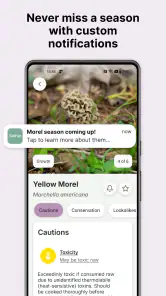
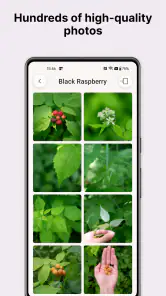
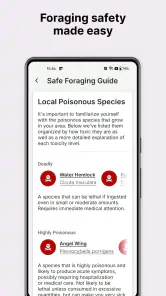
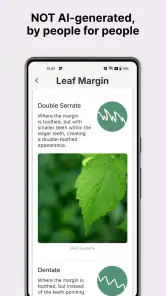
Analysis by Reviewed
I found Gather: The Foraging App most useful when I treated it as a field companion rather than a complete replacement for local knowledge. Its focus is simple—wild plants and mushrooms—but that narrow purpose gives it a clear place in an outdoor routine. I can imagine keeping it on a shared household phone before a walk, using it as a prompt for observation, and then discussing what was found at home. The important distinction is that an identification tool should support careful decisions, not turn a quick glance at a screen into permission to eat something unfamiliar.
As an Education app from Feral Foraging, LLC, Gather sits somewhere between a learning aid and a practical nature reference. It is free to install, rated for Everyone, and has reached over ten thousand installs, with a 4.3 average from more than a hundred ratings. Those figures suggest a small but active audience rather than a huge general-purpose platform. I like that positioning: it feels more approachable for curiosity-driven learning than an app designed only for experienced foragers.
How Gather works in a shared household
The most convincing use case for me is a walk where the phone belongs to everyone, not just one person. One family member notices a plant, another holds the device, and a child or beginner asks why the leaves, stem, or cap matter. That changes the app from a private reference into a conversation starter. The value is not only in reaching an answer; it is in slowing down long enough to notice the details that make one species different from another.
A shared-device routine also makes the app less intimidating. Someone who would not download a specialist reference for personal use may still open Gather because the household is already planning a nature walk. The free entry point helps here. There is no need to make a serious commitment before discovering whether the subject holds your attention.
I would use it in three stages. Before leaving, I would open it with the group and agree that observations are the goal, not collecting food. During the walk, I would compare several visible characteristics instead of relying on a single resemblance. Afterward, I would revisit the notes or images together, if the app’s available tools support that workflow on the device, and separate “interesting to learn about” from “safe to consume.” That last boundary is especially important with mushrooms.
The app works best when the phone is passed around deliberately. If one person silently makes every decision, the educational benefit becomes much smaller. A child can describe what they see before an adult checks the screen, while another person can look for a second source afterward. This creates a useful habit: observation first, identification second, confidence last.
What to settle before handing over the phone
Gather does not need to become a complicated household project, but I would establish a few simple boundaries. Decide who is allowed to install updates or make purchases, who is responsible for carrying the phone, and whether the device is being used for identification, photography, or general browsing. These are ordinary household decisions, yet they prevent confusion when several people use one screen.
More From Our News Desk

Clash of Clans Is Won Between the Battles

Android Auto Makes the Case for Quieter Car Software

MobiOffice: Transforming Mobile Productivity with Seamless Integration

EA SPORTS FC™ Mobile Soccer: Redefining Mobile Sports Gaming

How Microsoft OneDrive Became a Mobile Productivity Giant

How Google Translate Breaks Language Barriers Effortlessly
The app is free, but it includes in-app purchases ranging from $6.49 to $59.99 per item. That makes a shared-device conversation worthwhile before anyone taps a purchase option. I would explain that “free to install” does not mean every part of the experience is necessarily free, then keep purchase decisions with the owner of the device. This is particularly sensible when children are involved, because curiosity can easily become an accidental tap.
I also would not assume that a shared device means a shared account. Gather’s public details do not give me a reason to promise separate profiles, household libraries, child accounts, or synchronized progress, so I would plan around one device’s visible experience. If several people need independent records, a general note-taking system or separate personal devices may be more suitable. That is not a flaw unique to this app; it is simply the practical limit of treating one phone as a family reference shelf.
For a household, the best setup is therefore modest. Install it on the phone that normally goes outdoors, check the purchase settings, and make sure everyone understands that an identification result is a starting point. I would avoid presenting the app as an authority that settles disagreements instantly. The more cautious person in the group should have the final say about collecting anything, and “we are not sure” should always be an acceptable conclusion.
Coordinating observations without losing the learning
One of Gather’s strongest possible roles is coordination. On a walk with several people, one person can handle the phone while others search, photograph, or describe locations. This avoids the familiar problem of everyone crowding around one small screen. I would rotate the device holder so that the app does not become the responsibility of the most technically confident member of the group.
A useful method is to assign different questions rather than different authority. One person looks at leaf arrangement, another considers habitat, and a third checks whether the specimen has features that rule out a tempting match. This is more valuable than asking one person to announce an answer. It also reveals where the group is guessing, which is exactly where extra caution is needed.
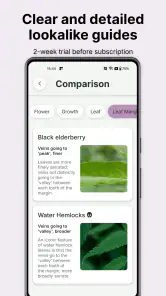
For mushrooms, I would be stricter. I would treat Gather as an educational aid for comparing visible traits, never as the only basis for eating a specimen. A photograph can miss texture, smell, spore details, age, or nearby lookalikes. Even a confident result may not capture local variation. The app can help a beginner learn what questions to ask, but it should not replace an experienced local expert or a dependable field guide when the consequence of a mistake is serious.
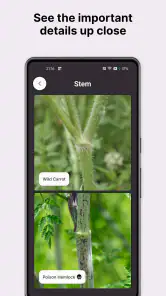
Plants deserve the same care, although the risks may look less dramatic. Some edible species resemble irritating or poisonous ones, and common names can vary by region. I would use the app to build recognition gradually: identify plants that are already familiar, compare several examples of the same kind, and avoid turning the first successful match into a foraging experiment. That approach makes the educational side more durable.
There is also a practical coordination tip that generic app reviews often miss: agree on the specimen before opening the identification screen. In a group, it is easy to point the camera at a nearby leaf, a damaged cap, or a different plant entirely while everyone assumes they are discussing the same thing. Taking a moment to mark the exact subject prevents a surprising amount of confusion.
Age, trust, and the limits of a Everyone rating
The Everyone rating makes Gather approachable for mixed-age households, but I would not interpret that as a safety guarantee for every activity connected with foraging. A young child can certainly participate in looking, describing, and learning. The adult still needs to control collection and consumption decisions. Age-appropriate use depends less on whether the app opens successfully and more on whether the child understands that “identified” and “safe to eat” are different ideas.
I would give children jobs that reward attention rather than risk: count visible features, compare two leaves, notice where a specimen is growing, or explain why the group is leaving it in place. These tasks turn the app into a shared lesson without encouraging unsupervised picking. They also make the screen less dominant, which matters on outdoor outings where the surroundings should remain the main experience.
Trust works both ways. Adults should trust children to make observations, but not expect them to carry responsibility beyond their experience. Children should be able to say that they are unsure without feeling they have failed. In my view, that is one of the healthiest ways to use an educational foraging app: uncertainty becomes part of the lesson instead of something the interface pressures everyone to hide.
For teenagers or adult beginners, I would be more comfortable assigning independent research, but I would still set a household rule that no wild plant or mushroom is eaten solely because Gather suggests a match. The app can support a second opinion, vocabulary building, and preparation for a guided walk. It should not be treated as a substitute for regional expertise, especially when the user is new to local species.
Shared use also raises a quieter trust issue: the phone may contain other people’s photos, messages, or accounts. I would hand it over only when everyone understands what they are opening and avoid assuming that a child needs access to the entire device just to use the foraging reference. If a household wants stronger separation between users, a dedicated outdoor device or each person’s own phone may be a better arrangement than expecting one app to create boundaries it was not designed to provide.
Where it beats ordinary alternatives—and where it does not
Compared with a thick printed field guide, Gather is easier to carry and more inviting for a quick question during a walk. A phone can be passed around, enlarged, and used immediately instead of searching through pages. That convenience is valuable for beginners who might otherwise stop looking after failing to find a matching illustration.
A printed guide still has important advantages. It does not depend on battery life, screen visibility, or a comfortable grip in wet conditions. It can encourage slower comparison across several species, and a well-chosen regional book may offer context that a focused app cannot. I would take both when the outing matters: Gather for accessible exploration, and a trusted physical reference for deliberate checking.
Compared with a general image-search tool, this app is more relevant because it is centered on wild plants and mushrooms rather than whatever visually resembles a photograph. A general search may return attractive but geographically irrelevant matches, while a specialist tool at least keeps the user’s attention on the right subject. Even so, visual similarity remains a danger. I would never treat a polished result as proof of edibility.
Compared with a community identification service, Gather may be preferable when I want a quick, private learning session without waiting for another person to respond. A community can be useful for difficult cases, local knowledge, and discussion, but it may also produce conflicting opinions. The trade-off is straightforward: Gather is convenient for immediate exploration, while human review can add context that an app cannot guarantee.
The purchase range is another point of comparison. Since the app is free to start but offers paid items, I would first test whether its basic approach suits the household before spending anything. For a casual family walk, the free experience may be enough to decide whether the subject is engaging. For a committed learner, a paid option could make sense only after checking exactly what it adds and whether those additions match the way the person actually studies.
Practical limits during real outdoor use
My main limitation is not the idea of the app; it is the danger of overconfidence. Outdoor identification is affected by lighting, damaged specimens, seasonal changes, regional differences, and incomplete views. A phone screen can make a match feel more definite than the evidence deserves. I would rather see Gather lead me to a shortlist of possibilities than persuade me that one tap has ended the investigation.
The environment can also work against a mobile reference. Bright sunlight makes screens harder to read, gloves make small controls awkward, and a muddy or wet outing is not ideal for passing one phone between several people. I would prepare by taking reference photos in good light, keeping the device protected, and doing detailed comparisons once the group is somewhere stable. That workflow is slower, but it produces better observations than rushing beside a trail.
Another limitation is household continuity. If one person uses the app on a walk and another wants to continue the research later, the group needs a simple way to remember which specimen was discussed. I would use a shared note with the date, location, photographs, and the group’s confidence level. This is not a claim about a built-in feature; it is a practical companion workflow that keeps the app from becoming a series of disconnected guesses.
Version 1.6.0 is the current version, and the minimum operating system is Android 7.0. That makes it accessible to many older Android phones, which is useful if a household keeps a spare device for outdoor activities. Before relying on an older phone in the field, I would still install and test the app at home, check that the screen is usable, and confirm that the device can handle the intended outing. A compatible phone is not automatically a comfortable one.
I would skip Gather if my only goal were guaranteed edible harvests, professional botanical documentation, or a fully separated family learning environment. A regional expert, specialist reference library, or dedicated personal device would be a better fit in those cases. I would also skip using it as a child’s unsupervised foraging authority. The app’s educational purpose is strongest when an adult provides context and the group accepts cautious conclusions.
My household verdict
I see Gather as a friendly entry point for learning about wild plants and mushrooms together. Its free installation, Everyone rating, and focused subject make it easy to introduce during a family walk or a shared weekend outing. The app earns its place when it encourages people to observe more carefully, compare features, and ask better questions.
My recommendation comes with a clear condition: keep the household boundaries visible. Decide who controls purchases, do not assume one shared phone provides separate user spaces, and make sure children understand the difference between exploring an identification and consuming a wild specimen. For serious decisions, add a trusted regional guide or experienced human opinion rather than asking the app to carry all the responsibility.
For me, the best result is not returning home with a basket full of food. It is returning with a better vocabulary for the landscape, a few carefully documented observations, and a group that knows when confidence is justified and when it is wiser to leave something alone. If that is the kind of outdoor learning you want, Gather: The Foraging App is worth trying. If you need professional-grade certainty, strong account separation, or a substitute for expert guidance, I would choose a different tool and use this one only as a supplementary reference.
Gather: The Foraging App Frequently Asked Questions
What devices and operating systems can run Gather: The Foraging App?
Gather is an educational app for people interested in wild plants and mushrooms, and it is available for Android and iOS users whose devices meet the minimum operating-system requirements. Before downloading, check that your device is running a compatible version of its operating system and has enough space for the app. Keeping the operating system up to date can also help with compatibility and stability.
Who develops Gather, and is it intended for all ages?
Gather is developed by Feral Foraging, LLC, and its content rating is Everyone, making it suitable for a broad audience. It can introduce families and curious outdoor learners to wild plants and mushrooms, but children should explore with an adult’s guidance. Foraging decisions require careful identification and awareness of local conditions, so the app should support learning rather than replace responsible supervision or expert advice.
What is Gather: The Foraging App used for?
Gather: The Foraging App is designed to help users identify, learn about, and keep track of wild plants, mushrooms, and other natural finds. It can be useful during walks, hikes, or foraging trips because it brings reference information and personal notes together in one place. It should be treated as an educational companion rather than a replacement for expert knowledge, especially when identifying anything intended for consumption.
Can Gather identify plants and mushrooms from photos?
Gather may provide identification assistance using photographs or visual information, depending on the version and features available on your device. However, image-based recognition is not guaranteed to be accurate in every situation. Lighting, seasonal changes, similar-looking species, and incomplete photos can lead to mistakes. Always compare results with reliable field guides or a qualified expert, and never eat a wild specimen based only on an app’s suggestion.
Does Gather: The Foraging App work without an internet connection?
Offline availability can depend on the specific feature, operating system, and content included in the current app version. Some saved records or previously loaded information may remain accessible without a connection, while searches, image recognition, maps, or synchronized data may require mobile data or Wi-Fi. Before heading outdoors, it is sensible to open the app, save important references, and confirm which tools remain usable offline.
Pros
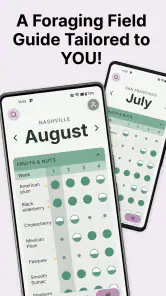
- Helps identify edible wild plants with useful seasonal information.
- Encourages outdoor activity and closer observation of local nature.
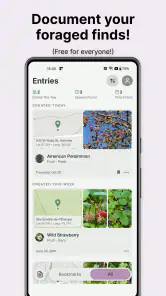
- Personal sighting records make it easy to track favorite foraging spots.
- Community contributions can reveal interesting finds near your area.
- Useful for beginners who want to organize their foraging discoveries.
Cons
- Plant identification should always be verified with a trusted expert.
- Coverage and community activity may vary considerably by location.
- Some features may require an account or access to location services.
- Information quality can differ between official and user-submitted entries.
- Foraging laws and land access rules are not always clearly explained.
- Category
- Education
- Version
- 1.6.0