FreeClaim: Class Action Money
- 41.00
- 4.8
- Installs
- 10.00K
- Price
- Free

Screenshots
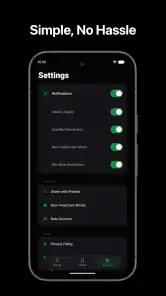

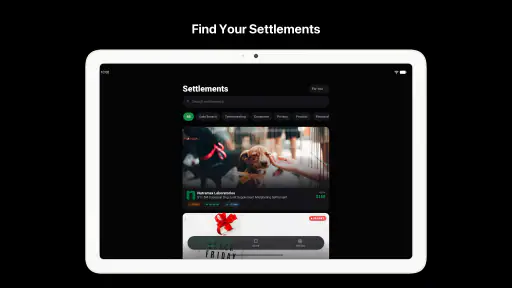
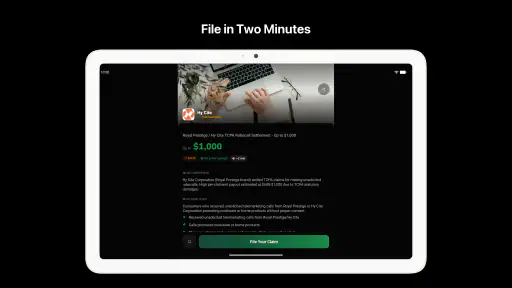
Analysis by Reviewed
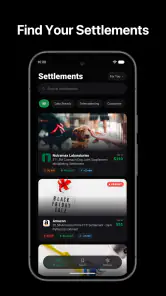
I like finance apps that solve a narrow problem without pretending to replace my bank, and FreeClaim: Class Action Money takes that approach. It is a free finance app from Qupid, LLC built around a simple question: whether I may be entitled to money from class action settlements, rebates, or refunds. That focus makes it more approachable than a broad budgeting app, especially when I want to check for overlooked claims rather than track every purchase or investment.
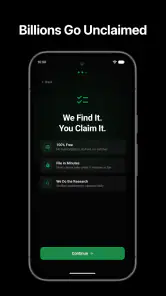
My first impression is that the idea is useful because settlement opportunities are easy to miss. Notices can arrive long after a purchase, through channels I rarely check, or with deadlines that do not fit into an ordinary financial routine. A finder dedicated to this kind of money gives the task a clear home. I would not treat it as a guaranteed source of cash, but I would treat it as a practical reminder system for something many people otherwise ignore.
What FreeClaim actually offers and what it costs
The verified store details describe FreeClaim as a free app, so the basic decision is refreshingly simple: there is no listed purchase price to weigh against a promised return. That matters here because settlement claims are uncertain by nature. I may find nothing relevant, or I may discover an opportunity worth pursuing, so paying upfront would make the experiment harder to justify. Free access lets me investigate without turning the search itself into another expense.
That does not mean every claim produces money, and I would keep that distinction in mind before installing it. A listing for a settlement is not the same as an approved payment. Eligibility can depend on dates, products, locations, account history, or other conditions set by the individual claim. The app’s value is therefore in helping me discover possibilities and decide whether to continue, not in promising a payout.
FreeClaim has a 4.8 average from over 900 ratings, with dozens of written reviews, and it has passed the ten-thousand-install mark. Those figures suggest that the concept has found an audience, but they should not be read as evidence that every user receives money. I see them as a useful sign that the app is being used and evaluated by real people, while still checking each opportunity on its own terms.
The app is rated for Everyone, which makes the subject matter accessible to a broad audience. It runs on Android 7.0 or later, and the current version is 1.4.4. In practical terms, that is helpful for people using older compatible phones who do not want to replace a device just to try a lightweight financial utility. I would still keep the operating system updated when possible, particularly for an app that may involve personal or purchase-related information.
A sensible way to use it without overestimating the result
I would begin with a short, deliberate check rather than browsing casually every day. First, I would think through products, services, subscriptions, and purchases from the past few years. Then I would compare those memories with the opportunities shown in the app, paying attention to eligibility wording and deadlines. This approach is better than tapping every result automatically because a claim may require proof that I cannot provide.
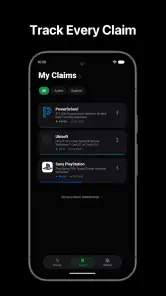
One useful habit is to keep a small record of anything that looks relevant: the settlement name, the reason I may qualify, the deadline, and the documents requested. I would not rely on memory after closing the app. Settlement processes can be slow and easy to forget, so a personal note helps me avoid repeating research or missing the next step.
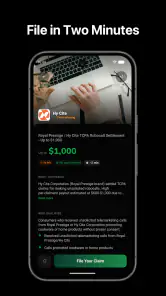
I would also separate discovery from submission. FreeClaim can help me notice an opportunity, but I would read the official claim instructions before entering sensitive details. If a result sends me toward a form, I would check that the form belongs to the appropriate administrator or official process and that the requested information makes sense. This is one of the most important trade-offs: convenience is valuable, but it should not replace careful verification.
Where the value is stronger than a normal finance app
Traditional finance apps are usually designed for spending awareness, budgets, bill reminders, credit monitoring, or investing. Those tools answer questions such as “Where did my money go?” FreeClaim addresses a different question: “Is there money connected to something I bought or used that I might be able to recover?” That difference makes it complementary rather than a direct replacement for a budgeting app.
For me, the strongest value is the low effort required to investigate an easily forgotten financial possibility. I do not need to build a complete budget before checking. I can use the app during a monthly money review, alongside bank statements and receipts, and then decide whether any result deserves more attention. That workflow turns a vague idea about settlements into a manageable task.
A realistic example would be a household that has moved several times and changed subscriptions, retailers, or service providers. The adults may remember the large purchases but forget smaller recurring services. During a weekend paperwork session, they could use FreeClaim to scan for relevant settlement or refund opportunities, then compare the details with old emails and statements. Even if only one result appears applicable, the app may have saved them from searching many unrelated websites.
Another useful case is after a major change in routine. Someone returning to school, moving to a new state, or reviewing old accounts may uncover receipts and confirmation emails that were previously scattered across devices. FreeClaim gives that person a reason to revisit the records with a specific goal. The non-obvious benefit is not just finding a claim; it is prompting a more organized review of old consumer activity.
I also see value for people who dislike complicated financial dashboards. A full personal-finance suite can be excellent, but it may ask for account connections, categorization, and ongoing maintenance. FreeClaim’s narrow purpose is easier to understand. If my goal is only to look for settlements, rebates, and refunds, a focused tool may feel less demanding than installing an app that tries to manage my entire financial life.
Three practical insights that improve the experience
First, I would treat the app as a periodic search tool, not as a daily money tracker. Checking during a regular monthly or quarterly review is more realistic than expecting constant activity. This prevents the app from becoming background noise while still giving me a repeatable process for catching new opportunities.
Second, I would search with evidence in mind. A vague memory that I once used a product may not be enough for a claim. I would gather order confirmations, invoices, account emails, or statements before starting a submission. That preparation helps me distinguish a genuinely actionable result from one that merely sounds familiar.
Third, I would compare the effort required with the likely value of the claim. A short form may be worth completing for a purchase I can clearly document. A lengthy process involving records I no longer have may not be worthwhile for a small, uncertain recovery. FreeClaim can surface possibilities, but I still need to make that time-versus-benefit judgment myself.
These habits also make the app more useful for families. Rather than having several people search independently, one person can maintain a shared list of potentially relevant purchases and another can locate supporting records. That division reduces duplicated work. It also prevents the common mistake of assuming that recognition of a company name automatically proves eligibility.
The trade-offs I would consider before relying on it
The biggest limitation is built into the category: discovery is not payment. A result can be interesting and still lead nowhere because the user does not meet the conditions, lacks documentation, misses a deadline, or decides the process is not worth the effort. Anyone expecting predictable income should skip this app as a financial strategy. It is better understood as a free opportunity check.
There is also a trust decision whenever a financial app helps direct me toward claims or refunds. I would read the wording carefully and avoid sharing more personal information than the official process requires. I would never provide bank credentials, payment-card passwords, or unrelated identity details simply because a result appears promising. This is not a criticism unique to FreeClaim; it is a sensible boundary for any tool operating near consumer finance.
Another trade-off is that a focused finder cannot replace the source documents or legal terms attached to each settlement. I still have to understand what the claim covers. If the wording is unclear, I would consult the official administrator’s instructions or seek qualified advice rather than guessing. The app can reduce the search burden, but it cannot make every eligibility decision for me.
People who already use a trusted service that monitors settlements may find the overlap unnecessary. In that situation, the free price makes trying FreeClaim inexpensive, but duplicate alerts can create clutter. I would choose one primary workflow and use the other only as a cross-check if the extra review is genuinely helpful.
I would also skip it if my main need is budgeting, debt payoff, investment analysis, bill negotiation, or credit improvement. Those goals require different tools and more continuous tracking. Installing FreeClaim will not organize spending categories or show whether a monthly plan is sustainable. Its narrow scope is a strength for the right user and a weakness for anyone seeking an all-purpose finance application.
Who is most likely to get real value?
This app suits people who have made many consumer purchases, changed providers over time, or simply want a low-cost way to look for overlooked refunds. It is especially reasonable for users who are willing to keep receipts and confirmation emails, because documentation can turn a possible match into a practical claim. The free access also lowers the barrier for curious users who want to test the idea without committing money.
It may be helpful for busy households if one person takes responsibility for a scheduled review. That person can collect relevant records, check the app, and discard results that clearly do not apply. The process becomes more efficient when it is treated like checking insurance paperwork or renewing a subscription, rather than something to do impulsively whenever there is spare time.
On the other hand, I would not recommend it to someone who is uncomfortable evaluating financial notices, who expects guaranteed returns, or who will submit forms without reading them. The app rewards patience and skepticism. If a user tends to confuse a possible match with confirmed eligibility, the tool could create false expectations instead of useful savings.
The age rating of Everyone makes the app broadly approachable, but accessibility does not remove the need for adult judgment around personal records and claim forms. I would explain the process to a younger family member rather than handing over sensitive documents without supervision. The app can be easy to open and understand while the underlying financial decisions still deserve care.
My verdict on installing FreeClaim
I would recommend FreeClaim: Class Action Money to someone who wants a focused, free way to search for class action settlements, rebates, and refunds. Its value is not that it transforms uncertain claims into guaranteed cash. Its value is that it gives an overlooked task a clear starting point and may save me from manually searching across scattered notices and websites.
The app works best when I use it alongside my own records and a cautious verification routine. I would check it periodically, note deadlines, gather proof before submitting anything, and read the official terms for every opportunity. That workflow makes the free price genuinely attractive because I can explore the possibility of recovering money without paying for the search itself.
I would skip it if I need a complete financial manager or if I am unwilling to spend time checking eligibility. A budgeting app is better for controlling monthly spending, while a dedicated financial adviser or official source may be better for complicated disputes. FreeClaim occupies a smaller but useful space between those options.
Overall, I see it as a sensible utility rather than a money-making shortcut. Qupid, LLC has kept the purpose clear, and the strong user rating gives me enough confidence to try it while remaining realistic about the results. If I already have old purchase records and a little patience, the best reason to install it is the chance to uncover money I had stopped thinking about—with no listed purchase cost standing in the way of that first check.
Pros
- Free to download and easy to browse available class action settlements.
- Clear eligibility details help users identify claims they may qualify for.
- Claim deadlines and settlement information are presented in one place.
- Useful for discovering compensation opportunities without hiring a lawyer.
- Simple interface makes it accessible to users with limited legal knowledge.
Cons
- Availability of settlements may vary by location and change over time.
- Not every listed case guarantees payment or successful claim approval.
- Users may need to provide sensitive personal and financial information.
- Some claims require supporting documents or detailed purchase records.
- The app does not replace independent legal advice for complex cases.

- Category
- Finance
- Version
- 1.4.4