Dipsea: Spicy Romantic Fiction
- 457.00
- 2.9
- Installs
- 500.00K
- Price
- Free

Screenshots
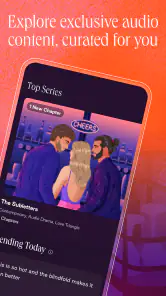
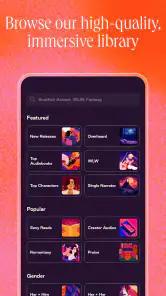
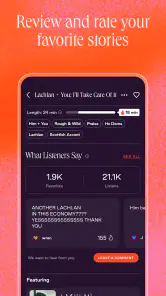
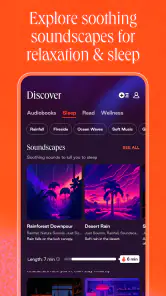
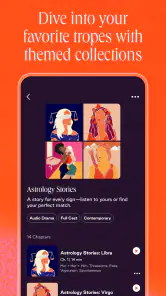
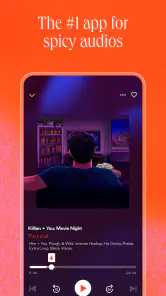
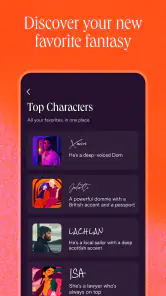
Analysis by Reviewed
I approached Dipsea: Spicy Romantic Fiction as a listening app rather than a conventional reading app, and that distinction matters immediately. It sits in Books & Reference, but its appeal comes from intimate audio storytelling: short moments designed to be heard, not scanned with your eyes. I found it most interesting when I wanted something private, atmospheric, and easy to fit around an ordinary evening instead of another screen-heavy activity.
The app is free to install, although access can involve in-app purchases ranging from $5.99 to $69.99 per item. It is intended for mature listeners aged 17 and over, and the developer is Dipsea. The current version is 5.1.4, while the Android requirement is version 7.0 or later. Those details make it broadly accessible on older Android devices, but the mature rating is not a minor footnote: this is clearly not an app to hand to a child or treat like a general-audience audiobook shelf.
How Dipsea feels in everyday use
An audio-first alternative to books and podcasts
What separates this app from a normal digital library is the way it uses sound to create the setting. With an ebook, I control the pace through the page. With a podcast, I usually expect conversation, information, or a long-running show. Dipsea occupies a more focused space. The experience is built around sensual romantic fiction, so the voice, pauses, mood, and private listening environment become part of the content rather than simple delivery tools.
I think the best time to use it is when I want a deliberate break from visual media. A realistic example is an evening after work: I can put my phone down, use headphones, and listen while winding down instead of scrolling through social feeds. It also suits a quiet commute or a personal relaxation routine, provided the setting is private enough for mature material. I would not play it aloud in a shared office, on public transport without headphones, or around family members.
The strongest benefit is convenience without demanding full attention from a screen. I can listen while lying down, stretching, or preparing for bed. That said, audio fiction is less forgiving than text when my attention wanders. If I miss a sentence in a book, I can look back. Here, I may need to pause or rewind, and that can interrupt the mood. I would keep the controls within easy reach rather than starting a story while doing something that requires constant concentration.
What the mature focus means for potential users
The 17+ rating should shape expectations before installation. This is not simply romance with a slightly flirtatious tone, and it is not a neutral reference collection. The central experience is spicy, intimate storytelling. Listeners who specifically want that tone may find the focus refreshing because the app does not need to disguise what it is trying to provide. People looking for family-friendly audiobooks, educational reference material, or broad literary fiction should choose a different app.
I also see a useful distinction between wanting romantic atmosphere and wanting explicit control over every detail. Audio leaves some of the scene to the imagination, which can feel more personal than watching a fixed visual adaptation. For me, that is part of the appeal. For someone who prefers visual novels, conventional ebooks, or stories with a large amount of world-building, the format may feel too narrow or too dependent on performance.
More From Our News Desk

Clash of Clans Is Won Between the Battles

Android Auto Makes the Case for Quieter Car Software

MobiOffice: Transforming Mobile Productivity with Seamless Integration

EA SPORTS FC™ Mobile Soccer: Redefining Mobile Sports Gaming

How Microsoft OneDrive Became a Mobile Productivity Giant

How Google Translate Breaks Language Barriers Effortlessly
Finding value in the free starting point
The free entry point makes it reasonable to test whether the style works for you before spending money. I would not decide based only on the store summary or the app’s category. I would first listen in a private setting, judge the narration style, and see whether the short-form audio approach fits my routine. The purchase range is wide enough that I would pay attention to exactly what an individual purchase unlocks before confirming it, rather than assuming every payment provides the same kind of access.
This is one of the more important practical trade-offs. A free installation does not mean the complete experience is free. If you are comfortable sampling and then paying for material you genuinely use, the model may feel fair. If you want a large, predictable catalog included with one simple subscription or prefer apps with no purchasing decisions after installation, the payment structure may create friction.
Small listening habits that improve the experience
My first tip is to treat the app like a private audio ritual instead of a background playlist. Use headphones, lower other notifications, and choose a time when you will not be interrupted. The writing is only one part of the experience; the atmosphere depends on hearing the delivery clearly. A noisy environment can make a carefully paced scene feel flat.
A second useful habit is to sample different story moods before deciding what suits you. Romantic audio can work for relaxation, escapism, or a quick emotional reset, but those are not interchangeable goals. If I am tired, I prefer something easy to follow. If I am specifically looking for atmosphere, I can give the narration more attention. Thinking about the purpose first prevents the app from becoming another collection of titles I never actually play.
Third, I would avoid starting a paid item impulsively just because the description sounds appealing. Since purchases can reach $69.99 per item, I would check the purchase screen carefully and consider whether I am likely to return to the content. This is especially important for listeners who are only curious about the format. A short trial of the free experience is a better way to learn whether audio romance belongs in your routine.
How the current version fits into the product’s evolution
The app was released on August 15, 2019, and the current version is 5.1.4. That combination suggests a product that has had time to develop beyond its initial launch, while the version number itself should not be treated as proof of a particular feature or redesign. I would judge the present experience by how smoothly it supports listening today, not by assuming that every older complaint or early impression still applies.
For existing users, a newer version can matter most in unglamorous ways: whether opening a story feels dependable, whether navigation stays understandable, and whether purchases are clear before confirmation. Those are the areas I would pay attention to after updating. The version information tells me where the app currently stands, but it does not by itself guarantee that every device will feel identical or that the catalog will match a listener’s personal taste.
The Android minimum of 7.0 is another practical part of that evolution. It leaves room for people using older phones, which is helpful if you do not upgrade hardware often. At the same time, modern audio apps can still feel different depending on the device, headphones, storage, and operating-system behavior. I would keep the app updated and test playback before relying on it for a carefully planned private listening session.
Where it compares well with familiar alternatives
Compared with ebooks, Dipsea is better suited to listeners who want to close their eyes and let performance carry the scene. An ebook remains the stronger choice when I want to read at my own speed, revisit a paragraph, highlight a passage, or explore a longer narrative in detail. Text also works better in a public place where listening would be awkward.
Compared with general audiobook services, the advantage here is focus. A broad audiobook catalog may offer romance among many genres, but it can take more effort to find material with this specific sensual audio identity. Dipsea is more purposeful for someone who already knows that intimate romantic fiction is what they want. The trade-off is variety: a general service is likely to be more useful if I want mysteries, nonfiction, history, children’s books, and romance in the same app.
Compared with podcasts, this app is less about hosts, discussion, or ongoing commentary and more about an immersive fictional moment. Podcasts are usually easier to sample casually and may be better for long commutes or informational listening. Dipsea makes more sense when I want mood rather than news or conversation. If I am looking for a completely free, endlessly varied audio habit, a podcast app may be the more natural choice.
Who should use it, and who should skip it
I would recommend trying it if you enjoy romantic fiction, prefer listening to reading, and want mature content that can fit into a private routine. It is particularly suitable for someone who finds visual entertainment tiring at night or who wants a more intimate alternative to browsing social media. The focused concept is a strength when it matches your interests.
I would skip it if you are under the stated age, uncomfortable with spicy romantic themes, or expecting a traditional reference app because of the Books & Reference category. I would also look elsewhere if you need extensive controls for studying, detailed text search, or a broad collection of unrelated genres. The app’s identity is specific, and that specificity is not a flaw for the right listener, but it will feel limiting if you want one app to cover every kind of book.
Remaining gaps and points of friction
The biggest limitation is the tension between a free installation and paid content. The purchase range requires attention, particularly for people who prefer transparent, all-in-one pricing. I would make every purchase deliberately and keep track of what I have already selected. That sounds obvious, but a mood-based app can encourage quick decisions, and the higher end of the range makes casual tapping a poor habit.
The second gap is the format itself. Audio can be immersive, but it is not ideal for every kind of story or every listener. I cannot skim a scene in the same way I can skim a page, and I may lose context if I am distracted. Someone who wants to compare passages, read discreetly in a crowded place, or control every sentence’s pace may be happier with an ebook.
There is also a social and privacy consideration that comes from the subject matter rather than a technical feature. I would use headphones and think carefully about where notifications, playback, and purchase screens might appear. The mature focus means discretion is part of responsible use. That is not a reason to avoid the app, but it is a reason to treat it differently from a public podcast player.
What I would watch before committing
Before spending more, I would watch how well the current version fits my actual listening pattern over several sessions. Do I return to the app, or do I only open it once out of curiosity? Do I prefer the available romantic moods, and does the narration keep me engaged without visual support? Those questions tell me more than the install count or a single first impression.
The app has more than 500K installs, an average rating of 2.9 from around 1.9K ratings, and 457 reviews. I read that overall reception as a reason to test it personally rather than assume it will be universally smooth. The audience is substantial enough to show real interest, while the middling rating suggests that expectations, device experiences, content preferences, or payment concerns may vary. I would use the free starting point to form my own view.
I would also watch for how the product continues to balance its focused identity with practical usability. A sensual audio app does not need to become a general audiobook platform, but it does need to make browsing, listening, and purchasing feel straightforward. The best future direction would preserve the intimate storytelling while reducing uncertainty for new listeners and keeping the experience comfortable for returning ones.
My recommendation after testing the concept
Dipsea is a specialized app, not a replacement for every reading or audio service. I like its willingness to center mature romantic fiction and to make listening feel more personal than ordinary scrolling. In the right setting, it gives me a screen-free way to enjoy atmosphere and storytelling, and the free installation lowers the barrier to discovering whether that format suits me.
My recommendation is conditional but positive: try it if the subject matter genuinely interests you, use headphones, and treat purchases carefully. Do not choose it because you simply want a general books app, a free podcast catalog, or a conventional romance ebook. For listeners seeking intimate audio fiction, the focused approach is exactly the point. For everyone else, that same focus is the clearest reason to pass.
Dipsea: Spicy Romantic Fiction works best when I approach it as a private listening experience with a specific purpose. It has a clear audience, a mature tone, and a payment model worth checking before committing. If those conditions match what you want, it can become a distinctive part of an evening routine; if they do not, a standard ebook or broader audiobook service will probably serve you better.
Dipsea: Spicy Romantic Fiction Frequently Asked Questions
Is Dipsea free to download, and what might cost extra?
Dipsea is free to download, so you can install the app without paying upfront. Some content and features may require a paid membership, with in-app purchases ranging from $5.99 to $69.99 per item. Before subscribing or making a purchase, check the price and renewal terms shown in the app store for your device so you know what you’re agreeing to.
Who makes Dipsea, and how popular is it?
Dipsea is developed by Dipsea and is listed in the Books & Reference category. It has more than 500,000 installs, with an average rating of 2.9 from around 1,900 ratings and 457 reviews. Those figures offer a broad sense of its reach and user feedback, but listening to the app yourself is the best way to judge whether its stories and style suit you.
What is Dipsea: Spicy Romantic Fiction?
Dipsea is an audio storytelling app focused on immersive romantic, sensual, and spicy fiction. Its library includes short stories, serialized narratives, guided audio experiences, and relationship-focused content designed for adult listeners. Instead of reading text on a screen, you listen to professionally performed stories with sound design that helps create a more intimate, cinematic experience wherever you are.
Is Dipsea suitable for everyone, and what age is required?
Dipsea is intended for adults because much of its catalog explores sexual attraction, intimacy, desire, and mature romantic situations. It is not appropriate for children or younger teenagers. The app is rated Mature 17+, so it is intended for users aged 17 and older. Parents and prospective users should consider that rating and the app’s adult themes before downloading.
Does Dipsea require a subscription?
Dipsea can usually be downloaded for free, but access to the complete collection generally depends on a paid membership. The app may offer a trial period or limited introductory content, while premium stories and series require a subscription. Review the price, billing frequency, trial conditions, and cancellation rules displayed for your device before confirming, since subscriptions typically renew automatically unless canceled in advance.
Pros
- Immersive audio performances make stories feel personal and cinematic.
- New episodes and stories are added regularly for returning listeners.
- Short listening sessions fit easily into commutes
- walks
- or bedtime routines.
- Offers romance-focused content for different moods and relationship fantasies.
- Audio format lets you enjoy stories without staring at your phone.
Cons
- Most premium stories require a paid subscription after the trial period.
- Content is intended for mature audiences and may not suit everyone.
- The catalog can feel limited if you prefer non-romance genres.
- Streaming longer episodes may use noticeable mobile data.
- Some stories may feel repetitive if you listen frequently.
- Category
- Books & Reference
- Version
- 5.1.4