Columbus Dispatch: Local News
- 429.00
- 2.5
- Installs
- 50.00K
- Price
- Free

Screenshots




Analysis by Reviewed
I approached Columbus Dispatch: Local News as a practical news reader rather than as a replacement for every source on my phone. That distinction matters. The app is built around the Columbus Dispatch, with local and national reporting, photography, and video in one place. In my experience, its strongest reason to exist is simple: it gives people who care about Columbus a focused way to check what is happening nearby without sorting through a broad national news app first.
My overall view is mixed but useful. The app can fit naturally into a morning routine, a commute, or a quick check during a developing local story. At the same time, the average rating of 2.5 from around 781 ratings suggests that the experience has not satisfied everyone, and I can understand why a reader might hesitate. This is a free News & Magazines app, but in-app purchases ranging from $19.99 to $69.99 per item mean that free installation should not automatically be confused with unlimited access to everything.
What the Columbus Dispatch app does best
The central strength is focus. Instead of asking me to build a local news feed from national headlines, social posts, and search results, the app puts Columbus-oriented coverage at the center. That makes it more useful for someone who wants local context: what is changing in the area, which regional story is developing, and how a nearby issue connects to broader national news.
The mix of written reporting, photography, and video also gives the app more range than a plain headline reader. A short visit can be enough when I only want to scan what is new, while a more visual story benefits from images or video. I would not install it solely for spectacular presentation, though. The visual material is most valuable when it helps explain a local event or gives a clearer sense of place, not when it is treated as decoration.
One useful habit is to separate quick checking from deeper reading. I would open the app first thing in the morning to see which local subjects deserve attention, then return later when I have time for a full article. This prevents the app from becoming another endless scrolling tool. It works better as a local briefing point than as something I leave open all day.
The developer is USA TODAY Co., while the short store description identifies the product as Columbus Dispatch. That combination tells me what kind of experience to expect: a recognizable local newspaper identity presented through a mobile app, rather than a general-purpose community message board. For readers who value professionally edited local coverage, that distinction is important.
A useful routine for local awareness
A realistic everyday scenario would be checking the app before leaving home. I might want to know whether a local issue has developed, whether a regional event deserves attention, or whether a national story has a specific Columbus angle. I can scan the main feed quickly, open the items that matter, and leave without spending time comparing several unrelated sources.
More From Our News Desk

Clash of Clans Is Won Between the Battles

Android Auto Makes the Case for Quieter Car Software

MobiOffice: Transforming Mobile Productivity with Seamless Integration

EA SPORTS FC™ Mobile Soccer: Redefining Mobile Sports Gaming

How Microsoft OneDrive Became a Mobile Productivity Giant

How Google Translate Breaks Language Barriers Effortlessly
The app is also potentially useful during a major local event. In that situation, photographs and video can add immediacy that a short text alert cannot. The trade-off is that visual content can consume more attention and data than a simple headline list, so I would use it deliberately rather than automatically playing or opening every item.
A less obvious benefit is editorial filtering. Social media may surface a local incident quickly, but it also mixes firsthand information with speculation, repetition, and commentary. A newspaper app gives me a more structured starting point. I still would not treat one source as the complete picture, especially during fast-moving events, but it is a calmer first step than searching through a crowded social feed.
Where it differs from broad news alternatives
Compared with a national news app, Columbus Dispatch: Local News is narrower in a way I consider valuable. A large national service may offer more subjects, more personalized recommendations, and a wider range of publishers, but local stories can become easy to miss. This app reverses that priority. If Columbus is central to your daily life, the narrower scope is a feature rather than a limitation.
Compared with reading the Dispatch through a mobile browser, a dedicated app can feel more direct. The app keeps the publication in a separate space and makes it easier to form a repeatable checking habit. However, a browser may be preferable for someone who wants to avoid another installed app or who only reads local news occasionally. I would not recommend installing this application for a single event and then forgetting it; its value comes from regular use.
Compared with social media, the app offers less conversation and less immediate crowd reaction. That is both a weakness and a strength. Readers who want comments, neighborhood debate, or a constant stream of eyewitness posts may find it restrained. Readers who want to reduce noise and begin with organized journalism may appreciate the restraint.
It also differs from an RSS reader or a customizable news aggregator. Those tools are better when I want to combine many sources, filter by topic, or create a highly personal reading list. This app makes more sense when the publication itself is the source I want to follow. I would choose the aggregator for breadth and this app for local focus.
What may frustrate regular readers
The clearest concern is the gap between the free download and the full reading experience. The app costs nothing to install, is rated for Everyone, and supports devices running Android 8.0 or later, but purchases inside the app range from $19.99 to $69.99 per item. That means a reader should pay attention to what is available without payment and what may require a purchase before making the app part of a daily news budget.
I see this as a planning issue rather than an automatic deal-breaker. If I only need occasional local headlines, the free entry point may be enough. If I expect unrestricted, long-term access to every article and feature, I would first examine the available access options carefully. The important question is not whether the app is free to download; it is whether its level of access matches how much local news I intend to read.
The modest average rating is another reason to set realistic expectations. A 2.5 average from 781 ratings is not a strong endorsement, and I would not dismiss that signal. Ratings can reflect many parts of an app experience, including access, stability, presentation, or expectations about a newspaper subscription. Still, the score tells me to test the app personally before relying on it as my only news source.
There is also a natural limitation in a publication-centered app: its usefulness depends on whether its local coverage matches my interests. Someone who wants Columbus reporting may find the focus exactly right. Someone who mainly wants international news, technology, entertainment, or a personalized mixture of outlets will probably feel restricted. The presence of national news helps broaden the experience, but it does not turn the app into a full replacement for a wide news platform.
How I would avoid common friction
I would begin by using the app for a short trial period without changing my whole news routine. I would check whether the local topics I care about are easy to find, whether the reading experience feels comfortable on my device, and how often I actually return. This is more useful than deciding from the app’s name alone.
I would also keep a second source available for confirmation. During a developing story, local reporting may provide essential context, while an official announcement or another outlet may offer a different detail. The app works well as a primary local briefing source, but I would not make it the sole authority for urgent decisions.
For readers concerned about spending, I would treat every purchase screen as a point to pause and read carefully. The listed purchase range is wide enough that casual tapping could lead to an option that does not fit the reader’s needs. A person who reads only a few local stories each week should compare that pattern with someone who wants sustained newspaper access; those are different use cases.
Another practical trade-off is attention. News apps can encourage repeated checking, especially when a local story is emotionally close to home. I find the app more useful when I set an intentional time to read and then close it. That approach makes the focused coverage an advantage instead of turning it into a constant stream of alerts and reactions.
Who should use it, and who should skip it?
I would recommend it first to Columbus residents, people who work in the area, and readers with family or ongoing interests there. It is also a sensible choice for someone who has moved away but wants a convenient connection to local reporting. The combination of local coverage, national context, photography, and video gives those readers a more complete visit than a single headline or social post.
It may also suit a reader who prefers one established local publication rather than assembling a news diet from several unrelated apps. That person should be comfortable with a focused editorial perspective and should understand that the free download may lead to paid access choices. The app is most appealing when local relevance matters more than maximum variety.
I would suggest skipping it if you want a completely free, all-purpose news service with broad international coverage and extensive customization. I would also hesitate to recommend it to someone who rarely follows Columbus news. In that case, a browser search or a general news reader may be more efficient than keeping a dedicated local app installed.
It is not the best fit for readers who primarily want live community discussion. The app’s value is organized news consumption, not the social back-and-forth found in neighborhood groups. Nor would I choose it as my only source for breaking information when accuracy and immediate confirmation are critical. Its role is better defined as a dependable starting point for local awareness.
Device details and long-term practicality
The app was released on March 20, 2014, and the current version is 8.10.3. Its minimum requirement of Android 8.0 or later makes it accessible to many reasonably recent Android phones, although anyone using an older device should check compatibility before planning around it. The Everyone content rating also makes it suitable for a broad household audience.
The install base is over 50,000, which indicates that it has reached a meaningful group of readers without making it one of the dominant news apps. I interpret that as a sign of a specialized local product: its appeal is tied to Columbus rather than to universal popularity. That is perfectly reasonable for a regional publication, but it reinforces the importance of location when deciding whether it belongs on your phone.
Because the app is tied to one local newspaper, I would judge it by usefulness per visit rather than by the number of features it offers. If it helps me understand my area in a few focused minutes, it is doing its job. If I need a broad media dashboard, extensive personalization, or a single place for many publishers, another category of app will serve me better.
My final recommendation is cautiously positive for the right reader. Columbus Dispatch: Local News is worth trying when Columbus reporting is part of your everyday life, but it should be tested with the access model and the middling rating in mind. I like its local emphasis and the way photography and video can add context, but I would not overlook the possible cost of deeper access or pretend that its focused coverage suits everyone.
For me, the best way to use it is as a deliberate local-news checkpoint: scan it in the morning, open the stories that genuinely affect my area, and use another source when a developing event needs confirmation. That makes its strengths clear without asking it to be a national aggregator, a social network, and a complete news subscription at the same time.
If you live in or closely follow Columbus, I think the app deserves a fair trial. If your interests are broader or you want a fully customizable free news feed, I would choose a general alternative instead. The app’s identity is its advantage and its boundary, and understanding that boundary is the key to having a good experience with it.
Columbus Dispatch: Local News Frequently Asked Questions
Will Columbus Dispatch: Local News work on my device?
The app is available for Android and iOS, and the Android version requires Android 8.0 or later. It is a News & Magazines app from USA TODAY Co., with a content rating of Everyone. Before downloading, check that your device meets the operating-system requirement and has enough available storage for the app and its news content.
What is Columbus Dispatch: Local News?
Columbus Dispatch: Local News is a mobile news app focused on reporting from Columbus and the surrounding Central Ohio area. It typically provides local breaking news, politics, crime, sports, business, entertainment, weather, opinion, and community stories. The app is designed for readers who want convenient access to updates from The Columbus Dispatch on an Android or iOS device.
Is Columbus Dispatch: Local News free to download and use?
The app is free to download, so there is no installation fee. However, access to all articles and features may depend on the publisher’s subscription policy. Some stories may be available to everyone, while premium content, unlimited reading, e-edition access, or other benefits may require a digital subscription. In-app purchases are listed from $19.99 to $69.99 per item, so check the current terms and pricing before subscribing.
Does the app require a subscription to read the news?
A subscription may be required after you reach a certain number of articles or when you try to open subscriber-only content. Exact access limits and available plans can change over time. If you already subscribe to The Columbus Dispatch, you may be able to sign in and use your existing account, although some features can vary by plan.
What kind of news and features are available in the app?
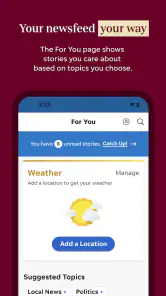
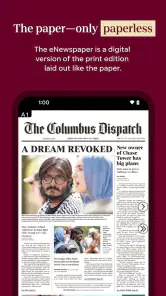
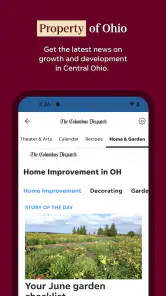
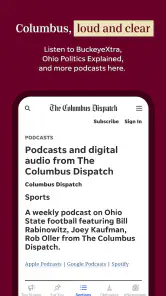
The app is primarily intended for local coverage, including breaking news, traffic-related updates, weather, sports, investigative reporting, local government, business, and lifestyle content. Its store summary also highlights local and national news, spectacular photography, and rich video content. Depending on the current version, it may also offer notifications, saved articles, photo galleries, podcasts, or access to a digital newspaper edition. Feature availability can differ between Android and iOS.
Pros
- Fast access to breaking news and local updates from Columbus and central Ohio.
- Clean layout makes headlines
- sections
- and featured stories easy to browse.
- Supports personalized news consumption through saved articles and favorite topics.
- Includes local sports
- politics
- business
- entertainment
- and community coverage.
- Useful alerts help readers stay informed about important developing stories.
Cons
- Some articles or features may require a paid subscription to access fully.
- Frequent notifications can feel excessive unless alert settings are adjusted.
- Advertising may interrupt reading and reduce the app’s overall visual simplicity.
- Coverage is focused mainly on Columbus
- limiting its value for distant readers.
- Performance and content availability may vary with internet connection quality.
- Category
- News & Magazines
- Version
- 8.10.3