CoinDrama - Short Dramas
- 0.00
- 0.0
- Installs
- 50.00K
- Price
- Free

Screenshots




Analysis by Reviewed
I approached CoinDrama - Short Dramas less like a conventional video editor and more like a compact viewing tool for people who enjoy serialized mobile storytelling. It belongs to the video players and editors category, but its practical appeal is not making clips from scratch. Instead, it gives short-form drama fans a place to discover ongoing stories, follow their viewing progress, and use collected coins as part of the experience. That distinction matters: if you are looking for a timeline, trimming controls, filters, or a way to publish your own film, this is not the right kind of app.
My first impression was that the app is built around quick decisions. You open it when you have a few spare minutes, scan for a story that looks interesting, and decide whether its opening is strong enough to keep watching. The format suits short breaks better than a traditional television app, especially when you want a dramatic hook without committing to a full-length episode. I found that the most useful way to judge it is not by asking whether it replaces a major streaming service, but whether it makes short drama discovery and continuation feel easy on a phone.
Starting with a story instead of a blank editing timeline
The creative starting point here belongs to the people making the dramas, not to the viewer. I cannot create a project inside CoinDrama, but I can see why its short-story format is attractive to creators: each installment has to establish a situation quickly, create a reason to continue, and leave enough unresolved tension to bring the audience back. That makes the app feel closer to a serialized reading habit than to a normal video library.
For a viewer, the first useful question is simple: what kind of attention do I have right now? If I have ten quiet minutes, I can try a new drama and decide whether the characters or conflict deserve more time. If I am tired, I can return to an existing story rather than spend several minutes searching through unrelated long videos. The short format reduces the commitment, although it does not remove the risk that a cliffhanger will make a “quick watch” turn into a much longer session.
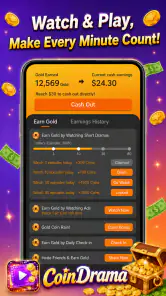
The store summary describes a service focused on trending short dramas, coin collection, and continuing story updates. In practice, I would treat those three ideas as one connected loop. Trending material helps with discovery, coins appear to support continued participation, and story updates give viewers a reason to return. That loop is more compelling for someone who enjoys following several active dramas than for someone who prefers a finished series that can be watched from beginning to end without interruption.
I also think the mature audience label deserves attention before installation. CoinDrama is marked Mature 17+, so I would not recommend handing the phone to a younger viewer simply because the episodes are short or the interface looks casual. Short drama apps can move quickly between romance, conflict, revenge, and other adult themes, and the age classification should be treated as a genuine part of the decision rather than a minor store detail.
The app comes from Little Pearl and is free to install. That makes trying it straightforward, but “free” does not automatically mean every part of the viewing journey will feel frictionless. The coin system is central enough that I would begin with modest expectations: explore the available stories, understand how coins are earned or used, and avoid treating the app as an unlimited replacement for every other video service.
Who gets the most from the discovery stage
CoinDrama makes the most sense for viewers who like fast-moving plots, regular updates, and the small ritual of checking what has changed since the last visit. It is particularly suitable for a commute, a lunch break, or the few minutes before bed when a full film feels excessive. I can also see it working for someone who enjoys sampling several stories before choosing one to follow closely.
It is less suitable for a viewer who wants careful recommendations based on a large personal library, high-control playback, or a single place for films, documentaries, and conventional television. A general streaming service will usually be better for that purpose. Likewise, anyone hoping to make and publish their own short drama should skip this app; its role is watching and participating in the story cycle, not producing a finished video.
Following the viewing process and managing coins
The central workflow is easy to understand: choose a short drama, watch it, collect coins through the app’s participation system, and return when the story receives another update. That is a different kind of “making process” from editing, but it still has a rhythm. The app turns passive viewing into a sequence of small decisions: which drama deserves attention, when to spend or preserve coins, and whether a new update is worth opening immediately.
My practical advice is to avoid spending coins impulsively during the first session. I would sample the opening of more than one story, identify the tone that actually suits me, and then focus my attention on the drama with the strongest combination of pacing and characters. This is a more efficient approach than treating every trending title as equally valuable. It also helps prevent the coin system from becoming the main reason I continue with a story I no longer enjoy.
A second useful habit is to separate “discovery time” from “continuation time.” During discovery, I would browse widely and keep my expectations low. During continuation, I would return to one or two dramas and check for updates. This keeps the app from becoming an endless scroll of openings without meaningful progress. The short format encourages sampling, but a little self-imposed organization makes the experience feel less scattered.
For example, imagine I am waiting for a train after work. I might open the app, watch part of a new drama, and collect the available coins while deciding whether its premise is worth following. If it ends on a sharp unresolved moment, I can note the title mentally and return later rather than immediately jumping into another series. The next day, I can check whether the story has continued and use that visit for progress instead of starting over with another random choice.
That scenario also shows the main trade-off. The short episodes are convenient, but dramatic endings can interrupt the natural feeling of completion. On a traditional streaming platform, I may choose a full episode and reach a clear stopping point. Here, the app’s appeal depends partly on wanting an ongoing chain of small developments. If I am in the mood for closure, the format may feel deliberately incomplete.
What the coin loop changes for viewers
Coins add a layer of planning that ordinary video players do not have. I would think of them as a viewing budget rather than as a reward to collect automatically. Before committing to a drama, I would watch enough to judge whether the writing and pacing work for me. Then I would reserve my coins for stories I genuinely intend to finish, rather than distributing them across every title that appears popular.
This approach is also useful when several dramas update around the same time. Instead of opening everything immediately, I can prioritize the story whose previous installment left the most convincing question unanswered. That is a small but important distinction: the app encourages frequent returns, while a viewer can still decide which updates deserve attention first.
The limitation is that the coin mechanic may feel like an interruption to people who want a simple play button. Viewers who dislike in-app currencies, progress systems, or any kind of decision about access may find a standard video platform more comfortable. CoinDrama’s identity is tied to participation, so removing that layer mentally is not really possible.
Iteration means choosing what deserves another visit
Because I am not editing footage inside the app, iteration happens at the audience level. I try a drama, assess its pacing, and decide whether to continue. That sounds simple, but it is where the service can either become useful or repetitive. A good short drama should make each return feel purposeful; a weak one can turn the update cycle into a habit without much satisfaction.
I would judge a series using three practical tests. First, does the opening establish a clear conflict quickly? Second, does each installment add something rather than merely delay the outcome? Third, does the ending create curiosity without making the previous viewing feel wasted? These are not app features; they are viewing criteria that help me make better use of a catalog built around short, continuing stories.
I also recommend stopping early when a drama is not working. The low time commitment can create the illusion that there is no cost to continuing, but attention is still a resource. CoinDrama is more enjoyable when I treat it as a curated personal queue instead of an obligation to complete every story I begin.
Updates are another reason to revisit the app, but they can also create uneven viewing habits. A completed series may provide a more satisfying experience for someone who dislikes waiting, while an active story is better for someone who enjoys speculation and conversation between installments. I would choose based on that preference rather than assuming that every trending title will offer the same type of payoff.
From phone viewing to a practical handoff
There is no reason to approach CoinDrama expecting a traditional export or publishing workflow. It is not an editor where I prepare a video, render a file, and hand it to a client or audience. The handoff here is simply the transition from one viewing session to the next: I find a story, remember where I stopped, and return when there is more to watch. That makes the app useful for consumption, but not for creative production.
If I were reviewing it as part of a creator’s toolkit, I would place it at the audience-research end of the process rather than the production end. A short-drama creator could potentially use the app to understand the kind of pacing and serialized structure that attracts mobile viewers, but CoinDrama itself does not replace a script tool, camera app, nonlinear editor, captioning service, or publishing dashboard. Anyone building a real video workflow will need separate tools for those stages.
For ordinary viewers, the practical handoff is easier. I can move from a discovery session to a focused follow-up session without preparing files or learning an editing interface. That simplicity is a strength when I want entertainment immediately. It is also a boundary: the app does not give me control over the content in the way a local media player or editing suite would.
Compatibility is reasonably approachable for older devices because the app requires Android 9 or later. It is currently at version 1.0.8, which suggests a relatively focused product rather than a mature all-purpose media platform. I would keep expectations realistic and update the app when a new version is offered, especially if playback, story loading, or coin behavior feels inconsistent on a particular phone.
The app has passed the fifty-thousand-install mark, so it is not an entirely unknown experiment. Still, I would not interpret that figure as proof that every drama will suit my taste. A catalog can have a lively audience and still contain plenty of titles I would abandon after a few minutes. The useful test is whether its specific short-form style fits my habits.
How it compares with familiar alternatives
Compared with a general streaming service, CoinDrama is narrower and more immediate. A large service is usually better when I want polished long-form productions, broad genres, profiles, and a predictable episode structure. CoinDrama is more appealing when I want short installments, frequent story movement, and a coin-based return loop.
Compared with a social video feed, it offers a more deliberate drama-focused experience. Social feeds are excellent for discovering isolated clips and reacting to whatever appears next, but they can make it difficult to follow a continuing plot. CoinDrama’s value is strongest when I want the narrative itself to remain central rather than treating every video as a separate scroll item.
Compared with a standard video player, the difference is even clearer. A local player gives me control over files I already own or have stored, while CoinDrama supplies an organized destination for short dramas and ongoing updates. If I need offline control, personal media management, or editing functions, I would choose another tool. If I want a ready-made stream of serialized mobile stories, this app is the more relevant option.
My verdict for short-drama viewers
After using CoinDrama as a viewing companion, I see a focused app with a clear audience. Its best quality is the way it turns spare minutes into a continuing drama habit without demanding the time commitment of a conventional series. The combination of trending stories, short installments, coins, and updates gives the experience a recognizable rhythm, and I can imagine returning regularly when I want quick narrative tension.
The main weakness is equally clear: this is not a flexible video tool. The video players and editors category may lead some people to expect editing controls, creator features, or file management, but CoinDrama is better understood as a short-drama viewing platform. The coin system may also be a source of friction for anyone who prefers unrestricted playback and no participation mechanics.
I would recommend it to adults who enjoy serialized romance, conflict, twists, and cliffhangers on a phone, especially when they like checking back for new story developments. I would skip it if my priority were making videos, watching long completed productions, managing a personal library, or avoiding virtual currencies altogether. In those cases, a dedicated editor, local player, or established streaming service would be a better match.
My final advice is to start slowly: sample a few dramas, choose one that genuinely holds your attention, and treat coins as something to manage rather than chase. That approach lets the app’s strongest idea stand out—the pleasure of discovering a compact story and returning to see how it changes—without allowing the update cycle to dictate all of your viewing time. For the right adult viewer, CoinDrama is a convenient doorway into ongoing short dramas, not a replacement for every video app.
Pros
- Episodes are short and easy to watch during spare moments.
- The app offers a wide variety of dramatic storylines.
- New content can provide regular entertainment for returning viewers.
- Simple navigation makes finding shows relatively quick.
- Mobile-focused playback suits casual viewing on smaller screens.
Cons
- Many episodes may end on cliffhangers that encourage continued viewing.
- Some stories can rely on familiar drama clichés.
- The viewing experience may be interrupted by frequent advertisements.
- Premium access may be needed for certain episodes or features.
- Video streaming can use considerable mobile data without Wi-Fi.
- Category
- Video Players & Editors
- Version
- 1.0.8