ClaimHunt: Class Action Claims
- 66.00
- 4.8
- Installs
- 10.00K
- Price
- Free

Screenshots


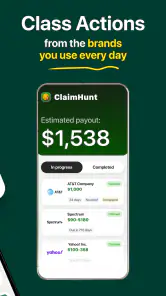
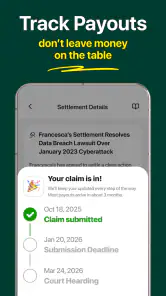
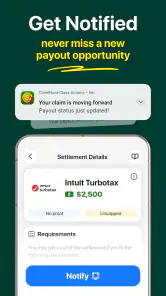


Analysis by Reviewed
I found ClaimHunt interesting because it focuses on a part of personal finance that most people usually ignore: money that may be available through settlements, refunds, or claims but is easy to miss. Instead of acting like a budgeting app or a banking replacement, it gives you a place to look for opportunities to recover money you may already be entitled to receive. That narrower purpose gives it a clear identity, although it also means its usefulness depends heavily on whether you are willing to review possible claims carefully.
In my experience, the app makes the most sense for someone who wants a simple way to keep an eye on class action settlements without searching for them manually. It is free to install, rated for Everyone, and works on devices running Android 7.0 or later. Push apps is the developer, and the current release is version 1.5. The audience appears to be growing, with more than ten thousand installs and an average rating of 4.8 from roughly 1.3 thousand ratings, so it has attracted a positive response while still being a relatively small app.
How ClaimHunt feels in everyday use
The first thing I noticed is that ClaimHunt is built around discovery rather than long-term money management. You are not opening it to categorize spending, move funds, or monitor an investment portfolio. You are opening it to see whether a settlement or refund opportunity deserves your attention. That distinction matters because the app should be judged by how quickly it helps you identify relevant possibilities, not by the number of financial tools it offers.
The basic workflow is easy to understand. You look through available opportunities, consider whether you might qualify, and then follow the information needed to make a claim. The practical value comes from reducing the amount of searching involved. A person who rarely checks consumer news or legal settlement notices may find this approach much more approachable than trying to discover every opportunity independently.
There is still an important difference between finding a claim and receiving money. ClaimHunt can help surface opportunities, but eligibility depends on the individual settlement and the details of your experience. I would treat every listing as a prompt to investigate, not as a guarantee of payment. That mindset prevents disappointment and encourages you to read the requirements before spending time on a submission.
Speed expectations and the first useful check
For this kind of app, perceived speed is less about complex calculations and more about how quickly you can move from opening the app to understanding what deserves attention. ClaimHunt benefits from having a focused purpose. You do not need to configure a full personal finance system before getting value from it. A short visit can be enough to scan for something familiar and decide whether it is worth opening.
I would use it during a spare minute rather than expecting it to replace a careful review. The fastest routine is to check the newest or most relevant-looking opportunities first, open only those connected to products or services you recognize, and then read the eligibility details closely. This avoids wasting time on claims that sound familiar but do not match your situation.
A useful habit is to keep a small personal record of claims you have already examined. Without that habit, it is easy to revisit the same opportunity or forget whether you already submitted something. ClaimHunt may help with discovery and tracking, but the final responsibility for remembering what you submitted, what documents were used, and what follow-up may be needed remains with you.
People often wonder whether an app like this can produce instant results. I would not approach it that way. The app can make the search faster, but settlement processing itself is a separate matter. The time between submitting a claim and receiving a payout depends on the settlement process, not simply on how quickly ClaimHunt opens or displays information.
What happens during heavier use
Light browsing is the natural use case, but heavier sessions can happen when you have ignored settlement searches for a while. You may open several opportunities, compare eligibility requirements, check dates, and move between different claim instructions. That is where organization becomes more important than raw speed. A focused app is helpful, but a long list can still become mentally tiring if you treat every entry as equally important.
My preferred approach is to divide the work into three passes. First, I remove opportunities that clearly do not relate to anything I purchased or used. Second, I examine the remaining entries for eligibility conditions and deadlines. Third, I complete only the claims for which I can provide accurate information. This workflow reduces rushed submissions and makes the app more useful during a longer session.
The trade-off is that ClaimHunt is not a substitute for personal judgment. A settlement may involve a product category you recognize but still require a specific purchase period, location, account history, or other condition. Skimming titles can create false hope. The app saves discovery time, but it cannot remove the need to verify the fine print.
Another practical point is that repeated checking may not always be necessary. If you are someone who wants constant financial alerts, this may feel too narrow. If you prefer a deliberate weekly or occasional review, the app fits better. I see it as a watchlist-style tool: useful when included in a routine, but unlikely to change your finances if opened once and then forgotten.
Reliability is more than an attractive list
For a finance app, reliability means more than staying open. The information has to be relevant enough for you to make sensible decisions, and the claim process has to be understandable. I would judge ClaimHunt by whether it consistently helps me distinguish a potentially relevant settlement from one that is merely interesting at first glance.
The strong average rating suggests that many users find the concept and execution useful. Still, ratings cannot replace careful reading. A positive impression may come from the convenience of discovering opportunities, while your own experience will depend on the kinds of products and services you have used. Someone with few matching claims may find the app less rewarding than someone whose consumer history regularly overlaps with listed settlements.
I also recommend treating any request for information with care. Before submitting personal details, I would confirm why the information is needed, whether it matches the official claim instructions, and whether the submission is actually relevant to me. This is not a criticism unique to ClaimHunt; it is simply sensible behavior whenever an app directs you toward financial or legal-related forms.
Tracking refunds and claims can become confusing when several opportunities are active at once. A simple note with the claim name, submission date, and any confirmation reference can make recovery easier later. That is one of the less obvious ways to get more value from the app: use it as the discovery layer, then keep your own lightweight record so that a promising opportunity does not disappear into a crowded notification history.
Device constraints and resource expectations
ClaimHunt supports Android 7.0 and newer, which makes it accessible to people using older compatible devices rather than requiring a recent phone. That broad compatibility is useful for a finance tool because users may not want to replace a perfectly functional device just to check settlement information.
At the same time, older hardware can affect the overall experience. I would expect browsing a focused finance app to be less demanding than running a modern game, but loading information, switching between screens, or handling a long session may feel less immediate on an aging phone. The app’s narrow purpose works in its favor here: it does not need to perform graphics-heavy tasks or maintain a complex financial dashboard.
Resource demands also depend on how you use it. Occasional checking should be easier on a device than leaving any app active for long periods while repeatedly moving between entries. If your phone already struggles with storage, background activity, or general responsiveness, ClaimHunt will not solve those underlying problems. I would keep the app updated and avoid judging it solely by a slow experience on a device that is already overloaded.
The free entry point makes testing straightforward, but there are in-app purchases ranging from $6.99 to $39.99 per item. I would pay close attention to what any optional purchase provides before agreeing to it. A person who only wants to browse possible claims may be perfectly satisfied without spending anything, while someone considering paid tools should first decide whether those tools genuinely improve their own routine.
Where it fits beside usual alternatives
The usual alternative is manual searching: checking settlement websites, consumer news, email notices, or general web results. That approach can uncover information, but it takes discipline and often produces scattered results. ClaimHunt’s advantage is convenience and focus. It gives the process a dedicated home instead of making you remember several places to search.
Another alternative is ignoring settlements altogether. That is certainly simpler, but it also means you may never notice an opportunity connected to something you bought or used. ClaimHunt is more useful for people who want to make a reasonable effort without turning the task into a research project.
It is not the right replacement for a budgeting app, a bank app, or a tax tool. Those products answer different questions: where your money goes, what is in your accounts, or how to organize financial obligations. ClaimHunt is about possible recovery from specific consumer-related situations. If your priority is controlling monthly spending, this app will not address the main problem. If your priority is finding overlooked claims, a traditional finance app may be too broad to help.
I also would not rely on it as the only source for a time-sensitive legal or financial decision. When an opportunity matters, compare the information shown in the app with the relevant official instructions and keep copies of anything you submit. The convenience is valuable, but verification remains the safer approach.
Who will get the most from it
ClaimHunt is a good match for people who have used many consumer products and services, dislike manually searching for settlements, and are willing to read eligibility rules before submitting a claim. It can also suit busy users who want a short, repeatable routine instead of a large financial dashboard.
Imagine noticing the app while waiting for an appointment. You scan the available opportunities and recognize a service you used during the relevant period. Rather than filing immediately, you check the qualifying conditions, gather the information you actually need, and record the submission afterward. That small routine is where the app can save effort: it turns a vague “I should look into settlements sometime” thought into a manageable review.
It is less suitable for someone expecting guaranteed payouts, instant refunds, or fully automatic claims. It is also a weak fit if you rarely remember what products or services you used, because matching yourself to eligibility requirements may take more work. Users who dislike reviewing terms or keeping basic records may find that the convenience of discovery does not compensate for the follow-through required.
Parents and families may appreciate the Everyone rating, but I would still explain the purpose of the app before letting a younger user handle claims. Financial and personal information deserves adult supervision even when an app’s age classification is broad. The rating describes accessibility, not a reason to submit information casually.
My performance verdict after weighing the trade-offs
ClaimHunt succeeds because it keeps its central idea clear. It is a focused finance app for discovering settlements, possible payouts, and refunds that could otherwise remain unnoticed. Its perceived speed should be good for short browsing sessions because the task is lightweight and specific, while longer sessions depend more on how carefully you filter and record what you find.
I would describe its stability in practical terms rather than expecting it to transform the claims process. The app can organize discovery, but reliability for the user also comes from checking eligibility, using accurate information, and preserving submission details. Those steps are essential, especially when several opportunities look similar or when a claim has conditions that are easy to overlook.
The free download lowers the risk of trying it, and the broad Android support makes it accessible to many users. The optional purchase range means I would review any paid feature carefully instead of assuming that spending more will lead to a payout. For most people, the best starting point is to use the free experience, establish a regular checking habit, and decide later whether anything extra is genuinely useful.
My honest recommendation is simple: install it if you want a focused way to look for consumer settlements and are comfortable doing the final verification yourself. Skip it if you need budgeting, banking, or guaranteed financial results. Its real strength is reducing the effort of finding possibilities, not removing the responsibility of judging them. Used with that expectation, ClaimHunt is a practical addition to a personal finance routine and an easy app to recommend to a friend who often wonders whether they have missed a refund or settlement.
Pros
- Simple claim-filing process with clear eligibility guidance.
- Helps users discover class actions they may not know about.
- Centralizes claim deadlines and settlement information.
- May reduce paperwork compared with filing directly.
- Useful for tracking submitted claims and potential payouts.
Cons
- Availability of settlements may vary by location and eligibility.
- Some claims require supporting documents or purchase records.
- Payout amounts are often uncertain and may be relatively small.
- Users should review privacy terms before sharing personal information.
- Processing times can be lengthy
- especially for large settlements.

- Category
- Finance
- Version
- 1.5