Bible Gateway
- 13.08K
- 2.7
- Installs
- 1.00M
- Price
- Free

Screenshots
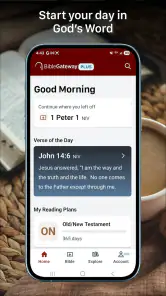
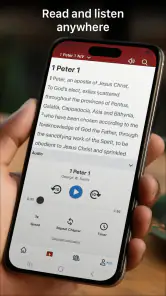
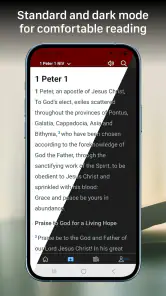
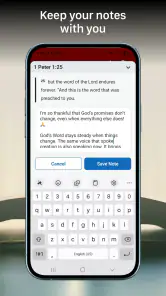
Analysis by Reviewed
I came away from Bible Gateway with a fairly clear impression: it is a useful Bible-reading and study app, but it works best when you already know what you want to read. Its biggest strength is convenience. I can open it for a quick passage, listen while doing something else, or spend more time comparing Scripture and study material. Its weaker side is the overall experience: the average rating sits at 2.7 from around 40 thousand ratings, which suggests that the app does not feel equally smooth for everyone.
That balance matters. This is not simply a digital replacement for a paper Bible, and it is not automatically the ideal choice for every kind of reader. Bible Gateway is more appealing to someone who wants a broad reference tool in one place than to someone looking for an extremely quiet, minimal reading environment. The app is free to install, carries an Everyone 10+ content rating, and comes from HarperCollins Christian Publishing. For me, it is worth trying, especially if reading, listening, and study are all part of your routine, but I would approach it as a practical tool rather than a flawless daily companion.
How Bible Gateway feels in everyday use
A convenient starting point for reading and listening
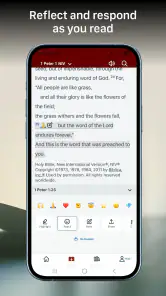
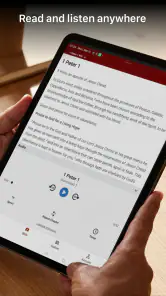
The most obvious benefit is that Bible Gateway brings several ways of engaging with the Bible into one app. I can use it for a short reading session, look up a passage when a question comes to mind, or switch from reading to listening when my attention is occupied elsewhere. That flexibility makes it useful in situations where carrying a physical Bible is inconvenient or where opening a browser feels like too much effort.
A realistic example is a busy weekday morning. I might have a few minutes before leaving home and want to read a particular passage rather than follow a long plan. Later, while preparing lunch or walking, listening can be more practical than holding a phone and reading. In the evening, I can return to the same subject for a slower study session. That change of format is the app’s strongest everyday argument.
I also like the fact that the app belongs naturally in the Books & Reference category rather than presenting itself as a social platform or a general inspirational feed. The focus is on accessing Scripture and related material. That makes it easier to treat the app as a reference shelf: open it, find what I need, read or listen, and close it without being pulled into unrelated content.
Searching is more valuable than it first appears
For many readers, search will become the feature that changes how often they use the app. A paper Bible is excellent when I already know where I am going, but it is slower when I remember only a phrase, theme, or partial reference. With Bible Gateway, I can begin from a remembered idea and use the result as a starting point for further reading.
That workflow is especially useful when preparing a discussion, checking a quotation, or trying to understand how a topic appears in different parts of Scripture. Instead of opening several books or relying on a general web search that may return distracting results, I can keep the task inside a Bible-focused environment. The practical advantage is not dramatic, but it saves friction during the moments when I need an answer quickly.
More From Our News Desk

Clash of Clans Is Won Between the Battles

Android Auto Makes the Case for Quieter Car Software

MobiOffice: Transforming Mobile Productivity with Seamless Integration

EA SPORTS FC™ Mobile Soccer: Redefining Mobile Sports Gaming

How Microsoft OneDrive Became a Mobile Productivity Giant

How Google Translate Breaks Language Barriers Effortlessly
My advice is to search with a specific purpose. If I search broadly and then jump from result to result, the app can become a rabbit hole. A better method is to begin with a passage or theme, read the surrounding context, and save a note elsewhere if the thought is important. The app is helpful for discovery, but I would not let search results replace a complete reading of the passage around them.
Study works best when I slow down
Bible Gateway is more useful as a study companion than as a simple verse-of-the-day shortcut. When I take time to compare wording, revisit nearby passages, and listen to a section after reading it, I notice details that a quick glance can miss. The ability to move between formats supports a more deliberate routine.
One practical approach is to read a chapter without stopping, then return to the parts that raised questions. I can listen to that same section afterward, not as a substitute for reading but as a second pass. Hearing the text changes my attention: sentence rhythm and repeated ideas can stand out differently. This is a small but worthwhile habit for anyone who tends to skim on a phone.
Another useful workflow is to use the app during a group discussion. I can keep the relevant passage open, check nearby verses when someone refers to them, and follow the conversation without carrying several books. That convenience is strongest for informal study, church groups, and personal reference. For intensive academic work, I would still want a more specialized study system with deeper annotation and research tools.
The free entry point is attractive, but the wider experience may cost more
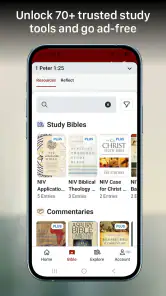
The app itself is free, which makes it easy to test without committing money first. That is important for a reference app: I can install it, see whether its reading and listening style suits me, and decide whether it fits my habits. The presence of in-app purchases ranging from $3.99 to $58.99 per item means that the free starting point should not be confused with every possible part of the experience being free.
I would make the decision based on actual use rather than assuming I need to buy anything immediately. If the free tools cover my normal reading, searching, and listening, there is no reason to spend simply because extra material is available. On the other hand, someone who wants expanded study resources should look carefully at what each purchase provides before paying. The price range is broad enough that the value will depend heavily on the particular item and the reader’s needs.
This is also where Bible Gateway differs from keeping a single printed Bible nearby. A paper edition has a fixed cost and no in-app purchase path, while the app can offer a wider digital experience but may introduce optional paid material. I see that as a trade-off rather than an automatic flaw. The important point is to treat the free app as a useful base and evaluate additions separately.
Where the experience can become frustrating
The rating of 2.7 is impossible to ignore. It does not tell me exactly why every dissatisfied user struggled, but it does signal that convenience alone has not produced a consistently loved experience. I would be cautious about recommending the app to someone who is very sensitive to interface friction, unexpected interruptions, or changes in how a familiar tool behaves.
My own concern with apps like this is that the reading experience can feel less calm than a physical Bible. A phone is full of competing signals, and even a focused Bible app cannot completely remove the feeling that I am using a general-purpose device. If I want uninterrupted reflection, paper may still be better. Bible Gateway earns its place through access and flexibility, not through recreating the atmosphere of a quiet room and a printed page.
There is also a difference between having many resources available and having a simple path through them. A large reference tool can encourage browsing when I intended to read. I find it helpful to decide my task before opening the app: read a chapter, find a reference, listen to a passage, or compare material. That small discipline keeps the app from becoming cluttered in my mind.
Compatibility and practical expectations
Bible Gateway supports devices running Android 7.0 or later, and the current version is 200.0.77. That makes it accessible to many Android users, including people who do not replace their phone frequently. Still, compatibility on paper does not guarantee that every device will feel equally quick or comfortable, so I would judge it on the phone or tablet where I plan to use it most.
The app has passed one million installs, so it is clearly not an obscure experiment. That level of adoption makes it easier to understand why it remains relevant as a mobile Bible reference. At the same time, popularity should not be mistaken for a promise that the interface will suit everyone. The rating shows why personal testing matters more than install count when choosing a daily reading tool.
I would also think about screen size. A phone is ideal for quick searches and short reading sessions, while a larger display is more comfortable for extended study. If I expect to read for a long time, compare passages, and take notes outside the app, a tablet or a physical Bible may offer a less tiring setup. Bible Gateway is flexible, but the device still shapes the experience.
Who will get the most from it
I would recommend Bible Gateway first to readers who want several ways to access Scripture without maintaining a collection of separate tools. It suits people who move between reading and listening, regularly look up passages, or need a Bible reference during travel, work breaks, and group conversations. It can also be a sensible first app for someone who wants to explore digital Bible reading before paying for a dedicated premium product.
It is particularly useful for a person whose routine changes from day to day. On one day, I may have time for a quiet chapter; on another, I may only be able to listen. A printed Bible remains excellent for focused reading, but it cannot adapt as easily to those changing circumstances. The app’s value grows when flexibility is more important than a perfectly distraction-free setting.
I would be more hesitant to recommend it to readers who want a very minimal interface, extensive scholarly annotation, or a carefully controlled offline library. Those users may prefer a dedicated study Bible app, a specialized research platform, or a physical edition. Bible Gateway can support study, but it should not be treated as the final answer for every serious research need.
It may also be the wrong choice for someone who dislikes optional purchases on principle. Even though the app is free to start, the in-app purchase range means the broader catalog is not necessarily part of the no-cost experience. A reader who wants one fixed, predictable product may feel more comfortable buying a printed Bible or choosing an app with a simpler pricing model.
How it compares with the usual alternatives
Compared with a printed Bible, Bible Gateway wins on portability, search, and the ability to listen. The printed book wins on concentration, ownership, and the absence of a battery or phone distractions. I would not choose between them as if one had made the other obsolete. For travel and quick reference, I prefer the app; for reflective reading, I often understand why people continue to choose paper.
Compared with a mobile browser, the app offers a more direct route to Bible reading. A browser can be useful when I am on a shared device or do not want another app installed, but it also exposes me to tabs, notifications, and unrelated search results. Bible Gateway feels more intentional when I want to stay within a Bible-centered task. The advantage is convenience and focus, although the app’s modest rating means that not every user will find that focus equally polished.
Compared with a highly specialized study app, Bible Gateway is easier to approach for ordinary reading and reference. A specialist tool may provide richer notes, stronger cross-referencing, or more advanced research workflows, but it can also feel heavy for someone who simply wants to read a passage or listen during a commute. My choice would depend on the job: Bible Gateway for flexible everyday access, a deeper study platform for sustained analysis.
Small habits that make the app more useful
The first habit I recommend is separating lookup from study. If I need one verse for a conversation, I search, read enough context to avoid misunderstanding, and move on. If I am studying, I deliberately slow down and read the surrounding section. This prevents the app’s speed from encouraging a shallow, isolated-verse routine.
The second is to use listening as a review method rather than background noise every time. I get more from audio when I first read the passage and then listen to it later. The two formats reinforce each other, and I am less likely to miss the structure of the text than if I treat listening as something that plays unnoticed while I multitask.
The third is to decide whether I need a free tool or a paid resource before browsing optional material. I find it easier to stay satisfied when I define the need first. If I want basic access, I use the free foundation. If I want a particular study aid, I examine that item on its own merits instead of assuming that every extra is necessary.
Finally, I would keep a separate personal system for long-term notes. Bible Gateway is convenient for reading and reference, but important observations, questions, and study conclusions are easier to preserve in a notebook or note-taking app I already trust. That approach gives me the best of both worlds: fast access in Bible Gateway and durable organization elsewhere.
My final recommendation
Bible Gateway is a capable, flexible Bible app with a clear practical purpose. I value the combination of reading, listening, and reference access, especially when my schedule makes a physical Bible inconvenient. The free entry point is welcoming, the age rating makes it suitable for a broad audience, and HarperCollins Christian Publishing gives the app an established home in the Books & Reference space.
Still, I would not overlook the 2.7 average rating or pretend that digital convenience solves every problem. The experience may feel less peaceful than paper, the wider offering includes optional purchases, and readers seeking advanced study tools may eventually need something more specialized. Those are meaningful limitations, not minor footnotes.
My verdict is straightforward: try Bible Gateway if you want an adaptable Bible reference that can fit reading, listening, and quick searches into a changing routine. I would recommend it to commuters, group-study participants, curious readers, and anyone testing digital Bible use for the first time. I would steer minimalist readers, intensive researchers, and people who dislike mobile distractions toward another option. For the right audience, it is a convenient companion; for everyone else, a printed Bible or a more focused study app may be the better daily choice.
Bible Gateway Frequently Asked Questions
Is Bible Gateway a good choice for daily Bible reading?
Bible Gateway is designed for reading, listening to, and studying God’s Word, so it can serve as a convenient companion for a daily reading routine. Its Bible passages and reading tools are useful for personal devotion as well as looking up Scripture when you are away from a printed Bible. You can explore the free features first and decide whether they fit the way you like to read.
Can I listen to the Bible in Bible Gateway?
Yes. Bible Gateway includes audio Bible content, letting users listen to selected versions as an alternative to reading on screen. Audio can be helpful during a commute, while doing household tasks, or whenever reading is inconvenient. The available recordings and listening options can vary, and streaming features may need an internet connection, so it is worth checking the version and controls you prefer.
Is Bible Gateway compatible with my phone?
Bible Gateway is a mobile app for reading and studying the Bible, and its listed minimum operating system is version 7.0. Before downloading, check that your device meets this requirement and has enough available storage for the app. Compatibility can also depend on your device’s software and app-store availability, so checking those details first can help avoid installation problems.
Who makes Bible Gateway, and is it suitable for younger users?
Bible Gateway is developed by HarperCollins Christian Publishing and is listed for Everyone 10+. It focuses on Bible reading and related Christian study resources, making it relevant to readers, families, and people involved in church or personal study. Parents can still review the app’s content and features with younger users to decide whether it suits their needs.
What is Bible Gateway, and what can I use it for?
Bible Gateway is a Bible reading and study platform available through its website and mobile app. It lets you read Scripture in numerous translations, compare different versions, search for words or passages, and listen to selected audio Bibles. It is useful for personal devotion, church preparation, Bible study, and quickly looking up verses while traveling or away from a printed Bible.
Pros
- Offers multiple Bible translations in one convenient app.
- Audio Bible support makes listening practical while traveling or multitasking.
- Search tools quickly locate verses
- keywords
- and passages.
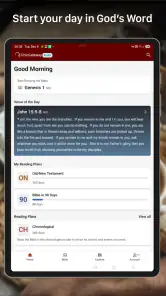
- Daily reading plans help users build a consistent study routine.
- Bookmarks
- highlights
- and notes make personal study easier to organize.
Cons
- Some translations or study resources may require an internet connection.
- The large amount of content can feel overwhelming for new users.
- Advertising or promotional content may distract from reading.
- Advanced study features may vary between translations and platforms.
- Audio playback and downloads can use significant mobile data or storage.

- Category
- Books & Reference
- Version
- 200.0.77