Bible Bff-Modern Bible Stories
- 190.00
- 4.1
- Installs
- 100.00K
- Price
- Free

Screenshots


Analysis by Reviewed
I went into Bible Bff-Modern Bible Stories expecting a simple reading aid, but the first thing I noticed was how directly it addresses the awkward beginning many people face with the Bible. The language can feel distant, the structure can be intimidating, and it is easy to read a few pages without knowing what to remember. This app, from Idea Garden LLC, is built around making that first contact feel less heavy. Its store summary admits that learning the Bible can be a struggle, and that honesty matches the app’s main appeal: it tries to make the subject easier to approach rather than assuming the reader already knows where to start.
After spending time with it, I see Bible Bff as a Books & Reference app for building a manageable Bible-learning habit, not as a complete replacement for a traditional Bible. That distinction matters. It is most useful when I want context, a gentler explanation, or a reason to return to a passage. It is less convincing if I need a serious study library, detailed scholarly notes, or a single tool that handles every kind of Bible reading. The experience is friendly and approachable, but its lasting value depends on whether the user turns that friendliness into a regular routine.
Why the first week feels approachable
The strongest part of the first week is the reduction of friction. Opening a large traditional Bible can create an immediate decision problem: which book should I read, how much should I cover, and what does this passage have to do with the larger story? Bible Bff-Modern Bible Stories feels aimed at that exact hesitation. Instead of treating the Bible as a test of prior knowledge, it presents the material in a way that is easier for a newcomer to enter.
That makes it particularly suitable for someone who has tried reading the Bible before and stopped because the experience felt confusing or dry. I can also see it helping a person who wants to reconnect with familiar stories without beginning with a dense study plan. The app’s Everyone content rating reinforces its broad, accessible positioning, although adults who want a more academic treatment may find the presentation intentionally simplified.
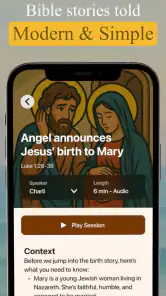
During an ordinary week, the practical use case is easy to imagine. I might have a few quiet minutes before work, open the app, read a modern retelling or explanation, and use that as a prompt to think about the original passage later. On a difficult evening, I might return to a story because I want perspective rather than another social feed. That is a better role for the app than expecting it to replace a full reading session every time.
One useful habit is to avoid treating the modern story as the entire lesson. I would read the app’s version first to understand the broad movement, then check the corresponding Bible passage in a separate Bible app or printed edition. This two-step workflow gives Bible Bff a clear job: it lowers the entry barrier, while the traditional text supplies the depth and wording. That combination is more effective than using either tool rigidly on its own.
What makes the novelty useful rather than merely decorative
The modern framing is not valuable simply because it sounds more contemporary. Its real benefit is that it can give a reader a mental outline. Many Bible stories are easier to remember when I understand the people involved, the conflict, and the emotional stakes before trying to examine every detail. Bible Bff can serve as that orientation layer, especially for readers who lose interest when they encounter unfamiliar names, historical settings, or abrupt changes in tone.
More From Our News Desk

Clash of Clans Is Won Between the Battles

Android Auto Makes the Case for Quieter Car Software

MobiOffice: Transforming Mobile Productivity with Seamless Integration

EA SPORTS FC™ Mobile Soccer: Redefining Mobile Sports Gaming

How Microsoft OneDrive Became a Mobile Productivity Giant

How Google Translate Breaks Language Barriers Effortlessly
I also appreciate that the app’s premise is not limited to people who identify as committed Bible readers. A curious reader can approach it as a reference companion, while someone returning to faith can use it to rebuild familiarity without announcing a major personal program. That flexibility gives the first-week experience more substance than a novelty app that depends only on attractive presentation.
Still, I would not mistake ease for completeness. A modern retelling can smooth out ambiguity and make a complicated account feel more straightforward than it really is. If I only use the simplified version, I may remember the general message while missing the details that different readers interpret in different ways. The app works best when I stay aware of that trade-off: clarity helps me begin, but it should not become a substitute for context.
How the value changes after the first month
After the initial curiosity fades, the important question is whether Bible Bff gives me a reason to keep opening it. For me, the answer depends on how I use it. If I expect a complete study course with increasingly advanced material, the experience may feel limited over time. If I use it as a short, approachable doorway into Bible stories, it has a more sustainable place in my routine.
The app is well suited to a recurring pattern built around small sessions. I can choose a story, read it without trying to finish an entire book, and write down one question to investigate elsewhere. That turns passive reading into a simple learning loop: encounter the story, identify what remains unclear, consult a fuller source, and return later to see whether the larger pattern makes more sense. This approach gives the app continuing value even when I have already seen its basic presentation.
Another useful monthly workflow is to pair it with a theme rather than browsing randomly. I might spend several sessions following stories about leadership, family conflict, forgiveness, doubt, or courage, then compare how those themes appear across different accounts. Bible Bff can make the starting point less intimidating, while a separate Bible reference tool can handle cross-references and deeper investigation. The trade-off is that I need to supply the structure myself rather than expecting the app to become a complete curriculum.
For families, the accessible style could make shared discussion easier. A parent or older sibling can read a story, ask what stood out, and then decide whether to explore the original passage together. The Everyone rating makes that broad audience clear, but I would still choose stories and discussion topics thoughtfully for younger readers because accessibility does not mean every biblical subject will feel equally comfortable in every household.
Its value can also appear in moments when a full study session is unrealistic. A person commuting, waiting for an appointment, or winding down before sleep may be more likely to open a friendly story app than a large reference work. That convenience matters because habits are usually built from repeatable actions, not ambitious plans. The app earns its space when it helps me return regularly, even for a short session, without making the task feel like homework.
Where it fits beside ordinary Bible apps and books
The usual Bible app is generally stronger when I want the full text, several translations, search, bookmarks, or a broad collection of study tools. A printed Bible is better for slow reading, visible page relationships, and a distraction-free experience. A commentary or study guide is better when I want historical background, interpretation, and references from an established tradition. Bible Bff occupies a narrower but useful position between these options.
Its advantage is approachability. I am more likely to begin with a modern story than with a long chapter whose setting and vocabulary I do not understand. Its weakness is that approachability can become a ceiling if I never move beyond it. I would recommend using it as a companion rather than choosing it as the only Bible resource. Someone who already has a comfortable reading habit may gain more from a translation with strong notes or a focused study app.
There is also a practical difference in attention. Traditional Bible apps often encourage searching, comparing, and jumping between passages, which is useful but can become distracting. Bible Bff’s story-centered approach should be better for a reader who needs one clear starting point. On the other hand, a person who enjoys detailed exploration may quickly want tools that let them trace terms, people, and related passages more precisely.
That comparison helps clarify who should skip it. I would not make it my first choice if my main goal were formal theological study, detailed historical research, or a complete digital library. I would also skip it if I dislike modern retellings and prefer to encounter every passage only through the original wording. But if my problem is beginning, remembering, or maintaining interest, the app has a sensible role that conventional tools do not always fill.
The maintenance burden behind a good habit
Maintaining a reading habit with Bible Bff is relatively simple in concept, but the app does not remove the need for personal discipline. The first few sessions may feel fresh because the format is different from opening a conventional Bible. A month later, I still need a reason to return. The best reason is not novelty; it is a repeatable routine connected to a real goal, such as learning one story each week or preparing for a conversation with family or a study group.
I would keep the routine deliberately small. Reading one story, noting one unfamiliar detail, and checking one question elsewhere is enough for a useful session. Trying to consume everything quickly could turn the app into another unfinished project. This is one of the more important trade-offs: the app can make starting easier, but it cannot make rushed reading meaningful.
The free price makes experimentation straightforward, which is helpful for deciding whether the tone suits me before committing to a long-term routine. At the same time, in-app purchases range from $6.99 to $59.99 per item, so I would pay attention to what is included before purchasing anything. I would not spend simply because the first week feels pleasant. I would first confirm that the app is solving a continuing problem for me, such as difficulty choosing where to read or trouble understanding the broad storyline.
That purchase decision is especially important for casual users. If I only want occasional inspiration, the free experience may be enough to judge the concept. If I plan to use it as a regular learning companion, I should evaluate whether any paid material adds genuine depth or simply extends the same introductory approach. The right choice depends on usage, not on the presence of extra content alone.
What can cause fatigue over time
The biggest source of fatigue is repetition in tone. A friendly, modern voice is useful when I am learning the format, but after many sessions I may want more variation in depth, context, and challenge. If every story feels equally simplified, the app can begin to feel like an introduction that never develops into a fuller study experience.
Another possible frustration is the gap between a retelling and the source text. I may finish a story feeling that I understand it, then discover that important details, tensions, or questions remain outside the modern presentation. That is not automatically a flaw; simplification is part of the app’s purpose. But it means I need to build in a second source if I want a well-rounded understanding. Readers who do not want that extra step may eventually feel that the app leaves them at the surface.
There is also a motivational risk. Because the app makes Bible learning feel less demanding, I might confuse comfort with progress. Reading a familiar story again can be worthwhile, but a lasting habit should occasionally include unfamiliar material and honest questions. I get more from the app when I use it to move toward the Bible, not to remain permanently at a safe distance from it.
Finally, the app’s long-term usefulness will vary with personal expectations. A beginner may find the accessible framing exactly right, while an experienced reader may outgrow it quickly. That is not a contradiction; it is a sign that Bible Bff has a specific audience. Its strongest users are people who need a bridge, a reminder, or a gentle way back into reading.
Performance expectations and the current package
Bible Bff-Modern Bible Stories is free to start and is available for Android devices using version 7.0 or later. The current version is 19.0, which shows that the app is presented as an actively maintained product rather than a forgotten experiment. I would still install it with a clear expectation: the app’s value comes from its reading experience and habit potential, not from replacing every other Bible resource on my phone.
Its audience is broad enough to explain the solid reception: it holds a 4.1 average from around 4.1 thousand ratings, with around 190 written reviews and over 100 thousand installs. Those figures suggest that many people find the concept useful, but they do not remove the need to judge whether its modern presentation matches my own preferences. A reader can appreciate the idea and still decide that a traditional Bible app is a better daily tool.
I would also give the app a short trial period with a specific test. Instead of asking whether I like it after one attractive session, I would use it on several ordinary days, then attempt the companion workflow: read a modern story, locate the original passage, and write one observation. If that process feels natural, the app is probably earning a place in my routine. If I never feel motivated to move beyond the retelling or return after the first burst of curiosity, it may be better treated as an occasional reference.
My long-term verdict
After the novelty fades, Bible Bff keeps its value when I treat it as a bridge rather than a destination. It makes Bible stories easier to approach, gives beginners a less intimidating starting point, and supports short sessions that can fit into real life. I especially like the idea of using it before reading the original text, during family discussion, or whenever I need a quick reminder of the larger story before opening a more detailed resource.
I would not recommend it as the only Bible app for a serious long-term study plan. Its modern approach can simplify difficult material, and readers who want extensive references, multiple translations, or scholarly commentary will be better served by conventional alternatives. The app also asks the user to create the deeper workflow: compare sources, keep notes, and deliberately return to unfamiliar passages.
Even with those limitations, I think it earns lasting space for the right person. If the Bible has always felt hard to start, Bible Bff offers a practical way to lower that first barrier without demanding an ambitious schedule. My advice is to begin with the free version, build a small recurring routine, and judge it by whether it helps you engage with the source text more consistently. Its lasting strength is not novelty; it is the possibility of turning hesitation into a repeatable reading habit.
Bible Bff-Modern Bible Stories Frequently Asked Questions
Who publishes Bible Bff-Modern Bible Stories, and what devices can run it?
Bible Bff-Modern Bible Stories is published by Idea Garden LLC and is listed for devices running Android 7.0 or later. Before downloading, check that your device meets this requirement and that you are choosing the version for your platform. The app is in the Books & Reference category, so it is aimed at readers exploring Bible stories rather than serving as a general entertainment game.
What is Bible Bff-Modern Bible Stories?
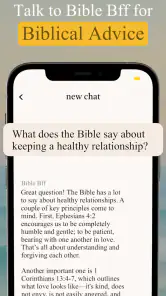
Bible Bff-Modern Bible Stories is a Christian Bible app that presents biblical stories and teachings in a more accessible, contemporary format. It is designed for readers who may find traditional Bible language difficult to follow, offering an approachable way to explore familiar events, characters, values, and lessons from Scripture through a modern presentation.
Is Bible Bff-Modern Bible Stories suitable for children and teenagers?
The app can be useful for children, teenagers, families, and adults who want an easier introduction to Bible stories. However, parents should review the content and features first, since biblical stories may include serious themes such as conflict, loss, punishment, or violence. Younger children may benefit from using the app together with an adult for explanation and guidance.
Does the app include the complete Bible or only selected stories?
Bible Bff-Modern Bible Stories focuses primarily on modern retellings or presentations of selected Bible stories rather than functioning exactly like a complete, traditional Bible edition. Users looking for every chapter, verse, translation, or advanced study tool should check the app’s current description and available sections before downloading, because its main purpose is accessible storytelling.
Can I use Bible Bff-Modern Bible Stories without an internet connection?
Offline availability may depend on the specific version of the app, the content being viewed, and the device platform. Some features or stories may require an internet connection, especially if content is streamed or updated online. Before traveling or relying on it without mobile data, open the app and confirm whether the desired stories can be downloaded or accessed offline.
Pros
- Short
- modern retellings make Bible stories easier to understand.
- Friendly presentation can help beginners engage with Scripture.
- Useful for quick reading during commutes or short breaks.
- May encourage conversations about faith and biblical themes.
- Simple language makes it suitable for younger readers.
Cons
- Modern wording may leave out important biblical context or details.
- Interpretations can differ from traditional Bible translations.
- Limited depth may not satisfy users seeking serious study tools.
- Some content may require an internet connection to access.
- Not a replacement for reading the complete biblical text.
- Category
- Books & Reference
- Version
- 19.0