Beli
- 225.00
- 4.2
- Installs
- 100.00K
- Price
- Free

Screenshots
Analysis by Reviewed
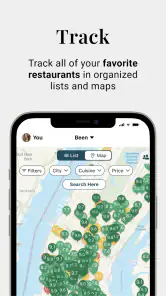
I started using Beli because restaurant recommendations usually disappear into a messy combination of saved posts, map pins, chat messages, and half-remembered conversations. This app takes a more opinionated approach: it is built around keeping your favorite restaurants in a ranked collection. That simple idea becomes especially useful when several people in a household share food decisions but do not share the same tastes.
In my experience, Beli works best as a personal record of where I want to eat, where I have already eaten, and which places I would suggest first. It is a free Food & Drink app from Beli App, available for users aged Everyone. The current version is 9.9.0, and it runs on Android 7.0 or later. Its public reception is encouraging, with a 4.2 average from around 1.8 thousand ratings, while its install count has passed 100 thousand.
How Beli fits into a shared household
The most realistic use case is not one person acting as the family food critic. It is a household trying to answer a familiar question: “Where should we go tonight?” One person may want noodles, another may prefer a quiet café, and someone else may only remember that a restaurant was “good, but not worth crossing town for.” A ranked restaurant list gives those opinions somewhere more useful to live than a group chat.
I found the ranking concept more practical than a long unorganized favorites folder. A normal saved list tends to become a storage box: every place looks equally important, even when some are reliable favorites and others were saved only because a friend mentioned them. Ranking forces a little judgment. That makes the list easier to use when I am choosing between familiar options rather than browsing endlessly for something new.
For shared use, I would treat Beli as a set of individual food memories rather than a communal account. Each person can have a different sense of what belongs near the top. That is not a weakness; it is often the honest picture of a household. A restaurant that is perfect for one person’s weekend brunch may be completely wrong for another person who cares about quick service or vegetarian choices.
The important practical habit is to discuss the reason behind a ranking instead of treating the ranking as an objective score. If my partner places a restaurant first because it is convenient after work, while I place it lower because I prefer the food at another location, both opinions can be valid. Beli helps surface that difference, but it does not remove the need to talk about it.
What to do before everyone starts saving places
I recommend agreeing on what a ranking means before using the app together. Does the top position represent the best meal ever, the most dependable choice, or the place you would choose tonight? Those are three different systems. Without a shared understanding, people can look at the same list and draw completely different conclusions.
More From Our News Desk

Clash of Clans Is Won Between the Battles

Android Auto Makes the Case for Quieter Car Software

MobiOffice: Transforming Mobile Productivity with Seamless Integration

EA SPORTS FC™ Mobile Soccer: Redefining Mobile Sports Gaming

How Microsoft OneDrive Became a Mobile Productivity Giant

How Google Translate Breaks Language Barriers Effortlessly
For a household, a useful approach is to keep personal rankings personal and use them as conversation starters. One person can say, “This is my safest choice near the office,” while another can say, “This is my favorite for a long dinner.” That is more informative than forcing every restaurant into one family-wide order that hides individual preferences.
I also would not use Beli as a substitute for a reservation calendar or a delivery tracker. Its strength is preference organization, not household scheduling. If the group needs to know who booked a table, who is picking up food, or which evening is free, a calendar or messaging app remains the better tool. Beli can help decide the destination, but it should not carry responsibilities that belong to those other tools.
Keeping account boundaries clear
Shared devices create a small but important boundary issue. If several people use the same phone or tablet, the person currently holding it may be tempted to add, edit, or rank restaurants in someone else’s collection. That can turn a useful personal list into a confusing one. I would avoid treating a shared device as proof that the account itself should be shared.
Before entering a restaurant, I would check whose profile or session is active and make sure the change is being made in the right place. This sounds obvious, but food lists are particularly vulnerable to accidental edits because people often use them while standing in a busy kitchen, sitting in a car, or passing a phone around at the table.
There is also a difference between sharing a recommendation and sharing control. Showing someone a favorite restaurant is harmless. Letting another person rearrange an entire ranking is a much bigger decision. Beli is more useful when each user’s preferences remain attributable to that person, especially in a household where tastes, budgets, and routines differ.
I would keep the app’s role narrow: use it to record and compare restaurant preferences, then use ordinary conversation for decisions that affect everyone. That boundary prevents disappointment when one person assumes a ranking is a group vote and another person intended it only as a private list.
Turning rankings into better coordination
The best everyday workflow I found is to use Beli before the decision becomes urgent. If everyone waits until they are hungry and already arguing about dinner, even a well-organized restaurant list will feel like extra work. Looking through rankings earlier in the day gives the household time to notice overlapping choices and avoid last-minute indecision.
Imagine a Friday evening when one person finishes work late, another wants something casual, and a third person does not want to travel far. Instead of searching the entire internet, I would compare the restaurants near the likely route, then use each person’s ranking to identify a compromise. The top-ranked place is not automatically the answer, but the overlap between several lists can reveal a dependable choice faster than starting from nothing.
A less obvious benefit is that rankings can expose gaps in a household’s routine. If every person’s list is full of dinner restaurants but almost empty for breakfast, lunch, or quick weekday meals, that tells you the problem is not a lack of favorites. It is a lack of recorded options for a particular situation. I would deliberately add places for different moments rather than only collecting special-occasion restaurants.
Another useful method is to separate discovery from decision-making. When someone recommends a restaurant, save it as a candidate rather than mentally treating it as a proven favorite. After visiting, decide whether it deserves a higher position. This prevents the common problem of confusing curiosity with experience and gives the ranking more meaning over time.
That workflow also makes Beli more valuable for visitors. If friends or relatives are staying with me, I can look at my strongest recommendations without scrolling through every restaurant I have ever considered. I still need to explain practical details such as distance, atmosphere, and whether the menu suits the group, but the list gives me a starting point based on actual preference instead of generic popularity.
Where the app is stronger than ordinary alternatives
Maps are excellent for finding restaurants near a location, checking basic details, and planning a route. They are less personal when the question is, “Which of these places would I choose again?” A map can show many options, but it does not automatically reflect the difference between a restaurant I loved and one I saved for later.
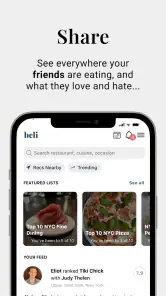
Social media is useful for discovery, especially when a friend posts a meal that looks appealing. The problem is that recommendations become scattered across feeds and conversations. Beli’s focused restaurant ranking gives those discoveries a more durable home. I prefer that approach when I want to build a usable personal shortlist rather than keep consuming new suggestions.
A notes app can imitate part of the experience, but manually maintaining an ordered list is less convenient. Notes are flexible, yet flexibility can become clutter. Beli’s restaurant-centered purpose gives the collection a clearer job: keep track of the places that matter to my eating decisions.
There is a trade-off, though. A general map or review service is usually better when I need immediate practical information about opening hours, directions, or nearby alternatives. Beli is better for preference memory and personal ranking. I would use it alongside those services, not expect it to replace every restaurant tool on my phone.
Age, trust, and household expectations
The Everyone age classification makes the app approachable for a broad household audience, but age suitability is not the same as independent judgment. Younger users may be perfectly capable of ranking restaurants while still needing an adult to handle decisions involving travel, spending, allergies, or late-night plans.
I would also explain that a ranking is an opinion, not a guarantee. A child may place a familiar fast-food restaurant above a new place because familiarity matters more to them. An adult may read that ranking as a useful clue, but not as a complete recommendation for the whole family. Keeping that distinction clear helps avoid turning a personal preference list into a source of pressure.
Trust matters in another way: people should know who can see or change what they add. I would not assume that using the same household device creates the right level of privacy or collaboration. Instead, I would establish a simple rule about whose account is being used and ask before changing another person’s list.
That approach is particularly important when restaurant choices reveal routines or preferences. A ranking can show which places someone visits often, what kinds of food they enjoy, and which options they avoid. Even in a family setting, those details deserve ordinary respect. The app can support coordination without requiring everyone to surrender control of their own taste profile.
Small frictions that affect daily use
The ranking model is appealing, but it also asks for maintenance. If I save every restaurant that catches my attention, the collection can become difficult to interpret. The app works best when I periodically promote genuine favorites, lower places that no longer fit my habits, and remove the mental clutter created by impulse saves.
Ranking also creates false precision if I take it too seriously. The difference between position three and position four may be meaningless when one restaurant is ideal for lunch and the other is better for dinner. I would use the order as a rough guide, not as a scientific rating system.
Another limitation is that personal preference can age quickly. A restaurant may change its menu, atmosphere, or consistency, while my ranking remains based on an older visit. That means Beli cannot make the judgment for me. I need to revisit my own list after meaningful experiences, especially before recommending a place to guests.
These are not reasons to skip the app, but they do define the kind of user who will enjoy it. If you like curating lists and remembering where you have eaten, the structure feels helpful. If you want an automatic answer based on live local conditions, a map or conventional review service may feel more direct.
Who should install it, and who should pass
I think Beli is a good fit for people who regularly debate where to eat, keep informal restaurant recommendations, or want a clearer record of personal favorites. It is also useful for couples and households with different tastes, provided everyone understands that rankings represent individual opinions rather than a mandatory shared order.
It may be especially worthwhile for someone who travels between neighborhoods or cities and repeatedly forgets which places were worth revisiting. A ranked collection can reduce the effort of rebuilding recommendations from memory. The benefit grows when the user is willing to update the list rather than treating it as a one-time scrapbook.
I would skip it if your main need is delivery ordering, table booking, expense splitting, or detailed dietary filtering. Those tasks require different tools and workflows. I would also skip it if you dislike maintaining personal lists; the app’s central idea depends on your willingness to make choices and keep them meaningful.
Because it is free, trying it carries little financial risk. Still, the real cost is attention. Every list-based app competes for time, and Beli earns a place on my phone only when it reduces repeated searching instead of becoming another collection I never open.
My household verdict
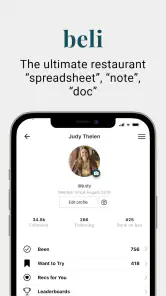
After using Beli as a restaurant memory and coordination aid, I see its strongest value in the space between a private notebook and a public review platform. It helps me express what I actually prefer, while still leaving room for conversation when a household needs to compromise.
The app does not make every food decision automatic, and it should not. Its ranking system is most useful when I treat it as a personal signal: a quick way to remember which restaurants deserve attention first. For shared-device use, clear account boundaries and a little respect for individual lists matter more than trying to turn every preference into one household score.
Beli App has built a focused Food & Drink experience rather than an all-purpose restaurant utility. That focus is its main advantage and its main limitation. I would recommend it to anyone who wants to organize restaurant preferences and make recurring food decisions less chaotic. I would pair it with maps, calendars, or messaging when practical coordination is needed, but I would not expect those tools to replace the personal ranking that makes Beli worth keeping.
With a free price, an Everyone rating, support for Android 7.0 and later, and a current 9.9.0 release, it is easy for interested users to try without changing their entire routine. My advice is to begin with a small, honest list: places you would genuinely suggest, not every restaurant you have heard about. That gives the rankings useful meaning from the start and makes the app much more helpful the next time someone asks where the household should eat.
Beli Frequently Asked Questions
Is Beli free to download, and what devices does it support?
Beli is a free Food & Drink app from Beli App, with an Everyone content rating. It is available for Android and iOS, though availability can vary by country and device. The Android version requires Android 7.0 or later. Check the relevant app store page on your device for compatibility before installing, and review any purchase details shown there.
What is Beli and what can I use it for?
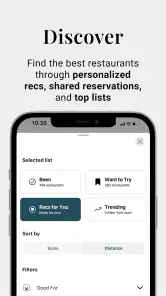
Beli is a social discovery app designed to help users keep track of restaurants they have visited, rate their experiences, and discover places recommended by friends or other members. After creating an account, you can build personal lists, rank restaurants, add notes, and browse suggestions based on your tastes. It is especially useful for planning meals, saving recommendations, and avoiding the problem of forgetting where you enjoyed eating.
How does Beli’s restaurant ranking and rating system work?
Beli focuses on personal rankings rather than relying only on a universal star score. You can add restaurants to your list and compare them with places you have already visited, creating an order that reflects your own preferences. This makes the recommendations feel more personalized, although it also means the results depend on how actively you rate restaurants and how closely your friends’ tastes match yours. The app may also let you include notes, tags, and visit details.
Can I use Beli without sharing my restaurant activity publicly?
Beli includes social features, so your profile, restaurant lists, rankings, and interactions may be visible to friends or other users depending on your account and privacy settings. Before adding personal information, review the available controls for profile visibility, contacts, notifications, and sharing. If you prefer a private experience, limit what you publish and avoid including sensitive details in restaurant notes, reviews, or location-related activity.
Does Beli require an account, and is it free to download?
Beli can generally be downloaded at no cost, but using its main features requires creating or signing into an account. Registration may involve information such as an email address, phone number, or an existing social login, depending on the current version and platform. The basic experience is typically free, while availability of optional paid features, subscriptions, or other in-app purchases can change, so check the store listing before downloading.
Pros
- Quickly share and discover recommendations from people you trust.
- Personalized suggestions can make finding products more engaging.
- Useful for saving items you may want to revisit later.
- Social features encourage discussion around products and purchases.
- Clean browsing experience makes exploring recommendations straightforward.
Cons
- The quality of recommendations depends heavily on your social network.
- Some features may require creating an account and sharing personal data.
- The catalog may feel limited in certain regions or product categories.
- Frequent shopping content can encourage impulse purchases.
- Price and availability information may not always be up to date.
- Category
- Food & Drink
- Version
- 9.9.0