AudioToon: Audiobooks & Dramas
- 19.00
- 2.8
- Installs
- 500.00K
- Price
- Free
Screenshots
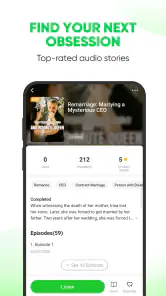
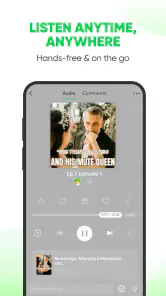
Analysis by Reviewed
I approached AudioToon: Audiobooks & Dramas as an audio-first entertainment app rather than a conventional music player. Its focus is on narrated books, short dramas, and story-led listening, which makes it a useful option when I want something more involving than a playlist but less demanding than sitting down to watch a full show. The app is free to install, aimed at Teen users, and developed by MangaToon HK Limited.
My overall impression is mixed but specific: the concept is appealing, especially for people who enjoy serialized fiction, yet the experience depends heavily on how comfortably you can browse, read small amounts of on-screen information, and tolerate a catalog that may encourage continued discovery. The average rating of 2.8 from around 1.8 thousand ratings suggests that the app does not work equally well for everyone. I can understand both sides. When the right story appears, it is an easy companion for a commute or quiet evening. When navigation or content discovery becomes frustrating, the entertainment value drops quickly.
How AudioToon feels to use from the first screen onward
Readability and navigation shape the whole experience
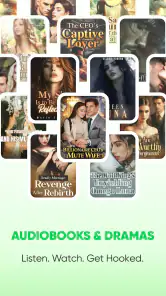
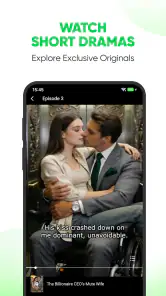
The most important thing to understand is that this is not simply an audiobook shelf. The combination of short dramas, audiobooks, and novels creates a mixed browsing environment. I found that distinction useful because it changes how I decide what to open. A short drama suits a quick break, while an audiobook or novel asks for a longer commitment. The app works best when I treat those formats as separate moods rather than expecting every title to behave like a traditional audiobook.
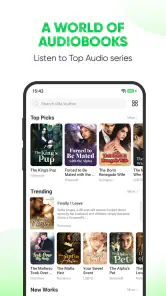
That mixture can also make the interface feel busier than a focused listening app. A person who already knows exactly what they want may prefer a dedicated audiobook service with clearer author, narrator, duration, and library tools. AudioToon is more discovery-oriented in spirit. I would use it when I am willing to browse and sample story ideas, not when I need the fastest possible route to one specific recording.
For readability, the practical challenge is the amount of text involved in choosing a story. Titles, descriptions, episode labels, and category cues all matter before pressing play. Someone with reduced vision, dyslexia, or limited concentration may need more time to distinguish one series from another. I recommend slowing down rather than opening the first attractive cover: read the short description carefully, check whether the item is a drama, audiobook, or novel, and decide whether its format matches the time you have available.
That small habit prevents one of the app’s likely frustrations: beginning a title expecting a complete listening experience and discovering that it is structured around short installments or a different storytelling format. I found the app easier to manage when I chose one series intentionally, listened to an episode, and then returned to it through the same path instead of repeatedly browsing the home feed.
The current version is 3.37.02, and the app supports devices running Android 6.0 or later. That broad operating-system requirement is helpful for people using older Android hardware, although compatibility alone does not guarantee a comfortable experience on every screen size. On a smaller phone, dense cover art and text can make scanning less relaxed than on a larger display. I would test the reading and browsing comfort early, especially if you rely on enlarged system text or have difficulty with crowded layouts.
More From Our News Desk

Clash of Clans Is Won Between the Battles

Android Auto Makes the Case for Quieter Car Software

MobiOffice: Transforming Mobile Productivity with Seamless Integration

EA SPORTS FC™ Mobile Soccer: Redefining Mobile Sports Gaming

How Microsoft OneDrive Became a Mobile Productivity Giant

How Google Translate Breaks Language Barriers Effortlessly
Audio reduces screen dependence, but does not remove it
The strongest inclusive quality here is the central role of listening. Once a story is playing, I can give my eyes a break and follow the content while doing a simple task. That matters for people who find prolonged reading tiring, for listeners with limited vision, and for anyone who wants entertainment without holding a screen continuously. It also gives the app a different value from a novel-reading application: the story can accompany a routine instead of demanding complete visual attention.
Still, the app is not screen-free. I need the display to select a title, understand its format, move between stories, and handle account or purchase decisions. Users with visual impairments may therefore find the listening portion more comfortable than the discovery portion. The practical workaround is to prepare a small queue during a moment when screen use is easy, then return to that selected story later. That workflow reduces repeated browsing and makes the audio side more accessible in everyday use.
For users who are sensitive to sound, the difference between narrated fiction and dramatic audio may be significant. A drama can involve more changes in voice, pacing, and intensity than a calm audiobook chapter. I would start at a low volume and sample unfamiliar titles in a quiet place before using them in a busy environment. This is not only about comfort; it helps determine whether the production style suits you before you invest time in a long series.
People who are hard of hearing should approach the app with a more cautious expectation. Audio-led entertainment is naturally less useful when speech cannot be followed clearly, and the surrounding browsing text does not replace a full visual version of every performance. If your priority is reading every story rather than listening to it, the novel side may be more relevant, but I would not choose this app primarily for accessibility to spoken content without first checking whether the available presentation works for you.
Everyday situations where the format makes sense
I found the best use case during repetitive, low-risk routines. Imagine preparing breakfast, folding laundry, or taking a familiar walk: a short drama can fill the gap without requiring the visual concentration of video. The app is also suitable for a short rest between tasks, when an episode feels more manageable than starting a full-length book. Its story focus gives those moments more structure than background music, especially when I want characters and plot rather than a passive soundscape.
Travel is another possible fit, but I would plan ahead. Browsing while moving through a station or crossing a street is a poor idea because the app asks for visual attention at the exact moment situational awareness matters. I would choose the title before leaving, start playback in a safe place, and avoid changing episodes while walking near traffic. This is a simple but important distinction: audio can support hands-busy situations, but selecting content is still a screen task.
The same applies at work or school. AudioToon can suit a break or a repetitive personal task, but story dialogue competes with reading, meetings, studying, and conversations. I would not treat it as harmless background sound when I need to process language elsewhere. A musical playlist may be less distracting for concentration, while this app is better when I can give at least part of my attention to the narrative.
For families, the Teen content rating is a useful boundary rather than a guarantee that every title will suit every listener. I would preview descriptions and choose content together with younger users instead of handing over the entire catalog without discussion. The app may be appealing to teenagers who enjoy serialized fiction, but parents should remain involved in deciding what fits the household’s expectations and the child’s maturity.
Small workflow choices that improve the experience
My first practical tip is to separate discovery from listening. Browse when you have time to read descriptions, then commit to one title for a few minutes before judging it. This avoids the constant switching that can make a story catalog feel overwhelming. If a series does not hold your attention, move on deliberately rather than allowing the home screen to dictate the next choice.
My second tip is to use the app according to episode length and energy level, even if you are only estimating from the presentation. Short dramas are naturally better for brief windows, while an audiobook or novel may reward a quieter session. Matching the format to the situation makes the service feel more flexible and prevents the common mistake of starting a long story when you only have a few minutes.
My third tip concerns shared spaces. Narration and dramatic dialogue can be intrusive to people nearby, so headphones or a private listening space may be necessary. That creates a trade-off for users who need to hear environmental sounds, use hearing devices, or avoid in-ear audio. In those situations, a speaker at a low level may be safer indoors, while outdoor listening should never interfere with awareness of vehicles, cyclists, or other people.
A fourth useful habit is to keep purchase decisions separate from casual browsing. The app is free, but it includes in-app purchases ranging from $0.99 to $99.99 per item. That is a wide enough range that I would not tap a purchase prompt casually, especially when following a serialized story can create pressure to continue. I recommend checking the amount, deciding on a personal limit, and involving a parent or account owner when appropriate. Free access can be attractive, but the story structure may make paid continuation feel more tempting than expected.
Where it compares well, and where alternatives are stronger
Compared with a standard music streaming app, AudioToon is much more narrative-driven. Music is usually easier to leave running in the background, while this app asks me to follow characters, scenes, and spoken details. If I want a soundtrack for exercise or concentration, a music service is the better tool. If I want a plot during a routine, AudioToon offers a more distinctive reason to open it.
Compared with a dedicated audiobook platform, the advantage is variety in storytelling style. Short dramas and novels can make the experience feel broader than a shelf of conventional recordings. The disadvantage is that people who care about precise audiobook controls, a highly organized personal library, or a straightforward author-and-narrator search may find a specialist service more efficient. AudioToon’s appeal is closer to serialized entertainment discovery than to a quiet digital bookshelf.
Compared with video drama apps, listening is less visually demanding and usually easier to fit around household tasks. That is valuable for anyone who cannot keep looking at a screen. The compromise is that visual performances, subtitles, facial expressions, and scene design are not the focus. Someone who needs visual context to understand a story may prefer video, while someone trying to reduce screen time may prefer this app.
The novel component also creates a choice between reading and listening. Reading can be better for users who need to control pace, revisit a sentence, or rely on text rather than speech. Listening can be better for users with eye fatigue or limited time for holding a phone. I would choose based on the specific title and my physical circumstances rather than assuming one format is universally more accessible.
Barriers that may affect different abilities
The biggest barrier is the gap between accessible listening and accessible navigation. A person may be perfectly comfortable hearing a story but struggle to identify the right item among covers and descriptions. Someone with motor limitations may also find repeated tapping, scrolling, or precise selection tiring, particularly if they are trying to browse one-handed while doing another task. I would not rely on the app during a moment when fine control is already difficult.
Attention and memory can create another challenge. Serialized stories often require remembering characters, episode order, and unfinished plot points. That is part of the appeal, but it can become tiring for users who prefer self-contained content. I found that choosing one series at a time was less mentally demanding than tracking several at once. If you frequently lose your place, a dedicated audiobook app with a stronger library workflow may be easier to live with.
Language processing is worth considering too. Dramatic pacing, multiple speakers, and emotional delivery can make audio engaging, but they can also make comprehension harder for listeners who need slower speech or frequent pauses. I would sample content before committing to a long run, particularly if you are listening in a second language or in a noisy room. The same title that feels lively to one person may feel rushed to another.
There is also the issue of dependence on a personal device. Battery life, notifications, headphones, and the surrounding environment all affect the experience. I would avoid starting an important episode when the phone is nearly empty or when I know I will be interrupted repeatedly. The app works best when the technical setup is simple and the listening window is realistic.
Who I would recommend it to
I would recommend AudioToon to listeners who enjoy discovering fictional series, want an alternative to music during routine tasks, and are comfortable moving between spoken dramas, audiobooks, and text-based novels. It is particularly interesting for someone who wants entertainment that can shift with their available attention: listening when their eyes are busy, then reading when they have time to focus on the screen.
I would be more selective for users who need a carefully structured audiobook library, depend on highly predictable navigation, or want a completely visual-free experience. I would also point heavy readers toward a dedicated reading service if text customization and uninterrupted reading are their main priorities. The app’s mixed identity is its attraction, but it is also the reason it will not be the best replacement for every specialist alternative.
The audience size is substantial, with over 500 thousand installs, but popularity does not remove the need to test personal comfort. The Teen rating, free entry point, and broad Android support make it easy to try, while the 2.8 average shows that expectations should remain realistic. I would install it for the storytelling formats, not because I expect a flawless universal interface.
My inclusive verdict after using the app
AudioToon succeeds most clearly when it lets me trade continuous screen use for spoken fiction. That makes it useful in carefully chosen situations and potentially valuable to people who find ordinary reading tiring. Its mix of dramas, audiobooks, and novels gives it more personality than a basic audio player, and I like the way a short story can fit into a small pocket of free time.
At the same time, inclusive access is uneven. The listening idea is welcoming, but the journey to the right story still depends on visual browsing, reading, repeated selection, and personal tolerance for serialized content. Users with vision, motor, hearing, attention, or sensory needs may experience different parts of the app very differently. My advice is to test one title in a quiet setting, prepare content before entering a busy environment, and keep purchase decisions deliberate.
My final recommendation is cautious but positive: try it if story-led listening appeals to you and you want a free way to explore short dramas alongside audiobooks and novels. Skip it in favor of a specialist reader, audiobook service, or music app when precise controls, minimal browsing, or background listening matter more than discovery. For the right listener, it can turn an ordinary routine into a small narrative break; for everyone else, its mixed format may feel more demanding than its simple premise suggests.
AudioToon: Audiobooks & Dramas Frequently Asked Questions
What devices and operating systems can run AudioToon: Audiobooks & Dramas?
AudioToon is a mobile app for listening to stories and dramas, and its minimum Android requirement is version 6.0. Before downloading, check that your device meets this requirement and has enough available storage for the app and any audio you choose to keep on your device. The app is free to download, though some content or features may involve in-app purchases.
What is AudioToon: Audiobooks & Dramas?
AudioToon: Audiobooks & Dramas is an audio entertainment app focused on narrated stories, audiobooks, serialized dramas, and other spoken-word content. Its catalog may include fiction, romance, mystery, fantasy, and dramatic productions, depending on your region. The app is designed for listening rather than reading, making it suitable for commutes, relaxing, or enjoying stories while doing other activities.
Is AudioToon: Audiobooks & Dramas free to use?
AudioToon can generally be downloaded and used without an upfront purchase, but access to every audiobook, episode, or premium feature may depend on the app’s current subscription and monetization model. Some content may be available freely, while other titles can require a subscription, credits, or in-app purchases. Check the pricing page and trial conditions before confirming any payment.
Does AudioToon support offline listening?
Offline listening may be available for selected audiobooks or drama episodes, allowing you to download content before traveling or entering an area with weak internet service. Availability can vary by title, account type, and app version. It is best to download episodes over Wi-Fi, confirm that they appear in your library, and check whether offline access expires after a subscription ends.
What kind of content can I find in AudioToon?
The app is aimed at listeners who enjoy narrated entertainment, including audiobooks, episodic audio dramas, serialized fiction, and character-driven stories. The exact selection can change over time and may differ between countries because of licensing agreements. Before downloading, browse the categories and descriptions to confirm that the available genres, languages, narration styles, and episode lengths match your preferences.
Pros
- Large selection of audiobooks
- dramas
- and serialized audio stories
- Dramatized productions with voice acting and sound effects
- Useful for listening during commutes
- workouts
- or relaxing
- Regularly updated catalog with new episodes and titles
- Supports discovering niche genres and independent audio content
Cons
- Some content may require a subscription or separate purchases
- Free listening options can include advertisements or limitations
- Audio quality and narration may vary between different productions
- Certain titles or features may depend on regional availability
- Long episodes can consume significant mobile data when streamed
- Category
- Music & Audio
- Version
- 3.37.02