Astra - Life Advice
- 488.00
- 4.4
- Installs
- 500.00K
- Price
- Free

Screenshots
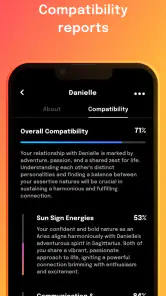
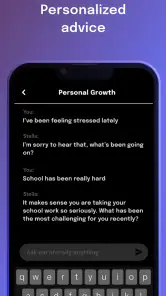
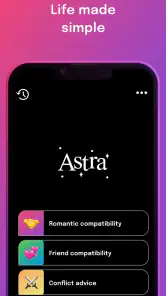
Analysis by Reviewed
I approached Astra - Life Advice as a practical lifestyle app rather than as a source of absolute answers. Its central appeal is easy to understand: it uses astrology as a simple way to reflect on moods, choices, relationships, and everyday uncertainty. After spending time with it, my view is that Astra works best when you treat its guidance as a prompt for self-reflection, not as a replacement for judgment, planning, or professional advice.
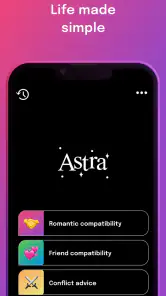
That distinction matters because astrology apps can quickly become repetitive or overly dramatic. Astra feels more approachable than that kind of experience. Its store summary, “Astrology made simple,” describes the basic direction well, but the useful part is how easily the idea fits into a normal routine. I can imagine opening it during a quiet morning, checking a thought before a difficult conversation, or using a short reading to put a vague feeling into words.
What makes Astra useful in everyday life
The app comes from Vert Media Partners and sits in the Lifestyle category, which feels appropriate. It is not presented as a game with goals to complete, nor as a conventional productivity tool with tasks and deadlines. I see it more as a small reflective space: something to consult when I want a different angle on what I am feeling or considering.
The strongest quality is accessibility. Someone who knows very little about birth charts or astrological terminology can approach Astra without first studying a complicated system. That makes a difference for casual users. Many astrology services overwhelm newcomers with symbols, house placements, and specialist language. Astra’s simpler approach is easier to absorb when I only have a few minutes and want a readable thought rather than a lesson.
Its rating is around 4.4 from roughly 23 thousand ratings, and the app has passed half a million installs. Those figures suggest that the straightforward format has found a sizable audience. They do not prove that every reading will feel personal, but they do indicate that Astra is not an obscure experiment with no established user interest.
One practical way I would use it is before making a decision that feels emotionally larger than it objectively is. Imagine receiving a short message from a friend that seems unusually cold. Instead of immediately replying defensively, I could open Astra, read the day’s guidance, and use the pause to ask myself what I actually know and what I am assuming. The value is not that the app can reveal the friend’s intentions. The value is that it creates a moment between emotion and reaction.
That is also where Astra compares favorably with generic inspirational quote apps. A quote may sound pleasant but have little connection to the situation I am facing. Astrology gives the reflection a framework, which can make it easier to engage with. On the other hand, a mood journal would usually offer deeper personal accuracy because it is built from my own words and patterns. Astra is quicker and more entertaining, while journaling is more demanding but potentially more revealing.
More From Our News Desk

Clash of Clans Is Won Between the Battles

Android Auto Makes the Case for Quieter Car Software

MobiOffice: Transforming Mobile Productivity with Seamless Integration

EA SPORTS FC™ Mobile Soccer: Redefining Mobile Sports Gaming

How Microsoft OneDrive Became a Mobile Productivity Giant

How Google Translate Breaks Language Barriers Effortlessly
A low-pressure way to build a reflection habit
I think the app is most effective when used lightly and consistently. Reading a long stream of predictions in one sitting can make the experience feel vague, especially if I am searching for a specific answer. A better workflow is to read one piece of guidance, identify the part that connects with my day, and write down a concrete intention in my own words.
For example, if the reading encourages patience, I would not leave that idea at the level of a general slogan. I might decide to wait before sending an important email, ask one clarifying question in a meeting, or postpone a purchase until I have compared alternatives. This turns the app from passive entertainment into a small decision-making ritual while keeping responsibility with me.
A less obvious benefit is that astrology can help users notice the subjects they repeatedly return to. If I keep looking for reassurance about work, relationships, or money, that repetition tells me something about my concerns even if the readings themselves are broad. In that sense, Astra can act as a mirror for attention. The useful information may come less from the prediction and more from noticing which parts I keep hoping will be mentioned.
I would also recommend avoiding the habit of checking the app every time something uncertain happens. Frequent consultation can make ordinary choices feel dependent on an outside signal. Used once as a prompt, Astra can encourage reflection. Used compulsively, it may make confidence harder rather than easier. That is an important trade-off for anyone who tends to seek repeated reassurance.
Simple presentation, with limits
Astra’s simplicity is both its main strength and its clearest limitation. New users benefit from not being buried in technical explanations, but experienced astrology readers may find the experience less satisfying if they want detailed chart interpretation or a more structured study of astrology. If I already understand planetary placements and expect extensive customization, a specialist astrology service may offer more depth.
The app also cannot know the full context of a personal situation. A short reading may feel relevant because its language is open enough to apply to many lives. That is not necessarily a flaw; broad reflection is part of the appeal. Still, I would be cautious about treating a general message as evidence about another person, a medical concern, a financial decision, or a major life change.
This is where Astra should be separated from therapy, counseling, financial planning, and serious research. It may help me frame a feeling, but it cannot assess risk or replace qualified support. Someone dealing with persistent distress should look beyond a lifestyle app. Someone making a high-stakes decision should gather direct evidence and speak with the right professional.
The Teen content rating also makes the app feel suitable for a younger audience, but that should not be confused with unlimited suitability for every topic. Teen users may enjoy the accessible tone, especially around friendships and self-image, yet they still need healthy boundaries around predictions and emotional dependence. I would encourage younger users to treat the readings as entertainment and reflection rather than instructions.
What the free experience means for different users
Astra is free to download, which lowers the barrier to trying it without committing money at the start. That is useful for anyone who is curious but unsure whether astrology belongs in their routine. The app includes in-app purchases priced at $6.99 per item, so I would pay attention to which parts are available without spending and decide whether any optional purchase genuinely adds value before buying.
My advice is to use the free experience long enough to answer a simple question: do I enjoy the app’s style, and does it help me reflect in a healthy way? If the answer is no, an upgrade is unlikely to solve the underlying problem. If the answer is yes, the purchase should still be judged by how often I would use the added material, not by the promise of more certainty.
This pricing structure creates a meaningful difference from a paper journal or a free notes app. Those alternatives require more effort but do not frame reflection around astrology. Astra saves time and adds a themed experience, while a journal gives me complete control over the content. For a user who wants quick guidance, Astra is easier. For someone who wants a private record of changing thoughts, a notes app may be the better long-term tool.
The current version is 2.5.2, and the app runs on Android devices using version 7.0 or later. That broad compatibility makes it accessible to people who are not using a recent phone. I still recommend keeping expectations realistic on older hardware: compatibility means the app can run on supported software, not that every device will feel equally smooth or modern.
Who will get the most from it
I would recommend Astra to curious beginners, casual astrology readers, and people who enjoy short prompts for thinking about their day. It is a good fit if I want something more personal than a random quote but less demanding than a full birth-chart service. It can also suit someone building a morning routine who likes to begin with a question or theme rather than a checklist.
It may be particularly useful for people who struggle to start journaling. A blank page can feel intimidating, while a reading gives me an immediate subject. I can respond to it, disagree with it, or adapt it into a question such as “What am I avoiding today?” That small starting point can make reflection feel less like homework.
I would not recommend making Astra the main tool for someone who wants precise predictions, detailed astrological education, or evidence-based personal guidance. A dedicated chart platform may be better for technical astrology. A mood tracker may be better for identifying emotional patterns. A calendar or task manager may be better for turning intentions into action. Astra’s role is narrower, and it works best when I let it stay narrow.
Another useful boundary is to decide in advance how I will respond when a reading feels negative. I would not cancel plans, confront someone, or make a major purchase solely because of a prediction. Instead, I would translate the message into a neutral question: what can I verify, prepare for, or communicate more clearly? This approach preserves the enjoyable part of astrology without handing over control of my decisions.
Choosing it over another kind of daily prompt
The choice between Astra and a conventional horoscope feed comes down to what I want from a reading. If I enjoy astrology as a lens and want a quick thought to consider, Astra is a natural fit. If I mainly want a stream of entertaining predictions, a general horoscope source may be enough. If I want to understand what is changing in my own mood over time, a tracker or journal is better suited because I can compare my own entries instead of interpreting broad guidance.
For a realistic routine, I would check Astra while having breakfast, then choose one small action that is already within my control. If the prompt nudges me toward clearer communication, I might draft a message and reread it before sending. I would not wait for another reading to decide whether to send it. That distinction keeps the app useful without letting a daily ritual become a source of delay.
There is also a practical trade-off between a prompt and a plan. Astra can give me a starting theme, but it is not a substitute for a calendar, reminder, or written task. When a reflection points toward something concrete, I would move that intention into the tool I already use to follow through. That handoff is a small step, but it prevents a pleasant reading from becoming the only action I take.
Trying it without making it a commitment
Someone wondering whether the app requires astrology experience can approach it as a beginner; its accessible presentation is part of the appeal. I would start by reading casually rather than trying to decode every message as a personal forecast. The more useful question is whether the wording helps me think, not whether it can prove what will happen.
It is also reasonable to try the free version before deciding whether the optional purchases matter. I would first notice whether I return to the app naturally, whether its prompts feel useful rather than stressful, and whether I can leave a reading behind when it does not fit. If I find myself repeatedly reopening it to settle the same worry, that is a sign to step back rather than pay for more reassurance.
Switching away is straightforward in principle because Astra does not need to become the center of a larger system. If it stops being helpful, I can keep the reflection habit and replace the prompt with a journal question, a mindfulness exercise, or a conversation with someone I trust. The habit of pausing is the part worth keeping; the astrology framing is optional.
My final view after using it
Astra - Life Advice is most convincing as a gentle reflection tool, not a crystal ball. Its easy entry point, lifestyle focus, and simple astrological framing make it approachable for people who want a few thoughtful minutes in their day. The experience can be surprisingly useful when it helps me slow down, name a concern, or turn a vague feeling into a practical next step.
Its weaknesses come from the same design choice that makes it friendly. Simplicity can mean less depth, and broad guidance can feel interchangeable when I am looking for a precise answer. The presence of optional purchases also means I would explore the free side carefully before spending anything. Most importantly, the app should remain a supplement to personal judgment rather than an authority over it.
For me, the best routine would be brief: open Astra once, read with an open but skeptical mind, write one sentence about what applies, and then return to real-world evidence and action. In that role, it earns a place among lightweight lifestyle apps. If I wanted technical astrology, detailed self-tracking, or professional support, I would choose something else. But for a free, approachable introduction to astrology-based reflection, Astra is worth trying.
Astra - Life Advice Frequently Asked Questions
Is Astra - Life Advice suitable for teenagers?
Astra - Life Advice has a Teen content rating, which makes it important for parents and younger users to consider whether its themes and guidance feel appropriate. The app focuses on lifestyle and astrology-related reflection, so it may touch on personal situations or relationships. Families can review the app together and discuss how to use its advice thoughtfully.
What does Astra mean by making astrology simple?
Astra’s short store description is “Astra,” and its summary presents the idea of astrology made simple. The app is aimed at people who want an accessible way to explore astrology and personal reflection on a mobile device. If you are new to astrology, it may be a convenient starting point, while experienced users may prefer to judge whether its approach suits their interests.
Who develops Astra - Life Advice, and what kind of app is it?
Astra - Life Advice is a lifestyle app from Vert Media Partners, built around the idea of making astrology simple. It is intended for people who want a convenient way to explore personal guidance and reflective prompts on a phone. The app is rated for Teen audiences, so users and families should consider that age guidance when deciding whether it is suitable.
What is Astra - Life Advice, and how does it work?
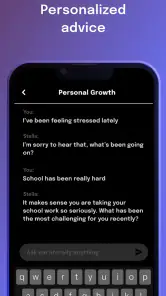
Astra - Life Advice is designed to provide users with personalized guidance, reflections, and practical suggestions for everyday situations. After entering a question or describing a concern, the app generates advice intended to help you think through relationships, decisions, emotions, and personal goals. It should be treated as a supportive tool for reflection rather than a replacement for professional counseling, medical care, legal advice, or financial guidance.
Is Astra - Life Advice free to download and use?
The app is free to download, but some features, advice categories, extended conversations, or personalized tools can require in-app purchases. Individual purchases are listed at $6.99 per item. Before confirming payment, review the purchase details shown in your app store so you understand what is included. Availability and prices may also differ between Android and iOS, as well as by country.
Pros
- Offers practical guidance for everyday personal challenges.
- Simple interface makes advice easy to browse and understand.
- Covers several areas of personal growth and daily life.
- Can provide quick inspiration when you need a different perspective.
- Useful for reflecting on habits
- choices
- and relationships.
Cons
- Advice may feel general rather than tailored to your situation.
- Some suggestions require personal judgment before being followed.
- Content quality can vary between different topics.
- Not a substitute for professional medical or psychological support.
- Frequent notifications may become distracting if left enabled.

- Category
- Lifestyle
- Version
- 2.5.2