Asbury Park Press: Local News
- 124.00
- 3.2
- Installs
- 50.00K
- Price
- Free

Screenshots





Analysis by Reviewed
I spent time with Asbury Park Press: Local News as a reader who wants nearby reporting without sorting through a broad national news feed first. It is a free news and magazines app from USA TODAY Co., built around local and national coverage, photography, and video. The focus is clear: if Asbury Park Press is the publication you already follow, this app offers a more direct way to keep up with its reporting on a phone or tablet.
My overall impression is mixed but useful. The app makes local news feel more immediate than a general-purpose news reader, and the combination of written stories, images, and video gives important coverage more context. At the same time, its average rating of 3.2 from around 350 ratings suggests that the experience is not equally satisfying for everyone. I can understand that reaction. This is a publication-specific app, not a complete replacement for every news source, and its value depends heavily on whether Asbury Park Press is relevant to your daily life.
How the app feels today
The strongest part of the experience is its editorial identity. Instead of presenting an endless mixture of unrelated headlines, the app points me toward local reporting connected to the Asbury Park Press audience while also including national news. That balance matters when I want to know what is happening close to home but still want a broader view of the day.
The local emphasis is especially helpful for readers who find national news apps too noisy. A general news aggregator may give me several versions of the same major story, while a publication app can make room for community developments, regional events, and issues that would otherwise be easy to overlook. I would use this app when local relevance matters more than having every possible source in one place.
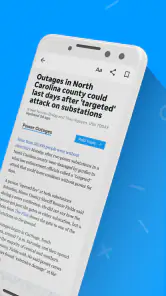
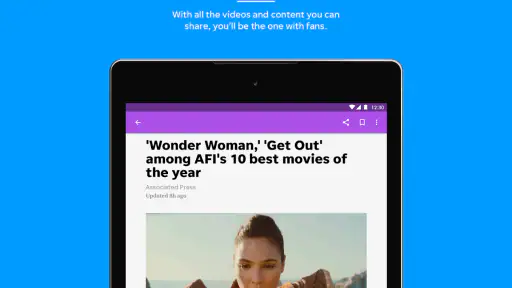
Photography is another meaningful part of the presentation. Local stories often depend on place: a road project, a public gathering, a storm effect, or a change in a familiar neighborhood can be difficult to understand from text alone. Strong images make those reports easier to scan and can help me decide which articles deserve a closer read. The video component adds another layer for stories where interviews, scenes, or demonstrations communicate more effectively than a written summary.
That does not mean every reader will prefer this format. If I only want short headlines, a compact news widget may feel faster. If I want a highly personalized feed assembled from dozens of publishers, an aggregator will probably offer more control. This app makes more sense when I value the voice and coverage of one local publication rather than treating news as a completely interchangeable stream.
A practical morning routine
A realistic way to use it is during a short morning check-in. I can open the app before work, scan the local headlines, look for developments that could affect travel or community plans, and then move to national coverage for the larger picture. The visual elements help me recognize important stories quickly, while longer articles are there when I have more time later.
More From Our News Desk

Clash of Clans Is Won Between the Battles

Android Auto Makes the Case for Quieter Car Software

MobiOffice: Transforming Mobile Productivity with Seamless Integration

EA SPORTS FC™ Mobile Soccer: Redefining Mobile Sports Gaming

How Microsoft OneDrive Became a Mobile Productivity Giant

How Google Translate Breaks Language Barriers Effortlessly
I would not treat that routine as a substitute for checking every detail of a developing story. News changes quickly, and a first read may not include the full context that appears later. My better habit would be to use the app for discovery, read the complete article when a topic affects me directly, and return to the relevant story rather than relying only on the headline.
One useful trade-off is that a focused local app can reduce distraction while also narrowing perspective. I am less likely to lose time in unrelated entertainment or international headlines, but I am also depending more on one editorial outlet. For major public issues, I would compare the reporting with another reliable source instead of assuming that one article represents every angle.
What the version tells me about its direction
The current version is 8.10.3, and the app has been available since May 3, 2012. That long presence suggests a product intended to remain part of a publication’s regular reading workflow rather than a temporary experiment. I see the current release as an established iteration of a local-news product, not as a brand-new app still searching for its purpose.
That history is relevant to existing users. People who already identify with Asbury Park Press are likely to understand the app’s role immediately: it is a mobile doorway into the publication’s reporting, with national material included alongside local coverage. New users may need a little time to decide whether the editorial mix matches their expectations, particularly if they arrived looking for a broad, customizable news service.
I would be careful not to assume that a newer version automatically changes every part of the experience. Version numbers show ongoing product maintenance, but they do not by themselves tell me that the app has been redesigned or that every previous annoyance has disappeared. What I can say from using the current release is that the app remains centered on reading and watching news from this publication, rather than trying to become a general social platform or a full news aggregator.
Who benefits most from the local focus
The clearest audience is anyone who lives in, works in, or has close ties to the area covered by Asbury Park Press. That includes residents following local decisions, people checking regional developments, and former residents who want a connection to news from home. For those readers, the app’s narrow editorial focus is an advantage rather than a limitation.
It can also suit someone who wants a calmer alternative to a crowded national feed. The local angle gives the reading session a purpose. I can open it with a specific question—what has changed nearby, what should I know today, or which community story deserves attention—and leave once I have the answer.
On the other hand, I would skip it if my main goal is international coverage, financial market monitoring, technology news, or a single dashboard that combines many publications. The app may still contain national reporting, but its identity is not built around replacing every specialist source. A broader news reader would be a better primary tool for someone whose interests jump constantly between unrelated subjects.
The age rating is Everyone 10+, which makes it broadly suitable for family devices, though I would still use normal judgment when children are reading current-events coverage. News can include difficult subjects even when an app is not aimed at adults only. The rating is useful as a general guide, not a promise that every article will feel comfortable for every reader.
Free access and the question of value
The app itself is free to download, which makes trying it straightforward. That is helpful for readers who want to see whether the local coverage fits their routine before committing time to it. However, in-app purchases range from $19.99 to $69.99 per item, so I would pay attention to any purchase screen and read the terms presented there before confirming anything.
This pricing structure changes how I judge the app. Free installation is not the same as unlimited access to every part of a publication’s offering. If I only want occasional headlines or a quick look at local developments, the free experience may be enough. If I plan to use it as my main source for detailed local reporting, I would first confirm what content is available in the version I am using and whether a purchase matches my reading habits.
My practical advice is to avoid buying immediately just because a story interests you. I would spend several days checking how often I return, whether the local coverage is genuinely useful, and whether the app fits better than the publication’s other reading options. A purchase makes more sense when the app becomes part of a consistent information routine, not when I open it once for a single headline.
Where the experience can feel less convenient
The narrow publication focus is also the main limitation. A reader who wants one app to cover local, national, international, sports, business, science, and culture from many viewpoints may find the selection too restricted. Even with national news included, the app is still anchored to the Asbury Park Press identity. That can feel reassuring when I want local relevance, but limiting when my interests are wide.
There is also a difference between discovering a story and understanding it fully. Photos and video make the feed more engaging, but visual presentation can encourage quick scanning. I have to make a deliberate effort to open the complete article, check the date and context, and distinguish a developing report from a settled one. The app supports a fast news habit, but it does not automatically make that habit thoughtful.
The rating of 3.2 is another reason I would approach it with realistic expectations. A rating around that level does not tell me which specific problems affected other readers, but it does signal that the app may not feel polished or convenient for everyone. I would test it on my own device before making it central to my daily routine, especially if I care about a very smooth reading experience.
Readers who depend on advanced personalization should also consider the trade-off. A publication-centered app may be easier to understand than a heavily customizable aggregator, but it may give me less control over how every topic is ranked or filtered. That is not automatically a flaw; it reflects the editorial model. Still, users who want to build a precise multi-source news profile may be happier elsewhere.
Small habits that make it more useful
I found that the app works best when I use it with a clear purpose instead of opening it repeatedly out of habit. I might begin with local headlines, choose one article that affects my area, and then use the national section only after I understand what is most relevant nearby. This keeps the local mission from getting buried under general headlines.
For video-heavy stories, I would watch when I have enough attention to absorb the material rather than treating video as background noise. A short clip can show atmosphere or a speaker’s delivery, but it may not answer every practical question. Reading the accompanying article afterward is a better workflow when I need names, timelines, or specific details.
Another useful approach is to compare the app’s coverage with a second source when the subject matters personally. For example, if a local issue could affect my commute, neighborhood, or public services, I would use this app to find the story and then look for official information or independent reporting. That gives me the benefit of local discovery without making one outlet my only reference point.
I would also keep purchase decisions separate from reading urgency. A compelling breaking story can create pressure to unlock content immediately, but it is better to consider the overall value of the publication and my expected usage. The available purchase range makes this especially important for occasional readers, who may not receive enough day-to-day benefit from paying for access.
How it compares with common alternatives
Compared with a general news aggregator, Asbury Park Press: Local News feels more intentional and more geographically relevant. An aggregator is usually better for breadth, personalization, and comparing multiple publishers in one place. This app is better when I want a direct connection to one local newsroom and do not want the feed dominated by stories selected for a national audience.
Compared with reading news through a mobile browser, the app offers a more dedicated environment for returning to the publication. A browser is more flexible because it lets me move between sources quickly, but that flexibility can also make local coverage harder to find. The app reduces that searching step, which is valuable when I already know whose reporting I want.
Compared with social media, the app is a more focused starting point for news. Social platforms may surface local stories quickly, but they also mix reporting with commentary, reposts, and incomplete context. I would rather use this app to locate the original coverage, then use other channels only when I need additional perspectives or community reaction.
None of those alternatives is universally better. My choice would depend on the job. For one trusted local publication, I would choose this app. For a broad daily briefing, I would use an aggregator. For checking several sources on a complex issue, I would combine the app with a browser rather than expecting one tool to do everything.
What existing users should expect next
For current users, the most important expectation is continuity. The app’s long availability and current version indicate an ongoing product rather than a discontinued reader, but I would still judge future updates by practical improvements: easier reading, dependable access to local reporting, clear handling of purchases, and a smoother path from headline to full story.
I would watch for changes that improve the relationship between local and national coverage. The best evolution would preserve the publication’s regional identity while making it easier to find the topics I personally care about. Better organization would matter more to me than simply adding more visual material, because a local-news app succeeds when it helps readers understand what is relevant, not merely when it gives them more items to scroll through.
I would also pay attention to how the app communicates access and value. Since the download is free but individual in-app purchases can be substantial, clarity around what I am receiving is essential. A reader should be able to make an informed decision without confusing free installation with unrestricted access.
My final view is that this is a worthwhile app for the right reader, not a universal news solution. I would recommend it to a friend who follows Asbury Park Press, cares about nearby events, and appreciates a mix of articles, photography, and video. I would not recommend making it the only news app for someone who needs global breadth, extensive customization, or constant coverage from many specialist sources.
After using it, I see its strength as focus. The app gives local reporting a dedicated place on the phone, and that can make a real difference when broad news services overlook the details of a community. Its weaknesses are equally clear: the publication-specific scope, the need to think carefully about paid access, and an experience that may not satisfy readers expecting a highly polished all-purpose news hub. If local relevance is your priority, it is worth trying; if variety is your priority, pair it with another source.
Asbury Park Press: Local News Frequently Asked Questions
Can I use Asbury Park Press: Local News on my device?
Asbury Park Press: Local News is available for Android devices running version 8.0 or later. It is a News & Magazines app from USA TODAY Co., intended for readers who want local and national coverage on a mobile device. Check your device’s operating-system version before downloading so you can confirm compatibility.
What is Asbury Park Press: Local News?
Asbury Park Press: Local News is a news app focused on communities across the Jersey Shore and surrounding New Jersey areas. It provides access to local reporting, breaking news, politics, weather, sports, entertainment, business updates, and community stories. The app is designed for readers who want regional coverage in one place, whether they live locally or want to keep up with events in the area.
Is Asbury Park Press: Local News free to download and use?
The app is free to download, but access to all articles and premium content may depend on your Asbury Park Press subscription. Some stories may be available without payment, while other content can be limited by a digital paywall. In-app purchases range from $19.99 to $69.99 per item, so review the subscription options, trial terms, renewal conditions, and pricing shown in the app before purchasing.
What type of news and features are available in the app?
The application typically brings together local news, breaking stories, investigative reporting, high school and professional sports, weather information, traffic or community updates, entertainment, and opinion content. Depending on the current version, users may also find personalized feeds, saved articles, alerts for important developments, photo galleries, videos, and access to digital newspaper editions or other subscriber features. Its description highlights local and national news, photography, and video content.
Does the app send breaking-news notifications?
Yes, Asbury Park Press: Local News may send notifications about breaking stories, severe weather, major local events, sports results, and other important developments. Notifications can be useful if you want immediate updates, but they may become frequent during busy news periods. After installation, you can usually manage notification permissions and select the types of alerts you prefer through the app settings or your device settings.
Pros
- Covers detailed news and events specific to the Jersey Shore community.
- Push alerts help readers stay informed about breaking local developments.
- Includes local sports coverage
- obituaries
- and community announcements.
- Digital access makes the newspaper convenient to read while traveling.
- Supports saving articles for reading later when time or connectivity is limited.
Cons
- Some articles may require a subscription or offer only limited free access.
- Advertising can take up noticeable space within the app experience.
- Coverage is highly regional and may feel limited outside Monmouth County.
- Push notifications may become frequent unless carefully customized.
- Certain features may depend on a stable internet connection.
- Category
- News & Magazines
- Version
- 8.10.3