Antique Identifier Zophi
- 973.00
- 4.6
- Installs
- 100.00K
- Price
- Free

Screenshots
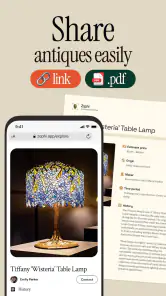
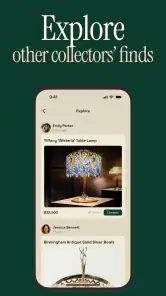
Analysis by Reviewed
I tried Antique Identifier Zophi with a simple question in mind: what can I realistically learn when I find an unfamiliar old-looking object and have nothing but my phone camera? That starting point matters, because this is not a replacement for an experienced dealer or a formal valuation. It is a Lifestyle app from 326 LAB - FZCO that turns a photograph into a quick first step for identifying an antique and judging whether it deserves more research.
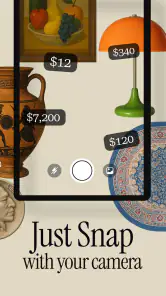
The appeal is immediate. You do not need to know the name of a vase, recognize a maker’s mark, or understand the difference between decorative age and genuine historical value before opening it. You point the camera at the object, submit the image, and use the response as a working hypothesis. In my experience, that makes the app most useful at the moment curiosity begins: while sorting a family cupboard, browsing a flea market, or deciding whether an inherited object should be handled more carefully.
It is free to install, carries a Teen content rating, and has reached over a hundred thousand installs. Its average rating is 4.6 from around twelve thousand ratings, which suggests that the quick-identification idea connects with many users. I would still approach the result as guidance rather than proof. The app can help me decide what to investigate next, but the responsibility for an important purchase, sale, or insurance decision remains with a qualified human specialist.
From an Unfamiliar Object to a Useful First Clue
Beginning with the right object and the right expectation
The quality of the starting photograph shapes the whole experience. An antique is rarely just a silhouette. Its surface, construction, decoration, wear, underside, label, and maker’s mark may all matter. If I photograph only the front of a dark object from across a room, I am giving the app very little to work with. A clear, close image in even light is a much more sensible starting point.
I also found it helpful to separate identification from valuation in my mind. Identifying an object means forming an opinion about what it may be. Valuing it involves condition, provenance, authenticity, demand, location, and sometimes the quality of the market in which it will be sold. A picture-based app can be a convenient doorway into the first task and a rough orientation for the second, but those are not the same job.
That distinction prevents one of the easiest mistakes: treating an attractive estimate as a confirmed selling price. A decorative reproduction can look convincing in a single photograph, while a genuine but damaged item may appear less impressive than it deserves. I use the app to create questions, not to close the case too early.
Capturing an image that gives the app a chance
My preferred workflow starts with a clean background and indirect light. I place the item on a stable surface, avoid harsh reflections, and keep the camera parallel to the most informative face. For glass, polished metal, and glazed ceramics, reflections can hide exactly the details that distinguish one object from another. Moving the object slightly is often more useful than repeatedly tapping the shutter from the same position.
More From Our News Desk

Clash of Clans Is Won Between the Battles

Android Auto Makes the Case for Quieter Car Software

MobiOffice: Transforming Mobile Productivity with Seamless Integration

EA SPORTS FC™ Mobile Soccer: Redefining Mobile Sports Gaming

How Microsoft OneDrive Became a Mobile Productivity Giant

How Google Translate Breaks Language Barriers Effortlessly
There is a practical trade-off here. A single full-object image gives useful context, but a close view may reveal the detail that separates a broad category from a specific style. I would begin with the complete object, then take additional images of the base, back, interior, signature, stamp, joinery, or damaged area when those details are visible. Even when the app’s first response is quick, this two-stage approach gives me a better basis for checking the result afterward.
Before photographing, I remove distracting items from the frame and make sure the object is not partly covered. I do not clean, polish, scrape, or repair it just to make the picture look better. Surface wear, old residue, and small imperfections may be relevant evidence. More importantly, aggressive cleaning can reduce the object’s value in the real world, so the app should never encourage cosmetic alterations before an expert has seen the piece.
Submitting the image and reading the response carefully
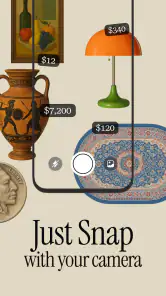
The central interaction is intentionally simple: use a picture to ask what an antique might be and what it may be worth. That simplicity is the main strength of the app. Someone who would not know which specialist to contact can still begin with an organized clue. I can imagine using it in a shop when I need a quick vocabulary lesson, or at home when a box of inherited items contains objects nobody in the family can name.
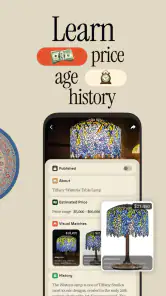
When the result appears, I read it as a proposed match rather than a certificate. I look for details that make sense alongside what I can physically see: the material, shape, decoration, construction, apparent age, and any visible mark. If the response points toward a style that conflicts with the object’s construction, that conflict is useful. It tells me to slow down instead of accepting the most exciting possibility.
A useful habit is to record the result beside my own observations. I might note the object’s approximate dimensions, where it came from, whether it has damage, and what is written on its underside. This creates a handoff document for the next stage of research. The app supplies a starting description; I supply the context that a photograph cannot fully carry.
Handling the handoff from app result to real research
This handoff is where the app becomes more valuable than a one-tap novelty. Once I have a possible identification, I can search for comparable examples, consult reference books, ask a specialist, or visit a dealer with a more precise question. Instead of saying, “I found this old thing,” I can say, “The app suggested this type, but I want to verify the mark, materials, and period.” That makes a conversation with a human expert faster and more focused.
I would also keep the original photographs, including wider views and close-ups. A specialist may notice a detail that the first image did not emphasize. If the object is potentially valuable, I would share the complete visual record rather than only the most flattering picture. The app’s response should travel with the evidence, not replace it.
For a possible sale, the handoff needs another layer of caution. A marketplace listing requires accurate wording, honest condition notes, and photographs that do not exaggerate quality. I would never copy an identification into a listing as though it were authenticated. A safer approach is to describe the app’s suggestion as an unverified possibility and obtain professional advice if the financial stakes are meaningful.
What the result is genuinely good for
The strongest outcome is not a dramatic discovery; it is a better decision. The result can tell me whether an object deserves careful storage, more research, a conversation with a specialist, or no further effort. That is especially useful when a household contains many inherited pieces and professional appraisal for every item would be impractical.
Imagine finding a small marked dish while clearing a relative’s cabinet. I photograph the entire piece, then the mark and underside, and use the response to learn which terms might describe it. I compare those terms with the visible construction and search for similar examples. If the object still appears promising, I wrap it safely, keep the photographs, and take the notes to a reputable appraiser. The app has not solved the valuation, but it has helped me avoid treating the dish as ordinary kitchenware or, equally, as a guaranteed treasure.
The same workflow works for furniture details, decorative objects, paintings, jewelry-like pieces, and ceramics, provided the image contains enough visual information. It is also useful for learning. A beginner can photograph objects from a collection and gradually build a vocabulary around periods, forms, materials, and marks. That educational role may be more dependable than expecting a precise monetary answer from every image.
Where the process becomes uncertain
The flow breaks down when the object is visually ambiguous. Many antiques share shapes and decorative patterns across countries and periods. A reproduction may intentionally imitate a familiar style, while a rare original may look plain. If the app has to infer too much from appearance alone, the response can sound more definite than the evidence deserves.
Condition creates another weak point. A photograph may show a crack but not reveal whether a repair is old, stable, invisible from another angle, or structurally serious. Missing parts, replaced hardware, refinished surfaces, and altered interiors can change value dramatically. Those are precisely the issues that require physical inspection, touch, weight, construction knowledge, or documentation.
Marks can mislead as well. A stamp may be decorative, copied, incomplete, or associated with a later reproduction. A signature can be genuine, added later, or difficult to read. I would avoid photographing only the mark and asking the app to make the entire judgment from it. The mark needs to be considered alongside the object’s materials and construction.
There is also a human limitation: the app cannot ask me why the item matters, where it came from, or what changes I have noticed over time unless I carry that information into the next stage myself. Provenance can be crucial, but it is not visible in a single image. If an object has family records, purchase receipts, old photographs, or a documented chain of ownership, I would preserve those separately and show them to a professional.
Everyday friction, cost, and device fit
The app is free to begin with, but in-app purchases range from $3.99 to $39.99 per item. That makes the payment decision part of the workflow rather than an afterthought. I would avoid purchasing anything simply because the first result sounds exciting. First improve the photograph, compare the suggestion with the object, and decide whether the item has enough personal or financial importance to justify spending more on the investigation.
Because the current version is 1.8.1 and the minimum operating system is iOS or Android 11, compatibility is straightforward for people using relatively recent phones, but older devices may not qualify. The app’s Teen rating is worth noting for families, although the subject itself is generally suited to adults handling household objects, collections, and purchases.
My main friction is not the camera step; it is knowing when to stop trusting the result. A fast answer can create false confidence, especially when the object is emotionally important or potentially expensive. I would not use this as the only basis for buying an item, setting an insurance figure, settling an estate, or accusing someone of selling a fake. In those situations, a qualified appraiser, auction specialist, conservator, or dealer is the better choice.
How it compares with the usual alternatives
Compared with a general image-search tool, Antique Identifier Zophi is more focused on the language of antiques and the question of value. A general search can produce visually similar objects, but it often leaves me to decide which results are relevant. This app is more convenient when I want a direct starting point rather than a long page of unrelated matches.
Compared with asking a collector in an online community, the app is faster and less dependent on finding the right group. A collector, however, may notice regional details, construction methods, and market context that an image-based response cannot reliably provide. Community feedback can also be inconsistent, so I would treat it as another opinion rather than automatic proof.
Compared with a professional appraisal, the difference is much larger. A professional can inspect the object, discuss provenance, evaluate condition, and explain the reasoning behind a conclusion. That service is slower and may cost more, but it is the appropriate alternative when the result will affect money, legal decisions, insurance, or family distribution. I see the app as a filter before that expense, not as a substitute for it.
Small habits that improve the whole workflow
- Photograph evidence, not just appearance: include the underside, interior, back, hardware, labels, and damage where they are relevant.
- Keep the object unchanged: do not polish, repaint, reglue, or remove residue before identification or appraisal.
- Separate confidence from excitement: an unusual suggestion deserves verification, not immediate spending or a high asking price.
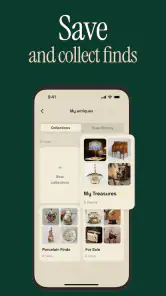
- Build a handoff note: save the images with the app’s suggestion, your observations, origin story, and condition details.
- Use the result to choose the next expert: a ceramic specialist, furniture restorer, jewelry appraiser, or auction professional may each ask different questions.
These habits also make the app useful when the answer is ordinary. Learning that an object is a common decorative reproduction can save time and prevent unnecessary professional fees. That is still a successful outcome if the app helps me handle the item appropriately and move on with confidence.
Who should use it, and who should skip it
I recommend this app to curious owners, beginners, families sorting inherited belongings, flea-market browsers, and collectors who want a quick second opinion before doing deeper research. It is particularly appealing when the first problem is simply not knowing what words to type into a search engine. The image-based entry point lowers that barrier.
I would be more cautious about recommending it to anyone who expects a formal certificate, a guaranteed market price, or authentication from one photograph. Dealers and serious collectors may still find it useful for triage, but they are likely to know that the important work begins after the initial suggestion. If the object is fragile, rare-looking, or financially significant, careful handling and professional inspection should take priority over repeated app scans.
My final view is positive but deliberately practical. Antique Identifier Zophi gives me a convenient first move when an unfamiliar object interrupts an ordinary day. It helps turn a vague curiosity into a possible name, a research path, and a better question for a human expert. Its best result is not certainty; it is momentum.
I would install it for household discoveries and casual antique research, while keeping its limits firmly in view. Use a careful photograph, preserve the surrounding evidence, treat every valuation as provisional, and hand important decisions to a qualified specialist. Used that way, the app earns its place as a useful first checkpoint rather than an authority it was never meant to replace.
Antique Identifier Zophi Frequently Asked Questions
Is Antique Identifier Zophi suitable for beginners who know little about antiques?
Yes. Antique Identifier Zophi is aimed at people who want a starting point for learning about an object, whether they are casual collectors, browsing a flea market, or curious about something at home. Its photo-based approach can make initial research easier, but the results are best treated as guidance. Beginners should compare suggestions with reliable references and seek expert advice for important decisions.
What devices can run Antique Identifier Zophi?
Antique Identifier Zophi is an app for mobile devices, and its current version is 1.8.1. It requires iOS 11 or later, so check your device’s operating system before downloading. The app is free to install, with optional in-app purchases ranging from $3.99 to $39.99 per item. It is rated Teen, which is worth considering when choosing apps for younger users.
What is Antique Identifier Zophi, and what can it identify?
Antique Identifier Zophi is designed to help users learn more about antiques, vintage objects, collectibles, and decorative items. You can typically submit a photograph or enter visual details to receive an estimated identification, historical context, and information about an object’s possible period or style. Results should be treated as helpful guidance rather than a definitive expert appraisal.
How accurate are the identification results in Antique Identifier Zophi?
The app can be useful for recognizing common styles, materials, and object categories, but its accuracy depends heavily on the quality of your photos and the amount of detail provided. Rare, restored, damaged, or highly specialized pieces may be difficult to classify. For valuable items, compare the result with museum references or consult a qualified antiques expert before making a purchase or sale.
Can Antique Identifier Zophi determine the monetary value of an antique?
Antique Identifier Zophi may provide information that helps you understand an object’s potential market relevance, but an automated result should not be considered a formal valuation. Price depends on authenticity, condition, provenance, rarity, demand, and current market trends. If you need an insurance, inheritance, auction, or sales valuation, obtain an independent appraisal from a professional.
Pros
- Identifies many antique categories from a single photo.
- Useful for quick research while browsing flea markets or estate sales.
- Simple interface makes image-based searches easy for beginners.
- Can provide historical context and background for identified objects.
- Helps organize discoveries for later comparison or investigation.
Cons
- Photo results can be unreliable for rare or heavily modified items.
- Identification does not confirm authenticity
- age
- or market value.
- Some useful features may require a subscription or in-app purchase.
- Requires clear
- well-lit photos for the best recognition results.
- Collectors may need expert verification before buying or selling items.
- Category
- Lifestyle
- Version
- 1.8.1