Amora: Romance Novels & Books
- 274.00
- 4.3
- Installs
- 100.00K
- Price
- Free

Screenshots







Analysis by Reviewed
I tried Amora as a reading-and-listening app for romance fans, and its appeal became clearest in a shared household. One person can want a light romantic story during a commute, another may prefer a longer novel before bed, and a third may simply want something easy to start without carrying a paperback around. Amora focuses on that very specific mood: romance novels and shorter romantic fiction delivered online in an audio-friendly format.
That focus is both its strength and its boundary. I would not open it expecting a broad library of nonfiction, literary classics, news, or general reference material. This is a Books & Reference app built around romantic storytelling. If that is the kind of escape you already look for, the narrow selection theme makes browsing feel more purposeful than opening a general audiobook service and searching through unrelated categories.
How Amora fits into a shared household
In a home where devices are passed between people, the first practical question is not only whether the stories are enjoyable. It is whether everyone understands what the app is for and whether the person opening it is the intended listener. Amora is marked for a Teen audience, so I would treat it as age-sensitive entertainment rather than a neutral children’s reading app. That matters when a phone or tablet is used by several members of a family.
A realistic example is a shared tablet in the evening. An adult might listen to a romantic short story while preparing dinner, then leave the device on a table for a teenager to use later. The next person may see the app already open and assume it is suitable for them without thinking about the audience rating. My advice is simple: keep the app associated with the person who chose it, and do not treat a shared screen as proof that every title is appropriate for every listener.
I also found that this kind of app works best when the household agrees on when and where it will be used. Audio fiction can be pleasant during chores or quiet travel, but it can also become distracting if someone is trying to study, sleep, or follow a conversation. A small routine helps: one listener uses headphones, while another can use the device for something else. That is not a special Amora feature; it is the practical habit that makes a shared-device setup less frustrating.
The app is free to install, which lowers the barrier for trying it. However, the presence of in-app purchases means “free” should not be understood as unlimited access to everything without spending. The listed purchase range runs from $6.99 to $519.99 per item, a wide enough span that I would want the account owner to review any purchase screen carefully before confirming anything.
What the first session feels like
Amora’s store short description is simply “Amora,” while its longer positioning makes the purpose clearer: online romance stories, novels, and shorter fiction intended for listening. In practice, I approached it less like a conventional ebook shelf and more like a source of serialized or audio-led romantic entertainment. That distinction is useful because someone looking for page-by-page reading tools may have different expectations from someone who wants a story playing in the background.
More From Our News Desk

Clash of Clans Is Won Between the Battles

Android Auto Makes the Case for Quieter Car Software

MobiOffice: Transforming Mobile Productivity with Seamless Integration

EA SPORTS FC™ Mobile Soccer: Redefining Mobile Sports Gaming

How Microsoft OneDrive Became a Mobile Productivity Giant

How Google Translate Breaks Language Barriers Effortlessly
The strongest first-use scenario is a listener who already knows the mood they want. If I am looking for romance, a focused catalog is convenient because I do not need to filter through cookbooks, biographies, technical guides, and unrelated audiobooks. On the other hand, a reader who enjoys discovering many genres may find the narrow theme limiting after the initial novelty wears off.
I would begin by browsing slowly rather than immediately committing to the first title that sounds attractive. Romance fiction often depends on tone: some stories are gentle and comforting, while others may involve more mature themes or emotionally intense situations. Because the app carries a Teen content rating, I would make that browsing decision with the intended listener’s age and preferences in mind.
Keeping accounts and purchases separate
Shared devices create a second boundary: the person listening is not always the person paying. Since Amora includes optional purchases, the safest household arrangement is for the account holder to make the final decision whenever a title or feature asks for money. I would not hand the device to a younger family member with a payment method already available and assume the distinction will be obvious.
This is especially important because the purchase range is not a small, uniform add-on. A low-cost option and a much higher-priced item can appear within the same app ecosystem, so a quick tap made by the wrong person could have consequences beyond a casual trial. I recommend explaining that the free installation is only the starting point and that any purchase requires permission from the person responsible for the account.
For a household with several listeners, I would also decide in advance whether Amora is a personal app or a shared entertainment app. A personal arrangement is clearer: one person chooses stories, manages spending, and keeps track of what they are listening to. A shared arrangement can work, but only if everyone agrees not to alter the other person’s listening choices or approve purchases casually. The app itself should not be treated as a substitute for that conversation.
There is another useful boundary around expectations. If two people want different romance stories at the same time, one shared device is not enough unless one person uses another device or listens later. I would plan around turns rather than assuming that a single installation automatically creates separate listening spaces. That is a small point, but it prevents the common household complaint that one person’s story has interrupted another person’s session.
Coordinating listening without making it complicated
Amora suits short listening windows particularly well. I can imagine using it while folding laundry, taking a quiet break, or settling down after a long day. Short romantic fiction is useful here because it can provide a complete emotional experience without requiring the listener to remember a complicated plot over several days. Longer novels serve a different purpose: they reward regular sessions and a little more continuity.
My practical tip is to match the story length and intensity to the activity. A short story is easier to fit into an unpredictable household schedule, while a novel is better when I know I can return to it consistently. If interruptions are common, I would avoid starting a dramatic chapter just before an appointment or a family meal. Audio storytelling is enjoyable when I can pay attention, and it becomes less satisfying when I repeatedly lose the thread.
Coordination also matters for sound. A speaker can make the app accessible while cooking or relaxing in a private room, but headphones are more considerate when other people are working, sleeping, or watching something else. I would not assume that romantic audio belongs in the background of a shared room simply because it is quiet. The subject matter and the age context still deserve a little discretion.
For couples or friends sharing recommendations, Amora can become a conversation starter: one person can suggest a tone or storyline, and the other can decide whether it fits their mood. I prefer that approach to treating the app as a passive stream of content. The romance category is broad enough for different tastes, but a recommendation is only useful when it includes a warning about intensity, length, or emotional style.
One trade-off is that a focused romance service may feel more immediately relevant than a general audiobook platform, yet a general platform usually makes more sense for a mixed household. If one person wants romance, another wants history, and someone else wants language learning, a broad service may reduce the need for separate apps. Amora is the better fit when romance is not an occasional interest but the main reason for opening the app.
Teen rating, trust, and sensible supervision
The Teen content rating should shape how I recommend Amora. I would be comfortable discussing it with a teenager and deciding together whether its stories match that person’s maturity and preferences, but I would not present it as a children’s app. The rating is a useful signal, not a complete substitute for knowing the listener or checking the context of a particular story.
That point becomes more important on a shared device. A younger child may recognize the familiar phone or tablet and open whatever is already available. If Amora is installed for an older user, I would explain that it is intended for a different age group and keep the device arrangement clear. Where the device is used by children and adults alike, a separate profile or a simple household rule may be more appropriate than relying on everyone to remember which apps are adult-oriented.
I would also avoid describing the app as suitable for every teenager. Maturity, family expectations, and personal comfort vary considerably. Some listeners may enjoy romance but dislike emotionally heavy scenes; others may prefer short, gentle stories rather than longer dramatic plots. A quick discussion before sharing a title is more helpful than assuming that the Teen label answers every content question.
Trust works in both directions. Adults should not use a shared device as an excuse to monitor every private listening choice, and younger users should understand that purchases and age-sensitive content need clear permission. The healthiest arrangement is transparent: everyone knows who owns the account, who can approve spending, and which listeners the app is intended for.
Because Amora is from Riseforward Ltd., I would identify it clearly when discussing the app with another household member. That avoids confusion if several similar romance or audiobook applications are installed. The app has reached over 100 thousand installs and holds a 4.3 average from around 1.6 thousand ratings, which suggests that it has found an audience, but those figures should not replace personal judgment about whether its content style suits a particular family.
Where it stands beside ordinary alternatives
The usual alternatives fall into three groups: a general audiobook service, an ebook reader, or free written stories found elsewhere. Amora’s advantage over the first is focus. I can open it with romance already at the center rather than searching through a much larger mixed catalog. Its advantage over an ebook reader is the emphasis on listening, which is convenient when my hands and eyes are occupied.
An ebook reader remains the better option when I want to control the pace, reread a sentence, highlight passages, or read in silence beside someone who is sleeping. Text also gives me more control over pronunciation and personal imagination. If I am choosing a story for close reading rather than relaxation, I would probably reach for an ebook first.
A broad audiobook service is more suitable for a household with changing interests. It can offer romance alongside mysteries, biographies, science, and children’s titles, reducing the need to switch between specialized apps. The compromise is that its discovery experience may feel less direct for a romance-only mood. Amora makes more sense when category focus is valuable enough to outweigh variety.
Free written-story platforms may be attractive to readers who want to browse casually without committing to audio. They can also offer a different range of writing styles. Amora’s appeal is the convenience of listening and the feeling of entering a dedicated romantic-fiction space. The trade-off is that any purchase prompts require attention, and listeners who prefer complete control over text may not find audio-first consumption as flexible.
My less obvious advice is to choose based on the household’s dominant use, not the most enthusiastic individual user. If one romance fan shares a tablet with three people who want unrelated material, Amora may create more app switching than convenience. If nearly everyone using the device enjoys romantic stories, the focused catalog becomes an advantage rather than a limitation.
Version, access, and everyday reliability
The current version is 1.15.2, and the app supports Android from version 8.0 onward. That makes the device check straightforward for Android users: before planning a shared installation, I would confirm that the tablet or phone is not running an older system. This matters more with household devices, since an unused tablet may sit for a long time without updates.
Amora is an online storytelling app, so I would plan listening around the quality of the connection rather than assuming every situation will be equally convenient. At home, Wi-Fi is the natural setting. On the move, I would test the experience before depending on it for a long trip or a place where mobile access is unreliable. A commute is a good use case only when the listener has already confirmed that the chosen story is ready to play in the needed environment.
I also recommend keeping the first session short. That lets me judge narration, pacing, story tone, and the amount of attention required before investing time or money. It is a better test than deciding from the app’s romance theme alone. If the voice or writing style does not suit me, a focused catalog will not solve that mismatch.
Another practical point is battery and speaker etiquette. Audio can run longer than a quick text-reading session, and a shared tablet may already be needed for other tasks. I would charge the device before a long listening period and use headphones when the room is shared. These are ordinary habits, but they make a noticeable difference when an app becomes part of a daily routine.
Who should try it, and who should skip it
I would recommend Amora to someone who actively seeks romantic novels or shorter romantic fiction and prefers listening over reading every word on a screen. It is especially appealing for quiet domestic tasks, evening relaxation, and listeners who want a dedicated mood rather than a general-purpose library. The free entry point makes it reasonable to explore before deciding whether the catalog and listening style are a good match.
I would also consider it for a teenager whose family is comfortable with the Teen rating and who understands the difference between free access and optional purchases. In that situation, the important part is not simply installing the app; it is agreeing on account ownership, spending permission, and suitable listening spaces.
I would skip it if my priority were children’s stories, educational reference material, many unrelated genres, or a reading experience built around highlighting and detailed text control. I would also choose a broader audiobook service if several people in the household need very different subjects. Romance fans may find Amora refreshingly focused, but that same focus will feel restrictive to anyone who wants a large all-purpose library.
Finally, I would not recommend treating it as background noise for every situation. Romantic storytelling still asks for attention, and the Teen context means I would be selective about where it plays aloud. The app is better when used intentionally: one listener, an appropriate setting, and a clear understanding of whether the chosen content is free or part of a purchase.
My household verdict
After using Amora with shared-device habits in mind, I see it as a specialized choice rather than a universal audiobook replacement. Its identity is clear: romance novels and shorter romantic stories for listeners who want that theme close at hand. The free installation helps with experimentation, while the focused category makes discovery less scattered than it can be in a general app.
The main responsibility falls on the household setup. Keep the account boundary clear, involve the person responsible for purchases, respect the Teen rating, and use headphones when other people are nearby. Those steps do not make the app difficult; they simply prevent a personal entertainment app from becoming confusing on a communal device.
My recommendation is to try it when romance is the household’s main listening interest, not merely one option among many. For that audience, Amora can be an easy way to turn a spare half-hour into a story. For mixed families, younger children, or readers who want broad reference material and full text control, a different kind of app will probably fit better. Its current 1.15.2 release and support for Android 8.0 or later make the technical check simple, but the more important decision is whether its focused romantic format matches the people who will actually use it.
Overall, I would keep Amora on a personal or clearly assigned device rather than treating it as a completely open family app. Used that way, it feels purposeful and easy to recommend to the right listener. Used without age, account, and purchase boundaries, the convenience of a shared screen can quickly become the weakest part of the experience.
Amora: Romance Novels & Books Frequently Asked Questions
Is Amora suitable for younger readers?
Amora has a Teen content rating, and its focus on romance means stories may include relationship drama or mature themes. Suitability can still vary from one book to another, so parents and readers should check story descriptions, genre labels, and any content warnings before reading. If a young person will use the app, it is sensible to review its content together.
Which devices and operating systems can run Amora?
Amora is an app for reading and listening to romance stories, and the current version is 1.15.2. It requires Android 8.0 or later, so check your device’s operating system before downloading. On a compatible device, you can explore the app’s romance fiction and audiobook-focused experience; keeping the app updated can also help you use the latest available version.
What is Amora: Romance Novels & Books?
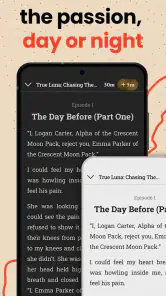
Amora: Romance Novels & Books is a mobile reading app focused on romance fiction and serialized stories. It offers access to different romantic genres, including contemporary relationships, drama, fantasy romance, and stories with suspense or mature themes. The app is designed for readers who enjoy discovering new novels, following ongoing chapters, and reading directly from a phone or tablet rather than using a traditional e-reader. Its store summary also highlights audiobooks and romantic short stories, making it relevant to readers who prefer listening as well as reading.
Is Amora: Romance Novels & Books free to download and use?
The app is free to download, but access to all content may not be completely free. Some stories, chapters, or reading features can require in-app purchases, depending on the title and the current app version. Purchases range from $6.99 to $519.99 per item, so review the pricing information, available free chapters, and purchase terms shown inside the application before spending money.
Does Amora offer offline reading?
Offline availability may depend on the specific story, account status, and features supported by the current version of Amora. Many reading apps allow selected chapters to be cached or downloaded, while others require an internet connection to load content and synchronize progress. If offline reading is important to you, check each book’s options after signing in and confirm whether downloaded chapters remain accessible without mobile data or Wi-Fi.
Pros
- Large selection of romance novels across popular subgenres.
- Personalized recommendations help discover books matching your tastes.
- Offline reading is convenient for travel or areas with weak internet.
- Adjustable text settings make longer reading sessions more comfortable.
- Regularly updated catalog provides fresh stories to explore.]
- contras:[
- Some chapters or books may require a subscription or in-app purchases.
- Reading access can vary depending on region and licensing agreements.
- The catalog may favor contemporary romance over niche subgenres.
- Frequent notifications may feel distracting unless carefully managed.
- Account registration may be needed to sync reading progress across devices.
Cons
- Some chapters or books may require a subscription or in-app purchases.
- Reading access can vary depending on region and licensing agreements.
- The catalog may favor contemporary romance over niche subgenres.
- Frequent notifications may feel distracting unless carefully managed.
- Account registration may be needed to sync reading progress across devices.
- Category
- Books & Reference
- Version
- 1.15.2