Abide: Bible Meditation Prayer
- 6.79K
- 4.1
- Installs
- 1.00M
- Price
- Free

Screenshots
Analysis by Reviewed
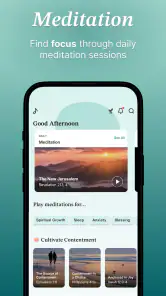
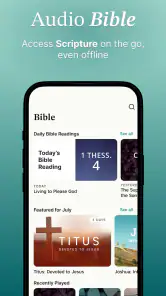
I approached Abide: Bible Meditation Prayer as someone looking for a calmer, more structured way to fit Christian reflection into an ordinary day. The app sits in the Books & Reference category, but it feels less like a digital bookshelf and more like a guided devotional companion. Its focus is daily Bible reading, meditation, prayer, and a verse to return to when I need a short pause rather than a long study session.
That distinction matters. If you want a full-featured Bible reader with extensive study tools, this may not replace your usual Bible app. If you want help moving from “I should spend a few quiet minutes with Scripture” to actually doing it, the guided format is much more approachable. I found the experience most useful when I treated it as a repeatable routine: open the app, choose a suitable moment, listen or read with intention, and carry one thought into the rest of the day.
How Abide fits into a real daily routine
Starting with the problem of an inconsistent routine
My starting condition was familiar: good intentions, limited attention, and a day that rarely leaves a naturally quiet space. A printed devotional can be meaningful, but it is easy to leave it on a table. A general Bible app gives me access to a large amount of material, yet that freedom can create another problem: I spend more time deciding what to read than reading it. Abide addresses that hesitation by placing devotional and meditation-oriented content closer to the front of the experience.
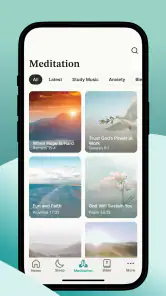
I would describe it as a guided Christian meditation app rather than a replacement for a study Bible. The store summary points toward daily devotionals, Bible study, Christian meditation, and a verse of the day, and those elements work best together as a sequence. The verse can provide a small starting point, while the devotional or meditation gives the moment more shape. Prayer then becomes a natural response instead of an activity I have to design from scratch.
The app is free to install, which makes it easy to test without committing money first. It is rated for Everyone, so its presentation is accessible to a broad audience. At the same time, optional purchases range from $2.99 to $59.99 per item, so I would take a moment to understand which material is available without payment before building a routine around a particular series.
Choosing the right moment instead of forcing a perfect one
One of my practical conclusions is that Abide works better when I match the session to my available attention. A short verse or brief prayer fits a crowded morning. A longer guided meditation is more suitable when I am winding down and can listen without multitasking. Trying to use every part of the app every day can turn a restful practice into another task on a checklist.
A realistic example would be a weekday commute, provided I am not the person driving. I can begin with a verse before leaving, listen to a guided reflection while riding public transport, and keep the central idea in mind during the first part of work. On a different day, I might use the app at night when I want a clear transition away from screens and unfinished tasks. The useful handoff is from the app’s guided content to my own quiet time; the phone should not remain the center of the experience.
More From Our News Desk

Clash of Clans Is Won Between the Battles

Android Auto Makes the Case for Quieter Car Software

MobiOffice: Transforming Mobile Productivity with Seamless Integration

EA SPORTS FC™ Mobile Soccer: Redefining Mobile Sports Gaming

How Microsoft OneDrive Became a Mobile Productivity Giant

How Google Translate Breaks Language Barriers Effortlessly
Moving through the app step by step
The first step is deciding what I need from the session. That sounds simple, but it prevents aimless browsing. If I need encouragement, I look for devotional material that speaks to the concern in front of me. If I am restless, meditation is the more sensible entry point. If I want a small daily anchor, the verse-of-the-day approach is enough. This choice is one of the app’s strengths because it lets the same installation serve different moments without pretending that every moment needs the same depth.
Next, I give myself permission to use only one part of the experience. I do not need to finish a long session to make the app worthwhile. A short reading followed by a minute of silence can be more useful than starting an ambitious plan and abandoning it after several days. Abide’s guided character helps here, but the user still has to resist the temptation to collect content instead of engaging with it.
After the reading or listening portion, I pause before moving on to another screen. This is where the app can become more than an audio player or a quote feed. I ask myself what the passage changes about the next hour. That question creates a handoff from consumption to action. For example, a reflection about patience might lead me to delay a sharp reply, while a prayer about worry might remind me to separate what I can do today from what I cannot control.
Finally, I close the session deliberately. I do not treat the end of the narration as the end of the practice. A quiet moment, a personal prayer, or a single sentence written elsewhere can make the material easier to remember. This workflow is not a special feature claim; it is the way I get more value from the app’s structure instead of letting the phone dictate the pace.
Where the handoffs are smooth
The transition from a daily verse to a broader devotional thought is the smoothest part of the experience. The verse gives me a low-effort entry point, while the surrounding material can provide context and emotional direction. This is particularly helpful for someone who feels intimidated by opening a Bible at random and wondering where to begin.
The handoff from devotional content to prayer also feels natural for users who prefer some guidance. Many people know they want to pray but draw a blank once they sit down. A reflection can supply a theme without requiring a rigid script. I can respond in my own words, keep the prayer short, or stay with the idea in silence. That flexibility is more valuable than a large collection of decorative screens.
Another useful handoff is between planned use and spontaneous use. I can approach the app as a daily habit, but I can also open it when a stressful day changes my needs. That makes it more practical than a devotional format that assumes every day has the same emotional temperature. The trade-off is that spontaneous browsing may expose more material than I need, especially if I am already distracted.
How it compares with familiar alternatives
Compared with a traditional printed devotional, Abide is easier to carry and better suited to audio-guided reflection. A book can be less distracting once it is open, though, and many readers will prefer the tactile simplicity of paper. The app wins on convenience and variety; the book wins when I want a screen-free practice with no temptation to check something else.
Compared with a general Bible app, Abide places more emphasis on guided meditation and prayer than on navigating a large library of translations, passages, and study references. A general Bible app is the better choice when I want to compare wording, trace themes across books, or conduct detailed research. Abide is the better fit when I already know that my main obstacle is starting a reflective practice.
Compared with a podcast or ordinary meditation app, its Christian framing is the defining difference. The purpose is not simply relaxation or concentration. Scripture, devotional reflection, and prayer shape the session. Someone looking for completely secular mindfulness should choose another type of app, while a Christian user who wants faith-based guidance may find the focus reassuring rather than restrictive.
What the result feels like after consistent use
The result I value most is not a dramatic change after one session. It is a lower barrier to returning the next day. When the app gives me a clear starting point, I spend less energy deciding what a devotional moment should look like. That consistency can make a small practice feel more realistic than an occasional, overly ambitious study session.
The verse-of-the-day format is especially useful as a memory prompt. I can carry a short phrase into a conversation, a commute, or a difficult task without needing to remember an entire lesson. The content becomes more meaningful when I connect it to a specific behavior rather than treating it as a pleasant thought that disappears as soon as I swipe away.
I also appreciate that the app can support different levels of involvement. On a busy day, I may only read a verse. On a quiet evening, I can spend more time with a guided meditation and prayer. This makes the workflow resilient. Missing the “ideal” session does not have to mean abandoning the routine altogether.
Three practical ways to get more from it
First, I would create a simple two-level routine: a small minimum for busy days and a longer option for days with more room. The minimum might be the daily verse and a short personal prayer. The longer option can include a guided reflection and a few minutes of silence. This prevents the common all-or-nothing pattern in which a demanding schedule destroys the habit.
Second, I would use the app before a predictable transition rather than waiting for perfect quiet. A session before work, after putting children to bed, or before turning off the light has a natural handoff into the next part of the day. The transition itself becomes a reminder. The important insight is that the app does not need to occupy a large block of time to influence what follows.
Third, I would avoid judging a session by how emotional or inspiring it feels. Some days the material may connect immediately; on others, the value may be simply showing up and paying attention. Recording one practical response in my own notes can help me notice whether the app is shaping my choices, not just my mood. That is a better test than endlessly searching for a more powerful devotional.
Where the flow breaks down
The biggest weakness is the possibility of turning reflection into passive listening. Guided content is convenient, but convenience can also make me feel as if I have completed a spiritual practice merely by pressing play. The solution is to build in a pause afterward and respond personally. Users who want a demanding, text-heavy study experience may find the guided approach too light unless they pair it with a separate Bible and study method.
Another friction point is the boundary between free access and optional purchases. The app costs nothing to install, but in-app items can reach $59.99, so I would not assume that every series or resource is included. This does not make the app unsuitable, but it does mean I would explore the free experience first and decide whether paid material genuinely supports my routine rather than buying because a topic sounds appealing.
The phone itself can also interrupt the intended atmosphere. Notifications, incoming messages, and the instinct to leave the app immediately can break concentration. I get better results when I silence distractions, use headphones only when appropriate, and place the device somewhere that does not invite unrelated browsing. In that sense, the app can guide the content, but I still have to protect the setting.
People who need advanced Scripture research, extensive cross-references, or a highly customizable reading plan should probably use a dedicated Bible study tool instead. People who dislike spoken guidance may prefer a print devotional or a simple text-based reader. Abide is not the universal answer for every Christian reading style; its value depends on wanting a guided bridge between Scripture, meditation, and prayer.
Device details and who should try it
Guideposts Digital is the developer behind the app, which has been available since November 24, 2014. The current version is 3.76.0 and requires at least iOS 8.1 or a compatible operating system at that level, making it approachable for users who are not running the newest hardware. Its reach is substantial, with over one million installs, while its average rating is 4.1 from around 22 thousand ratings. Those figures suggest a well-established app, though they should not replace testing whether its devotional style suits you.
I would recommend it to a Christian who wants a dependable starting point for daily reflection, especially someone who finds open-ended Bible reading difficult to maintain. It is also a sensible option for users who appreciate listening, guided prayer, and short sessions that can expand when time allows. Families and younger users may appreciate the Everyone rating, although the right content still depends on personal preferences and the setting in which it is used.
I would skip it if my main goal were scholarly study, detailed annotation, or a completely distraction-free reading environment. I would also hesitate if I knew I was likely to browse endlessly through devotional options without settling into one. In that case, a physical Bible and a fixed reading plan could provide stronger boundaries.
My final assessment after following the workflow
Abide succeeds when I use it as a doorway, not a destination. It lowers the effort required to begin a moment with Scripture, offers guidance when I do not know what to choose, and gives prayer a natural place after reflection. The strongest outcome comes from carrying one idea beyond the screen and letting it affect a real decision, conversation, or pause.
Its limitations are equally clear: guided material is not the same as deep Bible study, optional purchases require attention, and a phone can undermine the quiet atmosphere the app is trying to create. Still, for someone who wants a practical Christian meditation and devotional routine, I think it is worth trying. My recommendation is to start small, use the free experience honestly, and judge it by whether it helps you return to prayer and Scripture with less friction.
Abide: Bible Meditation Prayer Frequently Asked Questions
Is Abide: Bible Meditation Prayer free to download?
Abide is free to download and includes some content you can use without paying. Other meditations, prayers, Bible reflections, and features may require an in-app purchase. Before starting a trial or making a purchase, review the terms shown in the app, including the price, billing period, renewal conditions, and cancellation instructions, so you know what to expect.
What can I do with Abide each day?
Abide is presented as a daily Bible app for devotionals, Bible study, Christian meditation, and a verse of the day. Its Bible-centered material can give you options for reflection and prayer as part of a regular routine. If you are looking for an app focused on Christian spiritual practice rather than general reading, its stated purpose may be a good fit.
What age group can use Abide: Bible Meditation Prayer?
Abide is rated for Everyone, making it suitable for a broad audience interested in Christian prayer and Bible-based reflection. Its guided meditations and devotional content may appeal to adults as well as families exploring a shared spiritual routine. As with any religious content, parents and caregivers may want to preview sessions and decide whether their themes and presentation are appropriate for younger listeners.
Who develops Abide, and what kind of app is it?
Abide is a Books & Reference app developed by Guideposts Digital. Its focus is on Christian devotional material, Bible study, prayer, and meditation rather than general-purpose reading. The app’s short description is simply “Abide,” while its broader purpose is to provide Bible-centered resources that users can turn to for reflection and a more regular spiritual practice.
What is Abide: Bible Meditation Prayer, and who is it designed for?
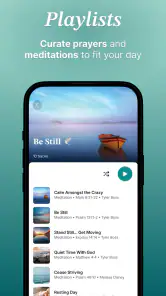
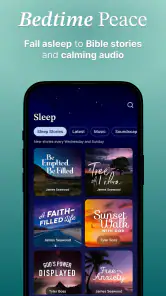
Abide: Bible Meditation Prayer is a Christian meditation and prayer app designed to help users spend more intentional time with God. It combines Bible-based reflections, guided prayers, calming audio, sleep-focused content, and devotional sessions. It may be useful for beginners who want structure, as well as experienced Christians looking for a convenient way to build a regular prayer or Scripture meditation routine.
Pros
- Short guided sessions make daily Bible meditation easy to fit into busy schedules.
- Includes prayer
- Scripture
- and reflection content for a well-rounded devotional routine.
- Calm audio and visual design create a relaxing atmosphere for quiet time.
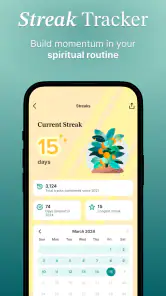
- Progress tracking can help users build a consistent spiritual practice.
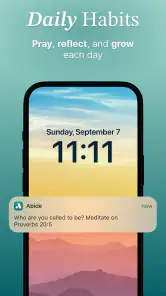
- Useful reminders encourage regular prayer and meditation throughout the day.
Cons
- Some content and features may require a paid subscription.
- The app may feel repetitive for users seeking deeper Bible study tools.
- Personalization options can be limited compared with full devotional platforms.
- Audio sessions depend on clear narration and may not suit every preference.
- Requires ongoing engagement to benefit; it is not a replacement for church or study.

- Category
- Books & Reference
- Version
- 3.76.0