2026 ASVAB Practice Test Prep
- 41.00
- 4.3
- Installs
- 10.00K
- Price
- Free

Screenshots
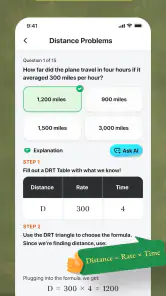
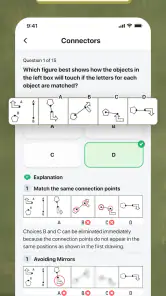
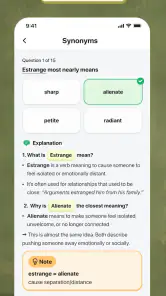
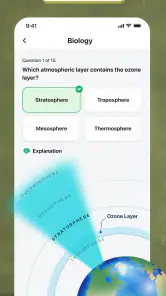
Analysis by Reviewed
Preparing for the ASVAB is not just a matter of memorizing vocabulary or doing a few arithmetic questions before bed. The exam rewards steady practice across several different skills, and that is where 2026 ASVAB Practice Test Prep tries to help. I used it as an education app rather than treating it like a complete course, and my overall impression is that it works best as a focused practice companion for people who already know they need regular question-based revision.
The app is free to install, aimed at Everyone, and published by UNISOFT VIET NAM TECHNOLOGY JOINT STOCK COMPANY. Its store summary promises help with passing the Armed Services Vocational Aptitude Battery, while the shorter description simply presents it as an ASVAB practice test. That modest positioning is important: I would not approach it as a replacement for official recruitment guidance, a teacher, or a carefully structured study book. I would approach it as a convenient way to turn spare minutes into exam practice.
Its current release is version 1.3.4, and it runs on Android 7.0 or later. The app has reached over ten thousand installs, with a 4.3 average from roughly three hundred ratings and a little over forty written reviews. Those figures suggest that it has found a real audience, but they are not enough on their own to prove that every learner will find the question quality, explanations, or study flow equally useful. I paid more attention to how much control the learner appears to have and how clearly the app communicates its boundaries.
What the app feels like in everyday ASVAB preparation
A practical tool for short study sessions
The strongest use case is the learner who needs repetition but struggles to maintain a fixed study schedule. A phone-based practice app can fit into moments that would otherwise disappear: waiting for an appointment, taking a break at work, or reviewing a few questions before sleeping. In my experience, that convenience matters because ASVAB preparation can feel overwhelming when the exam is treated as one huge task.
I would use this app in short, deliberate blocks rather than opening it without a plan. For example, I might reserve one session for arithmetic reasoning, another for word knowledge, and a later session for checking mistakes. The key is to record the topics that cause trouble instead of celebrating only the questions I answer correctly. Practice becomes much more useful when each wrong answer leads to a small adjustment in the next session.
That workflow also exposes one of the app’s likely limitations as a standalone resource: question practice is not the same as learning a subject from the beginning. If fractions, ratios, mechanical concepts, or vocabulary foundations are weak, repeated testing may reveal the problem without fully teaching the solution. I would keep a notebook or separate reference beside the app so that an incorrect answer becomes a lesson rather than a number on a screen.
Who will get the most value
This is a sensible fit for someone who has already decided to take the ASVAB and wants a low-friction way to practise. It can also suit a learner who prefers private self-study, does not want to carry a book, or needs a simple routine that can be repeated every day. The free entry point makes it easier to try the study style before making a larger commitment.
I would be more cautious about recommending it to a complete beginner who wants a full curriculum, detailed tutoring, or a carefully explained path from basic concepts to timed exam readiness. It is also not the right choice for somebody who needs guaranteed alignment with an official testing arrangement or enlistment requirement. For those needs, official guidance and reputable instructional material should remain the authority, while this app can serve as supplementary practice.
Another group that may want a different option is a learner who needs accessibility features, extensive progress reporting, or strong account-based synchronization across devices. I did not treat the app’s existence as proof that those controls are available. Before relying on it as the center of a long study plan, I would personally check which settings, history tools, and explanations are visible on the device I intend to use.
Turning mistakes into a study plan
A useful but easily missed habit is to separate performance from understanding. A correct answer produced by guessing is not the same as a mastered skill. After each practice session, I would mark questions in three groups: answers I knew, answers I guessed, and answers I missed. The second group is especially valuable because it identifies fragile knowledge that a simple score can hide.
I would also avoid switching topics every time the app presents something difficult. If a learner repeatedly misses the same kind of problem, the right response may be to pause the app and review the underlying method elsewhere. For example, an arithmetic question may really be testing proportional reasoning, unit conversion, or reading comprehension. Treating every error as an isolated question can create the illusion of progress without fixing the pattern.
A second practical tip is to use the app at two different speeds. Early in preparation, I would answer carefully and write down why each option is right or wrong. Closer to the exam, I would introduce timed sessions to practise decision-making under pressure. The app is more valuable when it supports both modes, but the learner has to supply the discipline and review process rather than expecting the phone to create that automatically.
How it compares with books, videos, and official material
Compared with a printed ASVAB book, this app is more portable and easier to open for a quick session. A book usually offers more room for long explanations, worked examples, and handwritten notes, while a phone app is better at reducing setup time. I would choose the app for frequent question exposure and the book for deeper repair work when a topic remains confusing.
Compared with video lessons, practice software is less passive. Watching somebody solve a problem can feel clear until I try one alone. An app makes the learner commit to an answer, which is uncomfortable but useful. The trade-off is that a video instructor can explain a concept in several ways, notice common misunderstandings, and build a lesson sequence that a compact practice tool may not provide.
Official resources remain important for information about the exam itself, eligibility, scheduling, and current procedures. A practice app can help with preparation, but it should not be used to settle administrative questions. I would use this product for repetition and use official channels for anything that affects an actual testing or enlistment decision.
Trust begins with what the app clearly lets you see
My trust assessment is deliberately cautious. A clean study purpose is reassuring, but the category alone does not tell me how an app handles personal information, device access, or account activity. I look for visible explanations, understandable choices, and controls that let me decide what to share. I would not infer strong privacy practices merely because the app is educational.
Before using it seriously, I would inspect the permission prompts shown during installation and normal use. I would also read any privacy or data-use information presented in the app or its store page, paying attention to whether an account is needed, whether study history is stored, and whether there are options to remove or reset that information. If a prompt appears unrelated to answering practice questions, I would stop and consider whether the convenience is worth granting that access.
This matters most for younger learners or anyone studying on a shared phone. The Everyone rating makes the app broadly approachable, but it does not remove the need for an adult or device owner to review account and privacy choices. I would avoid entering unnecessary personal details into any study tool, particularly when a basic practice session does not appear to require them.
Paid choices and the importance of checking before committing
The app is free, but it includes in-app purchases ranging from around ten dollars to around eighty dollars per item. That is a meaningful difference from a completely free study utility, so I would not tap a purchase button casually. I would first identify exactly what the paid item unlocks, whether it is a one-time purchase or part of another arrangement, and whether the material is genuinely needed for my study plan.
The safest approach is to treat the free version as a trial of the app’s question style and usability. I would spend enough time checking whether the explanations make sense, whether the navigation feels comfortable, and whether the available practice matches my weaknesses. Only then would I consider paying. A higher-priced item could be worthwhile for a learner who uses the material consistently, but price alone does not establish quality.
I would also keep purchase controls in mind when a family member or teenager shares the device. Store-level authentication and device account settings are more reliable safeguards than assuming an educational app will prevent accidental spending. This is a small practical detail, but it can matter more than an attractive practice interface when several people use the same phone.
Where user agency matters during study
The best study app is not the one that keeps me tapping longest; it is the one that helps me make better decisions about what to study next. I want to be able to stop a session, revisit a difficult area, and decide whether I need a slower explanation elsewhere. I would be wary of any design that makes a score feel more important than understanding or pushes me toward a purchase before I know whether the content suits me.
For that reason, I would keep my own simple record outside the app. I might note the date, topic, number of uncertain answers, and one concept to review. This gives me a backup if progress history is limited, changed after an update, or tied to a device I no longer use. It also keeps the study plan under my control instead of making the app the only place where my preparation exists.
There is a useful trade-off here. A self-contained app can reduce friction, but independence from the app improves resilience. If I lose access, change phones, or decide to switch to a book, my notes still show what needs work. That is especially important for a long preparation period, where a single score can be misleading and a record of recurring mistakes is more informative.
What I would check before making it my main resource
I would begin with a short trial focused on usability rather than score chasing. Can I find the practice area I need without confusion? Are explanations available at the moment I need them? Does the app make it easy to understand why an answer is wrong? Are paid prompts clear enough that I know what I am being offered? These questions tell me more about fit than the download count.
I would then compare a few sessions with a trusted ASVAB study source. If the app helps me identify weak skills and the other resource explains those skills more clearly, the combination makes sense. If the app’s wording feels unfamiliar or the explanations do not resolve repeated errors, I would reduce its role rather than forcing it into the center of my preparation.
Updates can also change the experience, so I would pay attention to the current version displayed on my device and review any new prompts after an update. I would not assume that a familiar screen means the app’s data practices or purchase flow have stayed identical. Checking visible choices periodically is a reasonable habit for any app that stores study activity or offers paid content.
My cautious verdict
2026 ASVAB Practice Test Prep is worth trying if you want a free, portable way to add question practice to an existing preparation routine. I like the basic idea because frequent retrieval is more useful than occasional cramming, and a phone is often close at hand when a textbook is not. The app’s education focus and accessible age rating make it approachable, but approachability should not be confused with completeness.
I would recommend it as a supplement, especially for learners who can create their own review system and are willing to verify important information through official sources. I would not recommend relying on it alone if you need extensive teaching, individualized feedback, dependable administrative guidance, or clearly documented controls that are not visible to you. In those situations, a structured book, instructor, or official resource may be the better primary choice.
My final advice is simple: try the free experience, inspect permissions and privacy choices when they appear, keep personal information to a minimum, and understand any purchase before approving it. If the questions help you expose weak areas and the controls feel clear on your device, the app can earn a place in your routine. If it mainly produces scores without helping you learn from mistakes, move it to a minor supporting role and choose a resource that gives you deeper explanations.
Pros
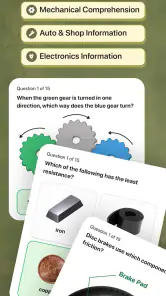
- Covers all major ASVAB sections
- including math
- science
- and verbal skills.
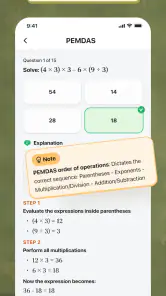
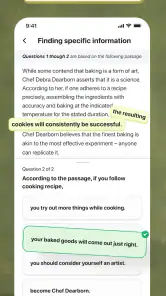
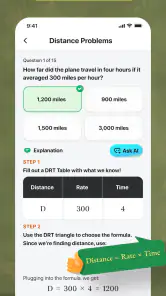
- Practice questions include explanations to help clarify mistakes.
- Short quizzes make it easy to study during commutes or spare time.
- Progress tracking helps identify weaker subjects over time.
- Useful for building familiarity with the ASVAB question format.
Cons
- Some advanced features may require a paid subscription.
- Question difficulty may not always match the official ASVAB.
- Ads can interrupt study sessions in the free version.
- Content quality may vary between different subject sections.
- Requires consistent self-study; it does not replace official guidance.

- Category
- Education
- Version
- 1.3.4