Zoologic: Brainrot Evolution!
- 83.00
- 3.4
- Installs
- 5.00M
- Price
- Free

Screenshots

Analysis by Reviewed
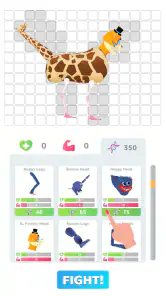
Zoologic: Brainrot Evolution! is the kind of arcade game I open when I want something immediate, silly, and easy to understand without committing to a long session. Its central idea is simple: combine animals, watch them turn into stranger hybrids, and use the resulting creatures in battles. That premise gives the game a playful identity from the first few minutes, but the real question is whether the visual joke can support repeated play. In my experience, it can, although the appeal depends heavily on how much you enjoy short-form merging and deliberately chaotic humor.
Developed by Sunday.gg, this free game sits in the arcade space rather than presenting itself as a serious strategy title or a deep role-playing adventure. It is available for players aged Everyone 10+, runs on Android 7.0 or later, and its current version is 0.66. Those details make it broadly accessible, but accessibility should not be confused with universal appeal. I would recommend it most readily to someone who likes quick experiments, odd character designs, and games that turn a familiar combination mechanic into a visual comedy routine.
From a strange first impression to a playable routine
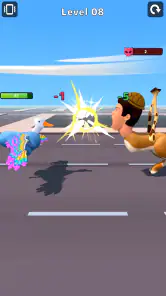
My first impression was that the game understands its own silliness. The animal combinations are not presented as realistic evolution, and that is important. The fun comes from seeing recognizable creatures pushed into absurd territory, then finding out how those designs behave when the game moves from collecting to battling. Instead of asking me to admire a polished fantasy world, it invites me to enjoy the next unexpected result.
The opening experience is easy to approach because the basic action is readable. I can focus on what combines with what, observe the change, and then decide how to use the result. That clarity matters in an arcade game. If the first few minutes were buried under menus or complicated explanations, the joke would lose its timing. Here, the concept does most of the teaching.
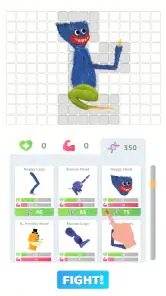
There is also a useful difference between discovering a new hybrid and simply improving a number. A stronger unit may help, but the visual transformation is often the more satisfying reward. This gives the early game a collector’s curiosity: I want to see what the next pairing produces, not only because it might perform better, but because it may be funnier than the last one.
That said, the novelty has a natural limit. Once the surprise of the first combinations fades, the game needs its battle loop and progression to keep me interested. I found that the experience works best when I treat it as a series of compact sessions rather than a game demanding constant attention for an entire evening. Its energy is closer to a quick arcade diversion than to a large adventure with a carefully unfolding plot.
A realistic everyday use case is a short wait before an appointment or a few minutes after finishing another task. I can start a session, make a few combinations, adjust my lineup, and leave without feeling that I have abandoned a complicated campaign. That convenience is one of its strongest practical qualities. It does not ask me to remember a large story or reconstruct a complex map after a break.
More From Our News Desk

Clash of Clans Is Won Between the Battles

Android Auto Makes the Case for Quieter Car Software

MobiOffice: Transforming Mobile Productivity with Seamless Integration

EA SPORTS FC™ Mobile Soccer: Redefining Mobile Sports Gaming

How Microsoft OneDrive Became a Mobile Productivity Giant

How Google Translate Breaks Language Barriers Effortlessly
The game has attracted over five million installs, while its average rating is 3.4 from around 3.3 thousand ratings. I read that combination as a sign of a recognizable but somewhat divisive experience: enough people find the concept worth trying, yet the unusual presentation and repetitive arcade structure will not suit everyone. My own reaction lands in the middle. I enjoy the personality, but I would not mistake the loop for an endlessly deep system.
A visual language built around deliberate nonsense
The art direction does much of the work. The creatures are designed to be understood quickly, then questioned a second later. A familiar animal shape gives me an anchor, while the hybrid details push the design toward cartoon absurdity. That contrast creates the game’s visual language: recognizable enough to read instantly, strange enough to make the next result worth checking.
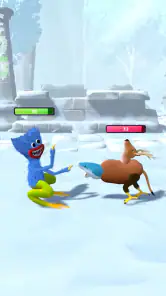
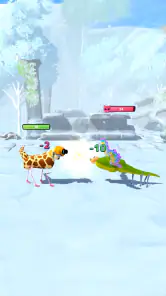
This approach also helps the battles remain approachable. In a busy arcade screen, an animal with a clear silhouette is easier to identify than a highly detailed character covered in small effects. The exaggerated designs give each creature a strong visual presence, even when the underlying action is fast. I can usually tell what I am looking at before I think about its exact role.
The setting feels less like a conventional world and more like a stage for the creatures. That is not a weakness by itself. It keeps attention on the combinations and the confrontations instead of asking the player to absorb extensive lore. If you want a game with a richly explained universe, named regions, and a story that develops through dialogue, this is probably not the right choice. If you prefer the world to function as a colorful backdrop for the next odd discovery, the restraint works better.
One of the more useful ways to play is to separate visual discovery from practical upgrading. I try not to merge every available animal immediately. Keeping a few options visible lets me compare outcomes and prevents the session from becoming an automatic sequence of taps. This is a small habit, but it makes the combinations feel more like decisions and less like housekeeping.
It also helps to pay attention to the difference between a creature that looks impressive and one that fits the current battle. The game’s humor encourages me to chase the strangest design, yet the most entertaining-looking hybrid is not always the most useful one at that moment. That tension gives the visual style a mechanical purpose. The art is not merely decoration; it affects what I want to collect and what I am willing to place into action.
The deliberately exaggerated tone may be tiring for players who prefer clean, restrained interfaces. Some people will see the “brainrot” style as the main attraction, while others may find it noisy or too dependent on internet humor. I think the game is most successful when the visual chaos stays readable. When I can see the creature, understand the result, and follow the battle, the absurdity feels controlled rather than random.
Sound, timing, and the mood of a short session
The sound design supports the same mood as the artwork: playful, quick, and slightly unruly. I do not approach this as a game built around a sweeping musical score. Its audio role is more functional and immediate, helping combinations and battles feel like events rather than silent menu interactions. That makes the rhythm of play more noticeable, especially when I am moving rapidly between merging and fighting.
For me, the strongest mood comes from the relationship between visual surprise and response. A new hybrid appears, the game acknowledges the change, and then I return to the practical question of where that creature belongs. That sequence creates a small comic beat followed by a tactical beat. Repeated often enough, it gives the game a recognizable cadence.
I prefer playing with sound enabled when I am actively discovering combinations because the feedback makes the results feel more complete. In public spaces, however, the game remains suitable for muted play when I only want to check progress or make a few quick choices. The visual signals carry much of the experience, so muting it does not remove the entire point, although it makes the loop feel flatter.
The pacing is intentionally brisk. There is little need to wait for a long narrative scene before returning to the core activity. That is useful when I have limited time, but it can also make the game feel repetitive if I play beyond the point where the combinations still surprise me. The rhythm rewards short bursts more than marathon sessions.
A practical tip is to use the battle moments as a natural stopping point. Rather than continuing automatically after every result, I can finish a confrontation, review what changed, and close the game. This keeps the experience from turning into a blur of identical actions. It also makes it easier to remember which creatures I was testing when I return later.
The tone is coherent because the sound, art, and pacing all avoid pretending that the game is more serious than it is. There is no mismatch between a goofy hybrid and a solemn presentation. The result is a light atmosphere that can be relaxing in its own odd way, particularly when I want entertainment without emotional pressure or a complicated plot to follow.
Where the merging loop fits, and where it does not
Mechanically, the game is easiest to appreciate as a meeting point between merging and arcade battling. The combination process gives me a reason to experiment, while the battles give those experiments a purpose. If merging were only a visual catalogue, I would lose interest quickly. If the battles ignored the creatures I created, the evolution theme would feel decorative. The two parts work best when each one sends me back to the other.
The main trade-off is depth versus immediacy. A more demanding strategy game might offer greater control over positioning, abilities, or long-term planning, but it would also require more time and concentration. This game keeps the barrier lower. I can understand the broad goal quickly and make progress without studying a large rulebook. That is a strength for casual players and a limitation for anyone looking for a highly technical challenge.
I found it useful to treat each merge as a question rather than an obligation. Do I need this hybrid now? Is it worth keeping a lower-level animal for another combination? Will changing the lineup make the next battle easier, or am I only chasing a funny appearance? Asking those questions adds decision-making without turning the game into a spreadsheet.
Another non-obvious trade-off is that collecting and winning are not always the same activity. A player focused on completing the most amusing set of creatures may make choices that are less efficient in battle. That is not necessarily a problem; it gives the game two compatible goals. I can play for experimentation when I am relaxed, then switch to more practical choices when I want to push through a difficult encounter.
Compared with a traditional arcade game built around reflexes, the experience is less dependent on precise timing. Compared with a conventional merge game, it has a stronger reason to care about the creatures after they are created. Compared with a full strategy title, it is lighter and less demanding. Those comparisons explain its niche better than calling it simply “casual.” It is a collection of small decisions wrapped in a fast, comic presentation.
Players who dislike repetition should be cautious. The core actions remain closely related throughout the experience, so the game’s longevity depends on how much enjoyment you get from new combinations and incremental improvement. I would skip it if I wanted a story-led adventure, a competitive game requiring exact skill, or a deep management system where every choice has many layers of consequences.
I would also skip it if the visual style itself sounds irritating. The humor is not an optional surface placed over a serious game; it is part of the reason the game exists. Someone who finds exaggerated animal hybrids amusing may forgive a familiar loop, while someone who wants a more elegant presentation may never get past the first impression.
For families, the Everyone 10+ rating gives a useful general age guide, but I would still consider whether the deliberately chaotic humor suits the individual player. The game is easy to understand, yet “easy to understand” does not mean every child or adult will enjoy the same style. It is best suited to players who like cartoon weirdness and can accept a game that prioritizes playful mood over realism.
What I would tell a friend before they install it
I would tell a friend that the game is free to start and that its strongest selling point is not complexity but personality. The first session is about discovering how far the animal combinations can go and seeing how those results behave in battle. If that basic curiosity does not catch you, later play is unlikely to transform the experience into something entirely different.
I would also explain that the game is better for flexible, interrupted play than for a single long sitting. It fits a commute, a short break, or the few minutes before sleep, provided the player is comfortable with a bright and energetic presentation. The compact rhythm makes it easy to return to, but it does not create the same sense of journey as a larger arcade adventure or a story-focused game.
For someone choosing between this and another merge title, I would ask what they want from the combinations. If they want a calm, orderly puzzle with a clean visual style, another option may be better. If they want the creatures themselves to be the joke and the reward, this game has a clearer identity. For someone choosing between this and a reflex arcade game, I would point out that it favors observation and selection over rapid finger skill.
The current version is 0.66, which is worth keeping in mind when setting expectations about polish and balance. I approach it as an evolving arcade experience rather than a finished-feeling premium production. That does not prevent enjoyment, but it makes patience more important. Small rough edges or uneven pacing are easier to tolerate when I am playing for the concept and the quick bursts of amusement.
Sunday.gg has made a game that knows its most memorable asset is the collision between cute animal recognition and ridiculous transformation. The battles give that idea a reason to continue, while the sound and pacing keep the mood light. The result is not a universal recommendation, but it is specific enough to stand apart from anonymous merge games.
My verdict on the atmosphere and the loop
After spending time with it, I see Zoologic: Brainrot Evolution! as a playful arcade experiment that succeeds when its art direction, audio feedback, and brisk rhythm stay connected to the merging decisions. The setting does not need a large story because the hybrids provide the game’s personality. The sound does not need to dominate because it reinforces the small moments of discovery and action. The pacing works because it respects short sessions.
Its limitations are just as clear. The central loop can become familiar, the chaotic style will divide players, and anyone seeking deep strategy or a substantial narrative should look elsewhere. I would not recommend it as a replacement for every other arcade game. I would recommend it to a friend who wants a free, accessible way to combine bizarre animals, make lightweight tactical choices, and enjoy an intentionally ridiculous mood without a heavy time commitment.
My final advice is to play it experimentally rather than mechanically. Keep a few combination possibilities in mind, compare a creature’s comic appeal with its battle usefulness, and stop after a satisfying encounter instead of forcing a long session. Used that way, the game’s oddness becomes its greatest strength. It may not offer endless depth, but it delivers a coherent little world where every strange animal is both a joke and a possible next move.
Zoologic: Brainrot Evolution! Frequently Asked Questions
What kind of game is Zoologic: Brainrot Evolution!?
Zoologic: Brainrot Evolution! is a free arcade game developed by Sunday.gg. Its central idea is captured by its playful premise: merge unusual animals, evolve them into brainrot hybrids, and take them into humorous battles. If you enjoy lighthearted creature-collection games with an intentionally silly tone, this gives you a quick sense of what to expect before installing.
What is Zoologic: Brainrot Evolution!?
Zoologic: Brainrot Evolution! is a casual evolution and collection game built around humorous “brainrot” animal characters. You typically combine or upgrade creatures to unlock new forms, expand your collection, and progress through increasingly entertaining stages. Its simple controls make it easy to start playing, while the evolving roster of bizarre animals provides the main reason to keep returning and discovering what comes next.
How do you play Zoologic: Brainrot Evolution!?
The gameplay is designed to be straightforward for mobile players. You interact with creatures, combine matching or compatible characters, and use the resulting upgrades to advance through the game. As you progress, new animals and evolution possibilities become available. The experience focuses more on quick decisions, collection, and experimentation than on complicated strategy, so it can be enjoyed in short sessions or longer play periods.
Is Zoologic: Brainrot Evolution! free to download?
The game is free to download, so you can try it without paying an upfront purchase price. Like many free mobile games, it may include optional in-app purchases, advertisements, or bonuses that speed up progress. Before downloading, it is worth checking the store listing for the current purchase details and reviewing device restrictions if the game will be used by children.
What devices can run Zoologic: Brainrot Evolution!?
The Android version requires Android 7.0 or later, so check your device’s software version before downloading. The game is also available for iOS, but compatibility can depend on the device and its operating-system version. Keeping enough free storage and installing system updates can help avoid common download or launch problems. The current version is 0.66, and updating through your device’s app store is the simplest way to get the latest release.
Pros
- Simple controls make it easy to start playing immediately.
- Short evolution stages suit quick gaming sessions.
- Colorful creature designs are appealing to younger players.
- Progression gives each run a clear sense of advancement.
- Works well as a casual game for relaxing
- low-pressure play.
Cons
- Repetitive gameplay may lose its appeal after extended sessions.
- Some progress can feel slow without repeated grinding.
- The game may offer limited depth for experienced puzzle players.
- Ads may interrupt the flow
- depending on the game mode.
- Creature evolution choices may feel less varied over time.

- Category
- Arcade
- Version
- 0.66