Spinner Merge
- 253.00
- 3.8
- Installs
- 10.00M
- Price
- Free

Screenshots
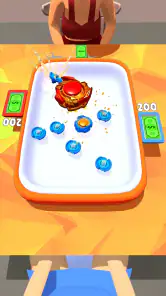
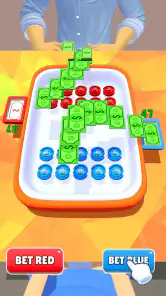
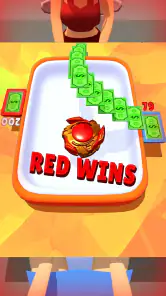
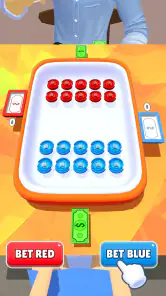
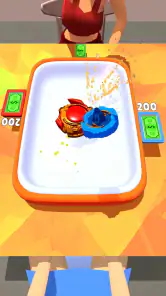
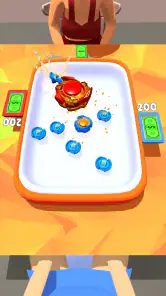
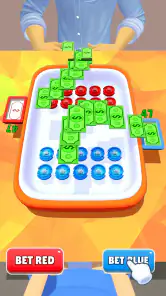
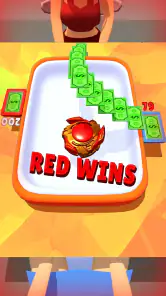
Analysis by Reviewed
When I first stumbled upon Spinner Merge, I was a bit skeptical. Another casual game in the sea of endless apps? But oh boy, was I in for a surprise! This game might just be one of the most addictive ones out there, and here's why.
A quick shared-device break
I can picture this working well on a household tablet passed between people who each want a brief turn. The appeal is immediately visible: match spinners, watch them combine, and see what the next tier looks like. That makes it easier to hand the device to someone without a long explanation. I would still treat turns as separate play sessions rather than assume progress or preferences are neatly separated for each person; anyone sharing should agree whose session is active before tapping around.
For a realistic use case, it fits a short wait while dinner is finishing or a quiet pause between errands. I’d set a simple stopping point first, such as reaching the next objective, because the merge-and-upgrade loop can make “one more move” tempting. It is less suitable when the household needs a game that supports cooperative play: the fun here is in individual decisions and watching the board change, not coordinating a shared team strategy.
Before passing the device
A shared tablet changes the practical question from “Can everyone understand the game?” to “Whose play is this right now?” I’d make that clear before handing it over, especially if one person has already started a run and has a particular merge in mind. This is a small courtesy, but it avoids the awkward moment when a well-meaning relative taps a piece that someone else was saving.
I’d also keep the game’s place in the household routine uncomplicated. It works best as an optional filler rather than a reward that has to be negotiated every time the device changes hands. If several people want a turn, a short, agreed stopping point is more useful than trying to make every session exactly equal: finish an objective, make one planned move, then pass the screen. That preserves the casual feel without pretending the game is built around formal multiplayer turns.
The Mesmerizing World of Spinners
At its core, Spinner Merge is a delightful mix of strategy and casual fun. The basic premise is simple: you’re given a board filled with various spinners, and your goal is to merge them to create higher-tier spinners. It sounds simple, right? Well, it is, but that’s where the beauty of the game lies.
Getting Hooked
From the moment I started playing, I was hooked. The game mechanics are effortless to grasp, and the satisfaction of merging two spinners to unlock a new one is incredibly rewarding. Each new spinner comes with its own unique design and spinning speed, making the discovery process exciting.
More From Our News Desk

Clash of Clans Is Won Between the Battles

Android Auto Makes the Case for Quieter Car Software

MobiOffice: Transforming Mobile Productivity with Seamless Integration

EA SPORTS FC™ Mobile Soccer: Redefining Mobile Sports Gaming

How Microsoft OneDrive Became a Mobile Productivity Giant

How Google Translate Breaks Language Barriers Effortlessly
Moreover, the game throws in various challenges and objectives to keep you on your toes. Completing these objectives not only gives you a sense of achievement but also rewards you with coins, which you can use to purchase in-game upgrades. It’s this constant cycle of reward and upgrade that keeps you coming back for more.
Making turns and spending choices
On a shared device, I’d keep purchases and play decisions in mind as separate household concerns. The game is free, with in-app purchases ranging from $0.49 to $21.99 per item, so it is worth agreeing in advance who is allowed to make purchase decisions. I would not hand over a device with payment access and assume a younger player will know when a prompt involves spending. A quick adult check before confirming anything is a sensible boundary.
For better coordination, a player can say what they are aiming for before making a merge, then let the next person take over after that move or objective. That small pause helps avoid the common shared-screen frustration of someone changing a board while another person is planning. It also makes the game easier to put down: finish the agreed turn, note what you wanted to try next, and hand the device back without turning a casual break into an argument over who gets another go.
Planning merges without overthinking
The useful habit here is to look at the board before making a move rather than tapping the first pair that seems available. Since the point is to combine spinners into stronger ones, a moment spent checking what can merge may prevent a move that feels satisfying now but leaves fewer obvious choices afterward. I wouldn’t turn that into a strict optimization puzzle, though. The game’s appeal is that planning stays light; if every turn becomes a calculation, the relaxed arcade feel starts to disappear.
When I’m playing in short bursts, I’d treat an objective as a natural checkpoint. It gives me a reason to pause and consider whether I want another round, instead of letting the upgrade cycle decide for me. For a shared device, that checkpoint is also a practical handoff moment: the next person can see the current board and choose what to do without interrupting a move already in progress.
Visual and Auditory Delights
One of the standout features of Spinner Merge is its visual appeal. The developers have done an excellent job in crafting spinners that are not only visually appealing but also mesmerizing to watch. The colors are vibrant, and the animations are smooth, making the entire experience visually delightful.
And let’s not forget the audio! The gentle hum of the spinners is oddly satisfying, and the sound effects when two spinners merge is the cherry on top. It adds to the overall immersive experience, making it a game that’s hard to put down.
Where it fits among arcade games
In the wider arcade category, I see this as a calmer alternative to games that test quick reactions or demand repeated precision. Its central pleasure is the visible transformation of the board, not dodging hazards or hitting a narrow timing window. That makes it easier to pick up when I have only a few minutes and don’t want to restart a fast action sequence because I got interrupted.
It also differs from puzzle games built around carefully staged levels and a clear finish line. Here, the merge-and-upgrade rhythm is the main attraction, so players who want a fresh type of challenge every few minutes may find it repetitive. I’d choose it for low-pressure tinkering and visible progress; for competition, elaborate level design, or a strong sense of an ending, I’d look elsewhere.
Who will enjoy this loop?
I’d recommend it to someone who likes arcade games that pair quick visual feedback with light planning. Compared with a reflex-focused arcade game, where success depends on timing every move, this one puts more emphasis on combining pieces and choosing when to improve them. Compared with a deeper strategy game, it asks less of your memory and long-term planning. That middle ground is useful for casual play, though players wanting precise competitive action may prefer a game built around direct skill tests.
There is also a practical trade-off in the upgrade loop: spending coins can make progress feel satisfying, but it may shift attention from experimenting with merges to chasing the next improvement. I’d try a few rounds before buying anything, and decide whether the basic rhythm is enjoyable on its own. If the repeated combine-and-upgrade cycle feels tiring rather than soothing, another arcade game with shorter, clearly separated rounds may be a better fit.
Small routines that make it easier to stop
For an everyday session, I’d start with a modest intention: explore a couple of merges, work toward one objective, or simply see how the board develops. That gives the session a shape without adding rules the game doesn’t need. It is especially useful when I’m playing while waiting for someone or taking a break between tasks, because I can put the device down at a sensible moment instead of relying on willpower after an open-ended run.
If a child is sharing the device, I’d make the handoff routine explicit: say whose turn it is, agree on the stopping point, and have an adult handle any purchase decision. These are household habits rather than special game features, but they answer the questions that matter in practice. The game can be straightforward to learn while still being easy to keep playing longer than intended.
Age, trust, and expectations
The game is rated Teen, so I would not treat its simple spinner imagery as a substitute for checking whether it suits a particular child. The right choice depends on the player and the household’s rules around screen time and spending. Sunday.gg is the developer, and I find it useful to know who is behind a game when deciding what to try, while still judging the experience by how it fits our own routine.
It is free to start, and the current version is 8.9.0. The game has a 3.8 average from around 47,000 ratings, with more than 10 million installs. Those figures suggest plenty of people have tried it, but they do not tell me whether every player will enjoy its repeatable loop. I would use the first few sessions to see whether the pace, sound, and goals suit the person holding the device. Its release date is March 8, 2022, and it requires Android 5.1 or later.
What I’d check before settling in
The first session is a useful test of fit, not just a tutorial. I’d pay attention to whether the person playing enjoys watching the board evolve, whether the objectives feel motivating rather than pushy, and whether the sound is welcome in the room. Since the game’s appeal depends partly on its spinning visuals and audio, it may be a better match for a quiet break than for a noisy shared space where its small feedback cues are easy to miss.
It is also worth deciding whether the device is being used by one person or passed among several. A shared screen is convenient, but it does not automatically create separate account boundaries or personal play spaces. I would avoid assuming that a new person can pick up exactly where they left off independently; instead, agree on the active session and keep any personal device or account arrangements separate from the game itself.
Why You Should Give It a Spin
If you’re looking for a game that’s easy to pick up but hard to master, then Spinner Merge is definitely worth a try. It’s perfect for those moments when you need a quick break or when you’re looking to unwind after a long day. The game is free to download, so there’s really no reason not to give it a shot.
In conclusion, Spinner Merge is more than just a casual game; it’s a delightful experience that combines strategy with relaxation. Whether you’re a seasoned gamer or someone just looking for a fun distraction, this game has something for everyone. So go ahead, download it, and let yourself get lost in the mesmerizing world of spinners!
My household verdict
For a home where people want a low-pressure game to take turns with, I think it can be an easy option, provided everyone understands who is playing and who can approve purchases. It is not my pick for shared teamwork, strict turn-based competition, or a child’s unsupervised access to spending. If those boundaries are clear and the merge loop appeals, I’d give it a short trial; if not, a more structured arcade game may suit the household better.
My clearest recommendation is to try it on a device where the person playing can make their own choices and pause without disrupting anyone else. It suits someone who enjoys gradual board changes, simple objectives, and a little planning without the pressure of fast reactions. I’d skip it for a household looking for a proper multiplayer activity, a strongly varied campaign, or a game that naturally ends after a short, fixed round.
As a free game, it is easy to sample, but “free to start” is not the same as “no spending decisions.” I’d keep the purchase boundary clear from the beginning, particularly on a shared device. If the spinner-merging itself is satisfying, the core loop has a fair chance of holding your attention; if the upgrades become the only reason to continue, I’d take that as a sign to switch to another kind of arcade game.
Spinner Merge Frequently Asked Questions
What is the price of Spinner Merge, and can I try it before spending money?
Spinner Merge is free to download, so you can try its arcade gameplay without paying upfront. It also offers optional in-app purchases, with prices ranging from $0.49 to $21.99 per item. If you prefer not to spend, review your device’s purchase settings and keep in mind that the game is designed to be playable without making an in-app purchase.
How much space does Spinner Merge need, and what should I check before installing?
Before downloading Spinner Merge, make sure your device has enough free storage for the game and any updates it may receive. The Android minimum operating system is version 5.1, so check that your device meets that requirement. On iPhone or iPad, review compatibility in the relevant app store before installing, and use an official store to get the genuine game.
What kind of game is Spinner Merge, and who might enjoy it?
Spinner Merge is an arcade game built around merging spinners, spinning blades, and battling. Its straightforward central idea may appeal to players who enjoy casual games with quick, action-focused interactions, as well as those who like combining items to build stronger versions. The game is rated Teen, so it is worth checking that age guidance before downloading it for a younger player.
What is Spinner Merge and how does it work?
Spinner Merge is an engaging mobile game that combines the fun of spinning and merging. Players start with simple spinners and gradually merge them to create more powerful ones, unlocking new levels and challenges. The objective is to build the ultimate spinner collection, enhancing their spinning capabilities with each merge. The game offers intuitive controls, making it accessible for all ages.
Is Spinner Merge free to play, and are there in-app purchases?
Yes, Spinner Merge is free to download and play. However, like many mobile games, it offers in-app purchases that allow players to enhance their gaming experience. These purchases can include new spinners, special power-ups, or removing ads. While the game can be enjoyed without spending money, these optional purchases can provide a faster progression and additional customization options.
Pros
- Engaging gameplay mechanics
- Visually appealing graphics
- Easy to learn controls
- Variety of levels
- Challenging puzzles
Cons
- Contains in-app purchases
- Occasional ads interrupting play
- Limited offline functionality
- May drain battery quickly
- Requires internet connection

- Category
- Arcade
- Version
- 8.9.0