Word Connect Association
- 2.18K
- 4.8
- Installs
- 1.00M
- Price
- Free
Screenshots
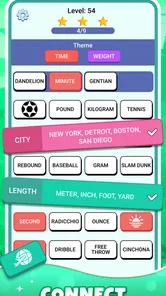
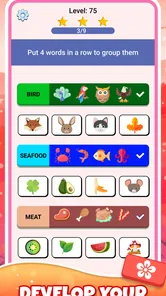
Analysis by Reviewed
I like word games that let me settle into a small puzzle without demanding a long session, and Word Connect Association is aimed squarely at that mood. Its central appeal is connecting related words while working through brain-teasing puzzles at an unhurried pace. That makes it easy to pick up during a quiet break, though it is better suited to relaxed wordplay than to players looking for a deep campaign or a fiercely competitive challenge.
What makes a connection satisfying
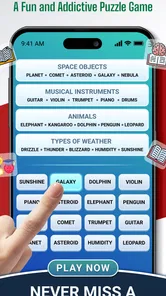
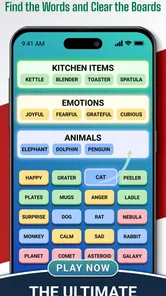
The best way to judge an association puzzle is not only by whether I can solve it, but by whether the link feels coherent once I see it. This style rewards flexible thinking: a word might belong with others through a shared setting, a common use, or a familiar idea rather than through spelling or a strict definition. That variety gives the solving process its small surprises, but it also explains why different players can approach the same group from different directions.
I find it useful to read the full set of words once before committing to a theory. A quick first impression can anchor me to one meaning, especially when a word has several everyday uses. Looking across the board first helps me notice whether a possible theme actually accounts for a cluster, rather than just one appealing pair. It is a simple habit, but it makes the game’s central skill clearer and cuts down on unproductive trial and error.
How the word-linking feels in practice
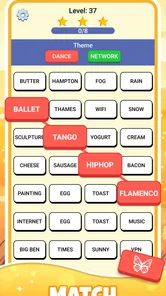
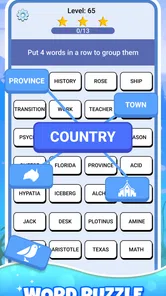
This is a word game from PlaySimple Games, built around spotting relationships between words rather than simply recalling definitions. That distinction matters: a puzzle can feel approachable because its words are familiar, yet still make me pause while I work out what links them. I find that the satisfying moment is often not discovering an obscure term, but noticing a connection I had overlooked.
The format naturally encourages short sessions. I can give a puzzle my attention while waiting for something or take a few minutes to unwind at the end of the day, then stop without needing to remember a complicated story or a set of controls. The store describes the experience as calming, and that is a fair expectation if you enjoy thinking things through without a timer-driven feel being the main attraction.
One useful way to approach a stubborn board is to stop treating every word as an isolated clue. I look for possible shared contexts, categories, or everyday associations, then test whether the same idea makes sense across the group. If a connection explains only one pair, it may be a tempting dead end; if it makes several words feel like they belong together, it is a stronger candidate. That small change in approach can make the game feel more like reasoning and less like random guessing.
There is also a trade-off in this kind of design. Familiar vocabulary keeps the barrier to entry low, but association puzzles can depend on how a player interprets a word. Two people may see different plausible links, especially when a term has several common meanings. When I get stuck, I try changing the angle—thinking of a word’s use, setting, or familiar grouping—rather than repeatedly trying the same interpretation.
More From Our News Desk

Weather by Xiaomi Review: Clear at a Glance, Less Clear Up Close

X Under Pressure: Can It Recover When Posting Goes Wrong?

Clash of Clans Is Won Between the Battles

Android Auto Makes the Case for Quieter Car Software

MobiOffice: Transforming Mobile Productivity with Seamless Integration

EA SPORTS FC™ Mobile Soccer: Redefining Mobile Sports Gaming
A gentler alternative to word searches and crosswords
Compared with a word search, this asks for more interpretation and less visual scanning. Compared with a crossword, it does not put the same emphasis on filling a grid from tightly phrased clues. The appeal is in making connections, so it can suit someone who likes language puzzles but finds dense clue-solving tiring. If you specifically want a large vocabulary test, a crossword or spelling-focused game may offer a more demanding workout.
It is also distinct from word-building games where the main task is arranging letters into valid words. Here, recognizing relationships is the point. That makes it a good change of pace for someone who has played many anagram or letter-tile puzzles and wants a different kind of mental nudge. On the other hand, players who love racing a clock, competing directly with friends, or optimizing a score may find the calmer approach less compelling.
The game is free to download and has optional in-app purchases, with listed item prices ranging from $2.99 to $199.99. I would treat those purchases as something to review carefully rather than as a reason to spend by default: the basic proposition is casual word puzzling, and anyone who prefers not to make optional purchases can decide whether the free experience suits them. The price range is broad, so it is worth checking the exact item and amount shown in the app before confirming anything.
Small-session play works best with a little patience
A realistic use case is a short wait between errands. I would open a puzzle, give it a focused attempt, and use a pause as a natural stopping point rather than forcing a solution when my attention has wandered. Association games can be surprisingly sensitive to mood: when I am tired, I may keep circling one idea, while a brief break makes another connection easier to see. The game’s low-pressure premise makes that stop-and-return rhythm a sensible way to play.
For a more deliberate session, I would group candidate words mentally before settling on an answer. If a puzzle seems to invite several interpretations, I would ask which proposed link accounts for the most words with the fewest assumptions. This is a useful habit beyond the game, too: it turns a vague “these seem related” feeling into a clearer test. It also helps keep an easy puzzle from becoming a string of guesses.
There is a limit to that advice. If a particular association feels culturally specific or simply does not match the way you use a word, more analysis may not make it enjoyable. I would not recommend pushing through frustration just because the game is designed to be relaxing. A different word game with direct definitions or letter clues may feel fairer to someone who wants every answer to be supported by an explicit clue.
Who is likely to enjoy it
I would recommend it to casual players who like language, pattern recognition, and puzzles that can fit around ordinary life. It is especially suitable for someone who wants a gentle mental break rather than a long, high-stakes session. The game is rated for Everyone, which makes its broad, approachable style easy to understand, though individual preferences still matter: a child who prefers fast action may not be drawn to word associations, while an adult who enjoys quiet puzzles may find the format a welcome change.
Its audience is not limited to experienced word-game fans. Because the challenge comes from linking ideas, a player does not need to enjoy spelling contests or know rare vocabulary to understand the basic attraction. Still, people who dislike ambiguity should try it with an open mind. The pleasure depends partly on being willing to consider more than one possible relationship before the intended grouping becomes clear.
The numbers suggest that it has found a substantial audience: it has more than a million installs, an average rating of 4.8 from around 39,000 ratings, and roughly 1,900 written reviews. Those figures do not tell me whether every puzzle will fit every player, but they do place it among widely tried casual word games rather than an obscure experiment. I would use that popularity as context, not as a substitute for deciding whether association puzzles are your kind of challenge.
It is less suitable for players who want a structured narrative, extensive strategic systems, or a clearly measurable competitive ladder. It may also be the wrong choice if you want to learn new words through definitions: connecting familiar ideas is a different skill from studying vocabulary. For that goal, a dictionary-based quiz or a crossword with explicit clues would be a better match.
Practical details before you install
Word Connect Association is free, runs on Android with a minimum OS version of 8.0, and its current version is 1.68.0. It was released on July 7, 2025. Those details make it straightforward to check basic compatibility before downloading, while the free-to-start model lets a new player try the core style before deciding whether optional purchases are relevant to them.
As with any game that offers in-app items, I would keep an eye on purchase prompts if I am handing a device to a child or simply want to avoid an accidental charge. The Everyone age rating describes the game’s general suitability, but it does not remove the need to manage spending settings according to your household’s preferences. That is a practical consideration, not a reason to assume the game requires payment.
PlaySimple Games has made a focused choice here: the attraction is the moment when several words suddenly make sense together. That focus is a strength when I want a compact, calm puzzle, but it also means the game should not be mistaken for a broad collection of word-game modes. I would choose it for association-based thinking, not because I expect it to replace every crossword, anagram, or trivia game on my phone.
A good pick when you want a calm mental reset
My verdict is positive with a clear caveat. Word Connect Association is worth trying if you enjoy making links between familiar words and want a low-pressure activity that works in brief sessions. Its best quality is the simple satisfaction of spotting a relationship that was not obvious at first; its main limitation is that association-based answers can feel less precise than a direct clue when your interpretation differs from the puzzle’s.
If that ambiguity sounds enjoyable, I would give it a try and let the puzzles set the pace. If you prefer strict clues, competitive timers, or lessons in unfamiliar vocabulary, I would choose a different kind of word game instead. For the right player, though, this is a pleasant way to turn a spare few minutes into a small exercise in attention and flexible thinking.
How I would fit it into an ordinary day
For me, the most useful way to make a casual puzzle habit stick is to attach it to a moment that already has a natural pause: waiting for a kettle, sitting on a train, or taking a breather between tasks. I would treat one board as a complete little activity, not as something that needs to become a daily streak or a serious routine. That keeps the experience restorative rather than turning downtime into another obligation.
When I have only a minute, I would scan for the most obvious shared theme and stop if nothing clicks. With a little more time, I would compare two competing explanations and ask which one makes the whole group hang together. This second pass is more useful than repeatedly staring at the same words, because it makes me test an idea instead of merely hoping it will feel right.
That approach also gives a practical answer to whether the game suits quick play: its word-linking premise is naturally easy to pick up in short stretches, but a puzzle can still ask for sustained attention if the association is not immediately clear. I would not open it expecting every round to resolve instantly. The pause-and-return option is part of the appeal, especially for anyone who would rather leave a puzzle fresh than turn a relaxing break into a frustrating guessing session.
Choosing it over another word game
The choice comes down to what kind of thinking feels enjoyable. A crossword gives more explicit prompts and often rewards vocabulary and clue interpretation; a word search is more about visual scanning; an anagram game focuses on rearranging letters. This title sits in a different lane, asking me to build a plausible bridge between familiar ideas. If I want a loose, lateral-thinking exercise, that is a meaningful difference. If I want a precise clue with one clearly signposted route, the alternatives may feel more satisfying.
I would also separate “relaxing” from “effortless.” The unhurried style can make a session feel calm, but finding the intended relationship may still take concentration. Someone hoping to zone out completely while tapping through obvious answers could find the interpretive work more demanding than expected. Conversely, a player who enjoys a little uncertainty may appreciate that the puzzle asks for a thought rather than just a fast response.
One small tactic is to give a candidate association a quick reality check: can I explain the connection in ordinary words, and does it apply consistently to the group? If I have to invent a strained explanation for one member, I would keep looking. This does not guarantee that every puzzle will match my instincts, but it keeps my reasoning grounded and makes the moment of resolution feel earned rather than accidental.
Who should pass, and what to check first
I would steer away from it if your main goal is formal vocabulary study, a story-led game, or a head-to-head contest. It is also a less comfortable fit if you strongly prefer unambiguous answers; a connection can seem obvious to one person and less natural to another. Those are not flaws that a few extra minutes necessarily fix—they come from the central design choice. Before installing, I would ask myself whether exploring possible meanings sounds fun or like needless guesswork.
For someone deciding whether to spend anything, the sensible first step is to try the free experience and judge whether the basic puzzle style holds their attention. Optional items are not essential to the reason I would recommend the game, and the broad purchase range makes checking an item’s exact price especially important. If a child will use the device, household purchase controls are a better safeguard than relying only on the age rating.
Overall, I see this as a focused option for people who want a small, thoughtful change from the usual letter games. Its strongest case is not that it replaces crosswords or anagrams, but that it offers a distinct kind of word play: looking for relationships instead of spelling or decoding direct clues. If that is the sort of mental detour you enjoy, it is an easy one to try; if not, choosing a more structured puzzle will probably be the better use of your time.
Word Connect Association Frequently Asked Questions
What is Word Connect Association?
Word Connect Association is a word puzzle game that asks you to find links between words and solve association-based challenges. Rather than relying only on spelling, it encourages you to think about meanings, categories, and connections. The exact puzzles and features can vary by version, so check the app listing for current details before downloading.
How do you play Word Connect Association?
In general, you examine the words shown in a puzzle and identify how they relate, then use the available controls to submit your answer or progress through the level. Some puzzles may feel straightforward, while others require trying several possible connections. Read the in-game instructions at the start, since controls and rules may differ between releases.
Is Word Connect Association free to download, and does it include ads or purchases?
The game may be offered as a free download, but that does not necessarily mean every part of it is free or ad-free. Mobile puzzle games commonly use advertisements, optional in-app purchases, or both. Availability and pricing can also differ by platform or region, so review the Google Play or App Store listing and its purchase information before installing.
Can I play Word Connect Association offline?
Offline availability depends on how the current version handles ads, saved progress, and online services. Basic puzzles may work without a connection in some releases, while features such as advertisements, purchases, or cloud synchronization may require internet access. If you need to play while traveling, check the store listing and test the game before relying on it offline.
Is Word Connect Association suitable for children, and what should parents check?
Word association puzzles can be a suitable way for players to practise vocabulary and reasoning, but suitability depends on the game’s content, difficulty, and advertising. Parents should check the age rating, privacy information, and whether the app contains ads, external links, or in-app purchases. Reviewing these details on the relevant app store is sensible before a child downloads or plays it.
Pros
- Quick rounds make it easy to play during short breaks.
- Word puzzles can help build vocabulary and spelling skills.
- The simple controls are easy for new players to understand.
- Increasing difficulty offers a steady challenge as you progress.
- Offline play lets you enjoy puzzles without an internet connection.
Cons
- Some word puzzles may feel repetitive after extended play.
- A few answers can be difficult to guess without using hints.
- Ads may interrupt the flow of play.
- Later levels can require more time and retries to complete.
- The game may offer limited variety beyond its core word puzzles.