Vigor Solitaire for Seniors
- 178.00
- 4.9
- Installs
- 50.00K
- Price
- Free
Screenshots
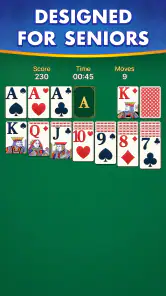
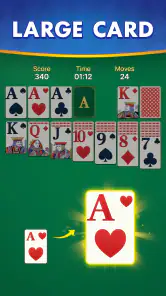
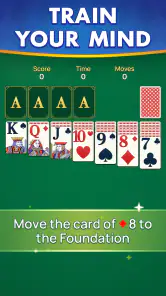
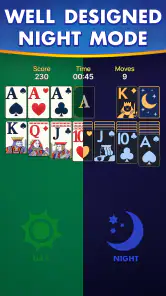
Analysis by Reviewed
I spent my first sessions with Vigor Solitaire for Seniors in the way most people will probably use it: for a few quiet minutes, with no tutorial-heavy learning curve and no need to gather other players. It is a free card game from Mouse Games, built around the familiar solitaire format and presented as a senior-friendly choice. That simple purpose is also its strongest argument. You can open it when you want a calm mental break, play at your own pace, and stop without feeling that you have abandoned a larger game world.
The important question, though, is not whether solitaire is enjoyable for an afternoon. It is whether this particular version still deserves a place on a phone after the initial novelty disappears. My answer is cautiously positive. The game is easy to understand, accessible to a broad audience, and suitable for short recurring sessions. At the same time, its appeal depends heavily on how much variety and challenge you expect from a card game. If you want a focused solitaire companion rather than a feature-packed gaming platform, it makes sense. If you need constant progression, social competition, or a large selection of card formats, it may feel limited sooner.
What the first week feels like
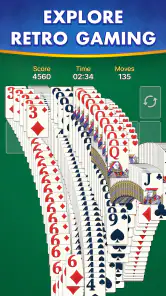
The first-week appeal comes from immediate familiarity. This is not a game that asks me to learn a fictional world, memorize a complicated ruleset, or build a collection before the basic experience becomes enjoyable. The solitaire structure does most of the teaching by itself. Anyone who already knows the classic card game can settle in quickly, while a less experienced player can understand the central rhythm through ordinary play.
That matters especially for older players who may not want a crowded interface or a game designed around constant alerts. A senior-friendly solitaire title should reduce the distance between opening the app and making the first useful move. Vigor Solitaire for Seniors succeeds as a low-pressure activity because the card table is the point, not a distraction from several other systems.
I also found the short-session design practical. A round can fit into a waiting room, a coffee break, or the quiet period before bed. There is no need to reserve a long block of time, and the game does not require coordination with another person. For someone who wants a small daily habit, that is more valuable than dramatic presentation. The app gives solitaire a dedicated place on the phone instead of making the player search through a broad collection of unrelated games.
My advice during the first week is to resist judging it only by the first few rounds. Familiar card games can feel almost effortless at the beginning because the rules are already stored in your memory. The better test is whether you naturally return to it the next day. I would try it in three different situations: a very short break, a longer relaxed session, and a moment when I want concentration without pressure. Those uses reveal whether the simple format fits your routine.
The game is rated for Everyone, which matches its approachable identity. That does not mean every person will enjoy it equally. A child looking for action may find it too quiet, while a competitive adult may want more demanding goals. For families, however, the age positioning makes it easier to recommend as a straightforward card activity rather than a game built around mature themes or complicated online interaction.
One useful habit is to treat each round as a small exercise in planning rather than as a race. Before moving an available card, I look at what that move exposes and whether it creates a better sequence later. This approach makes the game more satisfying for someone who values attention and routine. It also prevents the experience from becoming a series of automatic taps, which is one of the quickest ways for familiar solitaire to lose its charm.
Who gets the most from the simple format
I think the best audience is someone who already likes traditional solitaire or wants a quiet card game that can be understood without explanation. It also suits relatives looking for an uncomplicated pastime for an older family member. The game can be useful during travel, at home between chores, or whenever a person wants something more engaging than passive scrolling but less demanding than a strategy game.
It is less suitable for people who need a strong sense of advancement. There is a difference between enjoying repeated card puzzles and needing a game to keep introducing new mechanics. Vigor Solitaire for Seniors is strongest when repetition is comforting. It is weaker if repetition feels like a lack of content.
Why it may or may not last beyond the novelty
After the first month, the central value becomes habit. Solitaire does not need a dramatic update every time you open it; its recurring appeal comes from the small decisions inside each deal. I can imagine using this game regularly in the same way someone might keep a crossword book nearby. The activity is familiar, but each layout asks me to pause, scan the available choices, and accept that not every move should be made immediately.
That recurring value is real, but it has a ceiling. A classic card format can remain enjoyable for years when the presentation is comfortable and the player likes the underlying puzzle. It cannot, by itself, guarantee long-term interest for someone who needs fresh objectives. The game earns lasting space when it becomes part of a daily rhythm, not when it tries to compete with large modern games on content volume.
For a senior player, the routine may be more important than novelty. A predictable card table can be reassuring, especially when the goal is to spend a few minutes concentrating. I would recommend setting a natural stopping point rather than playing until the experience becomes mechanical. One or two thoughtful rounds can preserve the sense of occasion better than extended sessions where every move is made from habit.
There is also a useful distinction between relaxation and stimulation. When I want to unwind, the familiar rules lower the mental entry cost. When I want a demanding challenge, the same familiarity can make the game feel too gentle. This is why I would keep it alongside, rather than instead of, a more varied puzzle app. The two serve different moods.
The current version is 2.2, and the game was released on January 27, 2026. Those details place it in a relatively early stage of its life as a product, so I would judge its present value by the quality of the core experience rather than by expecting a mature ecosystem around it. A new player should think of it as a focused solitaire option, not as a broad platform whose long-term appeal depends on a large catalog of modes.
Its reception is encouraging: it holds a 4.9 average from around 2.8 thousand ratings, with roughly 178 written reviews and over 50 thousand installs. I would not treat those figures as a guarantee that it will suit every player, but they do suggest that the straightforward approach is connecting with its audience. The pattern also reinforces my impression that the game’s value is found in ease and familiarity rather than in ambitious complexity.
Practical ways to make the routine work
If you are installing it for an older relative, I would first let that person play without trying to optimize every decision. The game is more welcoming when the player feels ownership of the pace. Once the basic rhythm is comfortable, a simple routine helps: play at the same quiet time, stop after a satisfying round, and use the game as a deliberate break rather than something running constantly in the background.
For my own use, I would place it where I can reach it without opening a folder full of distractions. That small choice changes whether a short solitaire session remains a focused activity or turns into an accidental hour of unrelated phone use. The app’s strength is its low friction, so the surrounding routine should preserve that simplicity.
How much upkeep the game demands
The maintenance burden appears low in the everyday sense. This is a compact card game, not a service that asks me to manage characters, resources, teams, or a complicated account. I do not need to learn a new system each time I return. That makes it suitable for players who want a stable pastime and do not enjoy the feeling that a game is assigning them homework.
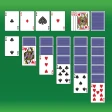
Low maintenance does not mean no friction. Any solitaire app can become tiring if the player has to work too hard to read the table, understand the available action, or recover from an accidental tap. For a senior audience, comfort is part of the game design, not a cosmetic extra. I would pay close attention during the first sessions to whether the cards are easy for me to follow and whether the controls feel forgiving enough for relaxed play.
The minimum operating requirement is Android 6.0, which keeps the game relevant to people using older Android devices. That is a practical advantage for families helping a parent or grandparent who does not replace a phone frequently. It also means the app is positioned as a broadly accessible game rather than one aimed only at recent hardware.
Because it is free, the decision to try it is relatively easy. Still, “free” should not be confused with a promise of unlimited satisfaction. The real cost may be attention: whether the game gives enough enjoyment to justify keeping it installed. I would give it a fair trial, then remove it without hesitation if it becomes an automatic habit with no pleasure attached.
One maintenance advantage of a focused solitaire app is psychological. There is less pressure to remember where you left off in a large campaign or to return before a timed opportunity disappears. If I skip several days, I can come back without feeling behind. That makes it a better fit for irregular routines than games built around daily obligations.
On the other hand, players who enjoy collecting, unlocking, or comparing progress may find the low-maintenance structure too bare. A game that never asks much from me can be relaxing, but it can also provide fewer reasons to return once the basic routine loses freshness. That trade-off should be considered before installing it for someone who expects visible long-term progression.
Where fatigue begins
The main source of fatigue is repetition. Solitaire’s rules are its comfort, but they are also its boundary. After enough sessions, I may start recognizing the same decision patterns and playing from reflex. When that happens, the game needs to remain mentally present; otherwise it becomes little more than a sequence of familiar gestures.
Another possible weakness is the narrow focus. The store summary presents a classic card experience, and that is exactly how I approach it. I would not install this expecting a collection of unrelated card games, multiplayer tables, or a deep progression system. Choosing it over a larger card-game app means accepting a smaller scope in exchange for a clearer purpose.
That makes comparison with alternatives fairly straightforward. A physical deck offers the same core activity without a battery, but it needs a table, good lighting, and someone willing to shuffle and arrange the cards. A broad digital card collection offers more variety, but usually requires more menus and more decisions before playing. A puzzle game may provide stronger changing challenges, while Vigor Solitaire for Seniors offers a gentler, more recognizable routine.
I would skip this app if I want competitive play, rapid action, or a game that constantly rewards me with new content. I would also skip it if I dislike replaying a familiar format. In those cases, a larger card suite or a dedicated puzzle game would likely provide better long-term value. The app is not failing when it lacks those things; it is simply serving a narrower purpose.
For someone with visual or motor difficulties, I would test the experience personally before recommending it as a gift. The senior-focused positioning is promising, but individual comfort varies widely. Card readability, touch accuracy, and the ability to distinguish available moves matter more than a general age label. If the table feels tiring after a few minutes, the game will not become a good daily companion simply because the rules are familiar.
There is also a social limitation. Playing alone is part of the appeal, but some people stay engaged through friends, rankings, or shared goals. This title is better for private concentration than for creating a social ritual. If the intended player enjoys discussing hands or competing with family members, a multiplayer-oriented alternative may create stronger recurring motivation.
A realistic everyday test
Imagine finishing lunch and having ten minutes before the next errand. With a physical deck, setting up may take most of that time. With a large game app, browsing can become the activity. Here, the natural use is to open the solitaire table, play one measured round, and put the phone away. That scenario captures the game’s practical strength: it fills a small gap without demanding preparation or commitment.
Now imagine the same player using it for an hour every evening. The experience may still work if solitaire itself is a favorite, but fatigue becomes more likely. I would alternate between short sessions and other hobbies rather than forcing the game to carry an entire evening. Its lasting value improves when it remains a welcome option, not the only option.
My long-term verdict
After looking past the first-week novelty, I see Vigor Solitaire for Seniors as a focused tool for a familiar pastime. Mouse Games has chosen a format that is easy to approach, inexpensive to try, and suitable for quiet repetition. The free price and Everyone rating make it an uncomplicated recommendation for adults and older players who want a classic card game on an Android device.
Its strongest long-term quality is not variety but reliability. I can imagine keeping it installed for those moments when I want a small concentration exercise without learning anything new. The game earns that space if I enjoy the ritual of arranging cards and making careful choices. It does not earn it through a broad content roadmap, social energy, or constant surprises.
I would recommend it to a friend who says, “I just want solitaire that I can open and play.” I would be more hesitant with someone who asks for a deep challenge, many card variants, or a reason to compete every day. For the first person, the narrow design is a benefit. For the second, it is the central limitation.
My final advice is to judge it by return behavior. Install it, play in short sessions, and notice whether you reach for it naturally after the first few days. If the familiar table helps you relax and focus, it can become a pleasant low-maintenance habit. If every round feels interchangeable, move on to a more varied card or puzzle experience. The lasting value here comes from fitting neatly into your routine, not from trying to be more than a calm solitaire game.
Pros
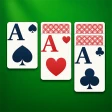
- Large cards and clear layouts make games easy to follow.
- Simple controls are comfortable for users with limited dexterity.
- Relaxed gameplay works well for short or longer sessions.
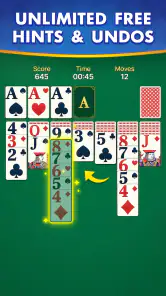
- Helpful hints can reduce frustration when a move is unclear.
- Offline play is convenient when no internet connection is available.
Cons
- Some features may be locked behind advertisements or purchases.
- Repeated deals can make the experience feel less varied over time.
- Ads may interrupt play
- especially between completed games.
- The app may use noticeable battery during extended sessions.
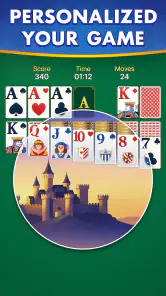
- Limited customization could disappoint players wanting more visual themes.
- Category
- Card
- Version
- 2.2