Undersea Solitaire Tripeaks
- 6.12K
- 4.6
- Installs
- 1.00M
- Price
- Free
Screenshots

Analysis by Reviewed
I approached Undersea Solitaire Tripeaks expecting a familiar card game with a decorative theme, but it works better when treated as a small adventure built around solitaire. The basic idea is easy to understand: clear cards from a TriPeaks layout by selecting cards that sit immediately above or below the value of the card in your hand. The underwater setting gives that straightforward loop a sense of place, while the progression keeps each short session connected to a larger journey.
That combination makes it a comfortable choice for people who want something more directed than a plain solitaire app, but less demanding than a traditional strategy game. I can play a single round while waiting somewhere, then return later without needing to remember a complicated control scheme. At the same time, the game is not simply a quiet card table. Its adventure framing, changing layouts and resource-conscious decisions create moments where an apparently obvious move is not always the best one.
How the underwater card adventure works
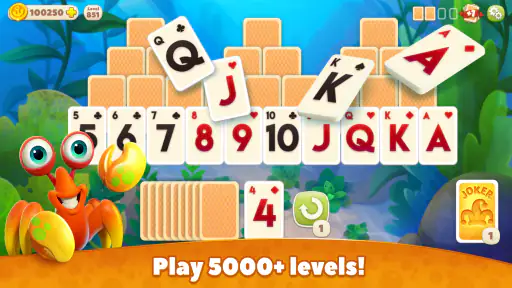
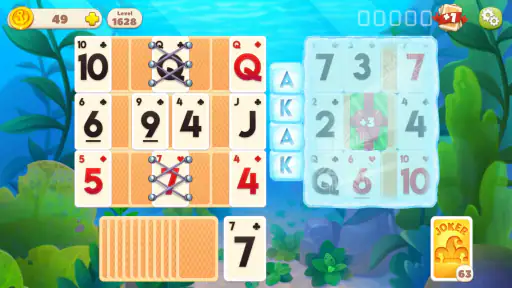
At its core, this is a card game for Android and iOS from Plarium Global Ltd. The TriPeaks format gives every round a clear rhythm. I look at the exposed cards, choose a valid next card, and try to build a sequence long enough to uncover more of the board. When no useful move is available, the round becomes less about speed and more about judging which card to remove first and which possibilities to preserve.
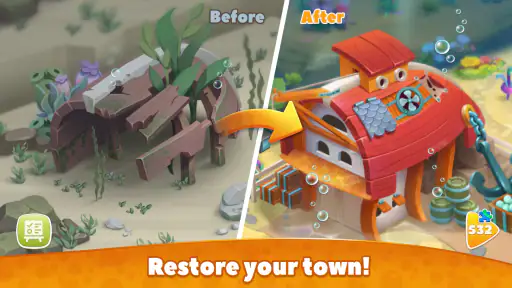
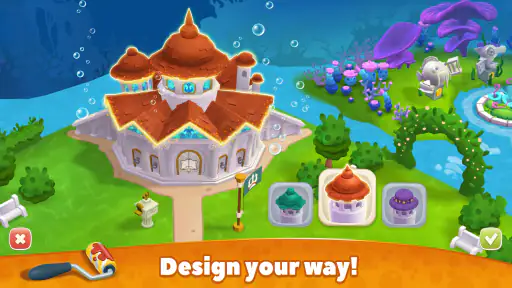
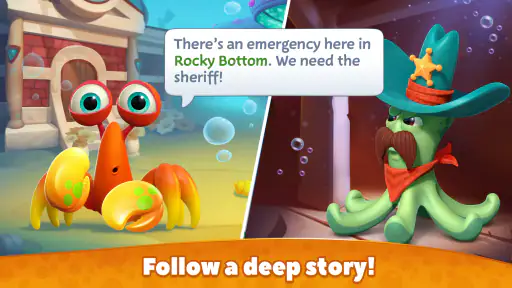
The underwater presentation is more than a label placed over a standard deck. It gives the game a reason to move beyond isolated rounds. The solitaire boards feel like steps in an undersea journey, so completing a hand has a little more purpose than merely improving a personal time or score. That structure is useful for players who lose interest in endless standalone deals, because each session contributes to visible progress through the game world.
I also like the way TriPeaks naturally creates tension without requiring complex rules. A run can look safe at the beginning, then become awkward when the next available cards do not match the sequence I have built. The best habit is to pause before taking an easy card and inspect the exposed options. Clearing one card may reveal another, but using a particular value too early can leave a more useful route unavailable later.
The controls are approachable enough for someone who has never played this variation of solitaire. The card values do most of the explaining, and the touch interaction is direct. That simplicity is important on a phone, where a dense interface would make a casual round feel like work. I found the format especially suitable for one-handed play, although the visual elements around the board can make the screen feel busier than a minimalist solitaire table.
What makes the progression worthwhile
The adventure layer gives the card rounds a stronger sense of continuity. Instead of opening the game only when I want a random deal, I have a reason to return and see what the next stretch of the journey offers. This is the main difference from a basic solitaire utility: the game is designed to turn repeated card sessions into an ongoing pastime.
That design also changes how I judge a failed round. In a plain solitaire app, losing usually means starting another deal immediately. Here, the surrounding progression makes the result feel like one step in a longer sequence. I still want to win, but the game is more forgiving psychologically because the purpose is not limited to a single perfect hand.
There is a useful trade-off in this approach. Players who enjoy a clean, distraction-free deck may find the adventure elements unnecessary. Those who like collecting, unlocking or moving through a themed setting will probably appreciate the extra context. The game is at its best when I want solitaire with a destination, not solitaire as a purely mathematical exercise.
Free access and the question of value
The game is free to download and is suitable for Everyone, which makes trying it straightforward. The free entry matters here because the appeal depends on whether the underwater progression adds enough interest beyond ordinary TriPeaks. I would not recommend paying before discovering whether the pacing and presentation suit your taste; the no-cost starting point lets you make that decision through actual play.
In-app purchases range from $0.99 to $99.99 per item. That wide span is the most important cost consideration. The game can be approached as a free casual experience, but players who choose to spend should decide in advance what kind of value they are buying: convenience, faster progress or a way to continue playing with fewer interruptions. Those are different benefits, and none should be confused with the basic value of the card gameplay itself.
My advice is to treat purchases as optional support for a game you already enjoy, rather than as the reason to install it. If the TriPeaks rounds are satisfying without spending, the free version already provides the central experience. If the only reason to consider a purchase is frustration after a difficult sequence, waiting and trying again is usually the more sensible test of whether the game belongs on your phone.
There is also a practical budgeting point. A low-priced item may feel harmless when bought occasionally, while repeated small purchases can alter the total value of a casual game. I would set a personal limit before playing regularly, especially if the adventure structure makes progress feel urgent. That approach keeps the decision about enjoyment instead of turning a short card session into an unplanned expense.
Where the game delivers real value
The strongest value comes from the balance between immediate play and longer-term motivation. A standard solitaire app may be better for a quick, neutral card puzzle, but it can also feel disposable. This game gives repeated rounds a visual setting and a sense of movement. For me, that makes it easier to return after a break because I am not opening the same empty table every time.
It is also a good fit for players who want rules that are quick to learn but still reward careful choices. TriPeaks does not bury the player under a large rulebook, yet it offers enough uncertainty to prevent every round from feeling automatic. The challenge comes from managing the order of available cards, not from memorizing a complicated system.
Another advantage is its flexibility as a short-session game. I can play when I have only a few minutes, but the same format can occupy a longer break if I want to continue. That makes it more adaptable than a game that needs a large uninterrupted block of time. It is particularly convenient for people who prefer calm, turn-based interaction over reflexes, timing or competitive pressure.
The underwater theme may also appeal to players who normally ignore card games. Someone who would not install a plain solitaire app may be more willing to try a game that presents the cards as part of an adventure. The theme does not change the fundamental rules, but it gives the experience a stronger identity and can make repetition feel less stark.
Small decisions that improve a round
My first practical tip is to avoid choosing the first legal card automatically. When several cards are available, I look for the move that exposes the most useful follow-up rather than the move that merely extends the current run. This is a simple adjustment, but it makes the game feel more strategic and reduces the number of rounds lost through impatience.
A second tip is to treat the visible board as a limited set of future options. I try to notice which values are still buried and which exposed cards could connect to them. If I spend a valuable connecting card too soon, I may break a sequence that could have cleared a larger section. The game rewards a quick scan before every tap, particularly when multiple peaks are partly open.
Third, I use the game as a low-pressure reset rather than forcing a long session. If I start selecting cards without checking the layout, the relaxing quality disappears and mistakes become more common. Closing the round and returning later can be more useful than chasing a win while distracted. This is one reason the short-session design works well for commuting, waiting rooms or a quiet pause between tasks.
A fourth insight is that the adventure framing can influence how I handle difficulty. I do not judge the entire game by one stubborn board. The appeal is cumulative, so a difficult round is better treated as a puzzle to revisit than as evidence that the whole experience is unfair. That said, players who want every deal to be immediately winnable may prefer a simpler solitaire format with fewer layers around the result.
Everyday use and practical fit
Imagine having ten minutes before an appointment. A conventional strategy game may take too long to reach a satisfying stopping point, while a multiplayer title may depend on other people being available. This game fits that gap neatly: I can open a TriPeaks board, make deliberate moves, and stop when the moment ends. The underwater setting gives the break some character without demanding a large commitment.
It can also work as a wind-down activity for someone who wants light engagement without fast reactions. The cards ask for attention, but the play is not based on aiming or split-second movement. That makes it a reasonable choice after work or during a quiet evening, provided the player enjoys progression systems and does not want a completely bare-bones interface.
On the other hand, I would not choose it for a serious card-game enthusiast seeking deep deck construction, competitive ranking or a highly traditional solitaire presentation. Its value is in the blend of TriPeaks and adventure, not in replacing a dedicated collection of classic solitaire variants. If your priority is maximum control over rules, layouts and visual simplicity, another card app may serve you better.
Limitations worth considering before installing
The biggest potential friction is the tension between casual card play and the broader progression design. Players who want to deal hands endlessly may find the adventure layer distracting. The game asks you to care about more than the cards, and that is either its main attraction or its main complication depending on what you expect from solitaire.
The purchase range is another reason to play thoughtfully. Free access is valuable, but the presence of items from $0.99 to $99.99 means the experience should be approached with a clear spending boundary. I would be especially cautious about making a purchase simply to overcome a temporary obstacle. The game is easier to evaluate when I separate enjoyment of the rounds from any desire to accelerate progress.
There is also the ordinary repetition that comes with any solitaire-based game. Even with an underwater setting, the central action remains selecting connected card values over and over. The progression can extend the appeal, but it cannot make the core loop suitable for everyone. If you need constant novelty, social interaction or a story that changes dramatically from session to session, this is probably not the right choice.
Device compatibility is reasonably broad for a modern casual game: the current version is 1.42.8 and it requires Android 6.0 or later. That makes it accessible to many older Android phones, although actual comfort will still depend on screen size and general device performance. I would keep the display clean and use a phone size that lets the card values remain easy to distinguish, since a crowded board is less pleasant when the cards are small.
Who should play it, and who should skip it
I would recommend it to people who enjoy classic solitaire but want a reason to keep progressing. It is also a strong match for players who like themed casual games, short sessions and decisions that are easy to learn but not entirely automatic. Families can consider it approachable as well because the age rating is Everyone, though younger players may need help understanding why a legal move is not always the wisest one.
It should be on the shortlist for anyone looking for an alternative to a plain TriPeaks app. The combination of card puzzles and an undersea journey gives the familiar format more personality. The audience is especially clear: this is for someone who wants solitaire with atmosphere and forward motion, not a silent digital deck with no surrounding context.
I would skip it if you dislike in-app purchases on principle, even when the initial download is free. I would also look elsewhere if you want a completely offline-feeling, minimalist card table, a competitive multiplayer focus or a game with substantial strategic depth outside the solitaire board. A traditional solitaire application is likely better for pure simplicity, while a full strategy card game is better for complex planning and collection-based play.
My recommendation after weighing the trade-offs
The game has earned a strong audience, with an average rating of 4.6 from around 46 thousand ratings and more than 1 million installs. Those figures do not replace personal testing, but they fit my impression that the blend of familiar TriPeaks rules and themed progression has broad casual appeal. It feels polished as a concept because the underwater setting gives repeated card rounds a clear identity.
My final verdict is to try it if you want a free entry point into a more decorative, goal-oriented version of solitaire. The value is strongest when you enjoy the card decisions first and view the adventure layer as a welcome reason to return. I would keep purchases optional, set a spending limit before becoming invested in progression, and give the game several sessions rather than judging it from a single board.
Undersea Solitaire Tripeaks is not the universal replacement for every card game, and its progression and purchase structure will not suit everyone. For me, though, it succeeds at making TriPeaks feel like a destination rather than a disposable hand. If that is the kind of light, repeatable game you want on your phone, it is worth downloading and evaluating at no cost before deciding whether any paid extras add enough value for your play style.
Pros
- Relaxing underwater theme with colorful visuals and soothing atmosphere.
- Tripeaks rules are easy to learn
- even for casual card-game players.
- Short levels make it convenient for quick gaming sessions.
- Progression and unlockable areas provide a clear sense of advancement.
- Offline play makes it suitable for travel or areas with limited connectivity.
Cons
- Some levels can depend heavily on luck rather than strategic decisions.
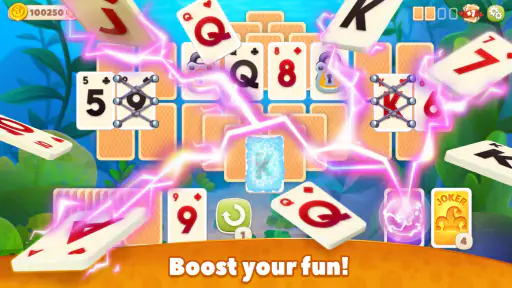
- Frequent boosters may encourage spending to overcome difficult stages.
- Ads can interrupt gameplay
- especially between completed levels.
- Later challenges may feel repetitive once the core mechanics are mastered.
- Small card details may be difficult to see on compact phone screens.
- Category
- Card
- Version
- 1.42.8