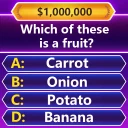
Trivia Mix: Quiz Game
- 2.00
- 4.4
- Installs
- 10.00K
- Price
- Free
Screenshots

Analysis by Reviewed
I spent time with Trivia Mix: Quiz Game as a casual trivia title, and my first impression is that it understands the appeal of short quiz sessions. You can open it when you have a few spare minutes, answer a handful of questions, and stop without committing to a long match. That makes it a natural fit for a commute, a coffee break, or a relaxed evening when I want something more active than scrolling but less demanding than a full game.
The game comes from Smart Owl Apps and sits in the trivia category. It is free to start, with optional in-app purchases ranging from $0.99 to $19.99 per item. Its age rating is Everyone, so the presentation is aimed at a broad audience rather than a narrowly defined group of players. I would describe it as a lightweight knowledge game first and a competitive experience second: the main attraction is testing what you know across many subjects, not building a character or mastering a complicated control system.
How the current version feels to play
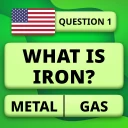
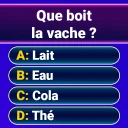
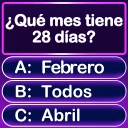
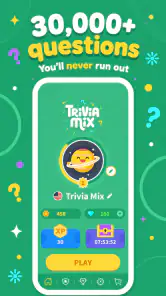
The central idea is easy to understand. You move through quick quiz rounds, answer questions, and work toward progressing through stages. The advertised question pool is very large, with over 30,000 trivia questions, which gives the game a useful sense of variety. In practice, that kind of scale matters because trivia becomes dull quickly when the same prompts return too often. A broad pool also makes the experience more suitable for repeated short sessions than a small, fixed quiz pack.
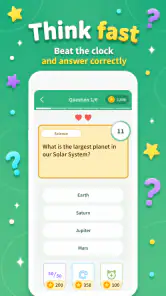
I like the quick-round format because it removes the usual friction of a trivia app. There is no need to schedule a long session or remember complicated rules before starting. If I have a few minutes while waiting for an appointment, I can play a round and put the phone away. That simplicity is one of the strongest reasons to try it, especially for people who enjoy general-knowledge questions but do not want a large multiplayer commitment.
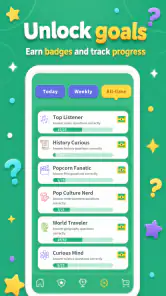
The stage structure gives the questions a little more purpose than a completely open-ended quiz. Instead of answering disconnected prompts forever, I have a sense of moving forward. That progression can encourage me to continue after a difficult question, although it also means the game works best for players who enjoy gradual advancement. Someone looking only for a single score attack may find the stage system less important than the question quality itself.
The most useful way to approach the game is as a flexible mental break. I would not install it expecting a deep strategy layer, a story, or a highly social party experience. Its value is in the rhythm of reading, recalling, choosing, and immediately seeing whether I was right. That rhythm makes it accessible, but it also places a lot of pressure on the writing and balance of the questions. If a question feels unclear or relies on an overly narrow interpretation, the simplicity of the rest of the game cannot fully compensate.
What the release and version tell me
The game was released on July 12, 2024, and the current version is 1.1.2. That places it in an early stage of its public life rather than making it look like a long-established trivia platform. I see that as a mixed signal. A newer app can feel fresh and may still have room to improve, but it has not had the same visible history as a mature quiz product with years of refinements and a large community around it.
More From Our News Desk

Weather by Xiaomi Review: Clear at a Glance, Less Clear Up Close

X Under Pressure: Can It Recover When Posting Goes Wrong?

Clash of Clans Is Won Between the Battles

Android Auto Makes the Case for Quieter Car Software

MobiOffice: Transforming Mobile Productivity with Seamless Integration

EA SPORTS FC™ Mobile Soccer: Redefining Mobile Sports Gaming
The current version is important for existing players because it gives them a specific point of reference when judging the experience. If someone tried an earlier build and found rough edges, checking that the device is running version 1.1.2 is a sensible first step before deciding whether the game has improved enough for another chance. I would also keep expectations realistic: a version number by itself does not prove that every part of the experience has changed, so I would judge the present build by its actual question flow, stage progression, and day-to-day reliability.
Smart Owl Apps has chosen a straightforward foundation rather than an intimidating one. That is a sensible direction for a general trivia game, because the first few minutes should teach the player through use instead of forcing them through a long tutorial. The result is easy to recommend to a family member who enjoys quiz questions but is not especially comfortable with complex mobile games.
At the same time, the simple foundation makes small details more noticeable. In an action game, a minor interface issue can disappear into the pace of play. In a quiz, every pause before an answer, every confusing phrase, and every unclear piece of feedback becomes part of the core experience. My advice is to give the game a proper trial across several sessions rather than judging it from one lucky or unlucky round.
Who will get the most from it
I think the best audience is the player who wants a broad trivia habit rather than a one-time challenge. The large question pool supports returning regularly, while the short rounds make it easy to fit the game around everyday routines. It can work well for a student who wants a light break from studying, an adult who enjoys general-knowledge tests, or a family sharing a phone and taking turns answering.
One realistic use case is a short waiting period before a train or appointment. I can start a round, answer without needing sound, and stop when my name is called. The stage-based structure gives that small session a clear endpoint, so it does not feel as open-ended as endlessly refreshing a social feed. A second useful routine is playing a few rounds in the evening and treating mistakes as prompts to remember unfamiliar facts rather than as a serious loss.
It may also suit people who prefer solo play. Many trivia alternatives focus heavily on live opponents, leaderboards, or inviting friends. Those systems can be fun, but they also introduce pressure, scheduling, and dependence on other players. Trivia Mix: Quiz Game is more appealing when I want control over when I play and do not want to wait for a match.
There is a trade-off here. Solo convenience can feel less exciting for people who need direct competition. If your favorite part of trivia is challenging a friend in real time, comparing scores immediately, or discussing an answer with a group, a dedicated multiplayer quiz may be a better choice. This game is strongest when the quiz itself is the activity, not when social interaction is the main reason for opening it.
Three practical ways to use the game better
My first tip is to treat the stages as a pacing tool rather than a measure of intelligence. A difficult run can reflect an unfamiliar subject area, not a lack of ability. I found it more enjoyable to notice which topics repeatedly caused trouble and use those mistakes as a personal map of weak spots. That turns a casual game into a simple self-test without pretending that every question is a complete lesson.
Second, short sessions are probably better than trying to exhaust the available content in one sitting. Trivia fatigue arrives quickly: after too many questions, I start reading less carefully and guessing from half-remembered patterns. Because the rounds are quick, the game works well in small doses. Stopping after a focused session can preserve the feeling that the next round will be interesting instead of making the question pool feel like work.
Third, I would play with another person even when the app itself is being used solo. Passing the phone after each question creates an informal household quiz, and the Everyone rating makes that kind of shared use approachable. The important distinction is that this is a player-created social routine, not a reason to expect a built-in party system. The game provides the questions and progression; the conversation comes from the people using it.
A fourth consideration is spending. Since the game is free to download and includes optional purchases, I would begin without buying anything and decide whether the basic loop holds my attention. That is a better test than assuming extra content will fix a weak connection with the core quiz. If I already enjoy the questions and want to support longer use, an optional purchase may feel reasonable; if I do not enjoy the basic rounds, paying more is unlikely to change that judgment.
Where it differs from familiar trivia alternatives
Compared with a traditional printed quiz book, the app is more convenient and easier to repeat. I do not need to carry a separate book, mark answers manually, or calculate progress myself. The stage structure provides a ready-made sense of movement, while the digital format makes quick sessions practical. The book still has advantages for a group around a table, especially when people want to debate an answer together without passing a phone around.
Compared with search-based trivia, the game is more focused. Looking up random facts can be useful when I want a precise explanation, but it does not provide the same closed challenge. Here, I have to commit to an answer before moving on, which creates a small amount of tension. The downside is that a quiz answer is not the same as a full explanation, so readers who want detailed learning should use another resource alongside it.
Compared with live multiplayer quiz games, this title is calmer and less dependent on timing. That is a genuine advantage when I am offline from friends, short on time, or simply not in the mood to compete. The cost is excitement: without the pressure of another person answering at the same moment, some players may find the experience too quiet. The right choice depends on whether the goal is personal practice or social competition.
It also differs from highly specialized trivia apps. A general mix can keep sessions unpredictable, but it may not satisfy someone who wants only cinema, sports, history, science, or another focused subject. The broad approach is useful for variety, yet specialization is better when a player has a clear interest or wants to prepare for a particular kind of quiz.
Limitations worth considering before installing
The biggest potential weakness is the same feature that makes the game approachable: the format is uncomplicated. Quick questions and stage advancement are enough for a casual player, but they may not provide long-term depth for someone who expects elaborate modes, detailed explanations, or a strong competitive ecosystem. I would not choose it as my only game if I wanted complex systems to master.
Question quality is another important consideration. A large pool sounds promising, but quantity alone does not guarantee that every prompt will be equally clear, balanced, or interesting. Trivia players are especially sensitive to wording because a small ambiguity can make a correct answer feel unfair. My practical advice is to judge the app by how consistently it explains the difference between a confident answer and a lucky guess, not merely by how many questions it contains.
The purchase model may also affect the experience differently for different people. Free access lowers the barrier to trying it, while optional items create a possible spending decision later. Players who dislike any in-app purchase structure should be cautious about whether the available free experience feels sufficient for their habits. Players who are comfortable with optional spending should still decide based on enjoyment rather than the promise of a larger question supply.
Device compatibility is relatively broad because the game supports Android 7.1 and later. That is helpful for people using older phones, although compatibility does not tell me how every device will perform. I would still install it on the phone I plan to use and check the interface, text readability, and responsiveness before making it part of a daily routine.
What existing players and newcomers should watch
The visible reception is encouraging but still modest in scale: the game has an average rating of 4.4 from 66 ratings, alongside 2 written reviews. I read that as a positive early signal rather than a final verdict. A small sample can show that some players have enjoyed the experience, but it cannot reveal every edge case or establish how the game will feel after months of repeated use.
The install count is over 10,000, which suggests that the game has reached an initial audience without making it appear like a dominant trivia platform. For a newcomer, that means there is less community momentum to rely on than with a major quiz brand. For an existing user, it means future development will be worth watching closely: improvements to question variety, clarity, progression, and the balance between free play and optional purchases would have a noticeable effect on the app’s long-term appeal.
I would pay particular attention to how the current version handles repetition. A large question pool should help, but the real test is whether regular players continue to encounter fresh, well-written prompts. I would also watch whether stages remain motivating after the novelty fades. Progression is useful when it gives context to each round; it becomes less meaningful if advancement feels automatic or disconnected from the quality of the answers.
New players should also decide what they want from trivia before downloading. If the goal is a quick, broad quiz with minimal setup, this is a sensible candidate. If the goal is a structured study tool, a specialist knowledge app with explanations may be more useful. If the goal is a lively group contest, a multiplayer alternative may deliver more energy. Knowing that distinction prevents the game from being judged unfairly for not serving a purpose it was never designed to prioritize.
My recommendation after using it
I would recommend Trivia Mix: Quiz Game to anyone who enjoys general-knowledge questions and wants a free, approachable way to play in short bursts. The combination of a broad question pool, quick rounds, and stage progression gives it a clear identity. Smart Owl Apps has kept the entry point simple, and the current version feels most convincing as a casual companion rather than a deep competitive platform.
I would skip it if I need detailed teaching after every answer, a specialized subject focus, or live competition with friends. I would also avoid spending immediately. Start with the free experience, notice whether the questions stay engaging across multiple sessions, and then decide whether the optional purchases fit your habits. That workflow gives a fair impression of the game without confusing extra content with better design.
Overall, this is a promising early trivia release with a practical everyday use case. Its strengths are convenience, variety, and a low-pressure structure; its limitations are the natural limits of a simple quiz loop and the uncertainty that comes with a relatively young product. For a few minutes of mental exercise while waiting, relaxing, or sharing questions with someone nearby, I think it is worth trying.
Trivia Mix: Quiz Game Frequently Asked Questions
What devices and operating systems can run Trivia Mix: Quiz Game?
Trivia Mix: Quiz Game is available for Android devices, with Android 7.1 as its minimum operating-system requirement. Before downloading, check that your device meets that requirement and has enough available space for the installation. Keeping your operating system and the game updated can also help you get the intended experience and avoid problems caused by running older software.
Who develops Trivia Mix: Quiz Game, and how established is it?
Trivia Mix: Quiz Game is developed by Smart Owl Apps. The game has passed 10,000 installs and has an average rating of 4.4 from 66 ratings, offering prospective players a modest snapshot of its audience and reception. Ratings are only one part of the decision, so consider whether its quick trivia format and broad topic mix suit the way you like to play.
What is Trivia Mix: Quiz Game?
Trivia Mix: Quiz Game is a general-knowledge quiz app built around short, fast-paced question rounds. It typically challenges players across multiple categories, such as history, science, entertainment, sports, geography, and everyday facts. The format is easy to understand: read each question, choose an answer before time runs out, and try to improve your score through accuracy and consistent play. Its store summary highlights more than 30,000 trivia questions, quick quiz rounds, and stages to climb as you master topics.
Is Trivia Mix: Quiz Game suitable for beginners and children?
The game is generally accessible to beginners because its controls are simple and each round explains the objective clearly. However, the difficulty can vary considerably depending on the category and question set. Its Everyone content rating makes it suitable for a broad audience, though parents may still want to check the game themselves and supervise younger players, particularly if they are concerned about advertising or optional purchases.
Does Trivia Mix: Quiz Game require an internet connection?
Whether an internet connection is required may depend on the version and the feature you are using. Basic quiz sessions may work offline in some releases, while daily challenges, rankings, advertisements, updates, or synchronized progress can require Wi-Fi or mobile data. It is worth testing the game after installation if you plan to play while traveling or in places with limited connectivity.
Pros
- Wide variety of trivia categories keeps each round feeling different.
- Quick questions make it easy to play during short breaks.
- Simple controls are accessible for most ages and skill levels.
- Score tracking adds motivation to improve over repeated games.
- Offline play may be useful when you have limited internet access.
Cons
- Some questions may feel too easy for experienced trivia players.
- Answer quality can vary depending on the selected category.
- Repeated questions may reduce replay value over time.
- Ads can interrupt the flow
- especially between quiz rounds.
- Competitive features may be limited compared with larger quiz apps.
- Category
- Trivia
- Version
- 1.1.2