That's My Seat - Logic Puzzle
- 691.00
- 4.7
- Installs
- 1.00M
- Price
- Free

Screenshots





Analysis by Reviewed
Whenever I look for a quick puzzle, I want something that gives me a clear problem to think through rather than a long tutorial or a complicated story. That's My Seat has a distinctive premise: work out where people belong by interpreting clues about their seats. That makes it easy to understand the basic appeal, while still leaving room for careful reasoning. I see it as a good fit for short breaks, though players who want a sprawling adventure or a head-to-head contest should look elsewhere.
A puzzle built around arranging clues
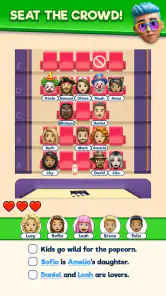
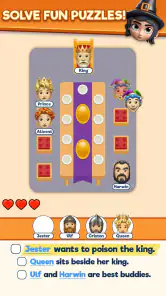
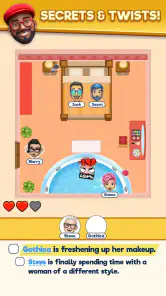
The central task is to place characters in seats while respecting the rules for each level. A clue can rule out a neighboring position or require someone to sit at the end of a row, so the useful habit is to treat every statement as a constraint rather than guessing and moving pieces at random. I like that the seating theme gives the logic a concrete shape: instead of handling abstract symbols, I can picture the arrangement and check whether it fits.
For a practical approach, I’d start with the most restrictive clue, such as a fixed end position, then use it to narrow down the remaining seats. After that, check relationships like “not next to” against the whole row, not just the person being moved. This small change in how I work through a board helps prevent repeated trial and error. It also makes the moment when a solution clicks feel earned.
Getting Hooked on Puzzles
Once you dive into That's My Seat, you’ll quickly find yourself captivated by its charm. The game welcomes you with a simple, user-friendly interface that makes navigation a breeze, even for first-timers. It’s designed to keep you engaged with its intriguing puzzles that range from easy-peasy to downright head-scratching. Each level presents a unique challenge where you must strategically place characters in their respective seats based on a set of rules. It’s like being the mastermind behind a seating chart, only a lot more fun!
The Gameplay Experience
The gameplay is where the magic happens. Every level in That's My Seat is meticulously crafted, requiring players to think several steps ahead. You’ll need to deduce the best possible arrangement for each character based on given clues. The rules might dictate that a character can't sit next to another or must be placed at the end of a row, and it’s up to you to figure it out. The satisfaction you get from cracking a particularly tough puzzle is akin to solving a real-life mystery.
What I love most about this app is how it caters to both casual gamers and puzzle enthusiasts alike. Whether you have a few minutes or hours to spare, you can always pick up where you left off. Plus, the app offers hints for those moments when you’re completely stumped, ensuring that frustration never gets in the way of your fun.
Getting stuck without losing the thread
Hints are useful when I have tested a few arrangements and can no longer see which clue matters most. I’d use one only after checking the fixed positions and neighbor restrictions, since doing that first keeps the reasoning satisfying and makes the hint more informative. The trade-off is that a hint can take some of the discovery out of a puzzle; if you enjoy solving entirely on your own, it is easy to treat hints as a last resort rather than part of every level.
You May Like

Clash of Clans Is Won Between the Battles

Android Auto Makes the Case for Quieter Car Software

MobiOffice: Transforming Mobile Productivity with Seamless Integration

EA SPORTS FC™ Mobile Soccer: Redefining Mobile Sports Gaming

How Microsoft OneDrive Became a Mobile Productivity Giant

How Google Translate Breaks Language Barriers Effortlessly
The game’s appeal is strongest when I can pause and return with the clues still fresh. For instance, I might play while waiting for a meal or during a quiet commute, solve one board, and stop before the session turns into a screen-filling commitment. If I’m interrupted mid-puzzle, I can resume later rather than needing to reserve a long block of time. That makes it more practical than a puzzle book when I have only a few spare minutes, although people who prefer paper may enjoy sketching the seating possibilities instead.
Who will enjoy this format
I’d recommend it to anyone who likes deduction puzzles with visible, everyday rules, especially players who enjoy testing a solution against several clues. It can also work for families or friends who want to talk through a single problem together, taking turns explaining why a seat is or isn’t possible. The clues make the reasoning easy to discuss, even when one person spots a restriction the others missed.
It is less suitable if you want action, a competitive leaderboard, or a puzzle experience built around free-form exploration. Its pleasure comes from orderly elimination, so anyone who finds logic-grid problems repetitive may not warm to it. Compared with word riddles, it gives you a spatial arrangement to manipulate; compared with broader brain-training collections, it stays focused on one kind of deduction rather than constantly switching activities. That focus is a strength for fans of seating logic, but a reason to choose a more varied game if you tire of one puzzle format quickly.
Progress, pressure, and fairness
There’s a useful balance between working things out independently and having a way forward when I hit a wall. I don’t experience the puzzle as a race, so I can take time to compare clues instead of rushing for a score. That makes it a relaxed choice for a break, but it may feel low-pressure to players who need timed rounds or direct competition to stay engaged. I would not treat it as a contest of skill against other players; the core appeal is solving the arrangement in front of me.
The game is free to download, and its in-app purchase range runs from $0.99 to $99.99 per item. That range is worth keeping in mind before spending: I’d check the purchase screen carefully and only buy something if its purpose and price are clear to me. I can’t judge the fairness of a particular purchase without knowing what it offers, so I wouldn’t assume that spending is necessary to make progress or that it provides a competitive advantage. For a solo logic game, my preferred approach is to enjoy the puzzles first and decide about optional spending only when I understand what I’m paying for.
Making a difficult board easier to reason through
One practical way to avoid circling the same guesses is to separate what a clue proves from what it merely leaves possible. If a person must be at an end, mark that as a firm restriction in your thinking; if a clue only says two people cannot sit together, keep both positions open until another rule narrows them. This distinction matters because a plausible arrangement is not automatically a valid one. I find it helpful to recheck every clue against the completed row before accepting a solution, especially when a late move seems to fix one problem but might create a neighboring conflict elsewhere.
That habit also helps when playing with someone else. Rather than passing the phone around and moving seats at random, one person can read a clue while another explains which positions it rules out. It keeps the conversation focused on evidence instead of hunches, and it lets a younger or less experienced player contribute without needing to solve the whole board alone. The limitation is that shared solving works best when everyone is comfortable taking turns; anyone looking for a party game with constant action will find this a quieter activity.
Choosing it over other puzzle habits
For a daily commute or a short wait, I’d choose this over a large brain-training collection when I already know I want a seating deduction problem and don’t want to spend time choosing among unrelated modes. A paper logic puzzle can be better if I want to annotate every possibility freely, while a word game is a better fit when I want language play rather than spatial constraints. The strength here is its narrow focus: the seats make each clue easy to visualize, but that same focus means the game is not a substitute for a varied puzzle library.
A realistic use is to open a board during a short break, solve one arrangement, and stop while the task still feels fresh. If I’m interrupted, I would avoid making several unrecorded mental assumptions; I’d return to the visible clues and rebuild the reasoning from the fixed positions instead. That makes the puzzle easier to resume and reduces the chance that I mistake a guess I made earlier for something the clues actually require. Players who want a session that can be abandoned at any moment may appreciate this bite-sized style, while those who prefer long, continuous campaigns may find it too self-contained.
Progress, pressure, and fairness
There’s a useful balance between working things out independently and having a way forward when I hit a wall. I don’t experience the puzzle as a race, so I can take time to compare clues instead of rushing for a score. That makes it a relaxed choice for a break, but it may feel low-pressure to players who need timed rounds or direct competition to stay engaged. I would not treat it as a contest of skill against other players; the core appeal is solving the arrangement in front of me.
The game is free to download, and its in-app purchase range runs from $0.99 to $99.99 per item. That range is worth keeping in mind before spending: I’d check the purchase screen carefully and only buy something if its purpose and price are clear to me. I can’t judge the fairness of a particular purchase without knowing what it offers, so I wouldn’t assume that spending is necessary to make progress or that it provides a competitive advantage. For a solo logic game, my preferred approach is to enjoy the puzzles first and decide about optional spending only when I understand what I’m paying for.
What to know before installing
Rooftop Game is the developer, and this is a free puzzle game rated for Everyone. It was released on August 15, 2024, and version 1.5.2 requires Android 7.0 or later. I’d check that my device meets the requirement before installing. The game has a 4.7 average from around 20,000 ratings, with over 1 million installs; those figures suggest that many players have tried it, but they can’t tell me whether its particular style will suit me.
If you’re wondering whether it costs anything to try, the download is free, while optional in-app purchases are listed in a wide price range. If you’re wondering whether it suits a younger player, its Everyone rating makes it broadly appropriate, though I’d still consider whether that child enjoys clue-based reasoning. And if you want to know whether you must use hints or compete with other people, neither is what makes the core puzzle appealing: the main activity is arranging seats from clues at your own pace.
Visual and Audio Appeal
Beyond the engaging puzzles, the visual and audio elements of That's My Seat deserve a mention. The graphics are crisp and colorful, making each level a pleasant sight for sore eyes. The background music complements the gameplay perfectly, adding an extra layer of immersion without being distracting. It’s these thoughtful touches that enhance the overall gaming experience, making it a joy to play anytime, anywhere.
In conclusion, That's My Seat is more than just a logic puzzle game. It’s a delightful blend of challenge and entertainment that keeps your brain engaged while providing tons of fun. Whether you’re a fan of puzzles or just looking for a new game to try, this app is definitely worth a download. So why not give it a shot and see if you can claim your seat as the ultimate puzzle master?
That's My Seat - Logic Puzzle Frequently Asked Questions
What does the title That's My Seat - Logic Puzzle mean in practice?
The title points to the game’s central task: working out who belongs in each place by using clues and logic. It is a puzzle game from Rooftop Game, and its short description, “That's My Seat,” sums up the seating theme. If you enjoy reasoning through a problem rather than relying on quick reflexes, the premise may appeal to you.
Is That's My Seat - Logic Puzzle free to download?
That's My Seat - Logic Puzzle is free to download, so you can try its seating puzzles without an upfront purchase. It also offers in-app purchases, so the free download does not mean every optional purchase is free. The game carries an Everyone content rating, making it a family-friendly option for players who want a logic-focused game.
What kind of game is That's My Seat - Logic Puzzle, and who developed it?
That's My Seat - Logic Puzzle is a puzzle game from Rooftop Game, built around planning seating arrangements and testing your reasoning. Its short description, “That's My Seat,” captures the central idea: work through clues to decide where each character belongs. If you enjoy solving logic problems at your own pace, this premise offers a straightforward way to put your deduction skills to work.
What is the main objective of That's My Seat - Logic Puzzle?
The main objective of That's My Seat - Logic Puzzle is to challenge players with a series of logic-based seating arrangements. Players must read clues and use deductive reasoning to correctly seat characters in the right order. The game is designed to test logical thinking and problem-solving, with puzzles intended to keep players engaged as they work toward a solution.
Is That's My Seat - Logic Puzzle suitable for all age groups?
Yes, That's My Seat - Logic Puzzle is designed to be family-friendly and suitable for all age groups. The game does not contain any inappropriate content, making it a safe choice for children, teenagers, and adults alike. Its puzzles range from simple to complex, allowing players of different ages and skill levels to enjoy the challenge. It carries an Everyone content rating, which is helpful for families considering whether the game is appropriate for younger players.
Pros
- Challenging logic puzzles to engage your mind.
- Simple and intuitive user interface.
- No internet connection required to play.
- Regular updates with new levels.
- In-game hints to help when you're stuck.
Cons
- Ads can be intrusive at times.
- Limited free levels before paywall.
- Some puzzles may feel repetitive.
- Occasional minor bugs or glitches.
- May drain battery quickly on older devices.

- Category
- Puzzle
- Version
- 1.5.2