Texas Holdem Poker & Blackjack
- 14.78K
- 4.5
- Installs
- 1.00M
- Price
- Free

Screenshots

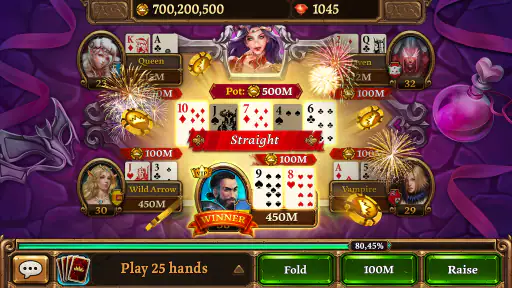
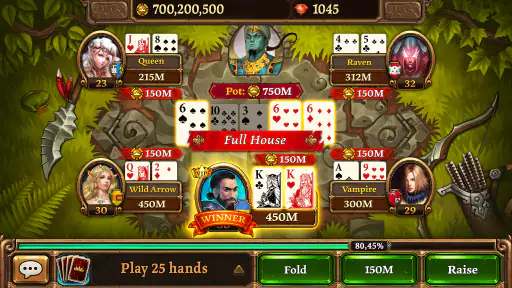
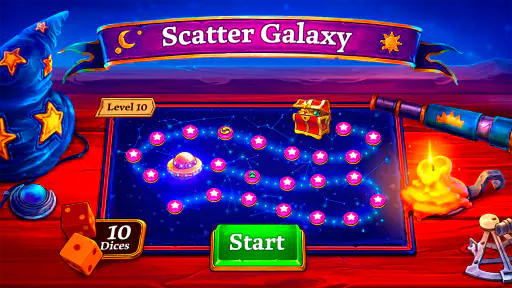
Analysis by Reviewed
Texas Holdem Poker & Blackjack is a free card game from Murka Games Limited that I found easiest to understand as a social poker experience with a strong mission-based structure. It is aimed at adults, carries a Mature 17+ rating, and combines Texas Hold’em tables with a large progression path built around poker missions. I approached it less like a quiet card simulator and more like a game designed to keep me moving from one challenge to the next.
That distinction matters. If you want a simple place to practise poker hands without distractions, this may feel busier than necessary. If you enjoy short sessions, visible goals, chips to collect, and playing alongside friends, the format has much more appeal. The game is free to start, although purchases range from $0.99 to $299.99 per item, so I would recommend deciding your spending limit before getting comfortable with the progression loop.
How clearly the game communicates what is happening
My first impression was that the game is built for quick recognition rather than careful reading. Poker depends on noticing your cards, the shared cards, the current action, and the size of the pot without losing track of the table. A good interface therefore needs to make the important information stand out, and this game generally feels more approachable when I focus on the central table and the action controls rather than trying to absorb every decorative element.
The mission structure also gives the experience a clear direction. Instead of opening a blank poker room and deciding what to do, I can work through objectives and let those goals shape the session. That is useful for new players who might otherwise feel unsure about whether they are progressing. It also gives experienced players a reason to return when a normal cash-style poker table would start to feel repetitive.
There is a trade-off in that approach. Missions can make the game easier to navigate emotionally because each hand feels connected to a larger purpose, but they can also pull attention away from the actual poker decision. I sometimes found myself thinking about the next reward or task instead of evaluating the strength of my hand. Players who want a pure strategy environment may prefer a more stripped-down Texas Hold’em app.
The game’s social focus is similarly easy to understand. It is designed around playing with friends, so it suits people who like sharing a session rather than treating poker as a solitary exercise. That makes it a natural fit for a casual evening when everyone wants something familiar but does not want to learn a complicated board game. The downside is that the experience is less attractive if you have no interest in social play or prefer to keep your sessions entirely private.
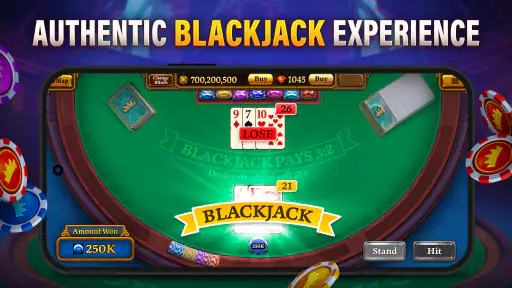
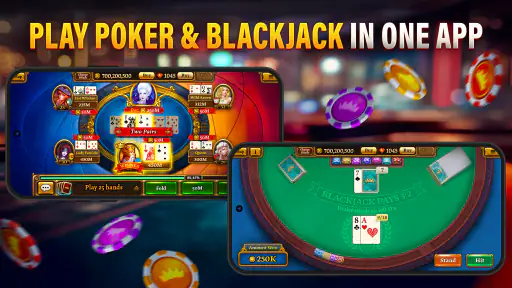
I also appreciate that the title presents itself as a card game rather than pretending to be a realistic casino replacement. The store short description identifies it as Texas Hold’em Poker, while the broader presentation includes Blackjack in the name. I would go in expecting poker to be the main identity and avoid assuming that both games receive equal emphasis. That expectation keeps the first session from feeling misleading.
What new players should learn before chasing missions
A useful habit is to separate the game’s objective from the quality of your poker decision. Completing a mission is not automatically proof that you played well, and failing to complete one does not necessarily mean the hand was a mistake. I found it more helpful to decide first whether a play made sense from the cards, then treat the mission as a secondary target.
This is one of the less obvious strengths of the format: it can give beginners a reason to observe specific situations. A mission may encourage attention to patterns that a new player would otherwise ignore, such as how often they enter a pot or how the shared cards change the value of a starting hand. Used that way, the progression system becomes a learning prompt rather than just a reward chase.
My practical advice is to pause briefly before tapping an action button. Fast poker controls are convenient, but the same convenience can make an accidental fold or an impulsive call more likely, especially on a small phone screen. I would also avoid playing with the sound or visual presentation treated as the only source of information. The cards and action choices should remain your main reference point.
Readability, motor comfort, and sensory demands
Card games can look accessible because their rules are familiar, but the real experience depends on how comfortably someone can distinguish cards, controls, chip amounts, and changing table states. In this game, readability is strongest when I give the table my full attention. The more crowded the screen feels, the more important it becomes to slow down and check the cards before acting.
For players with reduced vision, the key question is not simply whether the cards are visible. It is whether every important change can be noticed quickly: a new shared card, a change in the betting situation, or the appearance of a decision control. I would recommend testing a short session rather than assuming the game will suit every visual need. A player who relies on very large text, strong contrast, or extensive screen magnification may find the poker layout demanding if scaling causes information to compete for space.
Color can also matter. Poker interfaces often use color to separate buttons, statuses, or rewards, but color alone is not a reliable way to communicate a decision. I found it safer to read the action labels and inspect the cards directly instead of reacting only to visual emphasis. That is a useful approach for anyone with color-vision differences, as well as for people playing in poor lighting where subtle shades are harder to distinguish.
Motor demands are fairly straightforward in concept: most actions come down to tapping a card-game control at the right moment. That can be comfortable for someone who has precise touch control, but timing and target size still matter. Players with tremors, limited reach, or difficulty making repeated small taps may need to play more slowly and keep the device positioned securely. A stand or stable surface can reduce the need to hold the phone while making decisions, which is a simple adjustment that made longer sessions easier for me.
There is another motor consideration that is easy to overlook. Poker encourages repeated decisions, and a session can involve many taps even when each individual action is simple. Someone with hand fatigue may manage a few rounds comfortably but struggle with extended play. I would treat the game as better suited to short, deliberate sessions than to marathon use if repetitive movement is a concern.
Sensory load depends heavily on context. A busy room, bright reflections, or background conversation can make it harder to follow the table, particularly when the game expects quick attention. I had a better experience when I reduced distractions and played with the screen at a comfortable angle. That is not a special setting inside the game; it is a practical way to make the information already on screen easier to process.
Sound should not be the only thing a player depends on when deciding what is happening. If you are hard of hearing or playing without audio, the visual table state needs to be clear enough on its own. I would test this by muting the device for several hands and checking whether I can still identify the important transitions. If any notification is easy to miss visually, that becomes a meaningful barrier for silent play.
A realistic everyday session
Imagine waiting for a friend at a café with ten minutes to spare. This is where I think the game makes the most sense. You can open it, play a few hands, work toward a mission, and stop without needing to prepare a long campaign or remember a complicated control scheme. The short-session structure is also useful during a commute or a quiet break, provided the surroundings are calm enough to follow the table.
That same scenario shows why situational access matters. On a moving bus, glare can make cards harder to read and vibration can make precise taps less comfortable. In a noisy café, conversation may compete with any audio cues. If you are playing with friends, interruptions can also cause you to miss a decision. I would choose a stable seat, keep the screen close enough for comfortable reading, and avoid starting a hand when I know I will need to put the phone away immediately.
For a group of friends, the social design can be more valuable than the individual card mechanics. The game gives a shared activity to people who may have different levels of poker knowledge, and missions can provide an easy topic of conversation. Still, a friend who needs extra time to read the table may feel pressured if everyone treats the game as a race. The most inclusive group habit is simple: let players take their time and do not turn a missed tap into a joke.
Where the free model changes the experience
Because the game is free to download and play, it is easy to try without making an immediate commitment. That is a genuine advantage for anyone comparing several poker apps. The important caution is the purchase range. Optional items can cost from $0.99 up to $299.99 each, which creates a very different risk profile from a fully paid card game with one upfront price.
I would not let the free entry point decide the whole purchase decision. Instead, I would play long enough to see whether the mission loop remains enjoyable without buying anything, then decide whether spending improves the experience or merely speeds up progress. If you are buying for a younger household member, the Mature 17+ rating is an important reason to keep the game within an adult context and review how purchases are controlled on the device.
The chip-based progression can make losses feel less serious than real-money gambling, but it still encourages attention to winning, collecting, and continuing. That can be entertaining, yet it may not suit someone who is trying to avoid gambling-like reward patterns. For that player, a traditional offline card game or a poker app focused purely on rules and practice would be a better match.
Compatibility, maturity, and long-term use
The game supports devices running Android 5.1 or later, which gives it a broad technical reach among older Android phones. Even so, compatibility is not the same as comfort. A phone that technically runs the game may still offer a cramped display, slower transitions, or less convenient touch control than a newer device. I would judge it on the actual table experience rather than the operating-system requirement alone.
The current version is 2.31.0, and that matters when comparing advice from older discussions or screenshots. Interfaces and progression details can change over time, so I would rely on what appears in the installed version rather than expecting every older guide to match. This is especially relevant for players who need a particular layout or predictable navigation.
The game has been available since July 31, 2017, and its established audience is reflected in an average rating of 4.5 from around 79 thousand ratings. It has also passed one million installs, with around 15 thousand written reviews. Those figures suggest that it is not an obscure experiment, but popularity should not be confused with universal accessibility. A large player base tells me the core concept has broad appeal; it does not guarantee that every player will find the visual pace or interaction comfortable.
For long-term use, I think the strongest question is whether you enjoy the mission rhythm. If you like collecting goals and returning to a familiar table, the structure can stay engaging. If you are mainly interested in studying poker probabilities, comparing hands, or playing without reward pressure, you may outgrow it sooner than you would a dedicated training tool. The choice depends less on whether you like cards in general and more on whether you like cards wrapped in ongoing progression.
Barriers that still deserve attention
The biggest remaining barrier is the combination of quick decisions and dense information. Even a well-known game such as Texas Hold’em asks players to track several things at once. Anyone with attention, memory, reading, or processing difficulties may need more time than the table naturally seems to allow. I found that concentrating on one question at a time helped: first identify the cards, then consider the action, then check the mission.
Another barrier is the lack of a clearly separate low-stimulation identity. The game’s appeal comes from movement, rewards, and social energy, but those same qualities may be tiring for players who prefer quiet interfaces. If you are sensitive to visual activity or need a very predictable environment, an offline poker app with fewer layers may be more comfortable.
There is also a social barrier for people who do not want to connect their enjoyment to other players. Playing with friends can make a hand more memorable, but it can also introduce pressure, teasing, or different expectations about pace. Someone who wants complete control over when a session ends may prefer a solo card game, even if it feels less lively.
Finally, the purchase model requires self-management. The wide range of item prices means that the game is not equally low-risk for every household. I would use device-level purchase protections, agree on a spending rule before playing, and avoid treating chips or mission progress as a reason to spend impulsively. That advice is particularly important because the game is designed to make continued play feel convenient.
My inclusive verdict
I see Texas Holdem Poker & Blackjack as a good choice for adults who want a social, mission-driven poker game that works in short bursts. Its clearest strengths are the familiar card format, the sense of direction provided by missions, and the option to make a casual session feel more purposeful. The audience size and strong average rating also suggest that the central formula connects with many players.
For accessibility in everyday use, I would place it in the “try it in your own setting” category rather than recommend it blindly. Players with comfortable vision, reliable touch control, and an interest in fast social card play may find it easy to settle into. Players who need large, highly adjustable presentation, extended decision time, minimal sensory stimulation, or no purchase pressure should test it carefully and may be happier with a simpler alternative.
My best practical recommendation is to begin with a short session while the device is stationary, audio muted if necessary, and the screen positioned for clear reading. Check whether you can follow the cards and actions without relying on color or sound, then see whether the mission system feels motivating rather than distracting. If that trial feels comfortable, the game can be a friendly way to fill a break or share poker with friends. If it feels rushed or visually crowded, choosing a quieter Texas Hold’em app is not a failure; it is simply a better match for the way you play.
Overall, I would recommend it to an adult who wants more structure than a basic poker table and more social energy than a solo card simulator. I would skip it if my priority were pure poker study, a completely calm interface, or a fixed one-time cost. The most important trade-off is clear: its missions and social momentum make casual play more engaging, but they also add pressure, visual activity, and spending decisions that some players will want to avoid.
Pros
- Smooth gameplay with responsive controls on phones and tablets.
- Includes both poker and blackjack for more variety in one app.
- Quick rounds make it convenient for short gaming sessions.
- Clear table layout helps new players follow the action.
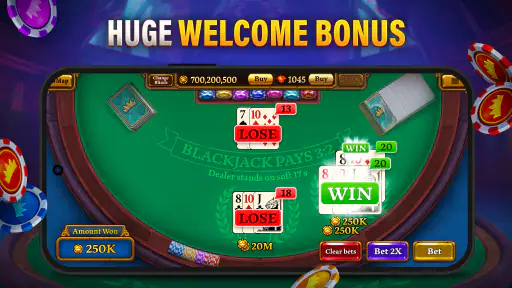
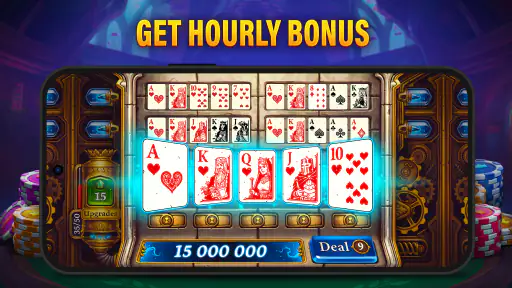
- Regular rewards can provide extra chips without immediate spending.
Cons
- Progress may feel slow without frequent play or bonus collection.
- Virtual chips can encourage repeated purchases after losses.
- Limited strategy depth compared with playing against real opponents.
- Ads or promotional offers may interrupt the overall experience.
- Results depend heavily on luck
- which may frustrate competitive players.

- Category
- Card
- Version
- 2.31.0