Gin Rummy GC Online
- 350.00
- 4.0
- Installs
- 100.00K
- Price
- Free

Screenshots

Analysis by Reviewed
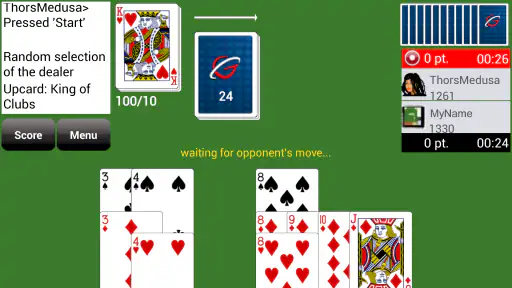
I enjoy card games most when they are easy to start but still give me something to think about after the first few hands. Gin Rummy GC Online fits that space well. It is a free card game built around live online gin rummy, with competition, chat, a ladder, and tournaments woven into the experience. I found it more interesting than a simple pass-the-time card app because the opponent is another person and every discarded card can reveal something about their plan.
That online focus also changes how I would use it at home. It is not really a family board game that everyone gathers around one screen to play together. It is better understood as an individual game that may be used on a shared phone or tablet, with each person taking a turn at a different time and keeping their own play separate. That distinction matters if several people in a household want to try it.
How the online card table feels in everyday use
A good fit for short, focused sessions
My favorite use case is a quiet break when I have enough time for a few thoughtful hands but not enough time to commit to a long strategy game. Gin rummy has a natural rhythm: draw, decide, discard, and watch for the opponent’s response. The basic actions are familiar, yet the decisions become more demanding once I stop chasing every possible combination and start paying attention to what the other player is refusing to take.
The live format gives those choices more weight. Against a computer opponent, I can sometimes fall into a predictable routine because the experience feels private and consequence-free. Against a real player, I have to manage what I reveal. A discard that looks harmless may tell the other person which suit or rank I do not need, while picking from the discard pile can expose the kind of hand I am building. That small layer of reading and misdirection is where this game earns its place among online card games.
I would not describe it as a relaxed solitaire substitute. Even when a match is short, the competitive setting asks for attention. If I am interrupted repeatedly, I would rather play a single-player card game that lets me pause freely. This is one of the first practical trade-offs to consider: the app is convenient for a break, but the break still needs to be focused enough to follow a live hand.
What the social layer adds
Chat can make a match feel less anonymous, especially for players who enjoy the social side of card rooms. It also introduces a boundary that is easy to overlook when choosing an app for a household. A person may be comfortable with the card mechanics but not want an open social interaction while playing, particularly on a device used by children or several family members.
I see chat as an optional part of the atmosphere rather than the reason to install the game. The strongest reason is still the gin rummy itself. If you prefer completely quiet play, the social layer may feel unnecessary. If you like the feeling of sitting down at a virtual table with other players, it helps the app feel more alive than an offline deck simulator.
The ladder and tournaments give regular players a reason to return. They turn individual hands into part of a longer competitive routine, which can be motivating when I want a clear goal beyond simply winning the current deal. At the same time, that structure can make casual play feel more serious. Someone who wants a no-pressure card game may find a plain offline alternative more comfortable.
Learning the game without wasting early matches
New players should spend time learning the difference between building their own melds and tracking the opponent’s likely needs. A common mistake is holding too many attractive but unrelated cards because each one seems useful. I get better results by deciding early whether I am pursuing a connected run, a group of equal ranks, or a flexible mixture, then discarding cards that do not support that direction.
My most useful habit is to remember the last few cards the opponent has ignored or accepted. If a player takes a discard, I treat nearby cards with caution because I may be feeding a run. If they repeatedly avoid a suit, I do not assume they have no interest in it, but I do consider whether discarding a card from that suit is safer than offering a card that completes a visible sequence.
Another practical tip is to avoid making every decision based on the immediate chance of improving my own hand. Sometimes the safer discard is the one that gives away less information, even if another card has a slightly better chance of forming a meld later. That balance between progress and concealment is what separates a thoughtful online match from simply sorting cards.
Shared devices need clear personal boundaries
For a household sharing one tablet, I would establish a simple routine before anyone starts. Each person should know whose turn it is to use the game, and players should avoid opening another person’s active session or making choices on their behalf. In a live card game, tapping the wrong option is not like opening the wrong photo; it can affect a match immediately.
I would also keep separate expectations around chat. A parent may be happy for an adult to use the social features but prefer a younger household member to play only with supervision. The app carries a Teen content rating, so I would treat it as a game for teenagers and older users rather than assuming that a child can use every part of it without discussion.
The game is free to download, but it includes optional in-app purchases ranging from $2.99 to $17.99 per item. That makes account separation especially important on a shared device. I would check which store account is active before anyone buys anything, and I would avoid handing the device to another player while a purchase-related screen is open. This is not a criticism of the card mechanics; it is simply sensible household housekeeping when several people use one device.
Why account awareness matters more here than in offline cards
An offline deck app usually keeps the consequences of play on the device itself. An online game can connect progress, competition, chat, and purchases to the active player’s identity or store environment. I would therefore avoid treating a shared tablet as if it were a communal deck of physical cards. The person playing should know whether they are entering their own session or using someone else’s.
That boundary is also useful for competitive records. If several relatives take turns through one account, the ladder experience no longer represents one person’s ability. Wins, losses, and tournament participation become mixed together, making the competitive side less meaningful. For a casual household, that may not matter. For anyone who cares about personal progress, separate use is the better arrangement.
I would not install it for a young child simply because the rules are easy to explain. The game involves real players, chat, competition, and optional spending, so the right question is not only whether the child understands gin rummy. It is whether the household is comfortable with the online setting and has agreed on how the device, conversations, and store account will be handled.
Coordination makes a shared setup work
The most realistic shared-device scenario is a couple or family member taking turns during the evening. One person might play a few hands after dinner, then sign out or hand over the device so another person can use it later. That works better than trying to make the game a simultaneous family activity, because the design centers on one player responding to an online opponent rather than several people sitting around the same screen.
I would keep a small household rule: announce when a session is finished, close the game if another person needs the device, and do not assume that a notification or open screen belongs to the next player. This sounds obvious, but online card games are sensitive to accidental taps and interruptions. A little coordination prevents arguments that have nothing to do with the quality of the game.
For adults sharing a device, a second useful rule is to discuss purchases before playing. The free entry makes it easy to begin casually, while the available purchase range can make the app feel more like an ongoing service than a one-time card download. Anyone who wants a strictly cost-free experience should decide that in advance and avoid treating optional items as part of normal play.
How it compares with familiar alternatives
Compared with solitaire, this game offers more tension because another person is adapting to my decisions. Solitaire is better when I want total control over the pace, no social interaction, and a game that can be abandoned without affecting anyone else. Gin Rummy GC Online is better when I want the unpredictability of a human opponent and a reason to improve beyond simply clearing a layout.
Compared with offline gin rummy, the online version adds a sense of occasion through live competition, chat, a ladder, and tournaments. The cost is privacy and flexibility. Offline play is easier to share around a table, easier to pause, and simpler for a household that does not want online contact. The online format wins when I want opponents beyond the people physically nearby.
It also differs from broad multiplayer card collections. A collection of many games may be more suitable if one person wants poker, solitaire, hearts, and other formats in the same app. This title is more focused: its appeal depends on whether gin rummy itself is the game I want to revisit. That focus is a strength for enthusiasts and a limitation for anyone looking for variety.
Performance expectations and practical fit
The game comes from GameClubUSA.com and has been available since July 17, 2013. Its current version is 2.2.1, with Android support from version 7.0 onward. Those details make it accessible to people using older compatible Android devices, although I would still keep expectations realistic: an older phone may be less pleasant for online play if it struggles with multitasking or has an unreliable connection.
Because matches involve real players, connection quality matters more than it would in a purely offline card game. I would choose a stable network, especially before entering a tournament or a match where a delayed response could be mistaken for inactivity. This is a useful reason to keep the app for deliberate sessions rather than launching it casually while moving between weak connections.
The game has an average rating of 4.0 from around 2.6 thousand ratings, with roughly 350 written reviews and over 100 thousand installs. I read that overall reception as encouraging but not a guarantee that every player will enjoy the same parts. The numbers suggest an established audience, while the moderate average also fits the app’s clear trade-offs: online competition and social features will appeal strongly to some players and bother others.
Who should install it, and who should skip it?
I would recommend it to someone who already enjoys gin rummy and wants live opponents, a competitive ladder, and tournament-style goals. It is also a good choice for an adult who likes studying small decisions, remembering discards, and improving through repeated hands rather than expecting instant wins. The free price makes trying it straightforward, provided the player is comfortable with optional purchases and online interaction.
I would skip it for a player who wants a completely private, offline, pause-anytime experience. I would also look elsewhere if the main goal is a large selection of different card games, or if chat and live competition feel like distractions. Families seeking a shared-screen game for younger children should choose something designed around group play and clearer household control instead of assuming that a live gin rummy room will serve that purpose.
For a shared household, my recommendation is conditional but positive: use it with an agreed player rotation, keep store accounts distinct, and treat the Teen rating as a meaningful age cue. Those steps do not change the game itself, but they make the difference between a smooth shared-device experience and a confusing one where chat, progress, or purchases belong to the wrong person.
My household verdict
Gin Rummy GC Online is strongest when one committed player wants a focused online card table, not when a family wants a communal game on one screen. I like the way the ladder and tournaments give purpose to individual hands, while the live opponents make ordinary discards feel consequential. The app asks for more attention than solitaire and more trust than an offline deck, but that is also what gives it character.
After using it, I would keep it on a personal device or reserve a clear turn on a shared one. I would explain the chat and purchase boundaries before letting a teenager play, and I would avoid mixing several people’s competitive progress under one account. With those expectations in place, the game offers a satisfying way to practice gin rummy against real players without paying to begin.
My final view is that Gin Rummy GC Online is worth trying for card players who want human competition and a continuing sense of progress. It is not the best answer for every household, particularly one looking for offline simplicity or child-focused group play. But for a teenager or adult who enjoys the psychology of discards, the pressure of a live opponent, and the discipline of a focused card session, it remains a convincing and specific choice.
Pros
- Smooth online matchmaking with players available at most times.
- Clear card layouts make hands easy to follow on smaller screens.
- Quick games fit well into short breaks or casual sessions.
- Multiple table options offer variety for different playing styles.
- Simple controls make discarding and drawing cards feel intuitive.
Cons
- Online play depends heavily on a stable internet connection.
- Some tables may include opponents with much more experience.
- Random card deals can make certain rounds feel frustrating.
- Ads or in-game promotions may interrupt the overall experience.
- The interface can feel dated compared with newer card-game apps.

- Category
- Card
- Version
- 2.2.1