Backgammon Club
- 150.00
- 3.3
- Installs
- 100.00K
- Version
- 2.2.3

Screenshots
Analysis by Reviewed
I found Backgammon Club most appealing as a straightforward way to play a familiar board game online without turning the experience into a complicated hobby project. It is a free board game for Android phones and tablets, developed by GameClubUSA.com, and its focus is easy to understand: sit down, find a game or tournament, and play a few rounds of backgammon. My overall view is positive but measured. The core idea works best for players who already enjoy backgammon and want a convenient mobile opponent, while people looking for polished teaching tools, deep customization, or a particularly modern presentation may find it limited.
The app has been available since September 23, 2016, and its current version is 2.2.3. That age matters because Backgammon Club feels built around the enduring appeal of the game rather than around flashy mobile design trends. It supports Android 7.0 and newer, carries a Teen content rating, and has passed the point where a small experiment can be dismissed as an unknown app: it has more than one hundred thousand installs and an average score of 3.3 from roughly two thousand ratings. Those figures suggest a real player base, but also a mixed experience that is worth considering before installing.
What playing Backgammon Club feels like
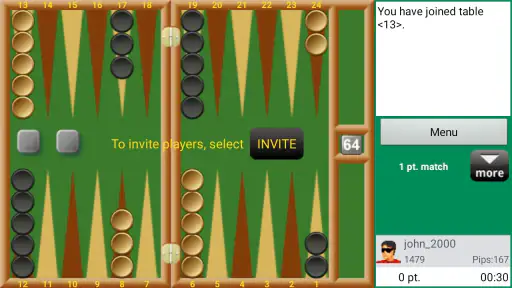
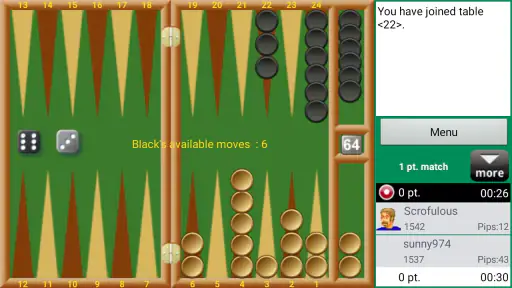
My first impression is that the game is at its best when I treat it as a quick online board-game session. Backgammon naturally fits short breaks because a match can be started without preparing a physical board, finding an opponent, or keeping track of pieces by hand. On a phone, the basic rhythm is familiar: examine the position, consider the dice, decide whether to take a risk, and move the checkers. On a tablet, the larger screen makes the board easier to read and gives the game a more comfortable tabletop feel.
That simplicity is also the app’s main strength. It does not need a complicated rules explanation to become useful. Someone who already knows the basics can open it and concentrate on decisions rather than menus. For a casual player, that makes it more practical than a general board-game collection where backgammon is only one small mode among many. The dedicated format also suits a player who wants to return to the same game repeatedly instead of learning a new system every time.
The online focus changes how I judge it. A backgammon app can be enjoyable against a computer, but human opponents add uncertainty that makes familiar positions feel different. A safe move against a predictable opponent may be too cautious against a person, while an aggressive hit can create a memorable comeback when the dice cooperate. Backgammon Club is therefore more interesting for players who want the social competition of online matches than for someone who only wants a quiet solo puzzle.
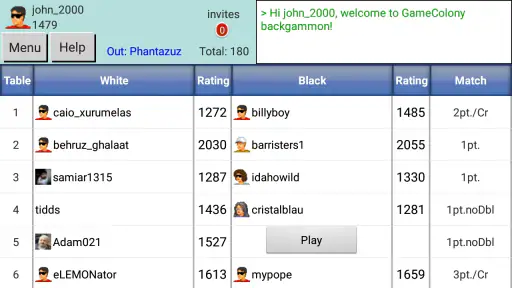
The tournament option gives the experience a useful second layer. A single match is easy to fit into a spare moment, but tournaments provide a reason to return and play with more intent. I would not approach every session as a major competition; the luck of the dice remains part of backgammon, and a tournament result cannot be read as a perfect measure of skill. Still, having both ordinary games and tournament-style play makes the app more suitable for different moods. I can play casually when I have limited time or become more focused when I want a longer challenge.
The strongest reason to install it
The clearest advantage is convenience. A physical board is enjoyable, but it requires another person, a suitable surface, and enough time to set everything up. Backgammon Club removes that preparation. If I am waiting between appointments or relaxing at home, the game is immediately available. That makes it more useful than a boxed set for solo mobile play, and more focused than a broad collection of casual games.
It is also a sensible choice for a backgammon player who wants practice against people rather than only against a fixed computer opponent. Human play exposes habits that a predictable artificial opponent may not punish. For example, a player who routinely leaves vulnerable points may discover that online opponents notice those openings quickly. Likewise, someone who plays too defensively may learn that pressure and timing matter more than simply protecting every checker.
One practical tip is to use the app as a review tool for your own decisions, even if it does not replace a dedicated backgammon study program. After a match, I would mentally revisit the positions where I felt uncertain: whether to hit, whether to split a point, or whether to race. Writing down one or two questionable moves can make the next session more purposeful. The app becomes more valuable when I use online games to identify patterns in my play instead of treating each loss as bad luck.
Another useful approach is to separate short sessions from tournament sessions. A quick match is ideal when I want entertainment without a large commitment, while a tournament deserves a calmer setting and a stable connection. Mixing those expectations can make the experience feel worse than it is. If I start a serious tournament while distracted, I may blame the game for a result caused by rushed decisions. Treating the two modes differently helps me get more from both.
The free entry point is important. I can try the game without paying upfront, which lowers the risk for anyone unsure whether online backgammon suits them. There are in-app purchases ranging from $2.99 to $17.99 per item, so I would keep that in mind before allowing a child or another user to play on the device. The app is free to start, but free does not necessarily mean that every optional element has no cost. For my own use, I would begin with the unpaid experience and decide later whether any purchase genuinely improves the way I play.
Where the experience becomes less convincing
The average rating of 3.3 indicates that the app does not deliver a universally smooth experience. I would not interpret that alone as a reason to avoid it, because ratings can reflect different expectations, devices, and online experiences. However, it does tell me to approach Backgammon Club as a functional, older-style game rather than a guaranteed premium experience. Players who expect highly refined interfaces, extensive accessibility controls, or the visual polish of a newer board-game release should keep their expectations realistic.
The online nature also introduces friction that is not present in a local physical match. A real opponent may be unavailable at the moment I want to play, or a session may feel less satisfying if the pace does not match my own. Some players enjoy quick decisions; others prefer time to examine the board. That difference can matter more in backgammon than in a purely casual game because one rushed move can shape the rest of a match. I would choose this app only if I am comfortable with the unpredictability of playing online.
There is a second trade-off in the tournament format. Tournaments can make a familiar game feel more meaningful, but they can also encourage me to play when I am tired or distracted simply because I have already committed to the event. That is not a flaw unique to this app, yet it affects whether the feature is a benefit in practice. For relaxed players, ordinary games may be the better fit. For competitive players, tournaments can add motivation, provided they are willing to accept that dice luck and timing influence the result.
I would also avoid treating Backgammon Club as a complete learning environment. Playing more games can improve pattern recognition and decision-making, but beginners may still need a separate explanation of rules, notation, opening ideas, probability, and match strategy. The app is more naturally a place to play than a structured course. Someone who has never touched backgammon may enjoy experimenting, but a dedicated tutorial-focused alternative would be a better first stop if learning efficiently is the main goal.
That distinction helps explain who should skip it. If I wanted a beautiful offline board with local pass-and-play, a highly adjustable computer opponent, or a detailed statistical record of every decision, I would compare other backgammon apps before settling here. If I disliked the uncertainty of online matchmaking, I would also look elsewhere. Backgammon Club makes the most sense when the priority is access to online games and tournaments, not a long list of advanced training or presentation features.
How I would use it in everyday life
Imagine having twenty minutes before leaving for work. I could open the game, play a short online match, and stop without carrying a board or asking someone nearby to join. That is the kind of scenario where its design makes sense. The game fills a small gap with something more engaging than passive scrolling, while the familiar rules mean I do not need to spend the whole break learning a new title.
At home, I would use it differently. A tablet can make the board easier to follow, so I could settle in for a tournament or several games when I have more time. I would keep notifications and other distractions under control, because backgammon rewards attention to the whole position rather than an impulsive response to the latest dice roll. The app is convenient, but convenience does not remove the need to think.
For a beginner, my advice would be to start with ordinary games and focus on a few basic habits: count the pips, notice exposed checkers, and avoid moving automatically just because one option looks aggressive. After gaining confidence, tournaments become easier to appreciate. A new player should not measure progress only by wins, since the dice can produce dramatic swings. Instead, I would look for better choices in familiar situations and gradually learn when a risk is justified.
For an experienced player, the value is different. The app can provide a steady stream of opponents and a convenient way to keep playing away from a physical board. I would use it to test whether my usual opening choices hold up against different playing styles. I would also pay attention to time management: taking a moment to calculate is useful, but spending too long on every move can make online play frustrating for both sides.
The Teen content rating is another reason I would frame it as a general audience game for older children and adults rather than as a preschool title. The subject is a traditional board game, but the rating should still guide family decisions. Because optional purchases are available, I would also check the device’s purchase controls before handing it to a younger player. That is a simple precaution and especially sensible with any free-to-start mobile game.
Backgammon Club compared with the usual alternatives
Compared with a physical backgammon set, this app wins on availability and loses on atmosphere. A real board gives every move a tactile quality and makes face-to-face conversation part of the match. Backgammon Club is better when an opponent is not nearby or when I want to play while traveling. It is not a replacement for the social ritual of sitting across from another person; it is a practical extension of the game.
Compared with a solo backgammon app centered on artificial intelligence, the online emphasis is its defining difference. A computer opponent is convenient and usually available immediately, but human opponents create more varied decisions and emotional momentum. On the other hand, solo play is preferable when I have no reliable connection, want to pause freely, or need a controlled difficulty level. I would choose Backgammon Club for live competition and a dedicated solo alternative for quiet practice.
Compared with a broad board-game platform, the specialized focus can be an advantage. I do not have to navigate through unrelated games to reach backgammon. The compromise is variety: if I want chess, checkers, cards, or several other board games in the same application, a larger platform may offer better value. This is a focused tool for one classic game, and that focus will either feel refreshingly direct or too narrow depending on what I expect from a mobile game.
The purchase model also affects the comparison. Since the game is free to install but includes optional items priced from $2.99 to $17.99, I would evaluate it by how enjoyable the basic play is before spending anything. A paid game with no purchase prompts may be preferable for someone who wants a single upfront transaction. Conversely, a free starting point is useful for testing whether the online format and tournament structure fit my habits.
Who will get the most from it
I would recommend Backgammon Club to a player who already knows backgammon, enjoys online competition, and wants a convenient Android option for phones or tablets. It is particularly suitable for someone who values quick access over elaborate presentation. The app also fits casual players who want both ordinary matches and tournaments, as long as they accept that online play can be uneven and that the overall experience is not universally praised.
I would be more cautious recommending it to a complete beginner who expects step-by-step coaching. It can be a place to learn through play, but that is a slower and less structured route. I would also steer away from it for anyone seeking a premium visual experience, extensive analysis tools, or a purely offline game. Those needs point toward different alternatives in the backgammon category.
GameClubUSA.com has kept the concept focused, and that focus is why the app remains understandable despite its older release history. The game does not need a complicated identity: it offers a mobile board, online matches, and tournaments. The challenge is that a focused design leaves less room to hide weaknesses. If the online experience suits me, the directness is welcome. If I need tutorials, customization, or more dependable control over every session, the limitations become much more noticeable.
My final verdict
Backgammon Club is a useful but imperfect online backgammon option. I like its free starting point, its dedicated board-game focus, and the choice between casual games and tournaments. It turns a physical game that normally needs another person and a table into something I can carry on an Android phone or tablet. That is a meaningful convenience, especially for short breaks and players who want live competition.
At the same time, the 3.3 average rating is a fair reminder not to expect a flawless or luxurious experience. The online format may not suit every pace, tournaments can add pressure, and beginners may need another resource to understand the game properly. Optional purchases also deserve attention before sharing the app with younger users. My recommendation is specific: try it if your main goal is accessible online backgammon, start with free play, and judge it by the quality of the matches you can actually enjoy. For the right player, its strength is simple access to a classic game; for everyone else, that same simplicity may feel like a limitation.
Pros
- Classic backgammon rules are easy to learn for newcomers.
- Quick matches make it convenient for short gaming sessions.
- Online play provides competition beyond local opponents.
- Clean board design keeps the focus on gameplay.
- Different match settings add variety for experienced players.
Cons
- Online matchmaking quality may depend on the size of the player pool.
- Random dice rolls can feel frustrating during competitive matches.
- Some features may require an internet connection to work properly.
- Advertisements may interrupt the experience for free users.
- Advanced players may want more detailed statistics and analysis tools.