Food Sort: Puzzle Game
- 597.00
- 4.7
- Installs
- 1.00M
- Price
- Free

Screenshots
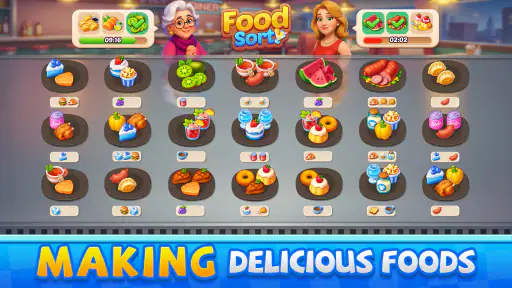
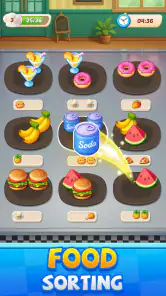
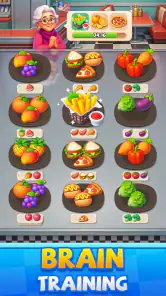
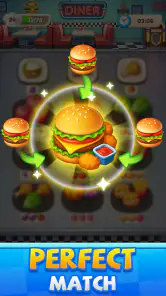
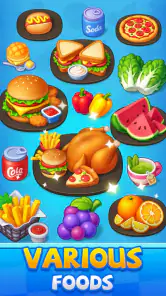

Analysis by Reviewed
I spent time with Food Sort: Puzzle Game as the kind of player who wants something calm between more demanding tasks. It is a free puzzle game from Playdayy built around arranging food items, making matches, and completing orders. The idea is easy to understand within seconds, but the appeal comes from deciding what to move first when the board starts to become crowded.
That makes it a natural fit for short breaks. I could play a round while waiting for an appointment, during a commute, or at the end of the day when I wanted a game that did not require a long explanation. It is also suitable for a broad audience: the content rating is Everyone, and the minimum operating-system requirement is Android 7.0 or later. The important question is not whether the concept is accessible; it is whether this particular version offers enough variety and fairness to keep the sorting routine enjoyable over time.
How the current Food Sort experience feels
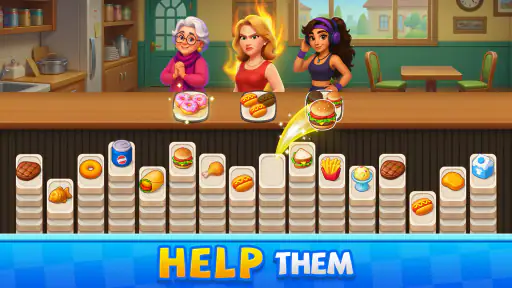
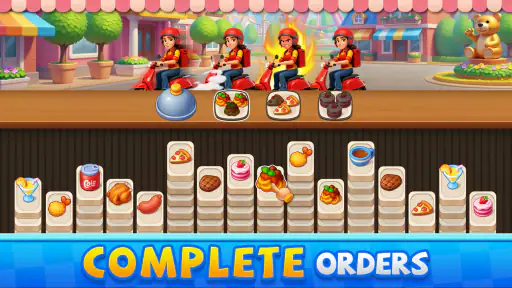
The central loop is deliberately straightforward. Food pieces need to be sorted into sensible groups, matching items need to be brought together, and orders need to be completed. I like that the game gives the familiar satisfaction of tidying a messy arrangement without turning the opening moments into a tutorial maze. The visual goal is usually clear, so my attention goes toward planning rather than decoding complicated rules.
There is a useful difference between simply spotting identical items and choosing the correct sequence of moves. A quick match can open a space that allows a more valuable combination, while an impatient move can leave useful food blocked behind less helpful pieces. That creates the small but meaningful decisions that make a sorting puzzle work. The game is relaxing when I approach it carefully, but it can still punish careless placement.
The order-based structure gives the activity a little more purpose than an endless matching board. I am not only clearing objects; I am trying to satisfy the immediate request efficiently. That framing helps the rounds feel like separate tasks, which suits players who prefer visible goals over an open-ended score chase. It also makes the game easy to return to after a few hours or days away because the basic objective remains familiar.
My strongest impression is that this is a comfort game rather than a deep strategy title. It is designed around repetition, recognition, and gradual improvement in decision-making. If you enjoy organizing shelves, arranging colors, or clearing a cluttered workspace, the food theme gives those actions a pleasant visual context. If you need a puzzle with a large story, complex systems, or a constantly changing ruleset, the simplicity may feel limited.
The best way to approach each board
I found it helpful to pause before making the first move. Instead of immediately matching the most obvious pair, I looked for items that were blocking several possible groups. Clearing those pieces early tends to preserve more options. This is a small habit, but it changes the game from automatic tapping into a light planning exercise.
More From Our News Desk

Clash of Clans Is Won Between the Battles

Android Auto Makes the Case for Quieter Car Software

MobiOffice: Transforming Mobile Productivity with Seamless Integration

EA SPORTS FC™ Mobile Soccer: Redefining Mobile Sports Gaming

How Microsoft OneDrive Became a Mobile Productivity Giant

How Google Translate Breaks Language Barriers Effortlessly
Another useful approach is to treat empty space as a resource. A move that creates room can be more valuable than one that completes a match immediately. When several orders appear possible, I generally prioritize the action that keeps the widest range of future moves available. That is especially useful in a crowded arrangement, where a short-term match can otherwise force awkward placements.
I also recommend resisting the urge to fix every visible group at once. Sorting games often reward looking at the whole layout rather than focusing on one corner. In this game, I had better results when I checked which food items were likely to become inaccessible after a move. That forward glance prevents the common mistake of making a board look cleaner while quietly reducing the number of workable choices.
These are not advanced mechanics hidden behind a complicated system. They are practical ways to get more enjoyment from the existing loop. They also reveal the main strength of the design: the controls and objective are simple, but a little patience gives the decisions more weight than the store summary alone suggests.
Who will get the most from it
I would recommend it first to people who like gentle sorting puzzles and want rounds that are easy to understand. It works well for casual players who do not want to memorize a long list of abilities or manage a large collection of upgrades. Families may also appreciate the approachable presentation and Everyone rating, although younger players may still need guidance around optional purchases.
It is particularly suitable for a person who enjoys short, repeatable sessions. Imagine finishing work with ten minutes before dinner: this is the kind of game you can open, complete a few orders, and put down without losing track of a complicated campaign. The same applies to waiting rooms or travel, where a focused but low-pressure activity is more appealing than a competitive multiplayer match.
On the other hand, I would not choose it for someone who wants a puzzle adventure with a strong narrative or a clear final destination. Players who prefer crossword-style deduction, physics challenges, or large logic problems may find the sorting loop too familiar. It is also not the best match for anyone who dislikes repeating a basic action with gradual variation. The game’s pleasure depends on whether organizing and optimizing small arrangements is enjoyable in itself.
What the rating and audience suggest
The game has an average rating of 4.7 from around 12 thousand ratings, and it has passed one million installs. Those figures suggest that the accessible sorting format has found a substantial audience. I would still treat popularity as a starting point rather than a guarantee, because the experience depends heavily on how much repetition each player is comfortable with.
The free entry point makes it easy to test that question for yourself. You do not need to commit money before discovering whether the pace suits you. At the same time, optional in-app purchases range from $0.99 to $99.90 per item, so I would recommend checking the purchase flow carefully if children use the device or if you prefer a completely uninterrupted free-to-play experience.
The Everyone rating tells me that the theme is broadly approachable, not that every player will find the progression equally satisfying. A calm presentation can still become repetitive, and a simple puzzle can still create frustration when a move closes off the board. I see the rating as a useful indication of audience suitability, while the actual decision should depend on your tolerance for repetition and optional monetization.
Development, updates, and the effect on regular players
Playdayy released the game on October 21, 2025, and the current version is 1.0.24. That version number places the review in an early stage of the product’s life rather than presenting it as a long-established puzzle platform. I see that as both encouraging and cautionary: the core identity is already clear, but future refinement may matter greatly to players who plan to stay for months.
The current build’s most important achievement is focus. It does not need a large collection of unrelated modes to explain why it exists. Sorting food, matching groups, and fulfilling orders form a coherent loop. For a new player, that clarity reduces friction. I could understand the purpose of a round without studying menus, and I could judge quickly whether the game belonged in my regular rotation.
For existing users, the version information is useful in a practical way. If the game is already installed, checking that the device runs Android 7.0 or newer helps avoid compatibility surprises. If you are moving from an older release to the current one, I would pay attention to how the pacing, board variety, and purchase experience feel after updating rather than assuming that a higher version number automatically changes the core game.
The current evidence points to a product that is still establishing its rhythm. I would expect regular players to care less about a dramatic reinvention and more about whether new content keeps the sorting decisions interesting. Small improvements can have a large effect here: clearer feedback after an order, better handling of difficult layouts, and a progression that feels rewarding without making the free route feel unnecessarily slow.
That distinction matters because puzzle games live or die by repetition. A new player may be happy with the basic loop for several sessions, while a regular player notices whether later boards genuinely ask for better planning or merely place more items on the screen. The current version gives the game a solid starting point, but long-term satisfaction will depend on how thoughtfully Playdayy develops the structure around that loop.
How it compares with familiar alternatives
Compared with match-three games, this experience feels more deliberate and less focused on creating chains. The goal is not simply to remove as many pieces as possible in a limited moment. I spend more time considering placement, access, and order completion. That makes it a better choice when I want a quiet planning exercise, while a traditional match-three game may be preferable when I want faster reactions and more explosive feedback.
Compared with classic tile-matching games, the food-order framing gives the tasks a stronger sense of direction. Instead of searching for any legal pair, I have a reason to care about what gets sorted next. Still, players who prefer mahjong-like layouts or strict one-solution logic may find this game more forgiving and less intellectually demanding.
It also differs from management games that use food as a theme. I am not running a restaurant, balancing staff, or designing menus. The appeal is the physical act of organizing items and finishing immediate requests. That narrower focus is a strength when I want a clean puzzle, but it will disappoint anyone expecting cooking simulation or business strategy.
The closest alternative is probably another casual sorting game, and that is where personal taste becomes decisive. Food Sort: Puzzle Game has a friendly, recognizable theme and a low barrier to entry. A competing title may be better if it offers a more varied set of rules, a stronger visual style, or a progression system that gives you more reasons to return. I would choose this one for its uncomplicated order-completion loop, not because it replaces every other puzzle format.
Where the experience still has room to improve
The biggest limitation is the risk of sameness. Sorting, matching, and completing orders are satisfying because they are easy to grasp, but those same actions can lose impact if the layouts do not introduce enough meaningful variation. I wanted later play to test new habits rather than simply ask me to repeat the opening routine with more clutter.
There is also a delicate balance between relaxation and pressure. A board can be pleasantly thoughtful when I have enough room to recover from a weak move. If the layout leaves too few options, the result feels less like solving and more like undoing a mistake. The best experience comes when the game encourages planning without making every imperfect decision feel irreversible.
The free model deserves attention as well. Free access is a genuine advantage for trying the game, but optional purchases can affect how comfortable the experience feels, especially for players who dislike prompts or who share a device with children. I would not make a purchase simply to move faster until I knew that the game’s core loop had earned a place in my routine. For many people, the sensible approach is to enjoy the free portion first and treat spending as entirely optional.
Another consideration is depth. This is not a game I would install as my only puzzle option. I like keeping it alongside something more demanding, because its strengths are calm pacing and immediate accessibility. When I want a longer mental challenge, I would switch to a logic game with more complex deduction. When I want to unwind without learning anything new, this food-sorting format is more appropriate.
What I would watch as the game develops
For future updates, I would watch for variety that changes the way I think rather than merely increasing the amount of food on a board. New order patterns, more interesting spatial constraints, or carefully introduced objectives could give regular players fresh reasons to return. The key is preserving the clean entry point while adding depth for people who have already mastered the basics.
I would also look for improvements that make mistakes easier to understand. In a sorting puzzle, feedback should help me see why a move was poor and how to recover, not leave me guessing whether the problem was my plan or the board’s structure. Clear communication would make the game more welcoming without reducing its challenge.
Progression is another area worth monitoring. A good system should make completing orders feel meaningful while avoiding pressure to buy. Since the game is free and includes optional purchases, I would judge future development by how well it respects players who simply want to sort at their own pace. That will matter more to me than adding decorative extras.
Finally, I would watch whether the current version remains stable and comfortable across supported devices. Because Android 7.0 is the minimum requirement, the audience can include older hardware as well as newer phones. A casual puzzle should feel light and dependable; if updates make it heavier or more distracting, that would weaken one of its main advantages.
My recommendation after playing
Food Sort: Puzzle Game is an easy recommendation for casual players who genuinely enjoy organizing objects and solving small placement problems. Its free starting point, Everyone rating, and clear food-order theme make it approachable, while the need to preserve space gives the simple loop a modest layer of strategy. I especially like it for short sessions when I want something focused but not exhausting.
I would skip it if you need a story-driven game, deep long-term strategy, or constant mechanical surprises. I would also avoid spending money until you have tested whether the repetition remains pleasant for you. The optional purchase range reaches from $0.99 to $99.90 per item, so keeping a firm personal limit is sensible.
My final view is positive but measured. Playdayy has created a clean casual puzzle with a clear identity, and the current version 1.0.24 is a good place for new players to decide whether the rhythm fits them. The real strength is not complexity; it is the satisfying moment when a messy board becomes an efficient order. If future development adds thoughtful variety without losing that calm clarity, this could remain a dependable break-time game rather than a brief novelty.
Food Sort: Puzzle Game Frequently Asked Questions
Who developed Food Sort: Puzzle Game, and what kind of game is it?
Food Sort: Puzzle Game is a puzzle game developed by Playdayy. Its focus is on sorting food, matching items, and completing orders, offering a straightforward activity for players who enjoy organizing pieces and thinking through their next move. The game’s food theme and simple premise make it easy to understand before you begin playing.
What does the gameplay involve, and is it suitable for short sessions?
The game is designed around sorting food and completing orders, so its central activity is easy to pick up for a brief break. Puzzle games like this invite you to consider where items belong and how to arrange them efficiently. If you enjoy casual sorting challenges rather than a complicated story or elaborate controls, its basic concept should feel approachable.
What is Food Sort: Puzzle Game?
Food Sort: Puzzle Game is a casual sorting game in which you organize colorful food items into matching containers, shelves, or trays. The main objective is to place identical items together while planning each move carefully. Its simple controls make it easy to start, but later levels introduce tighter spaces, more food types, and puzzles that require patience and forward thinking.
How do you play Food Sort: Puzzle Game?
Gameplay is based on tapping or dragging food items from one position to another, depending on the version and device controls. You generally need to group identical foods while following limits on available spaces and item placement. Before moving anything, it is useful to examine the entire board, identify blocked pieces, and avoid filling a container that you may need for another combination.
Is Food Sort: Puzzle Game free to download and play?
Food Sort: Puzzle Game is free to download, allowing players to try the game without paying upfront. It also offers in-app purchases, with individual items priced from $0.99 to $99.90. Consider checking the purchase options before handing a device to a child or making spending decisions, and use your device’s purchase controls if you want to manage access to paid items.
Pros
- Simple drag-and-drop controls are easy for players of all ages.
- Short levels make it convenient for quick breaks or casual play.
- Sorting challenges gradually introduce more complex arrangements.
- Bright food visuals make the board easy to read at a glance.
- Offline play is useful when traveling or without a stable connection.
Cons
- Repeated sorting patterns may feel predictable after extended play.
- Later levels can become frustrating without careful planning.
- Ads may interrupt the experience between levels.
- Limited gameplay variety may reduce long-term replay value.
- Some players may find the progression too easy at first.
- Category
- Puzzle
- Version
- 1.0.24