Does He Like You? Crush Test
- 6.00
- 3.8
- Installs
- 50.00K
- Price
- Free

Screenshots
Analysis by Reviewed
I approached Does He Like You? Crush Test as a lighthearted trivia game rather than a serious relationship tool. Its basic appeal is easy to understand: you answer a quick crush test, receive a result, and use that moment as a playful excuse to think about someone you like. I found the experience best when treated as entertainment shared with friends, not as a reliable way to discover another person’s feelings.
That distinction matters from the first tap. A result from a quiz cannot read someone’s mind, measure attraction, or replace an honest conversation. What it can do is create a short, low-pressure activity for a quiet moment. If you enjoy casual personality quizzes and do not mind taking the outcome with a smile, this game has a clear place on your phone. If you want evidence, detailed relationship advice, or a serious compatibility analysis, you will probably be happier with a different kind of app.
How the crush test works in everyday use
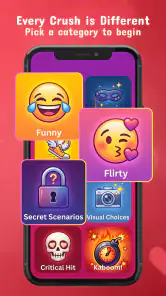
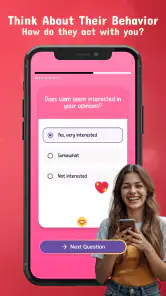
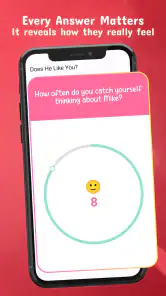
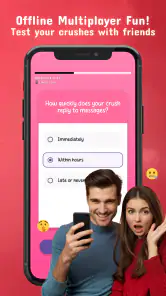
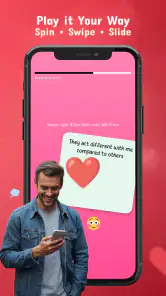
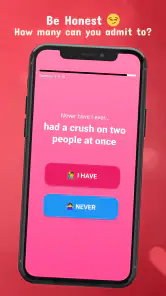
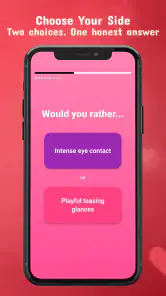
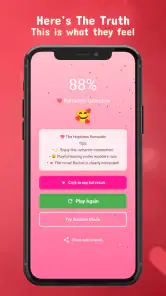
The normal workflow is deliberately simple. You open the game, think about the person you have in mind, complete the test, and look at the result. That short loop is the main experience, so there is no need to learn a complicated interface or spend a long time preparing. I would use it during a chat with friends, before sending a playful message, or when I wanted a few minutes of harmless distraction.
The strongest use case is social. One person can answer while friends offer exaggerated theories about every choice, then everyone can compare results and laugh at how seriously the group pretended to analyze them. It also works as a private curiosity game, especially if you are nervous about a crush and want something amusing to break the tension. The important habit is to decide beforehand that the result is for fun. That keeps a random quiz outcome from influencing a sensitive decision.
I would not use the test as a reason to confront someone, assume that a relationship is guaranteed, or interpret a low result as a personal rejection. The game does not turn uncertainty into knowledge. Its value is in the playful ritual: choosing answers, waiting for the outcome, and discussing what you think afterward. The real information still comes from how the person communicates with you in everyday life.
Because the test is quick, it suits short sessions better than long gaming periods. I can imagine opening it while waiting for a friend, passing the phone around at a sleepover, or using it as an icebreaker during a casual conversation. It is not the sort of title I would play continuously for an evening. Once the novelty of the result fades, the appeal depends on whether I want to repeat the joke with a different situation or share it with someone else.
The game comes from Dream Lab Entertainment and sits in the trivia category. That label gives a useful expectation: this is closer to a casual question-and-result experience than to a story-driven romance game or a competitive quiz with a knowledge bank. The free download makes it easy to try without committing money at the start, although optional purchases cost $0.99 per item. I would still check the purchase prompt carefully, particularly if a child or younger teenager is using the device.
What I check before taking a result seriously
My first practical tip is to answer consistently rather than trying to force a preferred outcome. If I choose responses based on what I hope the game will say, the result only reflects that mood. A better routine is to answer quickly, use the same person as the subject, and avoid changing choices just because an earlier result was disappointing. This does not make the test scientifically accurate, but it makes the session more honest as a piece of entertainment.
I also find it useful to separate the game’s result from the real-world question I am asking. “Does this person like me?” is a personal question, while “What result does this quiz produce from my answers?” is a game question. Keeping those two questions apart prevents the app from becoming an emotional scoreboard. If the result encourages me to be more confident, that can be pleasant; it should not be treated as proof.
There is another small but important choice: decide whether the session is private or social before handing over the phone. A friend may enjoy teasing, while another person may feel uncomfortable having a crush discussed aloud. I would avoid entering a real name when the activity is being shared, and I would not use another person’s private details as a joke. The most enjoyable version is usually the one where everyone understands that the outcome is playful and nobody is pressured to reveal more than they want.
The Teen content rating is worth considering when deciding who should use it. The theme is romantic curiosity, so it may be harmless for many teenagers, but the emotional context can still be sensitive. I would especially avoid presenting the result as advice to a younger user who is already worried about rejection or popularity. A parent or older sibling can make the experience healthier by explaining that quizzes are not substitutes for respectful communication.
Settings and purchase habits that reduce friction
There is no reason to overcomplicate the setup. Since the current version is 1.0, I would approach it as a straightforward early release and keep expectations focused on the core test. Before starting, I would check the device’s sound level, make sure the screen is comfortable to read, and confirm that the person using the phone is happy to participate. Those small preparations matter more here than elaborate customization because the game’s main loop is so short.
I would also pay attention to any purchase prompt instead of tapping through automatically. The game is free to download, but optional in-app items are priced at $0.99 each. That is a small amount, yet repeated impulse purchases can add up, especially when friends are encouraging one another to unlock or try something immediately. On a shared device, purchase controls should be handled by the account owner, and younger users should ask first rather than assuming that “free” means every part is free.
My preferred habit is to play the basic experience first and decide afterward whether anything additional is genuinely useful. That prevents the excitement of a result from turning into an unplanned purchase. It also gives a clearer sense of whether the game itself is enjoyable enough to keep. If the simple test already provides the intended laugh, spending money may not improve the experience.
The minimum operating-system requirement is Android 7.0, which makes the game accessible to many older Android devices. Even so, compatibility is not the same as identical performance on every phone. I would install it on the device I plan to use, allow the initial screen to load fully, and avoid judging it from a rushed handoff between several people. For a party-style session, a stable, charged phone is more useful than trying to run the test while multitasking.
Faster patterns for repeat sessions
Experienced users can make the short format feel more deliberate without pretending that it contains hidden mechanics. My favorite repeatable pattern is the three-step session: take the test alone, discuss the result with one trusted friend, then compare the result with actual behavior from the person in question. The first step provides the game moment, the second adds social fun, and the third brings the conversation back to reality.
Another useful pattern is to change only one element at a time when replaying. For example, I might keep the same person in mind but answer more instinctively on the second attempt, or I might use the game with a different crush while keeping my answering style consistent. This makes the comparison easier to understand. It does not create a controlled experiment, but it avoids the messy habit of changing the person, the mood, and every answer at once.
I would avoid rapid-fire retakes designed solely to chase a favorable result. That turns a playful test into a reassurance loop, where the user keeps playing until the screen says something comforting. If the outcome matters emotionally, taking a break is a better shortcut than repeating the quiz. A quick walk, a message to a friend, or a direct but respectful conversation can provide more useful clarity than another random result.
For group play, I would establish a simple rule: nobody has to reveal the name of the person they are thinking about. Players can describe the outcome without exposing private information, and the group can focus on the humor of the test itself. This is a surprisingly effective way to keep the activity welcoming. It also prevents the fastest or loudest participant from turning someone else’s crush into the center of attention.
When I want to use the game as an icebreaker, I would present it as a question about the app rather than a claim about romance. Saying “let’s see what this quiz gives us” feels lighter than saying “this will tell you whether they like you.” That wording sets the right expectation and makes it easier for someone to decline without feeling embarrassed.
Where the experience reaches its limits
The central limitation is the absence of real evidence behind a playful result. A test like this can reflect the choices made inside the game, but it cannot observe conversations, body language, shared history, or the other person’s intentions. Even a result that feels uncannily accurate is still not a dependable measurement. I would never use it to decide whether to end a friendship, confess intense feelings, or accuse someone of leading me on.
That limitation also affects replay value. Trivia games with factual questions can reward learning and improvement, while this title is built around mood and curiosity. There is no reason to expect a more informed result after repeated attempts. The appeal is situational: it works when the user wants a quick crush-themed activity, but it may feel thin to anyone looking for depth, progression, or a substantial challenge.
It is also not the best choice for someone who wants practical dating guidance. A relationship advice app, a thoughtful conversation guide, or a direct discussion with the person involved would be more useful for that purpose. Likewise, users who dislike fortune-style quizzes may find the premise too vague. The game is aimed at people who can enjoy an intentionally unserious answer without needing the app to justify it.
The age rating reinforces the need for emotional judgment. Teenagers may find the topic relatable, but romance and rejection can feel very personal at that age. I would be careful about group use in school or other settings where teasing can spread quickly. The same result that makes close friends laugh could embarrass someone in a larger group. Good boundaries matter more than squeezing another round out of the game.
There is a practical trade-off in the free-to-try model as well. Free access lowers the barrier to experimentation, while optional items may interrupt the simplicity if the user feels pushed to buy something. Since the experience is already designed around quick results, I would judge any purchase by whether it adds a meaningful new reason to play rather than by the excitement of seeing another screen. If the basic loop feels repetitive, paying for more of the same is unlikely to solve that problem.
Who should download it, and who should skip it?
I would recommend this game to a teenager or adult who enjoys casual trivia-style tests, playful romance themes, and sharing silly results with friends. It can be a pleasant five-minute distraction, a conversation starter, or a small way to make a nervous crush feel less intimidating. The free entry point makes trying it easy, and the modest device requirement means it can suit people using an older Android phone.
I would skip it if I were looking for a serious compatibility assessment, a dating coach, or a game with substantial progression. I would also skip it during a period of intense anxiety about someone’s feelings. In that situation, the result could become an excuse to overthink rather than a source of comfort. A trusted friend or honest conversation would be a healthier next step.
The rating of 3.8 from around 61 ratings suggests a mixed but reasonably interested early audience, while more than 50 thousand installs show that the concept has reached a noticeable group of players. I read those figures as a sign of curiosity rather than proof of quality. The small number of reviews means personal expectations still matter more than the store score: people who enjoy this style of quick test may have a good time, while people wanting depth may not.
Its release on May 13, 2025, and version 1.0 also shape my recommendation. I would treat it as a compact, focused experience rather than a mature platform with a long-established feature set. That is not automatically negative; a simple game can be exactly what someone wants. It simply means I would install it for the crush-test moment, not because I expect a broad collection of relationship tools.
My verdict after using it as intended
Does He Like You? Crush Test succeeds when I let it be what it is: a quick, social trivia game built around romantic curiosity. Its best feature is not the authority of the answer but the ease with which it gives friends something to talk about. The workflow is fast, the premise is immediately understandable, and the free download removes much of the risk of trying it.
The right way to get value from it is to use a repeatable but sensible routine: answer honestly, avoid chasing a preferred result, protect other people’s privacy, and compare the playful outcome with real communication rather than treating it as evidence. Those habits make the game more enjoyable and prevent its biggest weakness from becoming a real problem.
I would keep it as an occasional icebreaker rather than a daily app. The Teen rating, optional $0.99 purchases, and early version are all reasons to use a little awareness, especially on a shared device. For a light crush-themed diversion, it is worth a try. For answers that affect real relationships, I would put the phone down and talk to the person instead.
Pros
- Quick
- simple quiz format that delivers results in just a few taps.
- Playful design makes it suitable for casual use with friends.
- No dating profile or account setup is required to try the test.
- Can be a fun icebreaker when discussing a potential crush.
- Works well for lighthearted entertainment rather than serious dating advice.
Cons
- Results are for entertainment and cannot reliably measure someone’s feelings.
- Repeated answers may produce predictable or less interesting outcomes.
- Some features or content may require in-app purchases or ads.
- The app may encourage overthinking a crush’s behavior without real communication.
- Privacy details should be checked before entering personal or relationship information.

- Category
- Trivia
- Version
- 1.0