Deal To Be A Millionaire
- 1.19K
- 4.6
- Installs
- 10.00M
- Price
- Free

Screenshots







Analysis by Reviewed
I judge a trivia game by more than whether it can fill a spare minute: I also want to know whether its rules are easy to follow, whether its presentation works in ordinary settings, and whether the central idea stays enjoyable after the novelty wears off. Deal To Be A Millionaire has a focused game-show premise built around making decisions under uncertainty. That makes it a different sort of break from answering a rapid series of general-knowledge questions, though it also means the same basic tension is doing most of the work.
Where the game fits into an ordinary day
I can imagine opening it during a commute wait or a quiet break, provided I have enough time and attention to follow a round rather than needing to put the phone down every few seconds. A useful habit is to decide before starting whether I’m playing for a quick diversion or inviting someone else to join the decision-making. In solo play, the banker’s offers give each round its natural pause; with a companion, asking them to make a call before you do can turn a simple choice into a small shared game.
That distinction matters because this is not the kind of trivia title I’d choose to learn facts in short bursts. Its appeal is the suspense of choosing whether to accept an offer or continue, not building a store of knowledge across varied subjects. Players who want a stream of new questions, subject-specific practice, or a more involved strategy system should look elsewhere. If the pleasure is weighing a tempting deal against an unknown outcome, however, the compact premise is easy to understand and easy to share.
Readability, choices, and how the round flows
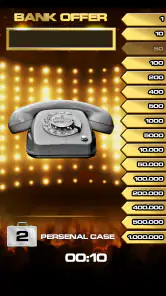
From the first choices, the game’s guided structure is one of its most approachable qualities. You work through a set of cases and face decisions about whether the banker’s offer is worth taking. That familiar sequence gives a newcomer a clear sense of what to do without asking them to master a complicated control scheme first. I find that helpful when introducing the game to someone who does not usually play mobile games: I can explain the basic idea in a sentence, then let the choices carry the conversation.
The presentation also aims for a televised game-show feeling, with suspenseful music, a voiceover, and animations. Those touches can make an offer feel more dramatic, especially when someone else is watching. They are not just decoration, though: players who prefer a calm, quiet interface may experience them as noise rather than atmosphere. I’d treat the sound as part of the game’s character and choose the moment accordingly, rather than opening it in a place where audio would be disruptive.
The case decisions are simple, but I wouldn’t equate that with effortless access. A small display can make visual details harder to follow, and a player who has difficulty tracking changes on screen may not find the pace comfortable. The interaction also relies on making choices on a touchscreen, so reduced dexterity can still be a barrier even when the controls themselves are straightforward. A short trial is more informative than assuming that a simple interface will work equally well for every player.
Who it suits, and what to check before installing
Niceteen Games makes this free trivia game, which has a 4.6 average from around 137,000 ratings and over 10 million installs. Those figures suggest it has reached a broad audience, but they do not tell me whether its particular game-show rhythm is a match for you. The age rating is Mature 17+, so I would not choose it for a child. Optional in-app purchases range from $0.99 to $1.99 per item; if keeping play free is important, pay attention to purchase prompts and make sure they fit your preferences.
More From Our News Desk

Weather by Xiaomi Review: Clear at a Glance, Less Clear Up Close

X Under Pressure: Can It Recover When Posting Goes Wrong?

Clash of Clans Is Won Between the Battles

Android Auto Makes the Case for Quieter Car Software

MobiOffice: Transforming Mobile Productivity with Seamless Integration

EA SPORTS FC™ Mobile Soccer: Redefining Mobile Sports Gaming
The game first appeared on September 18, 2017, and its current version, 9.8, requires Android 7.0 or later. Checking that requirement before downloading can save time if you use an older Android device. The question I’d ask before installing is not only whether the game sounds fun, but whether I want repeated decisions around the same central setup. If I do, the focused design is an advantage; if I want different formats and subject matter from session to session, a conventional quiz app is likely a better use of my time.
How I’d make a round more enjoyable
I wouldn’t tap through an offer immediately just to see the next screen. I’d take a moment to think about the cases that remain and whether the possibility of continuing is worth the uncertainty. The game’s simple structure gives room for that small pause, and it can make a round feel more like a deliberate decision than a sequence of taps. It is also a useful way to keep the tension enjoyable rather than letting the presentation rush the choice.
For a casual group, I’d pass the phone or invite everyone to state their opinion before deciding. The point is not to turn the round into a serious contest; it is to make the offer a conversation starter. This works particularly well for people who enjoy friendly disagreement but do not need a complicated multiplayer format. If everyone would rather play at their own pace, or if taking turns with one screen feels awkward, a board or party game designed around a group may be a better fit.
I’d also pick the setting with the sound in mind. At home or in a relaxed waiting area, the dramatic audio can add atmosphere. In a quiet workplace, library, or shared space, it may be distracting to you or to people nearby. Players who rely on audio cues, have difficulty hearing the voiceover, or find music fatiguing should consider whether the visual choices alone are comfortable to follow. The experience is most inviting when its presentation suits the player and the place, rather than when the game is squeezed into any available moment.
What the format does better—and what it cannot replace
Compared with the usual question-and-answer trivia game, this one puts less emphasis on recalling facts and more on judging risk. That is a genuine difference, not a claim that one format is better for everyone. A quiz is the stronger choice if I want variety in topics, a sense of learning, or a challenge based on what I know. Deal-making is the stronger choice when I want to weigh an offer and enjoy suspense without needing specialist knowledge.
It also sits apart from deeper strategy games. There is a decision to make, but the premise is deliberately narrow: the enjoyment comes from the case-and-offer loop, not from managing a long list of resources or planning several systems at once. That can be a relief when I want something uncomplicated, yet it can also limit replay appeal for someone who needs each session to introduce a new mechanic. I’d think of it as a compact game-show diversion rather than a substitute for a strategy campaign.
The same trade-off applies to social play. A leaderboard can give players a way to compare themselves, and the game’s decision points make it easy to discuss a round. But if the priority is face-to-face interaction, a tabletop quiz or party game may be more satisfying because the group—not the phone’s presentation—can drive the whole activity. I would choose this one for a shared screen and a quick debate, not for a gathering where everyone wants equal involvement at once.
Limits worth weighing
The biggest limitation is also the source of the game’s identity: the central setup stays focused on briefcases, offers, and risk. If that loop clicks, its clarity is welcome. If it feels repetitive after a few rounds, more sound effects or animations are unlikely to solve the underlying issue; I’d switch to a trivia game with broader question categories rather than expecting this one to become a different kind of experience.
There are also practical reasons some players may want another option. The Mature 17+ rating rules it out for younger audiences, and the audio-led presentation may not suit quiet environments or sensory preferences. Anyone who needs extensive control over visual contrast, text size, sound, or interaction should make that a deciding factor: the game’s straightforward choices do not by themselves guarantee a comfortable experience. I would not assume it meets a particular accessibility need without trying it in the conditions that matter to me.
For someone who wants to avoid spending, the free entry point is useful, but optional purchases are still part of the experience. I’d approach prompts deliberately and keep a clear boundary if I do not want to buy anything. The game is best enjoyed as a short diversion, not as something that needs paid extras to justify its premise. If purchase prompts are unwelcome, a no-purchase quiz or a physical game may be more comfortable.
What’s the Buzz About?
So, what’s all the fuss over Deal To Be A Millionaire? It’s an addictive game that puts your decision-making skills to the ultimate test. Inspired by the classic TV game show, it’s all about striking the right deal and making the right choices. The goal? To walk away with a virtual fortune!
Gameplay and Features
The app keeps things simple yet engaging. You’re presented with 26 briefcases, each containing a mystery amount of cash. The catch is to eliminate these cases and negotiate with the virtual banker to secure the highest amount possible. It sounds easy, right? But trust me, it’s a rollercoaster of emotions as you watch the stakes get higher and the offers more tempting.
One of the game’s standout features is its lifelike graphics and sound effects. The suspenseful music and the dramatic voiceover make you feel like you’re right there in the hot seat. Plus, the game offers realistic animations that capture the essence of the TV show, adding a layer of authenticity to the experience.
For a less rushed session, I’d treat each banker offer as a pause point: consider what you already know about the cases left, then decide whether the excitement of continuing is worth the uncertainty. The game is most enjoyable when you make that choice deliberately instead of tapping through just to see what happens. It turns a simple round into a small conversation about risk, which works especially well with another person watching.
User Experience
What I really love about this app is its user-friendly interface. Whether you’re a seasoned gamer or just someone looking to kill some time, you’ll find navigating through the game a breeze. The controls are intuitive, and the game guides you seamlessly through each round.
The app also includes a leaderboard feature, allowing you to compete with friends and players worldwide. It’s a fun way to test your skills and see how you stack up against others. Who doesn’t love a bit of friendly competition, right?
For readability and navigation, the guided sequence is a practical strength: you do not need to learn a complicated control scheme before a round makes sense. Still, the suspenseful presentation is part of the experience, so players who are sensitive to sound or prefer quiet play may find the music and voiceover distracting. I’d keep the setting and surroundings in mind before starting, particularly in a shared space.
The straightforward choices may also be easier to manage than games that demand repeated, precise movements, but that does not make the experience equally comfortable for everyone. A small screen, reduced dexterity, or difficulty following quick visual changes can still get in the way. I would try a brief session first and see whether the case display, pacing, and audio work comfortably for you rather than assuming a simple interface will suit every need.
Who will enjoy it, and where it may fall short
Niceteen Games is the developer behind this free-to-play trivia game. It has a 4.6 average from around 137,000 ratings and over 10 million installs, signs that many players have tried it, though popularity alone cannot tell you whether its particular pace is right for you. The game is rated Mature 17+, so it is not a choice I’d make for a younger player. Optional in-app purchases range from $0.99 to $1.99 per item; I’d check the purchase prompts carefully if you want to keep the experience strictly free.
It first arrived on September 18, 2017, and version 9.8 requires Android 7.0 or later. That makes the Android requirement worth checking before installing on an older device. The main trade-off is that the game’s appeal rests heavily on the familiar briefcase-and-banker setup: if you tire of repeated risk decisions, a question-based trivia game will offer more variety in what you learn, while a board game may work better for a group that wants face-to-face discussion without screen-led presentation.
One practical way to enjoy a round with friends is to agree that everyone gives an opinion before the offer is accepted or declined. That turns the banker decision into a small group debate without needing a leaderboard to make the session social. On the other hand, if you want a quiet solo game with no dramatic audio, or need highly configurable accessibility controls, I would compare alternatives before settling on this one.
Final Verdict
In a world where games come and go, Deal To Be A Millionaire stands out as a gem for anyone who enjoys strategy and a bit of thrill. It’s not just about the potential virtual winnings; it’s about the fun, the suspense, and the satisfaction of making a deal of a lifetime.
So, if you’re looking for a game that offers excitement and a chance to live out your millionaire dreams, this app is definitely worth a shot. Just remember, while you might not be able to cash in your virtual winnings, the entertainment value is priceless!
My inclusive verdict is that the clear, guided round may appeal to players who want uncomplicated choices and game-show tension, but its audio-led drama and fixed premise will not be comfortable or engaging for everyone. I’d recommend trying it when you have a few uninterrupted minutes and can comfortably see and hear the presentation. If the pace or sensory effects become tiring, a quieter quiz with a more flexible format is likely the better fit.
Deal To Be A Millionaire Frequently Asked Questions
Is Deal To Be A Millionaire suitable for fans of trivia games?
Deal To Be A Millionaire is a trivia game with a virtual game-show format, built around choosing cases and deciding whether to accept a deal. Its appeal is less about answering a long series of general-knowledge questions and more about weighing choices as the possible outcome changes. If you enjoy game-show tension and decision-making, this style may be a good fit.
Can I play Deal To Be A Millionaire on my device?
Deal To Be A Millionaire is available for Android and iOS, and its minimum operating-system requirement is version 7.0. Check your device’s operating-system version before downloading so you can confirm compatibility. The game’s current version is 9.8, and keeping your device’s software up to date can help you avoid common installation or compatibility problems.
What age group is Deal To Be A Millionaire suitable for?
Deal To Be A Millionaire is rated Mature 17+, so it is intended for adult players rather than younger children. The game presents a virtual game-show setting focused on choices and simulated winnings. Before downloading it for someone else, consider the age rating and whether its content and style are appropriate for that player.
Who developed Deal To Be A Millionaire, and what do players think of it?
Deal To Be A Millionaire is developed by Niceteen Games and is a trivia game built around a familiar deal-or-no-deal premise. It has an average rating of 4.6 from around 137,000 ratings, with about 1,200 written reviews. Those figures suggest that many players have tried it, though individual enjoyment will depend on whether you like game-show-style choices.
What is 'Deal To Be A Millionaire' about?
'Deal To Be A Millionaire' is a thrilling mobile game where players experience the excitement of a virtual game show. The objective is to make strategic decisions to win virtual money by choosing cases with varying amounts. The game is designed to simulate the tension and thrill of a real-life game show, challenging players to deal or no deal their way to a virtual fortune.
Pros
- Engaging gameplay mechanics
- Variety of challenges
- User-friendly interface
- Regular updates
- Motivational theme
Cons
- In-app purchases required
- Frequent ads interrupting play
- Some levels overly difficult
- Limited offline functionality
- Requires a stable internet connection
- Category
- Trivia
- Version
- 9.8