Car Jam Solver: Traffic Jam
- 504.00
- 4.7
- Installs
- 5.00M
- Price
- Free

Screenshots
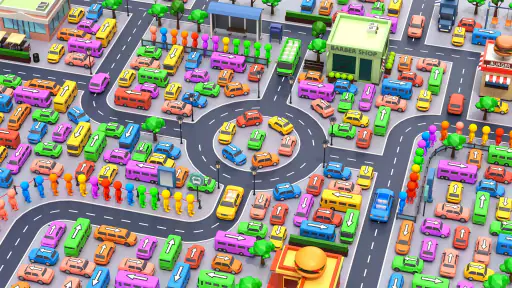
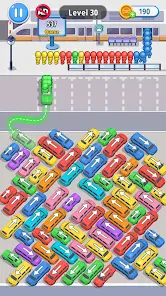
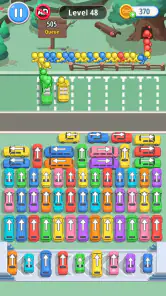
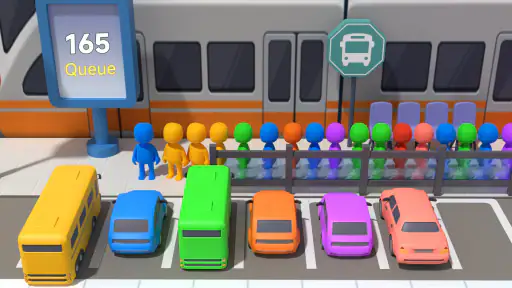
Analysis by Reviewed
I usually judge a traffic puzzle by whether it gives me a clear goal quickly and then makes me think before I move. Car Jam Solver: Traffic Jam gets that basic appeal right: the board is a knot of vehicles, and the task is to work out how to clear it. It suits short bursts of play, but its best moments come when I pause, scan the whole layout, and plan several moves instead of swiping at the first car in my way.
How to get more from a crowded board
The most useful shift in how I play is to stop treating every vehicle as an immediate obstacle. I first look for the route that needs to open, then ask which vehicle must move before the one blocking it can shift. This backward scan is more reliable than clearing whatever looks easiest, because an apparently helpful move may leave a long vehicle with nowhere to go.
I also try to distinguish between a move that creates space and one that merely changes the board. If I move a car but do not open a useful lane or make another move possible, I pause before continuing in the same direction. That simple check reduces aimless shuffling and makes the puzzle feel like a sequence of linked decisions rather than trial and error.
When I reach a knot I cannot solve, I find it more satisfying to inspect the tightest area first rather than repeatedly moving cars near the exit. A vehicle trapped between two others may be the real bottleneck, even if it is not the most obvious obstruction. This approach does not make every board easy, but it gives me a concrete place to begin and helps keep a difficult puzzle from turning into random swipes.
A small game for gaps in the day
A realistic time to play is while waiting for a takeaway order or sitting through a quiet stretch on the bus. I can use a few minutes to study a layout and try a handful of moves, then put the phone away when I reach my stop. The appeal is that I can focus on one compact problem without needing to remember a plot or manage a long run of connected tasks.
That convenience has a trade-off: a busy board still asks for visual attention. If I am walking, trying to follow a conversation, or watching for a stop, I would rather leave the puzzle for later. It is easy to pick up, but not quite a hands-free background activity; the useful part is looking carefully at where each vehicle can move.
For a parent considering it for a child, the Everyone rating makes the intended audience broad, and the basic traffic puzzle is easy to explain. I would still supervise purchase prompts on a shared device, since optional in-app purchases are available. The game can be a simple way to practise planning, but I would not assume every child will enjoy the patience required when a board gets crowded.
You May Like

Clash of Clans Is Won Between the Battles

Android Auto Makes the Case for Quieter Car Software

MobiOffice: Transforming Mobile Productivity with Seamless Integration

EA SPORTS FC™ Mobile Soccer: Redefining Mobile Sports Gaming

How Microsoft OneDrive Became a Mobile Productivity Giant

How Google Translate Breaks Language Barriers Effortlessly
What its progression can and cannot offer
The progress that matters here is mostly a growing ability to read the board. I notice improvement when I can identify a blocking chain sooner or avoid a move that only seems useful. That kind of progress is quieter than unlocking a new play style, so players who need frequent new mechanics or a sense of character development may find the experience too narrow.
Compared with a typical match puzzle, this asks me to reason spatially rather than spot a quick combination. Compared with a broad puzzle collection, it sticks to one central idea instead of switching between different kinds of challenges. That focus is a strength when I want traffic logic in particular, but it is also the clearest reason to choose something else if I tire of sliding vehicles.
There is no need to approach each board as a race. I get better results when I let the layout settle in my mind and consider the order of moves before acting. If a puzzle becomes frustrating, taking a break is often more useful than pushing through with guesses; a fresh look can reveal a lane or dependency that I overlooked.
A Puzzle Built Around Untangling Traffic
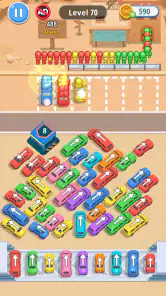
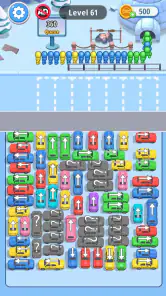
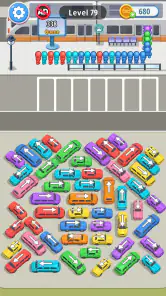
When I first downloaded Car Jam Solver: Traffic Jam, I wasn’t sure what to expect. The premise is simple yet genius. The game presents you with a gridlocked traffic scenario, and your task is to navigate the chaos and solve the puzzle. Each level is like a little riddle that needs unraveling, and trust me, it’s more fun than you’d think!
Gameplay and Features
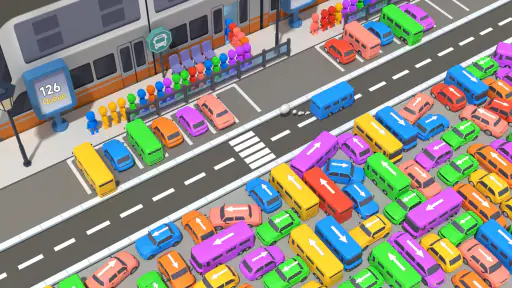
The game starts easy, almost deceptively so, with a few cars that need rearranging. But as you progress, the puzzles become increasingly complex, demanding strategic thinking and a bit of patience. The controls are smooth, making it easy to slide cars around with a simple swipe of your finger. What I really love is the variety of vehicles – from compact cars to school buses, each adding a unique twist to the puzzles.
One feature that stands out is the hint system. If you’re ever stumped, you can get a nudge in the right direction without feeling like you’re cheating. The hints are subtle enough to keep the challenge alive, yet helpful enough to prevent you from tearing your hair out in frustration.
For a more deliberate approach, I try to identify which vehicle is immediately blocking the route and then trace backward to find what is trapping it. That small habit makes the board easier to read and helps me avoid aimless moves. It is especially useful when a longer vehicle occupies a tight space: clearing a nearby car may feel productive, but it only helps if it creates room for the next necessary move.
Goals, Progress, and the Challenge Curve
The early puzzles work well as a low-pressure introduction because the objective is visible at a glance. As the layouts grow busier, the satisfying progress signal is not a new gadget or a complicated menu; it is recognizing a dependency that I missed before. A move that once looked like a dead end can become useful when I notice how one vehicle’s movement opens space for another.
That gradual shift is also where the game asks more patience from me. If I prefer to make quick moves and see instant results, a crowded board can feel repetitive while I test possibilities. I get more from it by treating each swipe as a small experiment: if it does not improve access or free a useful lane, I undo the impulse mentally and reconsider the order. The challenge comes from sequencing, not from speed.
A practical moment for this kind of play is a short wait for coffee or a quiet stretch on public transport. I can start a puzzle, inspect the layout, and stop when I need to, rather than needing a long uninterrupted session. I would not play while driving or in any situation that needs my attention; this is a screen-focused puzzle, not something to use as a distraction behind the wheel.
Graphics and Sound
The graphics are vibrant and colorful, which adds to the overall appeal of the game. It’s not overly flashy, which I appreciate, as it keeps the focus on the puzzle-solving aspect. The sound effects are delightful – nothing overbearing, just the right amount of "vroom" and "beep-beep" to keep things lively.
The presentation helps me distinguish the vehicles without turning the board into visual clutter, though the core enjoyment still depends on liking this particular sliding-block idea. If I want a story-led puzzle, rich character progression, or a different kind of brainteaser, a match puzzle or a narrative logic game would suit me better. This one keeps attention on spatial planning and traffic flow.
Who It Suits—and Where It Can Frustrate
If you’re a fan of puzzle games, Car Jam Solver will feel like a breath of fresh air. It’s a great way to kill time, whether you’re on a coffee break or just looking to unwind after a long day. Plus, it’s one of those games that’s easy to pick up but hard to put down, which is always a good sign in my book.
I’d recommend it to someone who likes working out a move order at their own pace, especially if the familiar traffic-grid setup sounds more appealing than puzzles built around words, matching, or reflexes. I’d skip it if I wanted constant novelty or a strong sense of narrative; repeating the same basic idea with more demanding arrangements is the point, and that can wear thin if sliding vehicles is not satisfying for me.
The hint system is a useful fallback, but I try to use it after making a genuine attempt rather than as my first move. A hint can help me get unstuck, while solving the surrounding steps myself keeps the puzzle rewarding. That trade-off matters: leaning on guidance too early can reduce the very planning that makes a tricky board enjoyable.
Practical Details and Staying Power
SparkWish’s puzzle game is free to start, with optional in-app purchases priced from $0.99 to $49.99 per item. I would treat those purchases as optional rather than necessary to enjoy the basic appeal: the central draw is solving the traffic layouts, not collecting extras. If you are careful about spending, check purchase prompts before confirming anything, particularly if a child is playing.
It is rated Everyone, runs on Android 5.0 or later, and version 1.29 is the current release. The game arrived on August 21, 2024; its 4.7 average from around 60,000 ratings and more than five million installs suggest that the simple premise has found a broad audience. Those figures are reassuring context, not a guarantee that its steady, move-by-move style will suit every puzzle fan.
Its retention comes mainly from the changing difficulty of the boards rather than a need to keep up with a story or compete against a clock. That makes it easy to return to when I have a spare moment, but it also means the game’s staying power depends on how much I enjoy refining a solution. Compared with broader puzzle collections that jump between mechanics, this offers a narrower, more focused challenge; choose it for traffic logic, not variety across genres.
Who should choose another kind of puzzle
I would look elsewhere if my main reason for downloading a game were to discover new mechanics every few levels. This traffic format has a clear identity, and the growing complexity comes from how the vehicles obstruct one another rather than from a wholesale change in what I am asked to do. Someone who enjoys a fresh rule set, a developing story, or a broader collection of mini-games may get more lasting variety elsewhere.
It is also not my first choice when I want a puzzle that rewards a fast glance and an instant response. The satisfaction here comes from considering dependencies, and sometimes the best next step is to wait and think rather than keep tapping. If I am tired and have little patience for working through a bottleneck, a gentler word or matching puzzle may feel more relaxing.
On the other hand, the narrow focus is useful when I want to practise orderly thinking without learning a complicated set of rules. The basic objective stays legible even as the arrangement becomes harder. That makes it a good fit for a player who likes gradually untangling a problem, but not necessarily for someone who equates progress with constant unlocks or a stream of new content.
How I handle hints, spending, and a stuck level
A hint is most valuable to me after I have tried to map the obstruction chain, not before I have looked carefully at the board. I make one pass to see which vehicle needs room, then a second to identify what holds it in place. If I still cannot see a productive first move, guidance can restore momentum without taking away every decision that follows.
I would avoid using a hint simply because a solution is not immediate. A short pause often changes what I notice, especially when I have been concentrating on the vehicle nearest the exit instead of the one that blocks the necessary space. This is a small but useful distinction: the game rewards patience, and a hint works best as a nudge past a genuine impasse rather than a substitute for looking.
The game is free to play, while optional purchases can range from $0.99 to $49.99 per item. I would keep that in mind on a device used by a child and review any confirmation screen before completing a transaction. For a careful player, the sensible approach is to try the core puzzle experience first and decide whether any optional purchase is worthwhile only when its purpose is clear.
In conclusion, Car Jam Solver: Traffic Jam offers an engaging and entertaining twist on the classic puzzle genre. It’s perfect for those who enjoy a mental workout with a side of fun. So next time you find yourself in a real-life traffic jam, remember you’ve got a virtual one waiting for you, ready to be solved!
Car Jam Solver: Traffic Jam Frequently Asked Questions
What does Car Jam Solver: Traffic Jam involve, and is it the kind of puzzle game I might enjoy?
Car Jam Solver: Traffic Jam is a traffic-and-parking puzzle game built around moving vehicles to untangle crowded situations. It may suit you if you like visual challenges that reward planning and patience more than quick reactions. The store summary invites players to clear a bus traffic jam, so expect the core appeal to come from working out how to free a route through a vehicle-filled puzzle.
Can I play Car Jam Solver: Traffic Jam offline?
The game centers on solving traffic puzzles by moving vehicles, which makes its main appeal a focused, individual puzzle-solving experience. Whether you plan to play during a commute or somewhere with limited connectivity, check the game’s behavior on your device before relying on offline access. You can also review the app’s permissions and connection behavior after installing it to decide what works best for you.
Who develops Car Jam Solver: Traffic Jam, and what kind of game is it?
Car Jam Solver: Traffic Jam is a puzzle game from SparkWish. It focuses on sorting out crowded parking and traffic situations by moving vehicles into a clearer arrangement. If you enjoy visual puzzles that ask you to plan a sequence of moves rather than react quickly, its central idea may appeal to you. The game is free to download, with optional in-app purchases.
What is Car Jam Solver: Traffic Jam?
Car Jam Solver: Traffic Jam is a strategic puzzle game designed for Android and iOS users. The main objective is to solve intricate traffic puzzles by maneuvering cars to clear the jam. The game offers various levels of difficulty, making it suitable for players of all ages who enjoy challenging their problem-solving skills.
How does Car Jam Solver: Traffic Jam gameplay work?
In Car Jam Solver: Traffic Jam, players must strategically move vehicles on a congested grid to clear a path and solve the traffic jam. The game features various levels, each with unique challenges and increasing complexity. Players must think critically to determine the best moves, requiring patience and foresight to succeed.
Pros
- Intuitive interface for easy navigation
- Challenging puzzles to keep you engaged
- Offers hints to guide you through tough spots
- Regular updates with new levels
- Offline mode available for uninterrupted play
Cons
- Ads can be frequent and interrupt gameplay
- Some levels are too easy for advanced players
- Occasional bugs may cause app crashes
- In-app purchases can be pricey
- Graphics may seem outdated to some users

- Category
- Puzzle
- Version
- 1.29