Brawlhalla
- 11.75K
- 4.4
- Installs
- 10.00M
- Price
- Free

Screenshots


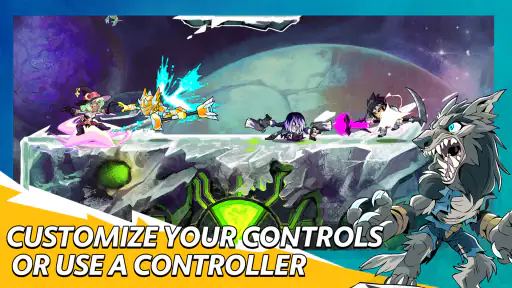
Analysis by Reviewed
I spent time with Brawlhalla as a quick, competitive action game, and my first impression was that it is much easier to start than to master. Matches are built around readable movement, attacks, recoveries, and ring-outs rather than a long campaign or complicated role-playing system. That makes it a natural choice when I want a short burst of competition, but it also means the game can feel demanding once I stop playing casually and begin facing opponents who understand spacing.
Developed by Ubisoft Entertainment, this free-to-play fighting game has reached a broad audience: the Android listing shows an average rating of 4.4 from roughly 347,000 ratings, with more than 10 million installs. Those numbers do not replace personal experience, but they do match what I felt while playing: this is not a niche experiment. It is an established multiplayer fighter designed to keep sessions moving and give players reasons to return.
How the game feels when you actually play
A fighter built around movement and ring-outs
The central appeal is its simple objective. I am not trying to drain a traditional health bar and watch a long finisher sequence. Instead, I am trying to control space, land attacks, and push the other fighter out of the arena while staying alive myself. That changes the rhythm completely. A small mistake near an edge can matter more than a large amount of earlier damage, and a player who understands recovery can survive situations that initially look hopeless.
This structure makes every match easy to read. I can usually tell whether I am winning because of positioning, whether I have used too many jumps, or whether I have given the opponent a safe route back onto the platform. The simplicity is useful on a phone because I do not need to remember a huge list of commands before I can participate. At the same time, the open arenas leave plenty of room for advanced decisions involving approach angles, dodging, weapon reach, and recovery timing.
I particularly like that the game rewards awareness rather than button mashing alone. Pressing attacks repeatedly may work against an inexperienced opponent, but it quickly becomes predictable. When a match gets more serious, I have to watch where the opponent is standing, anticipate a dodge, and decide whether chasing them offstage is worth the risk. That creates a nice gap between the friendly first session and the deeper competitive layer.
Why the mobile version needs an adjustment period
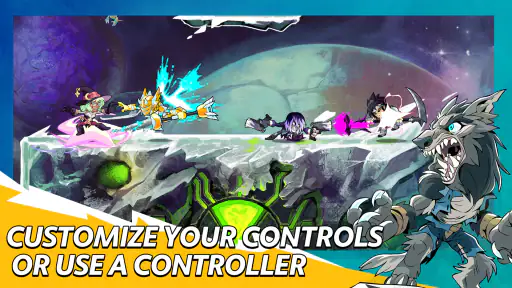
Touch controls are the first major question for anyone considering the game on Android or iOS. A fighting game asks for quick direction changes, accurate attacks, jumps, and recoveries, so the on-screen layout can feel busy at first. I needed time to stop looking at the buttons and start reacting to the action. The problem is not that the controls are impossible; it is that mobile play demands more deliberate hand placement than a casual puzzle or card game.
Short sessions helped me adapt. Rather than trying to learn everything in one evening, I focused on one practical skill at a time: staying on the platform, recovering without wasting movement, or avoiding repeated attacks. This approach made the controls feel less overwhelming. Players who already use a compatible controller may find the transition easier, while players committed to touch input should expect a learning curve before the game feels natural.
More From Our News Desk

Clash of Clans Is Won Between the Battles

Android Auto Makes the Case for Quieter Car Software

MobiOffice: Transforming Mobile Productivity with Seamless Integration

EA SPORTS FC™ Mobile Soccer: Redefining Mobile Sports Gaming

How Microsoft OneDrive Became a Mobile Productivity Giant

How Google Translate Breaks Language Barriers Effortlessly
Screen size also affects comfort. On a larger phone or tablet, it is easier to see both fighters and keep the controls from covering too much of the action. On a smaller display, crowded situations can become harder to read, especially when several effects or fighters are moving at once. That does not make the game unsuitable for smaller phones, but it does make visibility part of the experience rather than a minor detail.
Choosing a legend without getting trapped by a favorite
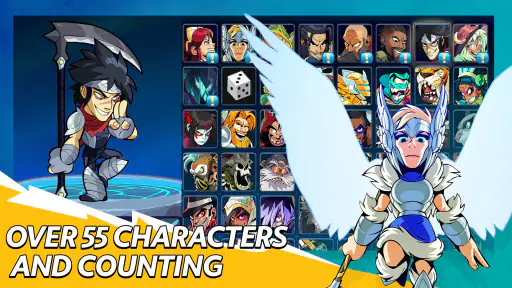
The playable legends do not all feel interchangeable. Their weapons, attack ranges, movement habits, and recovery options influence how I approach a match. One character may encourage close pressure, while another feels better when I keep a little distance and wait for an opening. I found it tempting to choose a favorite based on appearance, but a character that looks appealing is not automatically a good match for my preferred pace.
My practical advice is to test several legends before investing serious time in one. Pay attention to how comfortable the basic attacks feel, whether the recovery is easy to understand, and how well the weapon range suits your instincts. This is more useful than copying a popular choice immediately. A supposedly powerful option can feel awkward if its timing does not fit the way you naturally move.
There is also a valuable training habit here: after losing, I try to identify whether the problem came from the legend or from my decision-making. If I repeatedly attack from too far away, switching characters will not solve the underlying issue. If I consistently struggle to return to the platform, a legend with a more comfortable recovery may let me learn without fighting the controls at every moment.
Modes for quick play and longer practice
The game works well for different levels of commitment. I can open it for a few matches during a break, or stay longer when I want to improve. That flexibility is one of its strongest everyday advantages. A match does not require me to reserve a whole evening, yet the competitive structure gives a longer session a clear purpose: practice a weapon, experiment with a legend, or try to make fewer repeat mistakes.
For a new player, I recommend treating early matches as information rather than a test of talent. Watch how opponents approach, notice which attacks leave them vulnerable, and resist the urge to chase every target off the platform. The game becomes less frustrating when a loss produces one specific lesson. Trying to fix movement, attacks, recovery, and defense simultaneously usually creates confusion.
Players who prefer a solo campaign with a large narrative should set expectations carefully. This is primarily about fighting other players and improving through repeated matches, not about exploring a story world at their own pace. Someone looking for a relaxed adventure may prefer a different action game, while someone who enjoys competitive rounds will probably appreciate the directness.
What free access really means here
The important value point is straightforward: the game is free to download and play, so I can try its core experience without paying an upfront purchase price. That makes the decision low-risk for someone curious about mobile fighting games. I do not need to decide whether a full-price game is worth it before discovering whether touch controls and ring-out combat suit me.
There are in-app purchases listed from $4.99 to $49.99 per item. I therefore separate the free access from optional spending. The free entry is a genuine advantage, but the presence of purchases means I would not describe the entire experience as cost-free in every sense. Before buying anything, I would first make sure I enjoy the basic matches, understand what the purchase changes, and feel comfortable with the amount.
That distinction matters because competitive games can encourage impulse decisions after a frustrating loss or an exciting match. My rule is simple: I only consider spending after several sessions, when I know I will keep playing. If I am still experimenting with controls or uninstalling after short bursts, the free version has already delivered enough value and there is no reason to pay for something I may not use.
The value beyond the first installation
The strongest part of the value is replayability through skill. A beginner can enjoy the immediate action, but the game has more staying power when I start noticing small improvements. Landing safely, recovering with fewer wasted options, or recognizing an opponent's favorite approach can make a familiar arena feel different. The reward is not just unlocking another match; it is becoming more capable inside the same compact ruleset.
This is also why the game can be more satisfying with friends. A friendly match creates a clear shared activity, and the simple objective makes it easy for someone new to understand what is happening. However, the skill gap can become obvious quickly. If one player has much more experience, the newer person may spend too much time being knocked out before learning anything. Alternating legends, explaining one basic tip at a time, and keeping the tone casual makes the session more enjoyable.
For online competition, I value the short feedback loop. I can finish a match, think about one decision, and immediately test a different approach. That is more useful to me than a game where improvement is hidden behind long preparation. The trade-off is emotional intensity: because the matches are direct, a mistake feels personal even when it is simply a predictable part of learning.
Small habits that make a noticeable difference
One non-obvious improvement is to stop treating the edge of the arena as a place where I must always attack. Chasing an opponent offstage can produce a quick win, but it can also leave me without a safe recovery route. I now ask whether I have enough movement options before committing. That single pause prevents many unnecessary self-inflicted losses.
Another useful habit is to change the timing of my return rather than always pressing toward the platform immediately. Predictable recoveries are easy to punish. Varying the route, waiting briefly, or approaching from a different angle makes me less readable. This is especially important on mobile, where a rushed input can send the character in the wrong direction.
I also recommend reviewing the first few seconds of a loss mentally instead of focusing only on the final ring-out. Often the match was decided earlier by giving up center space, attacking from a poor distance, or repeating the same entry. Correcting that opening mistake is usually more valuable than searching for a dramatic finishing move.
Where the game creates friction
The biggest limitation is the same feature that makes the game approachable: its matches are easy to understand but difficult to control consistently. New players may know exactly what they wanted to do and still produce a mistimed attack or an unsafe recovery. That gap between intention and execution can be discouraging, especially when an opponent appears to move effortlessly.
There is also a real difference between casual enjoyment and competitive commitment. If I only want a calm game with predictable progress, repeated losses can make this a poor fit. The action is built around opposition, so improvement depends partly on accepting that other players will punish mistakes. I would skip it for anyone who dislikes competitive pressure, touch-control precision, or the possibility that a short session becomes unexpectedly intense.
Spending can add another layer of friction. Because purchases range from $4.99 to $49.99 per item, I would approach them with a clear personal limit rather than assuming every optional item improves play in a meaningful way. The free starting point is attractive, but players who are easily tempted by customization or collection goals should decide their budget before browsing purchase options.
Performance, age suitability, and device decisions
The game is listed for devices running Android 6.0 or later, which covers a wide range of phones and tablets. That broad compatibility makes it easier to try on an older supported device, although actual comfort still depends on screen size, touch response, and how smoothly the phone handles the action. For competitive play, even small interruptions or awkward controls can matter more than they would in a turn-based game.
Its content rating is Everyone 10+, so I would consider it suitable for younger players within that age guidance, while still remembering that multiplayer competition can be intense. Parents may want to discuss spending before handing over a device, since optional purchases are part of the game. The rating does not mean every child will enjoy the pressure of online matches; temperament matters as much as age.
The listed current version is 10.10. Keeping the app updated is sensible for a multiplayer title because the experience depends on playing within the current version environment. I would also install it on the device I plan to use most often rather than switching constantly between a small phone and a larger tablet while learning controls. Consistency makes it easier to build reliable muscle memory.
How it compares with other mobile action choices
Compared with a traditional single-player action game, this one offers less story-led progression and more immediate replay. I choose it when I want a contest that starts quickly and tests reactions. A story-focused alternative is better when I want exploration, character development, or a predictable sequence of challenges without another player interrupting my plan.
Compared with slower strategy games, the feedback here is much faster. I know almost immediately whether an approach worked. The cost is that mistakes are less forgiving and the controls demand more attention. A turn-based alternative may be better for someone who wants time to consider every move, while this game suits players who enjoy making decisions under pressure.
It also differs from a conventional arcade fighter because ring position and recovery are central to survival. I am not only trying to land a strong attack; I am managing space, platforms, and the route back into the arena. That gives the matches a distinct identity, but it may disappoint someone expecting a purely grounded exchange of combos.
Who will get the most from it
I think the best audience is a player who wants a free way to sample competitive action, enjoys learning through repetition, and does not mind that improvement takes practice. It is especially useful for short breaks, friendly sessions, and players who like analyzing why a match went wrong. The free entry also makes it a sensible experiment for someone unsure whether mobile fighting games are worth their time.
It is less suitable for someone seeking a substantial offline adventure, a relaxed experience with no competitive tension, or a game where paying upfront guarantees a complete and distraction-free package. I would also be cautious about recommending it to a player who becomes frustrated by touch controls quickly. In that case, a slower action game or a controller-friendly alternative may provide more enjoyment.
For families, the age guidance and free starting price make trying it relatively straightforward, but I would still establish spending rules and talk about respectful multiplayer behavior. For experienced fighting-game players, the accessible controls should not be mistaken for a shallow experience. The challenge shifts away from memorizing an enormous command list and toward movement, timing, prediction, and recovery decisions.
My verdict on whether to install it
My recommendation is to install it if you want a free, fast multiplayer action game and are willing to spend time getting comfortable with mobile controls. The free access gives the game a strong value proposition because I can discover whether its ring-out combat works for me before considering any purchase. That is the right order: play first, understand the experience, and only then decide whether optional spending has personal value.
I would skip it if my priority were a story campaign, quiet solo play, or guaranteed relaxation. I would also avoid paying immediately, especially while I was still learning which legends and weapons suited me. The game earns its value through repeated play and skill development, not through a single first impression or an automatic need to purchase anything.
After playing it, I see Brawlhalla as a strong recommendation for competitive-minded mobile players who want short matches with room to improve. Its best moments come when a small adjustment turns a likely loss into a recovery or a well-timed ring-out. Its weakest moments arrive when touch input, pressure, and an experienced opponent combine to make a match feel beyond reach. For me, that balance is worth trying, provided I treat the free version as the test and keep optional spending deliberate.
Brawlhalla Frequently Asked Questions
Can I play Brawlhalla with touch controls, or is a controller needed?
Brawlhalla is available on mobile, PC, and consoles, so the control experience depends on the device you choose. On a phone or tablet, you can play using the touchscreen; a controller is not a requirement to get started. The quick movement and timing can take practice on any control setup, so trying a few matches or practice sessions can help you decide what feels comfortable.
Who developed Brawlhalla, and what is its age rating?
Brawlhalla is an action game developed by Ubisoft Entertainment. Its content rating is Everyone 10+, which can help parents assess whether it suits a younger player, though the game also includes competitive online play. If you are choosing it for a child, consider the age rating alongside your family’s preferences for multiplayer games and review the available platform settings before play.
What devices and operating systems can run Brawlhalla?
Brawlhalla is available on Android, iPhone, iPad, PC, and consoles, so players can choose from several ways to join its fights. On Android, it requires version 6.0 or later. The game is free to download, which makes it easy to try on a compatible device before deciding whether its fast, competitive style suits you.
What is Brawlhalla, and what kind of game is it?
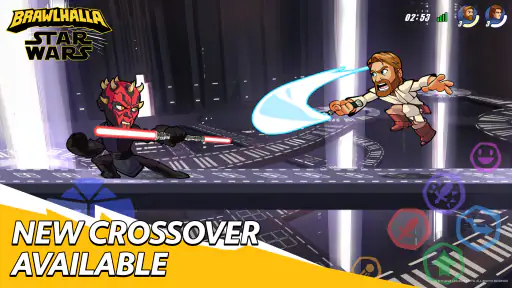
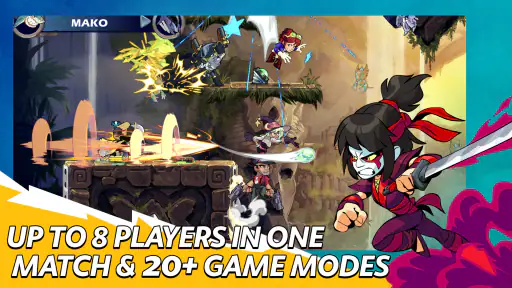
Brawlhalla is a free-to-play platform fighting game for Android, iPhone, iPad, PC, and consoles. Matches are built around fast movement, jumping, dodging, weapon pickups, and knocking opponents off the stage rather than reducing a traditional health bar to zero. It supports casual matches, ranked competition, training, special events, and several game modes, making it suitable for both quick sessions and longer multiplayer play.
Can I play Brawlhalla offline or without creating an account?
Brawlhalla is primarily designed as an online multiplayer experience, so an internet connection is normally required for standard matches, ranked games, and most social features. You can usually explore training and practice-related content without competing online, but the complete experience depends on connected play. Account requirements may vary by platform, especially when using cross-progression or linking the game across devices.
Pros
- Free-to-play with cross-platform multiplayer support.
- Large roster of legends with distinct weapons and playstyles.
- Quick matches work well for short gaming sessions.
- Frequent events
- updates
- and rotating content keep it fresh.
- Local multiplayer makes it fun for playing with friends.
Cons
- Progression mainly unlocks cosmetics rather than gameplay advantages.
- Online matches can feel frustrating when facing highly skilled players.
- Touch controls may feel less precise than a controller.
- Some cosmetic items and bundles can be expensive.
- Requires a stable connection for the best online experience.

- Category
- Action
- Version
- 10.10