Ascension: Deckbuilding Game
- 2.74K
- 3.7
- Installs
- 500.00K
- Price
- Free

Screenshots

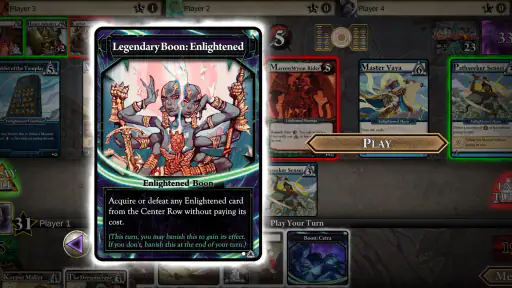
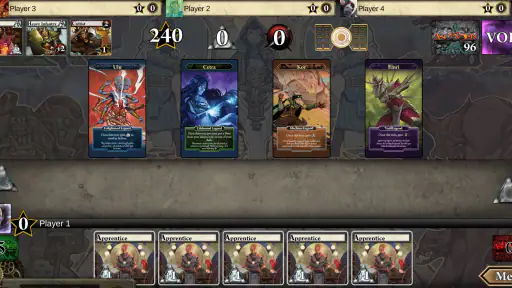
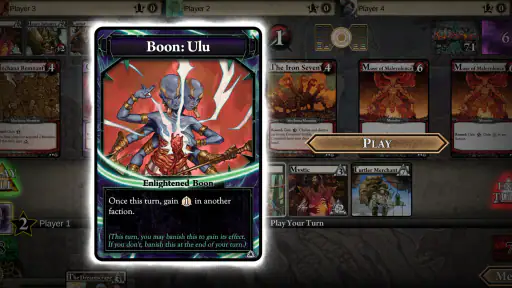

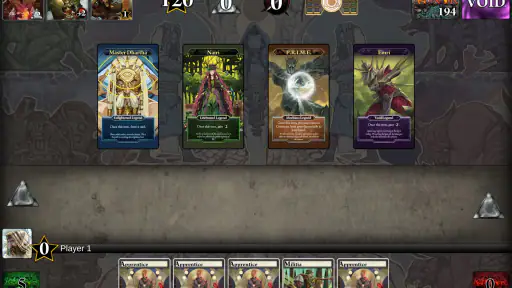
Analysis by Reviewed
I spent time with Ascension: Deckbuilding Game because it takes a different route from the usual card-game app. Rather than handing me a finished deck and asking me to play a fixed match, it makes the changing card pool the center of each decision. I am constantly weighing what is available now against what I want my deck to become later, and that gives even short sessions a useful sense of direction.
This is a free card game from Playdek, Inc., rated for Everyone. It has passed the half-million-install mark and holds an average rating of 3.7 from roughly seventeen thousand ratings, so it is established enough to have a sizeable player base while still showing that it will not suit every mobile gamer. The current release is version 2.5.3, and it runs on Android 7.0 or later. Optional purchases range from ninety-nine cents to $9.99 per item.
The changing card pool is the real game
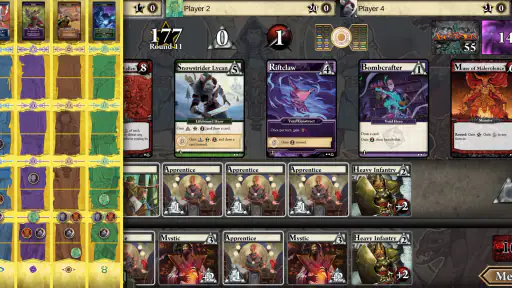
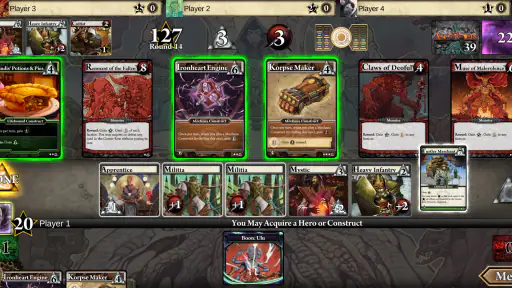
The capability that matters most here is the way the available cards shape your strategy from turn to turn. I do not begin with a carefully constructed list that behaves exactly as planned. Instead, I look at the cards currently offered, decide which ones fit my developing approach, and accept that the next useful opportunity may require a different choice.
That sounds simple, but it changes the feeling of deckbuilding. In many digital card games, preparation happens before the match and the battle is mainly about executing that preparation. Here, deckbuilding happens inside the match. I have to recognize value quickly, avoid buying cards merely because they look powerful, and think about how each purchase will affect future turns.
The strongest skill is not collecting the most impressive card; it is identifying the card that improves the next several turns. A card with modest immediate value can be better than a spectacular option if it helps my deck cycle more smoothly or supports the direction I have already started. That makes the game approachable at first, but it also gives experienced players plenty to analyze.
The store summary highlights the Legends Expansion, which is now available. I see that as useful for players who already enjoy the core loop and want more variety, rather than as the reason to begin. The basic appeal is already present in the central deckbuilding decisions, and the expansion matters most after I understand why certain purchases work together.
Why this feels different from a traditional card battler
Compared with a collectible card game, this is less dependent on arriving with an optimized collection. I am not forced to spend a long time assembling a particular deck before I can understand the game. The match itself gives me the material to work with, which makes experimentation less intimidating and makes each session feel more self-contained.
That also separates it from simple solitaire-style card apps. The goal is not just to clear a layout or chase a high score through predictable patterns. I am making choices that affect the pace and quality of later turns. A poor early purchase can leave a deck awkward, while a careful sequence can make the same starting situation feel much more manageable.
It is not as immediately cinematic as a real-time strategy game, and it does not offer the instant familiarity of a classic matching game. Its pleasure comes from planning, adaptation, and noticing small improvements. If I want quick visual action, I would choose something else. If I want a compact strategy puzzle that rewards attention, this is much more convincing.
How the decisions work in practice
My first useful habit was to stop treating every turn as an isolated opportunity. The visible cards are tempting, but I get better results when I ask what my deck will draw after the purchase. A card that looks efficient now may become less attractive if it adds clutter without helping the rest of the deck. That is one of the first trade-offs a new player needs to understand.
I also found it helpful to separate short-term survival from long-term improvement. Sometimes the best move is the card that gives immediate strength, especially when I need to keep pace. At other times, a less exciting purchase creates a better foundation for later turns. The game rarely tells me which answer is correct, so I have to read the situation rather than follow a fixed recipe.
One practical tip is to examine the whole available row before spending anything. Buying the first useful-looking card can remove an option that would have supported my plan better. I now take a moment to compare the visible choices, consider how much room my deck has for another card, and only then commit. That tiny pause prevents many of my weakest turns.
Another useful workflow is to decide on a broad direction without becoming stubborn. I may begin by favoring one kind of card, but I do not force the plan when the available choices point elsewhere. Flexibility is more valuable than loyalty to an idea formed several turns earlier. This is especially important when the card pool does not cooperate with my preferred strategy.
The game is also a good lesson in deck quality rather than deck size. More cards do not automatically mean more power. If I keep adding options without considering how often the important cards will appear, future hands can become less focused. I learned to value purchases that make the deck feel more purposeful, not merely larger.
A realistic short-session routine
For an everyday example, I can imagine opening the game during a commute or while waiting for an appointment. I do not need to prepare a deck before starting, so I can begin immediately and use the first few turns to understand the available direction. Instead of trying to win through a rushed series of purchases, I use the opening to identify which cards work together and which attractive options would only distract me.
When the session is interrupted, the most useful thing to remember is not a long sequence of moves but the current condition of the deck: whether it is becoming too crowded, whether it lacks immediate strength, and whether the next purchase should support consistency or flexibility. That way, I can return to the match without having to reconstruct an elaborate plan from memory.
This makes the game a better fit for thoughtful breaks than for completely passive play. I can play in small portions, but I still need to pay attention. If I am watching a video or answering messages at the same time, I am likely to miss the significance of a card and make a weaker decision. The sessions may be convenient, but they are not mindless.
Where the system shines and where it creates friction
The biggest strength is replay value created by changing circumstances. I am not simply repeating the same opening and hoping to execute it faster. Each match asks me to interpret what is in front of me, and that keeps the basic loop interesting after the rules become familiar.
It also gives beginners a gentler entry into deckbuilding than a game built around a large permanent collection. I can learn by playing rather than by studying a complicated list of cards before my first serious match. Mistakes are informative because they show how a purchase affects the rest of the deck.
The drawback is that the same uncertainty can feel frustrating. A player who wants complete control over a carefully engineered deck may dislike having to adapt to the available selection. The game rewards making the best decision from imperfect options, not always executing the plan I had in mind. That distinction is important before downloading it.
There is also a learning curve hidden inside the simple premise. The rules are approachable, but recognizing card quality and deck balance takes practice. Early games can feel less satisfying if I judge every decision only by its immediate effect. I had to accept that some purchases are valuable because they improve later turns, not because they produce the biggest result right away.
The free entry is welcome, but the optional purchases are worth considering before committing to the wider experience. Items cost from ninety-nine cents to $9.99, and I would approach them as additions for an interested player rather than necessary spending for someone still deciding whether the core loop suits them. I would play the free version first and only buy more after I knew I enjoyed adapting to the card pool.
The rating of 3.7 suggests a mixed reception rather than universal approval. In my view, that makes sense. The game has a focused strategic identity, but that identity can be mistaken for randomness or friction if someone expects a more direct battle system. It is not trying to be a fast action card game, and judging it by that standard will lead to disappointment.
How I would approach the Legends Expansion
The Legends Expansion is now available, but I would not rush toward it on the first day of play. My advice is to learn the basic rhythm first: inspect the available cards, avoid bloating the deck, and understand when immediate strength matters more than future efficiency. Once those decisions feel natural, additional content is more likely to add variety instead of confusion.
For experienced players, the expansion is more interesting because it gives them another reason to revisit the central capability. New options can change which early purchases are sensible and may encourage different approaches to the same kind of situation. The important point is that extra content does not remove the need for judgment. It increases the number of decisions that need to be evaluated.
I would also avoid assuming that a newly added card is automatically better than an older one. The value of a card depends on what the rest of the deck is doing and what the current selection allows. Treating expansion content as a collection of upgrades can lead to inefficient purchases. Treating it as another set of tools is a healthier way to use it.
Who gets the most from this card game
I recommend it most strongly to players who enjoy making plans and revising them. If you like the feeling of turning a limited set of choices into a coherent strategy, this is a satisfying mobile option. It is especially suitable for someone curious about deckbuilding but unwilling to begin with a large collection-management commitment.
It is also a good choice for players who enjoy learning through repeated attempts. A disappointing match can still teach me something about buying too broadly, ignoring the deck’s future draws, or committing too early to one direction. That makes failure feel useful instead of purely wasteful.
I would be more cautious if you want a game with a strong story, constant animation, or instant competitive intensity. I would also point fans of highly controlled collectible decks toward a different alternative, because the changing card pool limits how precisely I can prepare my experience. For those players, a traditional constructed card game may provide more control, even if it demands more time and collection work.
New players should give themselves several sessions before deciding whether they are good at it. The first match teaches the surface rules, but later matches reveal the real challenge: judging opportunity cost. I would focus less on winning immediately and more on noticing which purchases made later turns easier or harder. That approach shortens the learning process.
Players on older Android devices should note the operating requirement: the game needs Android 7.0 or later. The age rating is Everyone, which makes it suitable for a broad audience from a content perspective, although younger players may still need help understanding the strategic trade-offs rather than the basic card interactions.
After playing it, I see the game as a focused deckbuilding experience rather than an all-purpose card app. Its best feature is the pressure to build intelligently from what is available, and that feature affects every part of the experience: it lowers the barrier to trying deckbuilding, creates replay value, and occasionally frustrates anyone who wants total control.
My recommendation is simple: try it if adapting your deck matters more to you than showing off a prebuilt collection. The free starting point makes that decision easy, while the Legends Expansion gives committed players another layer to explore. I would skip it only if I need fast action, a fixed deck plan, or a game that can be played without sustained attention. For everyone else, this is a thoughtful card game with enough depth to make a short break feel like a real strategic session.
Pros
- Strategic deckbuilding offers meaningful choices every turn.
- Runs smoothly on most modern Android and iOS devices.
- Cards and abilities are easy to read on smaller screens.
- Solo play makes it suitable for quick sessions anywhere.
- Frequent card interactions create varied game strategies.
Cons
- The tutorial may feel too brief for complete beginners.
- Random card availability can sometimes make matches feel uneven.
- Advanced strategies take time to learn and understand.
- Some content may require purchases or additional unlocks.
- Longer matches can become repetitive without multiplayer variety.

- Category
- Card
- Version
- 2.5.3