Fluxx
- 227.00
- 3.7
- Installs
- 100.00K
- Version
- 2.1.9

Screenshots



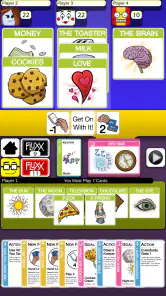




Analysis by Reviewed
I came to Fluxx expecting a light card game, but its real appeal is more unusual: the rules are deliberately unstable. The target can change, the way cards are drawn can change, and the best move one moment may become irrelevant a few turns later. That makes it a board-game-style experience for people who enjoy adapting rather than following a fixed plan.
My first impression was that the game is easy to approach but not especially easy to master. The basic idea is welcoming enough for a casual group, and the free entry point makes it simple to try. Yet the changing conditions create a level of uncertainty that can frustrate anyone looking for a calm, predictable match. I found the strongest sessions happened when everyone accepted that control would be temporary.
Playdek, Inc. presents this as a mobile version of the Fluxx card-game experience, and the app sits firmly in the board category rather than trying to behave like a traditional action game. It is available at no cost, with optional in-app purchases ranging from $0.99 to $2.99 per item. That makes it easy to test before deciding whether it fits your collection.
A changing table that rewards attention
The first few turns explain the personality
The opening turns are where I learned the most about the game’s attitude. Instead of building toward one permanent objective, I had to watch the current rules and reassess what mattered after every change. A turn can begin with a modest decision and end with the entire table operating under a different set of expectations.
That structure gives Fluxx its identity, but it also means the game asks for more attention than its simple card format suggests. I could not rely on memorizing one ideal sequence. I had to read the current situation, notice what opponents were collecting, and decide whether to pursue my own position or disrupt theirs.
This makes it particularly suitable for short social sessions. I can imagine opening it while waiting for friends to arrive, playing a few rounds after dinner, or using it as a change of pace between longer board games. It does not require the same preparation as a strategy title with a large board and many components, yet it still gives players meaningful choices.
The trade-off is that the result can feel less deserved if a late change overturns a carefully prepared position. I personally enjoy that swing when the group treats it as part of the joke, but players who prefer steady progress may find it irritating. The game is not trying to deliver a perfectly controlled contest.
The artwork supports a playful, flexible setting
The visual direction works best when it keeps the cards readable while allowing the game’s shifting identity to come through. Fluxx feels like a collection of playful ideas rather than a single realistic world, and that suits the mechanics. The presentation does not need to create a huge setting because the changing cards provide the sense of movement and surprise.
What matters most is the relationship between the visual language and the rules. When the active conditions change, the table feels as though it has entered a new little scenario, even though the underlying activity remains card play. That helps prevent the repeated reshuffling of objectives from feeling completely arbitrary.
I would not choose this app for a deep narrative journey or a richly developed fictional universe. Its atmosphere comes from the combination of changing instructions, visual cues, and the reactions around the table. The setting is light, flexible, and intentionally less important than the social tension created by the cards.
That lightness is an advantage for mixed groups. Someone who does not want to study a detailed lore system can still understand the immediate situation. At the same time, experienced players can find personality in how they manipulate the current rules. The game’s world language is therefore less about storytelling and more about making instability feel playful instead of confusing.
Sound and pacing shape the mood
The app’s mood depends heavily on pacing. Fluxx is at its best when turns move along and players respond quickly to new conditions. A long pause after every card can drain the humor from a sudden change, while a brisk table makes each update feel like part of a shared conversation.
I found that the game naturally creates small bursts of tension rather than one continuous build. A player may appear close to a goal, another card may alter the rules, and the group immediately has to reconsider the position. That rhythm gives the experience a lively, conversational quality even when the individual actions are simple.
The sound design is most useful when it stays in the background and supports the interface rather than demanding attention. This is not a game where dramatic music needs to carry a story. Its audio role is closer to reinforcing taps, transitions, and the feeling that the table is active. I would keep the volume moderate, especially when playing in a shared room or using the app as a casual group activity.
There is also a practical pacing issue: the game can feel slower when players do not understand the current rule changes. My advice is to read each new condition carefully instead of planning several turns ahead. That habit reduces confusion and keeps the session moving. It is one of the first adjustments I would suggest to a new player.
Why the mechanics and presentation belong together
The most successful part of Fluxx is the fit between its unstable mechanics and its playful presentation. In another card game, constantly changing objectives might feel like a lack of direction. Here, the uncertainty is the direction. The app works because its mood prepares me to expect interruption, reversal, and sudden opportunities.
That does not remove the need for strategy. It changes what strategy means. I am not simply calculating a route to a fixed victory condition. I am preserving options, watching the table, and choosing when to commit. A useful hand is often one that can respond to several possible developments rather than one that looks powerful in only the current situation.
One non-obvious lesson is to avoid treating every favorable card as an immediate play. Sometimes holding flexibility is more valuable than making a visible gain. If the rules change soon afterward, a card that seemed perfect may no longer fit, while a less exciting option may become useful. This is why the game rewards patience even though its surface feels chaotic.
Another practical insight is to watch opponents’ behavior rather than only their cards. Because the active objective can shift, a player who appears quiet may simply be conserving options. I learned to pay attention to who reacts quickly to a new rule and who suddenly starts taking risks. Those reactions can reveal priorities that the current table state does not show directly.
How it compares with more conventional board games
Compared with a traditional turn-based board game, Fluxx has less permanence. In a familiar strategy title, the board usually records progress and makes each decision part of a visible long-term plan. Here, the current rules can reshape that plan, so the satisfaction comes from adaptation rather than from building an efficient machine.
Compared with a simple luck-driven card game, however, it offers more room for judgment. The changing conditions do not make every choice meaningless. I still need to decide what to play, when to interfere, and how much attention to give the other players. The game sits between casual randomness and deliberate strategy.
This middle ground is also its main limitation. Players seeking a competitive game with a clear skill ladder may prefer something more stable. Players who want a completely relaxed experience may also dislike having to track changing conditions. Fluxx is best for people who enjoy a social contest where the rules themselves become part of the conversation.
I would also be cautious about recommending it as a solo replacement for a full board-game night. Its energy comes from seeing other players react to unexpected changes. It can still be useful for learning the flow or passing a short break, but the strongest reason to choose it is the shared table experience, whether that table is physical or represented through the app’s play environment.
Everyday use, device expectations, and value
For an everyday scenario, I can see myself using Fluxx during a relaxed evening with friends who have different levels of board-game experience. Rather than explaining a long rulebook, I could introduce the basic idea, let the changing conditions teach the rest, and allow the group to discover its rhythm together. The first session might be messy, but that mess is part of the appeal.
It is also a useful choice when the group has limited time. Because the game can change direction quickly, a short session can still contain several memorable turns. I would not promise every match will feel equally satisfying, though. A particularly abrupt ending may leave some players laughing and others wishing they had more influence over the result.
On Android, the app supports devices running Android 6.0 or later. The current release is version 2.1.9, which is relevant if you are checking compatibility before installing. I would still make sure the device has enough free space and that the interface is comfortable to read, since card-heavy games are less enjoyable when text or controls feel cramped.
The free price is a genuine advantage for curious players. With a 3.7 average from around 893 ratings and more than 100K installs, it has attracted a substantial audience without presenting itself as a premium-only purchase. The optional purchases are modest in size, but I would still treat them as extras rather than part of the basic reason to try the game.
The age rating is Everyone, which fits the approachable tone and makes it suitable for a broad household audience. Even so, suitability depends on the people playing: the competitive reversals can produce playful arguments, so younger players may benefit from an adult explaining that losing a strong position is normal in this particular game.
Small habits that improve the experience
My first recommendation is to explain the current rules aloud before making a complicated move. This sounds obvious, but it prevents the most common kind of frustration: a player planning around an older condition without realizing that the table has changed. A brief pause is better than several turns built on a misunderstanding.
Second, do not judge the game by one unlucky match. The design is intentionally variable, and a single session can make it seem either brilliantly clever or hopelessly random. I would play several rounds before deciding whether the balance suits you. The important question is not whether every result feels fair in isolation, but whether you enjoy responding to the changes.
Third, agree on the tone before starting. If the group wants a serious contest, the unpredictable structure may clash with that expectation. If everyone understands that surprise and table talk are central, the same reversal becomes much more entertaining. This simple conversation can improve the experience more than any advanced tactic.
Finally, use the game as a social opener rather than as a test of expertise. New players can contribute quickly because the active situation keeps changing, while experienced players can demonstrate better timing without making the whole session inaccessible. That balance is one of the app’s strongest practical qualities.
Who should install it, and who should skip it?
I would recommend Fluxx to players who enjoy compact board games, changing objectives, and the kind of table talk that comes from sudden reversals. It is especially appealing if you like learning a game through repeated play instead of mastering a fixed opening. The free entry point makes that experimentation easy.
I would skip it if your ideal card game is built around long-term planning, predictable progression, or a carefully controlled competitive environment. It is also not my first choice for someone who wants a story-rich mobile game, a fast reflex challenge, or a quiet solo activity with minimal mental tracking.
Families and mixed-experience groups may find it approachable, but I would introduce it with honest expectations. The game is not simply an easy version of a conventional board game. Its rules can become more demanding precisely because they keep changing. Once that is understood, the accessible card format becomes a strength rather than a misleading promise.
My atmosphere verdict
Fluxx succeeds because its art direction, sound, and pacing all support the same central idea: the table is never entirely settled. The presentation keeps the experience light enough for casual play, while the mechanics give each change practical consequences. I never felt that the mood was trying to hide the rules; instead, it helped me accept why the rules were so fluid.
There is friction in that design. A match can swing away from a player who made sensible decisions, and newcomers may need time to understand which conditions matter most. The interface and pacing also depend on everyone paying attention. Those are real weaknesses, not minor details, but they are connected to the same unpredictability that makes the game distinctive.
After spending time with it, I see this as a good recommendation for a friend who wants a free, social board game with a mischievous personality. I would describe it as a game of managing possibilities rather than controlling outcomes. If that sounds enjoyable, the Android version is worth trying; if you need every decision to remain valuable from start to finish, a more conventional card or strategy game will probably be a better fit.
Fluxx leaves its best impression when I stop asking it to behave like a stable strategy game. Once I accept the shifting goals and treat each turn as a fresh puzzle, its atmosphere becomes coherent: playful, alert, and slightly unpredictable. That will not suit everyone, but for the right group, the uncertainty is exactly what keeps the table alive.
Pros
- Fast
- fluid gameplay that is easy to learn for new players.
- Frequent card changes keep matches unpredictable and engaging.
- Supports strategic play without requiring complex rules.
- Compact match format works well for short gaming sessions.
- Distinctive card effects create plenty of memorable moments.
Cons
- Luck can strongly influence results
- even with careful planning.
- Games may feel repetitive after extended play sessions.
- Some card interactions can be confusing without checking the rules.
- Limited appeal for players who prefer action or visually rich games.
- Multiplayer enjoyment depends on having friends or active opponents.