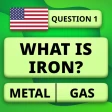
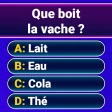
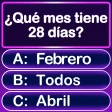
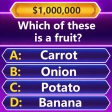
All-in-One Games
- 18.00
- 4.6
- Installs
- 50.00K
- Price
- Free

Screenshots
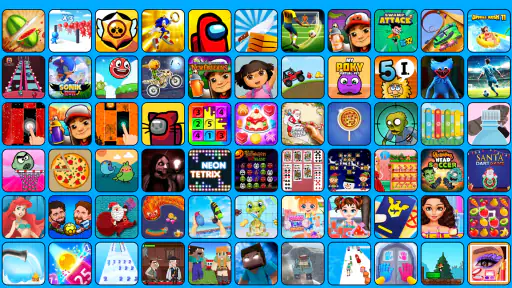
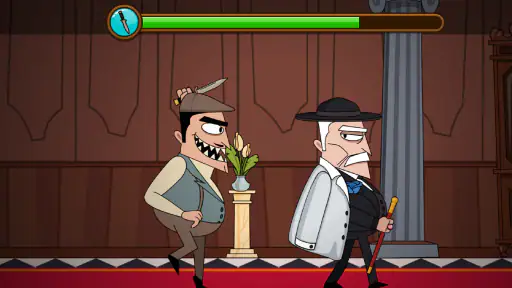
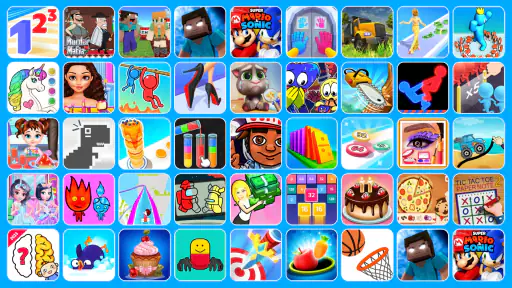



Analysis by Reviewed
I approached All-in-One Games as a quick-play trivia collection rather than a single long-form adventure, and that distinction matters from the first session. Developed by NAJOX Play, this free game brings several bite-sized activities together under one roof. The appeal is immediate: I can open it when I have only a few minutes, choose something that suits my mood, and start playing without committing to a large download or a complicated setup.
That convenience is also the central question. A collection of small games can be wonderfully flexible, but it can also feel scattered if the individual challenges do not give me a reason to return. After spending time with it, I think its strongest quality is the low barrier to entry. It is easy to recommend for casual trivia fans, families looking for light entertainment, and anyone who prefers switching between short challenges instead of learning one elaborate ruleset.
How the first session establishes its goals
The early goal is refreshingly simple: find the activities that fit your attention span and start testing yourself. There is no need to build a character, understand a large fictional world, or prepare a long strategy before the first round. That makes the opening especially suitable for a spare moment during a commute, a short break, or a relaxed evening when I want something interactive but not demanding.
I found that the collection format changes how I judge success. In a traditional trivia game, I expect a clear quiz structure and may measure my enjoyment by how well I perform. Here, the first objective is broader. I am exploring the selection, identifying which challenges feel natural to me, and deciding whether I prefer fast answers or a more considered pace. That discovery stage gives the game a useful early rhythm without requiring a lengthy tutorial.
The all-in-one approach is particularly helpful for households where players do not share exactly the same taste. One person may want general knowledge, while another may prefer a different type of quick challenge. Instead of opening separate applications, the collection offers a single place to look. That does not make every activity equally compelling, but it reduces the friction between finishing one round and trying another.
My practical advice is to avoid treating the first few minutes as a final verdict. The value of a collection like this depends on finding the right fit. If one activity does not hold your attention, moving to another is part of the intended experience. The game works better when I use it as a menu of short sessions rather than demanding that every option become a favorite.
The listing presents it as suitable for Everyone 10+, which feels consistent with its accessible, casual positioning. I would still make the usual judgment for younger players, especially if they are using a shared device, but the rating makes it easier to consider for family-friendly play. It is also free, so trying the selection does not require the same commitment as buying a dedicated trivia title.
What progress feels like in a collection
Progress in this kind of game is less about a dramatic campaign and more about building confidence through repeated play. I notice improvement when I recognize question styles more quickly, make fewer rushed mistakes, or become comfortable moving between different activities. Those are subtle signals, but they can be satisfying because they come directly from my own familiarity rather than from a complicated progression system.
This is an important distinction for potential players. If you need a large map, a visible storyline, or a clearly staged adventure, this may feel light. If you enjoy the small satisfaction of improving a personal performance over several short sessions, the format makes more sense. The game’s progress is tied to engagement and skill, not to a narrative destination that I am trying to reach.
I also like that the collection format gives me more than one way to measure a good session. Sometimes I want to answer accurately. At other times, I simply want to complete a few rounds without overthinking them. A game that supports both moods is more useful on a phone than one that expects the same level of concentration every time I open it.
There is a trade-off here: broad variety can make progress feel less visible. In a focused quiz application, I usually know whether I am advancing through categories or improving against a defined target. With All-in-One Games, the sense of advancement may depend more on remembering which challenges I have already tried and noticing how my decisions change. For me, that is acceptable for casual play, but it may not satisfy players who want a strong ladder or a detailed long-term record.
A useful routine is to choose one activity as a personal benchmark and return to it occasionally, while using the others for variety. That creates a simple structure without pretending that the collection is a full competitive training tool. It also helps separate genuine improvement from the temporary confidence that comes from answering familiar questions.
Challenge, mistakes, and the shape of the difficulty
The challenge works best when I treat each round as a test of attention rather than a high-stakes examination. Trivia can be difficult for reasons beyond obscure knowledge: wording, speed, distraction, and the temptation to change a correct answer at the last second all matter. A short format makes those details more noticeable because there is less time for the session to settle into a comfortable rhythm.
That quickness can be a strength. I do not need to reserve a long block of time to feel that I have played meaningfully. A few rounds can provide a compact mental reset, and a wrong answer does not have to ruin the entire session. I can simply try another activity or come back later with a clearer head.
At the same time, players should not expect a carefully graduated course that teaches every subject from beginner level upward. The collection’s appeal is breadth and immediacy, not necessarily a formal lesson plan. If you want a trivia experience that steadily introduces topics, explains every answer in depth, or builds toward a tournament-style climax, a specialized quiz game may be a better match.
One of the more useful ways to play is to separate speed sessions from learning sessions. When I am playing casually, I answer instinctively and accept that some mistakes are part of the fun. When I want more value from the experience, I slow down, read the question carefully, and think about why I chose an answer. This approach prevents the game from becoming only a reflex test and gives the trivia element more staying power.
The collection also suits mixed-skill groups better than a single narrow quiz can. A player who is strong in one area may not dominate every activity, while someone who struggles with a particular topic can still find another challenge where they feel more comfortable. That balance can make shared play less frustrating, although players seeking strict competitive fairness may prefer a dedicated title with a more controlled question pool.
Why the pacing helps, and where it can lose momentum
The strongest retention tool here is the short-session structure. I can play without planning around it, which is exactly what I want from a mobile game I keep available for occasional use. The lack of a large installation barrier reinforces that convenience: the store summary emphasizes instant play, and the experience is clearly designed around getting into an activity quickly rather than preparing a large game world.
That pacing creates a natural loop. I open the game, choose a challenge, complete a brief attempt, and decide whether I have time for another. The decision is mine, which makes the app easy to fit around real life. A parent waiting for an appointment, a student taking a break, or a group passing around a phone can all use it differently without needing a long uninterrupted session.
However, quick access is not the same as deep retention. Without a strong personal goal, I may finish a few rounds and put the game away. The collection gives me variety, but variety alone cannot guarantee that I will return every day. I need to supply some of the motivation myself by trying to improve, exploring an unfamiliar activity, or sharing the game with someone else.
This is where the title may be less suitable for players who expect constant rewards, elaborate unlocks, or a powerful sense of accumulation. I would not choose it primarily for a long-term progression fantasy. I would choose it because it is convenient, flexible, and easy to revisit. That difference is not a flaw, but it should shape expectations before downloading.
My best retention tip is to use it as a deliberate filler rather than an endless scrolling replacement. Set a small personal aim, such as completing a few focused rounds or testing a new activity, then stop while the session still feels fresh. That approach makes the game feel like a useful pocket pastime instead of something that has to compete with larger games on their own terms.
Everyday use and comparison with dedicated trivia apps
A realistic example is a short evening with friends when nobody wants to install a separate game or learn complicated rules. I can open the collection, let each person suggest an activity, and keep the pace moving. The appeal is not that it replaces a full board-game night; it is that it fills the gap between conversation and a more involved activity without demanding much preparation.
For solo use, I see it working well during small pauses in the day. I might play a few rounds while waiting for food, then close it without losing an hour. That kind of stop-and-start flexibility is more valuable to me than a large amount of content I rarely have time to explore. The game is also a sensible option for a secondary device running Android 6.0 or later, since its stated minimum operating-system requirement keeps it accessible to older compatible phones.
Compared with a dedicated trivia application, the main advantage is range. A specialized quiz app may offer a deeper question database, more detailed explanations, stronger category organization, or a more developed competitive structure. All-in-One Games instead reduces the need to choose between separate casual activities. I would pick the dedicated alternative when I want serious subject practice or a clearly tracked quiz career; I would pick this collection when I want easy variety.
Compared with a large multiplayer party game, it is likely to feel lighter and less event-like. That can be a benefit when I am alone or when the group has only a few minutes, but it may feel limited if everyone wants a major shared competition with elaborate presentation. The right comparison is therefore not “which game has more content?” but “how much structure do I want before I can start having fun?”
The game has already attracted over fifty thousand installs and holds a 4.6 average from around one hundred seventy ratings, with eighteen written reviews. Those figures suggest a positive early reception, though I would still treat them as a starting point rather than proof that every player will enjoy every activity. A collection naturally produces mixed preferences: one person’s favorite challenge may be another person’s least interesting option.
Who should try it, and who should skip it
I would recommend it to casual trivia fans who value convenience, families seeking accessible short-form entertainment, and players who like sampling different activities instead of committing to one format. It is especially appealing if you often play in brief bursts and dislike waiting through a large setup process. The free price also makes experimentation easy.
I would be more cautious about recommending it to someone who wants a deep educational quiz experience. If your priority is detailed explanations, structured subject mastery, or a carefully balanced competitive ranking, a purpose-built trivia app should probably come first. Likewise, players who need a strong story, complex strategy, or a highly visible progression path may find the collection too modest.
Another point is attention span. The quick format is convenient, but it can encourage switching before any one activity has time to become genuinely absorbing. I enjoy the freedom, yet I can also see how a player might browse rather than play. Giving each selected challenge a fair chance makes the experience more rewarding than constantly searching for a perfect option.
NAJOX Play has positioned this as a broad, approachable game rather than a specialist tool, and that focus comes through in use. The current version is 8.0, and the title was released on August 25, 2025, so it feels like a relatively recent option for people looking for a compact trivia collection. I would judge it by the quality of the moment-to-moment play rather than expecting the breadth of a long-established quiz platform.
My verdict on the progression and staying power
All-in-One Games succeeds when its goals remain small and immediate: choose an activity, test yourself, and decide whether to continue. Its progress signals are personal rather than dramatic, its difficulty is best approached as a series of short tests, and its pacing makes it unusually easy to fit into ordinary life. I appreciate that it does not ask me to reorganize my schedule around a mobile game.
The limitation is equally clear. The collection format provides variety, but it may not create enough long-term pressure for players who need unlocks, rankings, or a substantial campaign to stay engaged. I would not download it expecting a deep progression system. I would download it expecting a flexible pocket of trivia entertainment that can change direction whenever my attention does.
My recommendation is simple: choose it for variety and convenience, not for an elaborate endgame. As a free trivia game for Android, it earns a place on my device because it starts quickly, accommodates short sessions, and gives casual players more than one way to play. For a focused quiz challenge, I would look elsewhere. For a low-commitment game that can fill a few spare minutes without demanding a major installation or a long tutorial, this collection is an easy one to try.
Pros
- Offers many game genres in one convenient app.
- Quick to open for short gaming sessions.
- Simple interface makes browsing games easy.
- Suitable for different ages and casual players.
- Can provide variety without installing many separate apps.
Cons
- Game quality may vary considerably between titles.
- Some games may require an internet connection.
- Frequent ads can interrupt gameplay.
- Limited customization may reduce long-term appeal.
- The app may use significant storage and mobile data.

- Category
- Trivia
- Version
- 8.0