Zipline - Drone Delivery
- 371.00
- 4.9
- Installs
- 50.00K
- Price
- Free

Screenshots
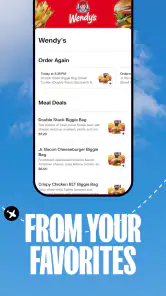
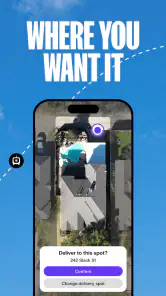
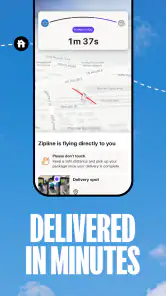
Analysis by Reviewed
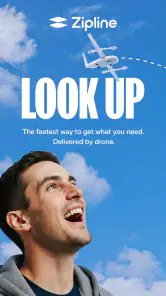
I tried Zipline - Drone Delivery with one main question in mind: does a food and grocery app become genuinely more useful when delivery is handled by drones? My answer is yes, but only in the situations where speed, convenience, and the available delivery area line up. This is not simply another menu for ordering dinner. It is an app from Zipline built around a very specific delivery idea, and that focus changes how I think about ordering small, urgent items.
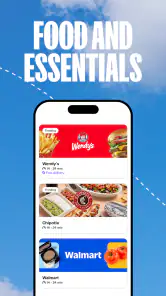
The app is free and aimed at everyone, so there is no complicated barrier to trying it. It belongs to the Food & Drink category, and its description covers food, groceries, and more. That broad wording is useful as a starting point, but the real reason to install it is the delivery method. If you are curious about receiving selected items by drone rather than waiting for a conventional courier, this is the experience worth examining.
Why the drone capability matters
The strongest part of Zipline - Drone Delivery is not a decorative map or a long restaurant directory. It is the possibility of moving an order through the air instead of relying entirely on roads. In everyday use, that can change the value of an order that would otherwise feel too small, too urgent, or too inconvenient to justify a trip.
I find this especially interesting for items that solve an immediate problem: groceries needed during a busy afternoon, food for someone who cannot easily leave home, or a forgotten household essential. With a normal delivery service, the question is often whether the wait and delivery process are worth it. A drone option makes the calculation different. You start asking whether the item is available and whether your location is covered, rather than whether a driver happens to be nearby.
That distinction is important because the app should not be judged as though it were only competing with a supermarket website. Traditional grocery apps are often better when I want to build a large, carefully planned basket. Restaurant apps can be better when I already know which local menu I want. Zipline has a narrower but more memorable strength: it makes rapid delivery the central part of the experience.
The developer, Zipline, gives the app a clear identity instead of trying to make it feel like every other ordering platform. I appreciate that focus. A service built around a particular delivery system can be easier to understand than an oversized marketplace filled with options I will never use. The trade-off is that the app’s usefulness depends heavily on whether the right items and delivery coverage are available for me at the moment I need them.
What the app is really good at
In my experience, the best way to approach it is as a problem-solving app rather than a browsing app. I would not open it just to wander through endless food choices. I would open it when I have a concrete need and want to see whether the service can handle that need with less effort than a normal trip or courier order.
More From Our News Desk

Clash of Clans Is Won Between the Battles

Android Auto Makes the Case for Quieter Car Software

MobiOffice: Transforming Mobile Productivity with Seamless Integration

EA SPORTS FC™ Mobile Soccer: Redefining Mobile Sports Gaming

How Microsoft OneDrive Became a Mobile Productivity Giant

How Google Translate Breaks Language Barriers Effortlessly
That mindset also helps avoid disappointment. A drone delivery service is not automatically the best choice for every meal, every shopping trip, or every neighborhood. Its advantage appears when the order is time-sensitive and reasonably simple. If I am planning a large weekly shop, I would still compare the available selection, delivery conditions, and total convenience with a regular grocery service before committing.
The app has earned a 4.9 average from around 1.8 thousand ratings, which suggests that the people who use it are responding well to the experience. It has also passed 50 thousand installs, giving it a meaningful user base without making it feel like an anonymous experiment. I treat those figures as encouraging rather than conclusive: a high rating can show strong satisfaction among suitable users, while it does not remove the practical question of whether the service works for a particular address.
How ordering feels in practice
The first practical step is deciding what I need before I start browsing. That sounds obvious, but it matters more here than it does with a general delivery marketplace. The app’s value comes from matching a specific need with a delivery option, so I get a better result when I search with a short list in mind instead of expecting the app to inspire a complete meal plan.
I would begin by checking whether my location is served, then look through the available food and grocery choices. This is one of the most important habits for new users: coverage is part of the product, not a minor technical detail. A service can be impressive in principle and still be irrelevant if the delivery area does not include your home, workplace, or the person you are ordering for.
Once the location question is settled, I would compare the available items with the urgency of the order. For a forgotten ingredient or a quick meal, a focused selection may be enough. For a larger shop, I would slow down and check whether the basket really covers what I need. The app is easier to appreciate when I judge it by the task it is designed to solve instead of expecting the range of a full supermarket aisle.
One useful workflow is to keep a mental distinction between “replacement” items and “planned” items. A replacement is something I need today because my original plan failed. A planned item belongs in a larger shop where price, brand choice, and quantity matter more than immediate convenience. Zipline - Drone Delivery makes more sense for the first group. That simple distinction can prevent me from paying for speed when speed is not actually valuable.
Another practical point is to review the order details carefully before confirming. With any delivery app, I want to check the selected items, the destination, and the final amount. With this service in particular, I would also make sure the order is suitable for the delivery method and that I am available to receive it in the expected way. I would not treat a drone order like a parcel that can automatically be left anywhere without thought.
The experience also changes the meaning of “convenient.” Convenience is not only the number of taps. It is the reduction of interruptions. If I am working from home, caring for a child, recovering from illness, or unable to make a quick trip, avoiding a journey can be more valuable than having hundreds of extra products to browse. That is where the app’s central capability has a real effect rather than merely sounding futuristic.
A realistic everyday example
Imagine that I am preparing dinner after a long workday and discover that one small but necessary item is missing. A standard grocery run means getting dressed, traveling to a shop, finding the item, paying, and returning. A conventional courier service might solve the problem, but I still need to compare its delivery timing and minimum order requirements. With Zipline - Drone Delivery, I would first check whether the item is offered and whether my address is eligible. If both answers are positive, the drone option could turn an annoying interruption into a short ordering task.
The same logic applies when someone at home needs a grocery item but cannot leave. The app may be more useful than a restaurant-focused platform because the need is not necessarily a prepared meal. It can fit the awkward middle ground between “I need dinner delivered” and “I need a full supermarket order.” That is a specific use case, and it is where I think the app earns its place on a phone.
For a workplace, the appeal is different. A team might need food or small supplies without sending someone away from an active shift. The benefit is not just speed; it is keeping people focused. Still, I would confirm the receiving arrangement first. A delivery method that works smoothly at a home address may require more planning around a busy workplace, shared entrance, or restricted outdoor space.
The trade-offs I noticed
The biggest limitation is that the concept naturally depends on location. I cannot assume that installing the app means I can order immediately. Service availability has to be checked in the app, and that makes the first-use experience more conditional than opening a standard restaurant marketplace. For some people, that will be a minor step. For others, especially those outside an active delivery area, it may be the reason to skip the app.
Selection is another trade-off. A focused delivery network can be valuable precisely because it is optimized for a particular kind of order, but it may not replace a broad supermarket or local restaurant directory. If I care about a specific brand, unusual ingredient, large quantity, or a highly customized meal, I would compare alternatives before assuming Zipline is the best fit.
There is also a difference between wanting food and wanting a delivery experiment. Some users will enjoy the novelty and practical speed of drone delivery. Others may prefer a familiar courier because they already know how that service handles substitutions, doorstep handoffs, and larger baskets. I would recommend Zipline to someone who values the delivery method itself, not to someone who simply wants the biggest possible catalog.
My advice is to avoid using it for an order where one unavailable item would ruin the whole plan. If I am preparing a recipe with several exact ingredients, I would either keep a backup option or use a supermarket service with broader stock. Zipline is more comfortable when the order can be adjusted: a quick meal, a replacement item, or a small collection of practical groceries.
Expectations matter too. Drone delivery sounds automatic, but real-world delivery still involves choosing a suitable destination and being prepared for the handoff. I would not place an order while planning to leave immediately or while assuming that someone else will notice it without instructions. The technology may reduce road travel, but it does not remove the need for a sensible receiving plan.
The app’s current version is 4.28.0, and it requires Android 7.0 or later. That makes it accessible to many Android users, including people who do not replace their phone every year. I still recommend keeping the app updated when possible, particularly for a service where ordering, location handling, and delivery information need to work together reliably.
When another option is better
I would choose a conventional grocery app for a large weekly shop, especially when I need to compare many brands, quantities, and prices. I would choose a restaurant app when the restaurant itself is the priority and I want a detailed menu with extensive customization. I would also consider a local courier service if I need an item from a shop that Zipline does not carry.
Zipline is the better choice when the delivery mechanism solves a real problem. That might mean reducing a trip, handling a small urgent order, or getting food and groceries without interrupting work or care responsibilities. If none of those benefits applies, the usual alternatives may offer more choice with less need to think about coverage and receiving conditions.
Who will get the most from it
The strongest audience is people who regularly face small, time-sensitive errands. Parents with limited flexibility, remote workers, older adults, people recovering at home, and anyone living in a serviced area can all find a practical reason to try it. The app can also appeal to curious early adopters who want to see whether drone delivery feels useful rather than merely novel.
I think it is particularly good for users who make decisions quickly. If I know what I need and can accept a focused range of choices, the service feels streamlined. If I enjoy spending a long time comparing menus and building a detailed basket, I may find the experience less satisfying than a broader platform.
People who should skip it are those outside the delivery area, shoppers who depend on a very wide supermarket selection, and users who dislike planning around a delivery handoff. It is also not my first recommendation for someone who only orders occasionally and has no interest in the drone aspect. Installing another app is not worthwhile if a familiar service already solves that person’s needs more completely.
The app is free, and its Everyone age rating makes it easy for a household to consider. That does not mean every order is equally suitable for every user, of course; the practical decision still comes down to location, available products, urgency, and whether the delivery arrangement fits the situation. Those are the four checks I would make before relying on it.
My favorite tip is to treat the app as a backup plan before treating it as a complete replacement for grocery shopping. Install it, check your coverage, explore the available range, and remember what kinds of urgent items it can help with. Then, when a small emergency happens, you already know whether it is a realistic solution instead of trying to learn everything while dinner is waiting.
After using it with that expectation, I came away impressed by how one verified capability can shape the entire experience. Drone delivery is useful here because it changes the effort involved in a small order, not because it magically makes every shopping task better. That is a meaningful distinction, and it keeps the review honest.
Overall, I recommend Zipline - Drone Delivery to anyone in a supported area who wants food or groceries delivered in a way that can reduce an unnecessary trip. Zipline has created a focused Food & Drink app with a clear purpose, and the high user response—371 reviews alongside its 4.9 average—supports the idea that the concept works for its intended audience. I would keep a broader grocery or restaurant app for comparison, but I would gladly keep this one installed as the practical option for those awkward, urgent orders where conventional delivery feels like too much effort.
Zipline - Drone Delivery Frequently Asked Questions
Is Zipline - Drone Delivery a standalone ordering app, or do I use it through a local partner?
Zipline is a drone delivery service, and ordering is generally handled through a participating retailer, healthcare provider, or local service rather than one universal Zipline app. The app is free and falls under Food & Drink, but the ordering experience depends on the partner serving your area. Before downloading, check whether a local partner offers Zipline delivery and directs customers to this app.
What is Zipline – Drone Delivery, and how does it work?
Zipline is a drone delivery service designed to transport items such as medicines, groceries, household products, and other eligible goods directly to a designated delivery area. Orders are placed through a participating retailer, healthcare provider, or local service rather than necessarily through one universal app. After confirmation, an autonomous aircraft carries the package and releases it safely at the approved location.
Is Zipline – Drone Delivery available everywhere?
No. Zipline operates only in selected cities, regions, and partner networks. Availability depends on local regulations, weather conditions, delivery infrastructure, and participating stores or healthcare organizations. Before downloading or registering through a partner application, check whether your address is inside the current service area. The available products, delivery times, and ordering process can also vary significantly by location.
What kinds of products can be delivered by Zipline?
The products available through Zipline depend on the local partner and the rules in your area. Common examples include prescription medicines, medical supplies, groceries, convenience items, and small retail purchases. Orders must meet weight, size, packaging, and safety requirements, so large, fragile, restricted, or temperature-sensitive products may not be eligible. The catalog shown at checkout is the most reliable guide.
How does a Zipline delivery arrive, and do I need to meet the drone?
In most cases, you do not need to meet or physically receive the drone. Zipline aircraft are designed to deliver packages to a carefully selected drop-off point, often using a controlled lowering system intended to reduce impact and improve precision. You may receive notifications when the order is dispatched and delivered, but you should follow the partner’s instructions and keep the drop zone clear.
Pros
- Fast delivery for eligible medical and essential supplies
- Uses autonomous drones
- reducing road traffic and emissions
- Can reach remote areas with limited road access
- Precise drop-off system minimizes the need for direct contact
- Designed with strong safety controls and real-time flight monitoring
Cons
- Service availability is limited to selected regions and partner locations
- Not intended for general shopping or everyday consumer deliveries
- Weather conditions may delay or cancel scheduled flights
- Delivery options depend on local healthcare or business partnerships
- Some users may have limited control over exact delivery timing
- Category
- Food & Drink
- Version
- 4.28.0