Zèya
- 51.00
- 3.8
- Installs
- 10.00K
- Price
- Free

Screenshots



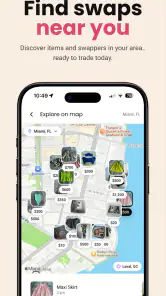




Analysis by Reviewed
Some apps try to make community life feel more useful by turning everyday exchanges into a shared habit. Zèya takes that approach as a lifestyle app built around swapping, saving, and connecting with people nearby. I found its central idea more interesting than a standard shopping or social app because it asks a practical question: could something I no longer need become valuable to someone in my community instead of being ignored or discarded?
That focus gives the app a clear identity. It is not simply a place to browse products, and it is not only another feed for chatting with strangers. The appeal comes from combining local discovery with the possibility of exchanging items or finding ways to save. The developer is The Zéya App, and the app is free to use. For someone who likes reuse, community interaction, or a more personal alternative to ordinary buying and selling, that combination is worth exploring.
My overall impression is positive but measured. Zèya feels most useful when I treat it as a community tool rather than a replacement for every marketplace, social network, or savings service. Its value depends heavily on whether enough relevant people and offers are active around me. That makes the experience potentially rewarding in one location and rather quiet in another.
Why the swap-and-save idea matters in everyday use
The most important capability here is the connection between local swapping and saving. In a conventional marketplace, the usual process is straightforward: find an item, pay for it, and arrange delivery or collection. Zèya encourages a different mindset. I can look at what is available in my community, consider whether I have something useful to offer, and make the exchange feel more mutual than transactional.
That difference affects how I browse. Instead of opening the app with only a shopping list, I can also think about unused belongings, occasional needs, and things that would be wasteful to buy new. A kitchen item needed for one event, clothing that no longer suits me, or a household object taking up space may all become more relevant when the goal is exchange rather than resale.
The saving benefit is not limited to spending less money. There is also a saving of storage space, time, and unnecessary consumption. If a useful item can move from one person to another, I may avoid searching several stores or buying something that will sit unused afterward. That is where the app’s concept has real practical strength: it encourages a more flexible definition of ownership.
At the same time, I would not confuse the idea with guaranteed savings. A swap only helps when the other person has something I want and I have something acceptable in return, or when the community makes another arrangement possible. If I need a very specific product immediately, a normal retailer is usually more predictable. Zèya is better suited to open-ended discovery and community exchange than urgent, exact purchasing.
More From Our News Desk

Clash of Clans Is Won Between the Battles

Android Auto Makes the Case for Quieter Car Software

MobiOffice: Transforming Mobile Productivity with Seamless Integration

EA SPORTS FC™ Mobile Soccer: Redefining Mobile Sports Gaming

How Microsoft OneDrive Became a Mobile Productivity Giant

How Google Translate Breaks Language Barriers Effortlessly
What the community angle changes
The community element makes the experience more personal than scrolling through anonymous listings. Even when the actual exchange remains simple, the context matters. I am not only asking whether an object is worth its price; I am considering whether it is useful to someone nearby and whether my own unused items could help another person.
This can make small exchanges feel worthwhile. A person may not want the effort of listing a low-value item on a traditional selling platform, especially if the expected payment is tiny. Swapping can make that effort feel more reasonable because the return is practical rather than purely financial. The app’s concept is particularly appealing for people who prefer circulation and reuse over constantly buying new things.
There is also a social trade-off. Community-based services can feel friendlier, but they require more patience and judgment. I would pay attention to the clarity of an offer, the condition of an item, and the practicality of arranging an exchange. The app can help create the setting for a useful connection, but it cannot make every interaction equally convenient.
How I would use it without wasting time
I would begin by deciding what kind of exchange I am actually open to. Browsing without a purpose can make any community app feel scattered. A better approach is to keep a short mental list of items I could pass on and needs that are flexible enough to be met through discovery. That turns the app from passive scrolling into a simple weekly routine.
One useful habit is to separate “I need this now” from “this would be nice to have.” The first group belongs more naturally to a conventional store or established marketplace. The second group is where Zèya can become interesting. If I am willing to wait for a suitable local opportunity, the swap model has room to work.
I would also prepare items before offering them. Clear descriptions, honest condition notes, and realistic expectations reduce unnecessary back-and-forth. This is not a hidden technical feature; it is a workflow choice that makes the app’s central capability more effective. A vague offer creates friction, while a thoughtful one gives the other person enough information to decide quickly.
Another practical tip is to think in categories rather than individual objects. If I only search for one exact item, I may conclude that the community is inactive. If I look for several related possibilities, such as home goods, clothing, or occasional-use items, I have a better chance of finding something useful. That broader approach fits the app’s discovery-oriented nature.
A realistic everyday scenario
Imagine I am preparing for a short gathering and need a serving dish, extra chairs, or decorations that I do not want to purchase permanently. In a normal shopping app, I would pay for something that may spend most of the year in storage. With Zèya, I could first check whether someone nearby has a suitable item and whether I own something they might value in exchange.
The outcome may be a direct swap, a useful connection, or simply confirmation that the item is not available locally. Even the last result can be helpful because it tells me whether the community is a realistic source for that type of need. If I use the app regularly, I can gradually learn what kinds of exchanges work best around me instead of expecting every search to succeed.
The same logic applies when clearing a home. Rather than treating unwanted belongings as rubbish or creating a complicated sale listing, I can consider whether another person could use them. This is where Zèya feels different from a standard social feed: the interaction has a concrete purpose, and the object itself remains central.
Where it sits beside familiar alternatives
Compared with a traditional marketplace, Zèya places more emphasis on community and exchange than on a clean buyer-to-seller transaction. A marketplace is usually stronger when I know the exact item, want a monetary price, or need a larger pool of listings. Zèya is more appealing when I am open to alternatives and interested in keeping useful things in circulation.
Compared with a neighborhood social group, the app’s purpose is more focused. General groups can contain local recommendations, announcements, and conversation, but swap-related posts may be mixed with everything else. Zèya’s lifestyle positioning gives the exchange idea a clearer home. The trade-off is that a general community may already have more participants in a particular area.
Compared with a savings or coupon app, Zèya approaches saving through sharing and reuse rather than simply reducing the price of a purchase. That distinction matters. If I want a discount on a specific product, a dedicated savings service may be more efficient. If I want to avoid buying that product at all, a community swap can be the more meaningful option.
Friction points I would consider before installing
The first limitation is network dependence. An app centered on community participation cannot provide the same experience everywhere. The number and relevance of nearby exchanges will shape the value I get from it. A strong concept does not automatically create a lively local pool, so I would approach the first session with realistic expectations.
The second is the time involved in matching. Swapping can require more conversation than pressing a purchase button. I may need to compare offers, explain what I have, and coordinate a practical handoff. That is part of the human appeal, but it is also the reason I would not choose this route for something urgent.
There is a further judgment call around fairness. Two objects do not need to have identical prices to be a good exchange, but both people should feel comfortable with the arrangement. I would avoid treating every interaction as a strict calculation. At the same time, I would not accept a vague or one-sided proposal simply because it is presented as community-minded.
The mature age classification also matters. Zèya is rated for users aged seventeen and over, so it is not an app I would recommend for younger teenagers. Adults should still use ordinary care when communicating with people they do not know and when arranging any exchange. The community concept is useful, but personal judgment remains part of using it responsibly.
What the current release tells me about access
The app was released on November 19, 2024, and the current version is 4.0.3. It supports devices running Android 7.0 or later, which makes the technical entry point fairly broad for Android users with older compatible phones. I would still check the app’s behavior on my particular device before making it part of a daily routine, especially if I rely on it for timely conversations or local coordination.
Its visibility is still modest compared with the enormous platforms people already use for buying, selling, and social interaction. Zèya has over ten thousand installs, an average rating of 3.8 from more than two hundred ratings, and fifty-one written reviews. I read that as a sign of an app with a real but still developing audience rather than a universally established service.
Those figures would not decide the installation for me. The more important question is whether the app’s community matches my location and interests. A smaller service can be valuable when its users are relevant, while a much larger one can still be unhelpful if its listings are too broad or distant. I would judge Zèya after testing the kinds of exchanges I actually care about.
Who is likely to gain the most
I think Zèya is a good fit for people who enjoy reusing items, are comfortable with flexible outcomes, and want a community-centered way to reduce unnecessary purchases. It may also suit someone moving house, simplifying belongings, or looking for occasional-use objects without committing to buying them permanently.
It is especially promising for a person who can contribute as well as receive. Going in only to find free or highly desirable items may lead to disappointment. The app’s strongest use comes from a two-way attitude: I look for useful things, but I also consider what I can return to the community. That makes the swap capability more sustainable and gives interactions a clearer purpose.
I would skip it if I need guaranteed stock, immediate delivery, formal seller protections, or a precise cash value for everything I own. I would also choose another option if I dislike negotiating or coordinating with individuals. In those cases, a retailer, a conventional resale platform, or a dedicated discount service will probably feel more efficient.
My recommendation after focusing on the core experience
The best reason to try Zèya is not that it promises to replace shopping; it is that it makes sharing and reuse easier to consider. That is a narrower promise, but it is also more believable. When the local community has suitable activity, the app can turn unused possessions and flexible needs into practical opportunities.
I would install it with one clear experiment in mind: offer something I no longer use, then browse for a related everyday need. That test reveals more than passive scrolling. It shows whether the exchange culture feels active, whether the available items are relevant, and whether the coordination effort fits my routine.
For me, the app’s success depends on that match between concept and local participation. The free price removes the main barrier to trying it, while the mature rating and community nature mean I would use sensible discretion. If I want a more thoughtful alternative to buying everything new, Zèya is worth a look. If I want speed, certainty, or a conventional transaction, I would stay with the usual alternatives.
Zèya Frequently Asked Questions
What devices and operating systems can run Zèya?
Zèya is a lifestyle app for Android devices running version 7.0 or later. Before installing, check your device’s operating-system version and make sure you are downloading the app from the official store. If you use an iPhone or iPad, confirm that Zèya is available for your particular device and current operating system in your regional App Store.
What does Zèya offer, and what should I expect from its community features?
Zèya’s short description is simply “Zèya,” while its broader summary invites users to swap, save, and connect with their community. That gives a sense of its lifestyle focus, but your experience will depend on the features available where you live and the people using the app. Review its store page and in-app options to see whether they suit what you want.
What is Zèya and what can I use it for?
Zèya is a lifestyle app designed around swapping, saving, and connecting with your community. Its exact tools and purpose may depend on the version available in your region. Before downloading, review its official store description to confirm whether it matches your needs. Check the listed features, supported devices, account requirements, and any service limitations so you know what to expect from the application.
Is Zèya free to download and use?
Zèya is free to download. Some features or services could still require in-app purchases, a subscription, or additional fees, so check the pricing section on Google Play or the App Store before installing. Read any payment and renewal terms carefully if a subscription is offered, since a free trial may automatically convert into a paid plan unless canceled in advance.
Does Zèya require an account or personal information?
Depending on the features you want to use, Zèya may ask you to create an account and provide information such as an email address, phone number, name, or preferences. Review the registration screen and privacy policy before submitting details. It is also worth checking whether the app supports guest access, what data it stores, and how you can request account deletion.
Pros
- Simple interface makes core features easy to find.
- Helpful reminders support consistent daily use.
- Runs smoothly on most modern Android and iOS devices.
- Useful settings allow a more personalized experience.
- Regular updates can improve stability and add new features.
Cons
- Some features may require an account or sign-in.
- The free version may include advertisements or limitations.
- Initial setup can take longer than expected for new users.
- Advanced options may feel limited for experienced users.
- Performance and availability can vary by device or region.
- Category
- Lifestyle
- Version
- 4.0.3