ZeeMee
- 372.00
- 4.5
- Installs
- 100.00K
- Price
- Free

Screenshots
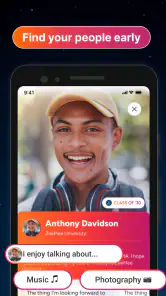
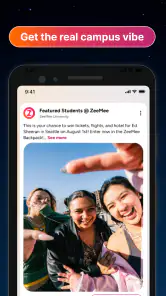
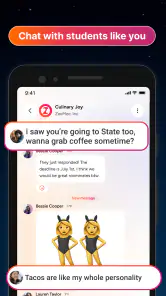
Analysis by Reviewed
Choosing a college is usually presented as a search problem: compare campuses, read official pages, and make a shortlist. The harder part comes afterward, when you wonder what daily life might actually feel like and whether you will know anyone there. I found ZeeMee most useful in that gap. It is a social app built around college discovery and connection, rather than a general-purpose network where college happens to be one topic among many.
That focus changes the way I use it. I am not opening it mainly to follow celebrities, browse unrelated entertainment, or keep up with people I already know. I am looking for conversations and signals connected to the college experience. The app is free, aimed at a teen audience, and developed by ZeeMee. Its strongest idea is simple: make the social side of choosing and approaching college feel less distant.
My overall impression is positive, but with an important qualification. ZeeMee works best as a bridge into college communities, not as a replacement for official admissions information or a complete social life. If you understand that role, it can be genuinely helpful. If you expect every campus question to receive an authoritative answer or every interaction to turn into a lasting friendship, the experience can feel less satisfying.
Why the college-centered social approach matters
The app’s defining capability is its college-focused social environment. That sounds narrower than a normal social network, and that is precisely its advantage. A broad platform gives you plenty of noise: unrelated posts, old contacts, and conversations shaped by whatever is trending. ZeeMee gives college-related interaction a central place, which makes it easier to approach people who are dealing with similar decisions.
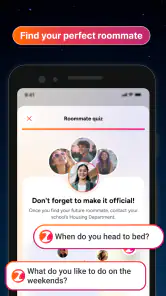
In my experience, the value is not just discovering a campus name. It is seeing the human layer around that choice. A student can be curious about the atmosphere, look for people considering the same school, or begin a conversation before arriving. Even a short exchange can reduce the feeling that college starts on the first day with a room full of strangers.
This is especially useful for students who do not already have a large network. Someone whose friends are applying elsewhere may have plenty of academic information but very little social context. A college-specific space gives that person a more natural opening line than sending a cold message to an unknown student on a general platform.
I also like that the app’s purpose is easy to understand. It is categorized as a social app, but its identity is not vague. The store summary describes it as a social app for college, and that accurately reflects the experience I would recommend it for: connecting the decision-making process with the people who may share the next stage of life.
More From Our News Desk

Clash of Clans Is Won Between the Battles

Android Auto Makes the Case for Quieter Car Software

MobiOffice: Transforming Mobile Productivity with Seamless Integration

EA SPORTS FC™ Mobile Soccer: Redefining Mobile Sports Gaming

How Microsoft OneDrive Became a Mobile Productivity Giant

How Google Translate Breaks Language Barriers Effortlessly
What the focused audience changes
A focused audience can make conversations more relevant. When people gather around college plans, questions about housing, routines, clubs, campus culture, and making friends feel more natural than they would in a random public feed. That context lowers the social cost of participating. You do not need an elaborate reason to speak; the college connection is already there.
There is also a useful emotional effect. College decisions can feel strangely private even when thousands of other students are making them. Seeing others ask similar questions helps normalize uncertainty. I would not treat this as a substitute for counseling or official guidance, but it can make the transition feel more shared.
The trade-off is that relevance depends on the activity and quality of the community around the college or topic you care about. A focused network is not automatically a busy network. If the conversations available to you are limited, the narrow focus can feel like a constraint rather than a benefit. I would give the app time to reveal whether it matches your situation instead of assuming that every campus will offer the same level of interaction.
Using it in a realistic college-search routine
I would use ZeeMee alongside, not instead of, the official college website. First, I would gather hard facts from admissions pages: requirements, deadlines, costs, programs, and policies. Then I would use the app for the questions that official pages rarely answer in a personal way, such as how students describe the social atmosphere or what they wish they had known before arriving.
That division of labor is one of the most important practical tips. Social answers can be useful because they offer lived perspective, but they are still personal impressions. I would compare several responses before treating a comment as representative, and I would verify anything that could affect an application or enrollment decision through an official source.
A second useful habit is to arrive with specific questions rather than simply scrolling. “What is this college like?” is too broad and often produces vague replies. A better question asks about a particular concern: how easy it is to meet people during the first weeks, whether students commonly commute, or what kinds of activities help newcomers settle in. Specific prompts create more useful conversations and make it easier for others to respond.
I would also separate information gathering from self-presentation. It is tempting to build a polished identity immediately, but the real benefit comes from finding honest points of connection. Mentioning an academic interest, a hobby, or a concern about moving away can give another student something concrete to respond to. The goal is not to perform certainty; it is to make a genuine introduction easier.
A scenario where the app earns its place
Imagine a student who has been accepted to a college several hours from home. The academic decision is mostly settled, but the student is anxious about arriving without friends. On ZeeMee, that person can look for others connected to the same college, read the kinds of questions people are asking, and join a conversation before moving day.
The important outcome is not necessarily finding a best friend immediately. It may be recognizing a few names, discovering that other students share the same worries, or learning which topics are worth asking about during orientation. That small head start can change the emotional experience of the first week. Instead of entering completely cold, the student has already practiced talking about the transition.
Another realistic use is for a student comparing several colleges. Rather than relying only on polished tours, the student can observe how people discuss each option and what concerns repeatedly appear. I would be careful not to mistake the loudest conversation for the whole campus, but the pattern of questions can still reveal what prospective students care about.
Parents and counselors may also find the app useful as a conversation starter with a student. They can ask what the student noticed, which concerns came up, and what still needs verification. In that role, ZeeMee is less a final answer machine and more a prompt for better questions.
How I would keep the experience useful
I would set a clear purpose for each visit. One session might be for comparing social questions across colleges; another might be for introducing myself to people with similar interests. Without a purpose, any social feed can turn into passive browsing, and the college focus does not completely protect against that.
I would also avoid treating online familiarity as proof of offline compatibility. A friendly exchange is encouraging, but it does not tell me everything about a person. I would keep personal details limited until trust develops and remember that college decisions should never depend on pressure from someone met through an app.
For younger users, the Teen content rating is a useful reminder that the app is intended for a teenage audience, not that every interaction should be treated casually. Basic online judgment still matters: do not share sensitive information, do not let another user rush a decision, and involve a trusted adult when a conversation becomes uncomfortable or asks for more than feels appropriate.
On the technical side, the current version is 6.0.2 and requires Android 8.0 or later. That makes checking device compatibility a sensible first step for Android users. I would not choose a phone or upgrade solely for this app, but it is worth knowing before planning a college-search routine around it.
Where the experience falls short
The biggest limitation is the difference between social insight and reliable fact. Students can describe their own experiences, but one person’s account cannot establish what every student at a college will encounter. If you need definitive information about admissions, financial aid, housing contracts, or academic rules, the official source remains the better option.
There is also a natural imbalance in social participation. Some people post often, while others observe quietly. That can make the app feel lively one day and thin the next. I would not judge its usefulness after a single visit. The relevant question is whether it helps you find the particular conversations you need, not whether every part of the community is constantly active.
Another trade-off comes from the app’s narrow purpose. If you want a broad network for family, work, entertainment, local events, and existing friends, a general social platform will probably be more convenient. ZeeMee is better when college is the organizing context. It is not designed to replace every other social tool in your life.
Compared with college forums, its advantage is the social framing. A forum can be excellent for searchable, detailed questions, but it may feel anonymous or formal. Compared with messaging people through a general network, ZeeMee offers a more relevant reason to connect. Compared with official campus communities, it can feel more personal, while official channels remain more dependable for confirmed information. I see it as occupying the middle ground between institutional communication and casual social networking.
Privacy and boundaries deserve attention too. Any app that encourages people who may soon attend the same college to meet can create useful connections, but it also makes oversharing tempting. I would avoid publishing details such as exact travel plans, room information, or anything that identifies where I will be at a particular time. The app can support introductions without requiring a public record of my private life.
Finally, social confidence affects the payoff. A person who dislikes initiating conversations may open the app, read silently, and leave with little changed. That is not a failure of the concept, but it does mean I would use small, low-pressure actions: answer one question, react thoughtfully, or introduce myself around a clear shared interest. The platform can lower the barrier, but it cannot do all the social work for you.
Who benefits most from it
I would recommend ZeeMee most strongly to prospective students who want a people-centered view of college. It is particularly suitable for someone comparing schools, preparing for a move, or hoping to meet future peers before classes begin. It can also help students who feel isolated in their current school or community and want a more relevant place to start conversations.
The app is less compelling for someone who already has a strong, trusted college network and only needs official administrative information. That person may get more value from the college’s own portals and direct admissions contacts. I would also suggest skipping it if you are looking for a general entertainment feed or a single platform for every kind of social interaction; its college focus will feel restrictive.
Its free price removes an obvious financial barrier, which makes trying it low-risk. The listed average is 4.5 from around 2.6 thousand ratings, with about 372 written reviews and more than 100 thousand installs. Those figures suggest a meaningful user base and generally favorable reception, but they do not guarantee that the right conversations will be available for every college or every student.
The developer, ZeeMee, has kept the product’s identity centered on the college transition rather than stretching it into an indistinct social network. That clarity is a strength. I know why I am opening it, what kind of connection I hope to make, and when I should move to another source for a more authoritative answer.
After using it, my recommendation is straightforward: try it if the social uncertainty around college is bothering you. Start with one concrete question, protect your personal information, and verify important facts elsewhere. Give it a fair chance to connect you with relevant people, but do not measure success only by how many contacts you collect.
ZeeMee is at its best when it turns “I hope I fit in there” into a first, manageable conversation. That is a modest promise compared with a full social network, but it is also a useful one. For students who need a human entry point into the college search and transition, I think that focused purpose makes the app worth keeping nearby.
ZeeMee Frequently Asked Questions
Is ZeeMee available for my phone?
ZeeMee is a social app for college communities, and the current version is 6.0.2. It requires iOS 8.0 or later, so check your device’s operating-system version before downloading. The app is free, and its Teen age rating is worth considering if you are choosing apps for a younger user. On a compatible phone, you can install it from the relevant app store.
What should I know about ZeeMee’s ratings and popularity before downloading?
ZeeMee has an average rating of 4.5 from around 2.6 thousand ratings, with about 372 written reviews and over 100 thousand installs. Those figures offer a general sense of how people have responded to the app, but they cannot tell you whether a particular college community is active or whether its features suit your needs. Reading recent reviews can help you decide what to expect.
What is ZeeMee, and who is it designed for?
ZeeMee is a social platform created mainly for students exploring colleges and preparing for campus life. It allows users to discover schools, connect with admissions communities, meet potential classmates, and participate in conversations or virtual events. The app is especially useful for high school students and prospective college applicants, although available communities and features can vary depending on the institutions using ZeeMee.
Can ZeeMee help me choose or apply to a college?
ZeeMee can support the college search process, but it is not a replacement for official admissions websites or application services. You may find school communities, student discussions, virtual events, and information shared by participating colleges. These tools can help you compare options and ask questions, while official applications, deadlines, financial-aid forms, and admission decisions must still be handled through the appropriate college or government platforms.
Is ZeeMee safe for students and what privacy controls are available?
ZeeMee includes a social environment where students may interact with peers, college representatives, and other members, so users should review privacy settings and think carefully before sharing personal information. Avoid posting details such as your home address, passwords, financial information, or private documents. Because features and moderation policies may change, read the current community guidelines and report suspicious, inappropriate, or unwanted behavior through the app.
Pros
- Helps students discover colleges and connect with future classmates.
- Offers a more informal look at campus life than official college pages.
- Community features can make the transition to college feel less intimidating.
- Users can explore student groups
- events
- and campus-related conversations.
- Available on mobile
- making college research convenient on the go.
Cons
- Content quality depends heavily on how active each college community is.
- Public profiles and posts may raise privacy concerns for some users.
- The app can feel overwhelming with frequent notifications and conversations.
- Some features are mainly useful during the college search and enrollment period.
- User-generated information may be outdated or differ from official college details.
- Category
- Social
- Version
- 6.0.2