Wisconsin State Journal News
- 297.00
- 2.8
- Installs
- 10.00K
- Price
- Free

Screenshots







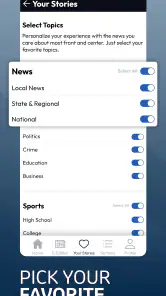
Analysis by Reviewed
Wisconsin State Journal News is the kind of app I would open when I want local reporting from the Madison, Wisconsin area rather than a broad national news feed. It comes from Lee Enterprises and sits in the News & Magazines category, with a free download and optional in-app purchases. My first impression is that it is most useful when local awareness matters every day: checking what is happening nearby, following developments that affect a household, or keeping a shared device ready for someone who wants regional news without searching through several unrelated apps.
The app has been around since August 13, 2010, and its current version is 9.22. It runs on Android 8.0 or later, so it remains accessible on many older phones and tablets. The audience rating is Everyone 10+, which makes it a reasonable candidate for a household device, although I would still treat news as something adults should discuss with younger readers because local reporting can cover accidents, crime, politics, and other difficult subjects.
How Wisconsin State Journal News works in a shared household
I can imagine using this app on a family tablet kept in a kitchen or living room. One person might check it with breakfast, another might look for local updates before commuting, and someone else might open it in the evening to catch up on community developments. That shared-device scenario is where the app makes the most sense to me: it gives the household one recognizable place to look for Madison-area coverage instead of relying on a mixture of social posts, search results, and national outlets.
The important distinction is that a shared device does not automatically mean a shared account. I would decide before installing it whether the tablet is simply a reading station or whether one person will use it for a more personal subscription relationship. That boundary matters because a news app can be casual for one member of the household and financially significant for another if paid content or purchases become part of the experience.
The free entry point makes trying the app straightforward. I would install it first on the device used most often for local news, rather than placing it on every phone immediately. That gives the household a chance to see whether the coverage fits its routine and whether the reading experience is comfortable on the available screen. If the app becomes part of a daily habit, each person can then decide whether a separate installation is useful.
There are over 10 thousand installs, which suggests that this is a focused regional product rather than a mass-market news platform. I see that as both a strength and a limitation. Its identity is clear, but it is not the app I would choose for someone who wants one destination covering every state, international story, sports league, and financial market.
Setting boundaries before anyone taps into paid content
One practical step I recommend is agreeing on who is allowed to make purchase decisions. The app is free to download, but its listed in-app purchase range runs from $26.99 to $324.99 per item. That is a wide enough range that I would not leave payment decisions vague on a shared tablet. A parent, partner, or device owner should know whether the app is being used only for free reading or whether a purchase is being considered.
More From Our News Desk

Clash of Clans Is Won Between the Battles

Android Auto Makes the Case for Quieter Car Software

MobiOffice: Transforming Mobile Productivity with Seamless Integration

EA SPORTS FC™ Mobile Soccer: Redefining Mobile Sports Gaming

How Microsoft OneDrive Became a Mobile Productivity Giant

How Google Translate Breaks Language Barriers Effortlessly
I would also avoid treating the app as a single person’s private news diary when several people use the same device. If one household member signs in or subscribes, the others should understand whose account is active and which person should manage billing. This is not about adding complicated rules; it is about preventing the ordinary confusion that happens when a family shares one screen and several people assume they have the same access.
For a household that wants simple coordination, a small note near the shared tablet can be surprisingly useful: identify the account holder, state whether purchases are allowed, and mention where to ask before changing anything. That approach is especially sensible for older children or guests who may be comfortable navigating apps but should not make financial decisions on someone else’s behalf.
I would not install it on a child’s personal device solely because the age label says Everyone 10+. That rating provides useful context, but it does not replace parental judgment about news topics, advertising, account access, or purchase habits. The app is better understood as a local news reader suitable for a broad audience, not as a child-focused educational environment.
Coordinating local information instead of forwarding rumors
A local news app can be valuable during ordinary household planning. Suppose a family is deciding whether to change weekend plans, checking developments that may affect a neighborhood, or trying to understand a regional issue mentioned by a child at school. I would use the app as a starting point for verified local reporting, then discuss what actually matters to the household rather than forwarding every headline to everyone.
That workflow is one of the less obvious benefits of a dedicated local outlet. A general social feed may show a dramatic post before anyone knows whether it is reliable or relevant. With Wisconsin State Journal News, I would first read the article itself, note the location and timing, and then share the useful conclusion in plain language. The app becomes a coordination tool, not merely a stream of notifications or headlines.
For couples or roommates, I would suggest dividing the reading routine by interest rather than duplicating it. One person might scan public affairs, while another checks community developments or practical local coverage. Later, they can compare notes. This reduces the tendency for everyone to spend time reading the same short updates while still keeping the household informed.
On a shared tablet, I would keep the device in a neutral place and avoid assuming that every user wants the same presentation. A person who reads carefully may prefer opening full articles, while another may only want a quick morning scan. The app works best when the household agrees that both habits are acceptable and does not mistake a short visit for a lack of interest.
My rating impression is mixed rather than enthusiastic. The app holds a 2.8 average from around 589 ratings and 297 reviews. I would read that as a reason to test it personally before making it central to the household’s news routine. A regional focus can be exactly what one reader needs, but a middling average suggests that the experience may not satisfy every user equally.
Age, trust, and the limits of a local news reader
The Everyone 10+ label is a useful reminder that the app is not aimed solely at adults, yet local news naturally includes subjects that require context. I would let a younger reader use it with an adult nearby when the goal is learning about the community, but I would not assume that every article is emotionally comfortable or easy to interpret. A conversation about headlines can be more valuable than simply handing over the tablet.
Trust also involves separating reporting from household opinion. If a teenager reads an article about a local controversy, I would encourage them to ask what is known, what is disputed, and what the article is actually saying. That habit is more important than making the app a permanent source of answers. The application can support informed discussion, but it does not remove the need for a reader to think critically.
For adults, the same principle applies. A local publication may provide useful depth on Madison-area matters, but I would pair it with another source when an issue has serious legal, medical, financial, or personal consequences. The app is a strong fit for staying oriented to the region; it should not be treated as the only authority for every decision.
This is also where the app differs from a general news aggregator. Aggregators are convenient when I want variety and speed, but they can make local stories feel interchangeable with national headlines. Wisconsin State Journal News has a narrower purpose, which can make it easier to maintain a local reading habit. The trade-off is obvious: readers who expect broad customization or a constant mix of worldwide coverage may find the scope too limited.
Where it fits beside other news options
I would compare this app with three common alternatives: a mobile browser, a broad news aggregator, and social media. A browser is flexible and lets me visit many publications, but it requires more searching and makes a shared-device routine less consistent. An aggregator saves time and offers more variety, yet local stories may be buried among national or international items. Social media is fast, but the path from a post to dependable context is less direct.
The dedicated app wins when the household’s priority is Madison-area awareness. It gives the local publication a permanent place on the device and makes the habit feel intentional. I would choose the browser instead for research across several sources, and I would choose an aggregator for a reader who wants a wide daily briefing. The right choice depends less on loyalty and more on whether local relevance is the main requirement.
Another trade-off is cost. A free download lowers the barrier to trying the app, but the in-app purchase range means that the household should understand its own budget before moving beyond casual use. Someone who only wants occasional local headlines may prefer to stay with the free experience if it meets that need. Someone who relies on the publication regularly should review the purchase screen carefully and make sure the account holder understands the commitment.
I also think the app is better for deliberate reading than for replacing every other information source. I would open it at set times, read the stories that affect my area, and then close it rather than letting news consume the entire day. That approach makes the local focus useful without turning the shared device into a constant source of interruptions or disagreements.
What I would do after installing it
My setup would be simple. I would install it on the household’s main Android tablet or phone, confirm that the device runs Android 8.0 or newer, and place the app where everyone can find it. I would then establish one rule: no one starts a paid transaction without asking the account holder. That single boundary addresses the most important shared-device risk without making the routine feel restrictive.
Next, I would use it for several normal situations rather than judging it after one quick launch. I would check it during breakfast, use it when planning a local outing, and open it after hearing an unverified community claim. Those tests reveal whether the app is genuinely useful to the household or merely sounds relevant because it carries a local name.
I would also pay attention to how different readers respond. If one person wants broad national coverage, this app will not replace their preferred news service. If another person wants a reliable Madison-area starting point, the focused coverage may be exactly right. Keeping those expectations separate prevents the common mistake of asking one app to serve every reading style.
Lee Enterprises gives the app a clear regional identity, and that identity is its main reason to exist on my device. The experience is not automatically ideal for every household, especially one that dislikes purchase decisions on shared hardware or wants a highly personalized nationwide feed. Still, the combination of local focus, a free starting point, and compatibility with older Android devices makes it easy to evaluate without rebuilding the household’s entire news routine.
My household verdict
After weighing the practical side, I would recommend Wisconsin State Journal News to a Madison-area household that wants one dependable local-news destination and is willing to keep account and purchase boundaries clear. I like it most as a shared reference point: one person reads, another asks questions, and the household uses the reporting to understand what is happening nearby.
I would skip it as a primary choice for anyone seeking worldwide coverage, highly personalized feeds, or a completely free experience with no need to think about paid options. I would also avoid presenting it to younger readers as an unsupervised, all-purpose information source simply because its age label is broad.
For the right household, the app’s value is not in replacing every news service. It is in making local awareness easier to reach and easier to discuss. The best way to use it is as a shared local-news starting point, with one clear account owner and realistic expectations about its regional scope. That makes the free download worth trying, while the mixed 2.8 average is a sensible reminder to judge the reading experience on the devices and routines your household actually uses.
In my experience, that balanced approach gives the app its fairest chance. Install it for the person who truly needs Madison-area coverage, test it in everyday household situations, and keep broader or more specialized news needs with the alternatives that handle them better. For local readers, it can earn a regular place; for everyone else, its narrow focus may be the reason to look elsewhere.
Wisconsin State Journal News Frequently Asked Questions
Is the Wisconsin State Journal News app available for both Android and iOS?
The Wisconsin State Journal News app is intended for mobile devices, and its minimum operating-system requirement is version 8.0. Before downloading, check the app’s store page on your device to make sure your operating system is compatible and that the app is available for your platform. The app is published by Lee Enterprises and is listed in the News & Magazines category.
Who publishes the Wisconsin State Journal News app?
The app is published by Lee Enterprises and focuses on the Wisconsin State Journal’s coverage of the Madison area. Its store summary describes it as the biggest and best local news resource in the Madison, Wisconsin area. That local emphasis may suit readers looking for reporting centered on Madison and nearby communities rather than a broad, general-purpose news service.
What is the Wisconsin State Journal News app?
The Wisconsin State Journal News app is a mobile way to follow reporting from the Wisconsin State Journal, with coverage focused on Madison, Dane County, and communities across Wisconsin. It typically brings together breaking news, local government, politics, sports, business, entertainment, opinion, and weather in a format designed for reading on an Android or iOS device.
Is the Wisconsin State Journal News app free to download and use?
Downloading the app is free, so you can install it and explore available sections without paying an installation fee. However, access to some articles or premium features may depend on a subscription, account, or digital access plan. The app includes in-app purchases priced from $26.99 to $324.99 per item, so check the purchase details before committing to a plan.
Does the app require a subscription to read all articles?
Not necessarily every article will be available without restrictions. News apps connected to a newspaper often provide a mixture of freely accessible stories and subscriber-only content, and the exact limit can change over time. If you regularly read Wisconsin State Journal coverage, review the subscription options, trial terms, renewal price, and cancellation policy before entering payment information.
Pros
- Provides reliable coverage of Wisconsin politics
- local news
- and community events.
- Offers breaking-news alerts to help readers stay informed throughout the day.
- Includes sports reporting focused on Wisconsin teams and regional athletics.
- Clean navigation makes it easy to browse sections and save interesting stories.
- Digital access can be convenient for readers who prefer news on mobile devices.
Cons
- Some articles or features may require a paid subscription to access fully.
- Frequent notifications can feel excessive unless alert settings are customized.
- Coverage is primarily regional
- with less depth on national and international news.
- Content availability and app features may vary depending on the subscription plan.
- Loading times can occasionally depend on connection quality or ad content.
- Category
- News & Magazines
- Version
- 9.22