WBRC 6 News
- 696.00
- 3.6
- Installs
- 100.00K
- Price
- Free

Screenshots

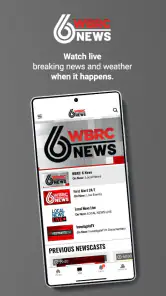

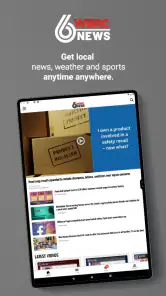
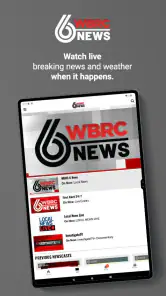

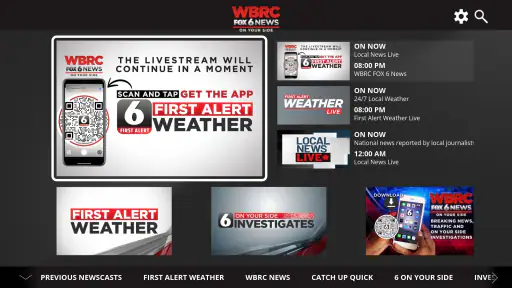
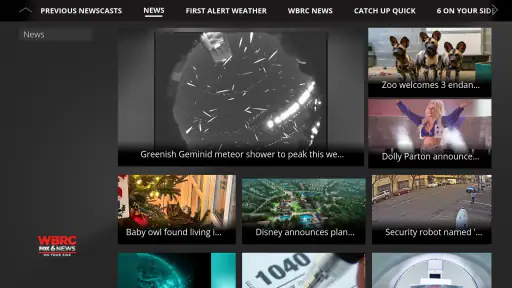
Analysis by Reviewed
I installed WBRC 6 News with a simple question in mind: would it make keeping up with central Alabama easier than checking several news sources throughout the day? My answer is generally yes, especially if local reporting and weather matter more to you than having a broad national news reader. This free News & Magazines app comes from Gray Media and focuses its attention on the WBRC 6 news service rather than trying to become an all-purpose media hub.
That focus is the main reason to consider it. I found the experience most useful when I wanted a quick local update, a weather check before leaving home, or a familiar regional source during a developing story. It is not the kind of app I would install for international coverage, deep customization, or a large collection of unrelated publications. Instead, it works best as a direct connection to central Alabama news and weather.
How the app feels during everyday use
The first thing I noticed is that the app’s value depends less on elaborate presentation and more on how quickly it gets me to relevant local information. A dedicated local news app has an advantage over a general news reader here: I do not have to search through national headlines to find something happening nearby. When my interest is central Alabama, that narrower scope feels practical rather than limiting.
WBRC 6 News has been available since July 12, 2011, and that long presence gives it the feel of an established local-news companion rather than a temporary experiment. Gray Media is the developer, and the app has built a sizeable audience, with more than one hundred thousand installs. Its average rating sits at 3.6 from around two thousand nine hundred ratings, alongside roughly seven hundred written reviews. Those figures suggest a useful but not universally loved experience, which matches my view: the purpose is clear, while the day-to-day polish may not satisfy everyone.
For a typical morning, I would open it while checking what could affect the day ahead. The local emphasis helps me decide whether I need more time for a commute, whether outdoor plans deserve a second look, or whether a nearby event is worth following. The app is also suitable for a quick evening scan, when I want a regional summary without opening a general-purpose platform full of unrelated stories.
Speed expectations: quick when the goal is clear
I would describe the perceived speed as task-dependent. If I already know that I want local headlines or central Alabama weather, the focused purpose makes the app feel direct. There is less mental sorting than in a broad news aggregator because the app’s identity is tied to WBRC 6 coverage. That does not mean every screen will feel instant on every phone or connection, but the workflow itself is uncomplicated.
A useful habit is to decide what I am checking before opening it. If I want weather, I go in with that single purpose instead of treating the app as a place to browse endlessly. If I want a news update, I scan the newest local items first and stop once I have enough context. This keeps the experience efficient and avoids turning a short check into an unplanned reading session.
More From Our News Desk

Clash of Clans Is Won Between the Battles

Android Auto Makes the Case for Quieter Car Software

MobiOffice: Transforming Mobile Productivity with Seamless Integration

EA SPORTS FC™ Mobile Soccer: Redefining Mobile Sports Gaming

How Microsoft OneDrive Became a Mobile Productivity Giant

How Google Translate Breaks Language Barriers Effortlessly
The app’s free price also lowers the barrier to keeping it installed for occasional use. I do not have to justify a subscription for a local update, which is important for people who only open a news app a few times each week. The Everyone content rating makes it suitable for a broad household audience, although parents should still remember that news itself can include upsetting subjects even when an app is not restricted by age.
What happens during heavier use
The most demanding moments are likely to be periods when many people are looking for the same local information at once, such as severe weather or a major regional event. That is precisely when a local news app becomes most valuable, but it is also when expectations become less forgiving. I would not rely on one app alone for urgent safety decisions. For those situations, official emergency alerts and local authorities remain important companions.
My practical approach is to use WBRC 6 News for context and continuing coverage rather than treating it as my only warning system. A weather update can help me understand what is happening in the area, while official alerts can provide the kind of immediate instruction that a news article may not. This distinction is easy to overlook, but it makes the app more useful because I am assigning it the right job.
Heavy browsing can also change the experience. Reading several stories in one sitting is different from opening the app for one headline, and moving repeatedly between news and weather asks more from the device and connection than a single glance. I would avoid judging the app only by an occasional quick check. Instead, I would test it during the way I expect to use it: a short morning scan, a weather check, and a longer session during a story that affects the area.
One non-obvious trade-off is that the app’s local focus saves time when the information is relevant but narrows its usefulness when it is not. If I am following a national election, international event, or specialized topic, I will probably switch to a larger news service. Keeping both types of app available is more sensible than expecting this one to cover every need.
Reliability and recovering from interruptions
For me, reliability in a local news app means more than launching successfully. It means being able to return after an interruption and quickly understand what has changed. WBRC 6 News is most helpful when I treat it as a repeat-visit tool: open it, review the local situation, read what matters, and come back later if the story develops.
That workflow is especially useful when I am interrupted by a call, a message, or a change in plans. Rather than trying to remember a long browsing path, I can reopen the app and start again from the current local coverage. The simpler the goal, the easier recovery feels. If I had been reading several pieces at once, I would expect to spend a little more time finding my place, so I prefer to finish one article before moving on.
I also see a difference between ordinary reliability and event-time reliability. During a quiet day, a local app may feel perfectly adequate for routine updates. During a fast-moving weather situation, the importance of freshness rises sharply. I would check the timestamp or wording of an item before acting on it, especially if conditions are changing quickly. That is not a criticism unique to this app; it is a sensible rule for any news service.
The written review count, at around seven hundred, indicates that users have had varied experiences rather than one unanimous reaction. I would interpret the 3.6 average as a reason to keep expectations realistic. The app can be worthwhile without being flawless. If a reader values absolute consistency across every device and every network condition, testing it during normal use before depending on it for important updates is wise.
Device constraints and resource-conscious habits
I would not choose a local news app based on maximum visual complexity. I want it to be comfortable on the phone I already use, easy to revisit, and not demanding when I only need a brief update. WBRC 6 News makes sense for that role because its purpose is narrow. Still, any news app can become less comfortable on an older or crowded device if several other apps are competing for memory, storage, or network access.
There are a few practical ways to reduce friction without changing the app itself. I keep background activity from unrelated apps under control, avoid opening many stories at once, and use a stable connection when I expect to read for longer. When the phone is low on space or already struggling with several active apps, I do not assume that a local news app alone is responsible for every delay. Closing unused apps and restarting the phone can be a more useful first step than immediately uninstalling it.
People with limited data should also think about how they use news applications. A quick headline check is different from repeatedly opening articles and weather information throughout the day. If mobile data is precious, I would reserve longer reading for Wi-Fi and use the app selectively while away from home. This is a general mobile habit, but it matters more when the app becomes part of a frequent weather-check routine.
Another constraint is attention rather than hardware. Local news can be useful, but constant checking may make the day feel dominated by updates. I prefer to set a purpose for each visit: checking the forecast before travel, understanding a local event, or catching up after work. That approach keeps the app helpful instead of turning it into an endless stream of interruptions.
Who will get the most from it?
The strongest audience is people who live in, work in, or regularly travel through central Alabama and want a dedicated local source. It can also suit former residents who still care about the area, provided they understand that its value comes from regional relevance rather than broad coverage. Families may appreciate having a straightforward way to check local conditions, while commuters can use it as part of a wider morning routine.
I would particularly recommend it to someone who is tired of general news feeds that bury local information beneath national stories. The narrower editorial purpose is a genuine strength. Instead of building a custom list of local topics inside a large platform, I can open one place that is already centered on WBRC 6 coverage.
I would skip it if my main interest is a nationwide or international news digest. I would also look elsewhere if I need extensive personalization, a multi-publication reading system, or a single app that combines many unrelated sources. A general news aggregator will usually be better for comparing coverage across outlets. A weather-focused app may be better when forecast detail is the only thing I care about. The right choice depends on whether local WBRC 6 coverage is the center of the task.
A realistic daily scenario
Imagine I am preparing for a workday in central Alabama. Before leaving, I open the app to check the local weather and scan the top regional headlines. One story suggests that conditions may affect travel, so I read it for context rather than relying on the headline alone. Later, during a break, I return to see whether the local situation has changed. In the evening, I use the app for a short catch-up instead of scrolling through a national feed.
That scenario shows where the app earns its place. It does not need to replace every other information source. It only needs to make local checking easier and more habitual. The best result is a small, repeatable workflow: open it when local conditions matter, read selectively, and use official channels when immediate safety instructions are involved.
My performance verdict
After using it with those expectations, I see WBRC 6 News as a practical regional news app rather than a complete media replacement. Its perceived speed benefits from a clear purpose, and its local focus reduces the time I spend filtering irrelevant headlines. The free price makes casual use easy, while the Everyone rating keeps the app broadly accessible.
Its limitations are equally clear. The 3.6 average shows that the experience has not been perfect for every user, and a focused local app cannot compete with a broad service for national or international depth. During high-pressure events, I would pair it with official alerts instead of depending on it alone. On constrained devices or limited data plans, sensible usage habits will matter more than simply installing it.
My bottom line: choose it when central Alabama news and weather are your priority, not when you want the entire news world in one place. I would recommend giving it a try if you want a direct local companion for morning planning, commute awareness, and regional updates. I would not recommend making it your only source for urgent warnings or your main app for broad news discovery. Used for what it does best, it is a convenient and reasonably focused addition to an Android or iOS news routine.
WBRC 6 News Frequently Asked Questions
Can I use WBRC 6 News if I live outside central Alabama?
WBRC 6 News is focused on local news and weather for central Alabama, so its coverage is most relevant to people in that area. If you live elsewhere, you may still be able to browse its stories and watch available reports, but the local updates may not match your community’s needs. Consider whether Alabama coverage is useful to you before downloading.
What is the WBRC 6 News app?
WBRC 6 News is the mobile application for WBRC FOX6 News, serving Birmingham, Alabama, and surrounding communities. After installing it, users can browse local and regional news stories, watch video reports, check weather forecasts, view live updates, and follow important events as they develop. The app is designed for people who want convenient access to the station’s coverage while away from a television or computer.
What type of news and information can I find in WBRC 6 News?
The app typically covers breaking news, local politics, crime, education, traffic, health, sports, entertainment, and community stories from the Birmingham area and across Alabama. It also provides weather information, including forecasts and severe-weather updates, which can be especially useful during storms. Content availability may change throughout the day as the newsroom publishes new articles, videos, alerts, and live coverage.
Does WBRC 6 News provide live video and breaking-news alerts?
WBRC 6 News may offer live newscasts, special reports, press conferences, and live streams when coverage is available. Users can also receive push notifications for breaking stories, severe weather, and other major developments. Notifications are helpful for staying informed, but they can be adjusted in the device settings or within the app if you prefer fewer alerts or only want updates about specific types of news.
Is the WBRC 6 News app free to download and use?
The WBRC 6 News app is free to download and use, allowing users to read news stories, watch available videos, and check weather information without purchasing a subscription. However, the app may display advertising, and watching video or streaming live coverage can use a significant amount of mobile data. Your carrier’s data charges may apply, so a Wi-Fi connection is recommended for extended viewing.
Pros
- Live local news
- weather
- and traffic updates in one app.
- Push alerts help users stay informed about breaking stories.
- Video reports provide more context than brief text headlines.
- Weather forecasts include radar and severe-weather information.
- Simple navigation makes it easy to browse recent coverage.
Cons
- Coverage is mainly focused on the WBRC viewing area.
- Frequent notifications may feel excessive for some users.
- Video playback can use significant mobile data.
- Some content may load slowly on weaker connections.
- Advertising can interrupt browsing and video viewing.
- Category
- News & Magazines
- Version
- Varies with device