VYBS: Play & Earn Rewards
- 16.10K
- 4.7
- Installs
- 1.00M
- Price
- Free

Screenshots

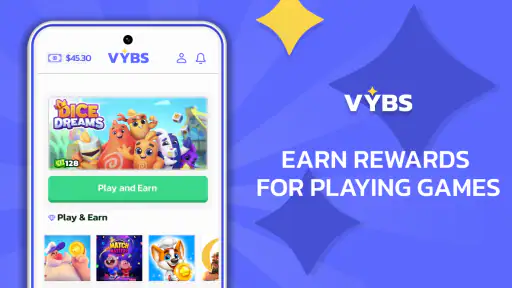

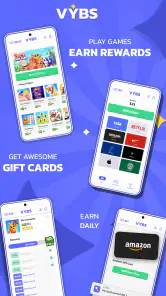
Analysis by Reviewed
I approached VYBS: Play & Earn Rewards as someone looking for a lighter way to fill spare minutes, not as a replacement for a serious income source. It belongs to the lifestyle side of mobile apps, but its appeal comes from connecting casual play with redeemable rewards. That sounds simple; the useful question is what the journey feels like from opening the app to reaching a payout.
My overall impression is that VYBS works best when I treat it as a small entertainment routine with a possible bonus at the end. The app is free, and the developer behind it is VYBS ENTERTAINMENT. Its mature age rating is important because this is not an app I would casually hand to a child just because games are involved.
From spare time to a reward: how the VYBS workflow feels
Starting with the right expectation
The first decision is whether this model suits the way I use my phone. If I already enjoy trying short mobile games and do not mind moving between an earning hub and individual play experiences, VYBS has a clear purpose. If I want a predictable hourly return, a single polished game, or an entirely passive rewards app, I would choose something else.
The store positioning is centered on playing, collecting rewards, and fetching gift cards. I read that as a motivation layer rather than a promise of substantial earnings. The sensible starting condition is therefore simple: I have a few spare minutes, I am willing to explore the available play options, and I understand that the entertainment comes first.
That distinction matters because reward apps can encourage users to chase a target instead of enjoying the activity. I found it more practical to decide in advance how long I want to play. A short session during a commute, while waiting for an appointment, or after finishing a household task makes more sense than constantly checking the balance.
Installing and getting oriented
VYBS is available at no cost and supports devices running Android 8.0 or later. That gives it a reasonably broad reach, although anyone using an older phone should check compatibility before planning around it. The current version is 1.77.0, so keeping the installation current is a sensible habit when an app involves account activity and reward tracking.
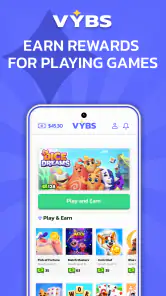
On first use, I would focus on learning the layout before starting the first activity. The important things to identify are where available games appear, where progress is represented, and where the redemption path begins. This is one of my first practical tips: do not start tapping through offers immediately. Spend a moment understanding which screen is the starting point and which screen confirms progress.
More From Our News Desk

Clash of Clans Is Won Between the Battles

Android Auto Makes the Case for Quieter Car Software

MobiOffice: Transforming Mobile Productivity with Seamless Integration

EA SPORTS FC™ Mobile Soccer: Redefining Mobile Sports Gaming

How Microsoft OneDrive Became a Mobile Productivity Giant

How Google Translate Breaks Language Barriers Effortlessly
That small pause can prevent a common frustration with reward platforms: confusing an activity description with a completed reward. I also prefer to note what I started before switching away. Even a quick mental record of the game or task, the intended goal, and the point at which I stopped makes the later handoff easier to understand.
Choosing an activity instead of chasing everything
The central workflow is not simply “open and earn.” I first need to choose something that fits my available time. A useful choice is one I can return to without losing track of what I was doing. If I only have a few minutes, I would avoid beginning an activity that appears to require a longer uninterrupted session.
This is where VYBS differs from an ordinary mobile game. In a conventional game, I choose based on graphics, controls, story, or competition. Here, I also have to consider the reward journey. The most attractive option is not necessarily the one with the most appealing title; it is the one whose activity and expected completion path fit my routine.
I would also avoid installing or playing something solely because a reward looks tempting. The value of a reward is reduced if the activity becomes tedious, consumes more time than I intended, or makes me spend money elsewhere. My rule is straightforward: never turn a free reward routine into an excuse for unnecessary spending.
Playing while keeping track of the handoff
Once I select an activity, the experience moves from the VYBS environment into the play itself. That handoff is the part I would watch most carefully. Reward apps depend on recognizing that I started through the correct route and that my progress belongs to the intended activity. If I jump around, reinstall something, or use several routes at once, the connection between play and reward can become harder to follow.
For that reason, I would begin from the in-app route, play normally, and avoid making unnecessary changes during the session. I would not assume that merely spending time in a game automatically completes every reward condition. The useful habit is to return to the rewards area afterward and look for a visible update or completion state rather than relying on memory.
This is a non-obvious strength of using a dedicated earning hub: it gives the activity a place to be organized. The trade-off is that it adds another layer between me and the game. A normal game opens directly and keeps all progress inside one system. VYBS can make the reward goal more visible, but that convenience depends on the handoff remaining clear.
Returning to check progress
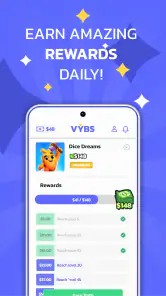
After playing, I would go back to VYBS and review the status before starting another activity. This step is easy to skip, especially when the game itself is more engaging than the rewards screen. However, it is the point where I learn whether the session was recognized and whether I am moving toward a redeemable outcome.
I would use this check as a decision point. If progress appears as expected, I can continue later. If it does not, I would stop and investigate the route rather than investing a long session without understanding what happened. This is a better workflow than blindly repeating the same action and hoping the balance catches up.
Another practical tip is to keep the number of active activities manageable. Starting many options at once may feel efficient, but it can make it difficult to remember which one I launched, what I was trying to achieve, and whether a particular reward was tied to a specific path. A smaller, organized list is more useful than a crowded one.
Moving from progress to redemption
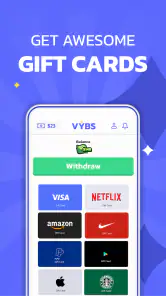
The outcome VYBS is designed around is the ability to turn accumulated rewards into gift cards or other available payouts. I would approach the redemption screen as a separate stage, not as an automatic conclusion to every play session. The key question is whether my balance has reached the relevant threshold and whether the selected reward is actually available for my account.
That separation helps keep expectations realistic. Playing today may contribute to a later redemption, but it does not mean every session produces an immediate gift card. I would check the available choices, read the instructions shown inside the app, and confirm the destination carefully before submitting anything.
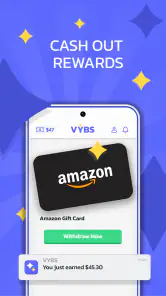
The handoff from in-app balance to a gift card is where clarity matters most. A progress number can feel satisfying, but the real result is the usable reward after the redemption process is complete. I would therefore judge VYBS less by how quickly the balance grows on screen and more by how understandable the final exchange feels.
For an everyday scenario, imagine I have a short wait before an evening appointment. I open VYBS, choose one activity that fits the time, play without switching between several options, then return to check whether the session registered. If it did, I leave the app and continue another day. When the balance eventually reaches a redeemable point, I review the gift card choices and complete the handoff. That routine feels more sensible than trying to force a result in one sitting.
What the numbers suggest about its audience
VYBS has an average rating of 4.7 from around 146 thousand ratings, and it has passed one million installs. Those figures suggest that the concept has found a substantial audience, but they do not remove the need for personal judgment. Reward apps can feel very different depending on how patient I am, which activities I enjoy, and how smoothly progress is recognized on my device.
The rating is encouraging because it indicates broad satisfaction, while the mature 17+ rating tells me to consider the app’s intended audience before installing it for someone else. I would also remember that a large user base can make an app feel established without guaranteeing that every individual session will be frictionless.
Where the workflow becomes less comfortable
The biggest weakness is the distance between “playing” and “getting a reward.” A normal game gives me an immediate result: I complete a level, unlock something, or improve a score. VYBS adds an external objective, so I have to monitor whether my play is being counted and whether the eventual reward is worth the time.
That extra monitoring can make the experience feel less relaxing. I may begin a game for entertainment, then find myself thinking about progress tracking, redemption requirements, and whether I should continue. For users who dislike promotional environments or who want a clean, uninterrupted game, this model may feel distracting.
Another friction point is motivation. The first few sessions can be enjoyable because the reward goal is new, but the routine may become repetitive if I choose activities only for their earning potential. I would skip VYBS if I know I will resent anything that asks me to play games I would not otherwise choose.
I would also avoid treating the app as a financial tool. The result is better understood as a small perk attached to leisure. Anyone needing dependable income, transparent budgeting, or a fixed return should use a dedicated financial product instead. VYBS is not the right substitute for paid work or a carefully planned savings method.
How it compares with ordinary alternatives
Compared with playing free games directly, VYBS adds a reward-oriented layer and gives me a reason to explore more than one experience. That can be useful when I enjoy variety and want my spare-time play to point toward a tangible outcome. The cost is additional navigation and the need to pay attention to how progress moves between the hub and the game.
Compared with survey or cashback apps, the appeal is that the main activity is interactive rather than answering questions or shopping. I would favor VYBS when I want entertainment and dislike filling out forms. I would favor a survey or cashback service when I prefer a more direct task and do not want to spend time playing.
Compared with a standard rewards program tied to one retailer, VYBS is broader in spirit because the activity is gaming rather than purchasing. However, a retailer program may be easier for someone who already shops there and wants rewards attached to an action they were going to take anyway. The best choice depends on whether I want to earn while playing or while completing ordinary purchases.
Compared with a single premium game, VYBS is less focused. A paid game may provide stronger design consistency, deeper progression, and fewer interruptions, while VYBS is more attractive to someone who values experimentation and the possibility of gift-card redemption. I would choose the premium game for immersion and VYBS for short, casual sessions with an added incentive.
Who will get the most from it
I think VYBS suits adults who already spend time on mobile games and are comfortable treating rewards as a bonus. It is especially appropriate for people who like sampling different play experiences, can keep track of an activity they started, and do not mind waiting until progress accumulates.
It can also fit a structured routine. I might use it during a daily waiting period, set a personal time limit, and check progress only at the end. That approach prevents the reward goal from taking over the day and makes it easier to decide whether the experience is still enjoyable.
I would skip it if I want immediate, guaranteed value from every minute, if I dislike switching between screens, or if I am under the mature age threshold. I would also skip it if I tend to make impulse purchases inside games, because the pursuit of a reward can make optional spending feel deceptively justified.
My practical routine for using it
My preferred workflow is deliberately conservative. I open the app, review the available choices, select one activity, and note what I am trying to accomplish. I play for a fixed period, return to verify progress, and stop if the result is unclear. Only after I understand the tracking do I consider adding another activity.
I would keep redemption as a milestone rather than checking it after every short session. When the balance is ready, I would slow down, review the selected gift card, and make sure the final step is intentional. This reduces the chance of confusing a displayed balance with a completed payout.
The most useful insight is that organization matters more than speed. VYBS rewards a patient workflow: one activity, one progress check, and one clear redemption path. Trying to maximize every spare second can make the app feel like work, while a controlled routine preserves its entertainment value.
My verdict after following the whole journey
VYBS: Play & Earn Rewards is a convincing option for casual players who want a reward layer attached to mobile gaming. Its free entry, wide device compatibility, and established audience make it easy to try, while its lifestyle positioning makes sense for people looking for a simple way to use spare time.
What I like most is the clear overall idea: choose an activity, play, return to verify progress, and work toward a gift-card redemption. What I like least is that the handoff between those stages requires attention. The app is not simply a game, and it is not a guaranteed earning solution; it sits between entertainment and rewards, with the compromises that come with both.
My recommendation is to install it only if you would genuinely enjoy the play without the payout. If the reward arrives, it becomes a welcome extra. If the process feels slow or the tracking does not fit your habits, a regular game or a more direct rewards alternative will probably serve you better. Use VYBS as a controlled leisure routine, not as a promise of dependable income.
VYBS: Play & Earn Rewards Frequently Asked Questions
Is VYBS: Play & Earn Rewards suitable for younger users?
VYBS carries a Mature 17+ content rating, so it is intended for adults and may not be suitable for younger users. Parents and guardians should consider that rating before allowing a teenager to download it. The app focuses on rewards and promotional activities, so it is also worth discussing the conditions attached to offers and any spending they may involve.
Is VYBS: Play & Earn Rewards available for my device?
VYBS is a lifestyle app for Android, with a minimum operating-system requirement of Android 8.0. Before downloading, check your device’s software version and make sure you are using a compatible device. The app is free to download, and its current version is 1.77.0. It is rated Mature 17+, so it may not be suitable for younger users.
Who develops VYBS, and is it popular?
VYBS: Play & Earn Rewards is developed by VYBS ENTERTAINMENT. It has an average rating of 4.7 from around 146,000 ratings, with roughly 16,000 written reviews and over one million installs. Those figures suggest it has attracted a substantial audience, but individual experiences can differ, especially because available activities and reward eligibility may vary by account and location.
What is VYBS: Play & Earn Rewards, and how does it work?
VYBS: Play & Earn Rewards is a rewards-based mobile app that lets users discover and complete activities, such as playing selected games or engaging with promotional offers, in exchange for points or other rewards. After installing it, you generally browse the available opportunities, follow the stated requirements, and wait for the activity to be verified before receiving credit. The exact offers and earning methods may vary by location and account.
Can I really earn cash or gift cards with VYBS?
VYBS may allow eligible users to exchange accumulated rewards for available cash-out options, gift cards, or other incentives, depending on the current program and region. However, it should not be treated as a guaranteed income source. Rewards depend on completing qualifying tasks, meeting offer conditions, and passing verification. Before starting an offer, carefully read its requirements, tracking rules, minimum withdrawal threshold, and expiration terms.
Pros
- Easy-to-use interface with clear reward and activity tracking.
- Offers multiple ways to earn
- keeping the experience varied.
- Short activities fit well into quick breaks during the day.
- Reward progress is visible
- helping users stay motivated.
- Social features can make earning feel more interactive and engaging.
Cons
- Rewards may require considerable time before reaching a redeemable balance.
- Available tasks and offers can vary by location and user profile.
- Some activities may redirect users to third-party websites or services.
- Earnings are typically modest and should not be viewed as regular income.
- The app may request permissions or personal details for certain offers.

- Category
- Lifestyle
- Version
- 1.77.0