Victory by Covenant Eyes
- 398.00
- 4.6
- Installs
- 100.00K
- Price
- Free

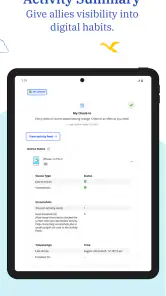
Screenshots
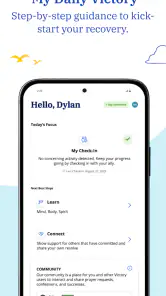
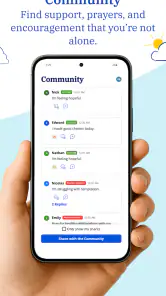
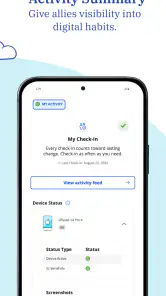

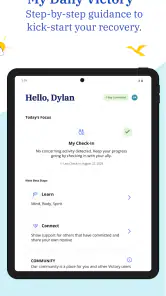


Analysis by Reviewed
I found Victory by Covenant Eyes most useful when I treated it as a practical support tool rather than a magic switch. Its purpose is direct: it helps people who want to quit pornography and gives friends, partners, or mentors a way to support that goal. That makes it a personal lifestyle app with a more serious purpose than the average habit tracker, and my overall impression is that it works best when the user is ready to build a routine around it.
The app is free to start, carries an Everyone age rating, and comes from Covenant Eyes. It has reached over 100 thousand installs, with an average rating of 4.6 from around 2 thousand ratings. Those figures suggest that it has found a real audience, but they do not change the central point: Victory depends heavily on honesty, consistency, and the quality of the support surrounding the user.
How Victory fits into a real quitting routine
When I use an app for a sensitive habit, I want it to reduce the distance between an intention and the next useful action. Victory is strongest in that space. Instead of presenting quitting pornography as a vague promise, it frames the process around ongoing effort and accountability. That is important because the difficult moment is rarely the moment when someone decides to change. It is usually later, when the phone is nearby, the person is tired, and the original motivation feels less convincing.
A realistic example would be someone who notices a pattern of browsing late at night. They install Victory during the day, decide who they can involve in their support, and make the app part of an evening check-in routine. After a difficult night, the useful response is not simply to feel guilty and delete the app. The better use is to review what led to the lapse, tell the trusted person what happened, and change the next evening’s plan. Victory is more valuable in that repeated process than as a one-time motivational download.
The strongest part of Victory is its emphasis on turning a private goal into a supported commitment. That can make a major difference for people who repeatedly make promises to themselves and then lose momentum in isolation. A support person does not have to solve the problem, but knowing that someone else may be involved can make a user pause before acting on an impulse.
This approach also makes the app different from a standard habit tracker. A typical habit app may show streaks, reminders, or a calendar of completed days. Those tools can be encouraging, but they can also make a setback feel like the entire effort has been erased. Victory’s accountability angle is better suited to a behavior that often involves secrecy, shame, and recurring triggers. It encourages the user to think about recovery as an ongoing relationship with a goal, not merely a number on a screen.
Why accountability matters more than a perfect streak
In my experience, a streak can be motivating at first but fragile later. If one difficult evening destroys the visual record, the user may decide that the attempt has failed and return to the old habit. An accountability-based approach has more room for an honest reset. The meaningful question becomes what the person does next, not whether the previous run was flawless.
More From Our News Desk

Clash of Clans Is Won Between the Battles

Android Auto Makes the Case for Quieter Car Software

MobiOffice: Transforming Mobile Productivity with Seamless Integration

EA SPORTS FC™ Mobile Soccer: Redefining Mobile Sports Gaming

How Microsoft OneDrive Became a Mobile Productivity Giant

How Google Translate Breaks Language Barriers Effortlessly
That does not mean Victory removes the emotional difficulty. Sharing a sensitive struggle can be uncomfortable, especially when the chosen supporter is a partner or family member. The app cannot make that conversation easy. What it can do is give the user a structure for having it, which is often better than relying on an improvised confession after a crisis.
A useful tip is to choose a supporter based on reliability rather than closeness alone. The person who knows you best is not automatically the person who will respond calmly or consistently. Someone who can listen without turning every setback into an argument may be a better fit. Victory makes the support relationship central, so this choice affects the experience more than a cosmetic setting would.
Useful for both the person changing and the person helping
The app’s audience is broader than people trying to quit on their own. It also makes sense for someone who has been asked to help a friend, spouse, or relative. That second role matters because supporters often do not know how much to ask, when to check in, or how to avoid becoming a full-time monitor. A dedicated tool can give the relationship a clearer boundary.
I would still encourage both people to agree on expectations before using it seriously. Is the supporter meant to receive regular updates, provide encouragement after a setback, or simply be available when an urge becomes difficult? If those expectations remain vague, accountability can turn into suspicion. If they are clear, the arrangement is more likely to feel like cooperation rather than surveillance.
One non-obvious strength is that Victory can serve as a conversation starter even before it becomes a daily habit. Installing it with a supporter can move the discussion away from accusations and toward practical questions: what situations create risk, what kind of message is helpful, and what should happen after a lapse? That preparation is easy to overlook, but it may determine whether the tool feels supportive or controlling.
Where it differs from blockers and private journals
Victory should not be judged as though it were only a content blocker. A blocker tries to create a technical barrier between the user and unwanted material. A journal helps the user record thoughts, emotions, or progress privately. A general meditation app may target stress without addressing pornography specifically. Victory occupies a different position: it focuses on commitment and human accountability.
That distinction also explains its main limitation. If someone wants an app that automatically prevents access to particular websites or services, this is not the first tool I would choose. A technical barrier may be more useful during an immediate high-risk moment. If someone wants completely private reflection with no involvement from another person, a journal may feel more comfortable. Victory is a better fit for the person who accepts that outside support is part of the solution.
I would not use it as a replacement for professional care when the behavior is connected to severe distress, trauma, relationship danger, or another mental health concern. An app can organize intentions and support, but it cannot assess a complicated personal situation. In those cases, a qualified therapist or counselor may be the better next step, while Victory could remain a supplementary routine if it feels appropriate.
The friction of making a private issue public
The most meaningful weakness is also built into the app’s strongest idea: accountability requires vulnerability. Some users will find that motivating; others will feel exposed. A person may download Victory hoping for a completely private solution and then discover that its real value depends on involving someone else. That is not a flaw in the concept, but it is a genuine mismatch for people who are not ready to share this part of their life.
There is also a risk that supporters interpret accountability as enforcement. If every difficult day becomes an interrogation, the user may hide problems rather than discuss them. The app cannot prevent that relationship dynamic. Before relying on it, I would set a simple rule: honest updates should lead to a constructive conversation, not punishment. Without that agreement, the tool may increase pressure without improving the underlying habit.
Another trade-off is emotional focus. A user who watches progress too closely may become preoccupied with failure, especially after a lapse. I would use Victory alongside a broader plan that includes sleep, exercise, reduced late-night phone use, and activities that make urges easier to manage. The app can support the plan, but it should not become the entire plan.
Practical ways to get more from the app
My first recommendation is to install it before the next crisis, not during one. Set aside a calm moment to think about the goal and the kind of support that would actually help. A rushed setup made during an urge is less likely to produce a sustainable routine.
My second recommendation is to identify triggers in plain language. “I need more discipline” is too broad to guide action. “I struggle when I stay in bed with my phone after midnight” is more useful because it points toward a change in environment. The app becomes more effective when the user connects the commitment to specific situations rather than treating the problem as a character defect.
Third, make the supporter’s role concrete. A short check-in can be more sustainable than constant messaging. The purpose is not to make another person responsible for every decision; it is to create a moment of honesty before the habit takes over. This is one of the clearest differences between meaningful accountability and simply reporting a score.
Fourth, plan for setbacks in advance. Decide what information should be shared, what immediate change should follow, and how to return to the routine without abandoning the goal. This is a practical advantage of using a dedicated app: the user can make the plan while thinking clearly instead of inventing one under pressure.
Finally, avoid judging the app solely by the first few days. A lifestyle tool like this may feel simple when motivation is high. Its real test comes when enthusiasm fades. If the support arrangement still feels respectful and useful at that point, Victory is doing something worthwhile.
Who should try it, and who should look elsewhere?
I think Victory is a strong choice for adults and older teens who have already recognized a pattern they want to change and are willing to involve a trusted person. It is especially suitable for someone who has tried private promises, deleted-and-reinstalled blockers, or ordinary streak trackers without lasting progress. The app’s focus gives the user a reason to return to the goal after an imperfect day.
It may also suit a couple or friendship where both people want a defined support process. The supporter should be willing to encourage honesty without acting as a police officer. If that balance is possible, the app can make a difficult subject easier to discuss regularly.
I would hesitate to recommend it to someone who does not want anyone else involved, who is being pressured into quitting by another person, or who expects an app to remove every opportunity for temptation. I would also look beyond it when the problem is severe enough to require clinical assessment. In those situations, a blocker, private journal, therapist, or combination of tools may be more suitable than Victory alone.
The app is free to begin with, although in-app purchases range from less than a dollar to nearly nine hundred dollars per item. That wide range makes it sensible to review any purchase screen carefully and decide what level of commitment fits your situation before spending money. The free entry point lowers the barrier to trying the approach, but the presence of optional purchases means users should not assume every part of the experience has the same cost.
Device details and everyday usability
Victory was released on March 1, 2022, and the current version is 2.4.2. It requires at least iOS 11, which keeps it accessible to many users who are not running the newest device software. Its Everyone rating also reflects that the app is intended as a broadly accessible lifestyle tool, though the subject matter is naturally more relevant to people mature enough to engage with it thoughtfully.
The developer, Covenant Eyes, gives the app a clear identity: this is not a generic wellness product that happens to mention pornography. That specialization is useful because the language and purpose are focused. At the same time, a focused app can feel narrow if your main concern is general compulsive phone use, relationship communication, anxiety, or another issue surrounding the habit.
I appreciate that the app’s basic premise is easy to explain to another person. “I am using this to work toward quitting and to make support part of the process” is clearer than asking someone to interpret a collection of charts. That simplicity is a practical advantage when the user wants to bring another person into the routine without turning the conversation into a technical demonstration.
My final assessment
Victory by Covenant Eyes is not the right answer for everyone, but it has a clear and worthwhile thesis: lasting change is easier to pursue when it is supported rather than hidden. In my view, that makes it more meaningful than a simple counter and more personal than a standard productivity tool.
Its greatest strength is the way it encourages a user to connect intention, reflection, and another human being. Its greatest weakness is that the same connection can feel uncomfortable or become unhealthy if the supporter relationship is poorly chosen. The app works best when accountability is voluntary, specific, and compassionate.
If you want a private technical barrier, start with a blocker. If you need clinical help, speak with a professional. But if you are ready to quit pornography and believe a trusted friend, partner, or mentor could help you stay honest, I think Victory is worth trying. The free starting point makes that experiment relatively approachable, and the app’s real value appears when it becomes part of a respectful routine rather than a desperate download after a setback.
My recommendation is therefore specific: choose Victory when your next step is not just “try harder,” but “build a support system I can return to every day.” Used that way, it feels less like a judgment on past behavior and more like a practical framework for changing what happens next.
Victory by Covenant Eyes Frequently Asked Questions
Is Victory by Covenant Eyes suitable for someone who wants to support a friend?
Yes. Victory’s purpose includes helping someone quit pornography or helping a friend, so it may suit people looking for a way to offer encouragement and accountability. Before getting started together, talk openly about what kind of support your friend wants, what information they are comfortable sharing, and how you will handle setbacks. A supportive, nonjudgmental conversation can make the arrangement more useful.
What should I check before installing Victory by Covenant Eyes on my device?
Victory is a Lifestyle app from Covenant Eyes, and its current version is 2.4.2. It requires iOS 11 or later, so check your device’s operating system before downloading. The app is free to download, with in-app purchases ranging from $0.99 to $899.99 per item. Review the purchase details and account terms that appear for your platform before committing to any paid option.
What is Victory by Covenant Eyes, and who is it designed for?
Victory by Covenant Eyes is a digital wellness and accountability app focused on helping people reduce or stop pornography use. It is designed for individuals who want structured support, personal goals, encouragement, and accountability from a trusted partner. The app may also be useful for couples, mentors, or support groups, although the experience depends on how consistently users engage with its tools and conversations.
How does Victory by Covenant Eyes help users change their habits?
The app combines educational content, motivational guidance, progress tracking, and accountability features to support long-term behavior change. Rather than presenting itself as a quick fix, Victory encourages users to recognize triggers, build healthier routines, and reflect on setbacks. In practice, its value comes from regular use and honest communication with an accountability partner, not simply from installing the app.
Does Victory by Covenant Eyes monitor my phone or share my activity with someone else?
Privacy and monitoring depend on the Covenant Eyes features, permissions, device settings, and accountability arrangement connected to your account. Users should carefully review the app’s current privacy policy and permission requests before enabling monitoring. If an accountability partner is involved, clarify exactly what information may be visible, how reports are delivered, and who can access them before using the service.
Pros
- Helps identify patterns in online behavior over time.
- Accountability reports can encourage honest conversations.
- Supports multiple devices under one membership.
- Designed with privacy-conscious monitoring features.
- Useful for families seeking structured digital boundaries.
Cons
- Requires a paid subscription after the trial period.
- Some monitoring features may vary by device or platform.
- Accountability partners must be comfortable receiving reports.
- Reports may feel intrusive for users who value complete privacy.
- Can be less effective without consistent partner engagement.
- Category
- Lifestyle
- Version
- 2.4.2