TrendStudy
- 179.00
- 3.8
- Installs
- 100.00K
- Price
- Free

Screenshots

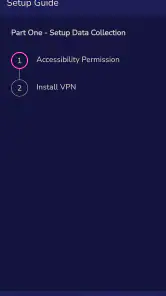
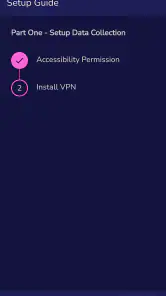
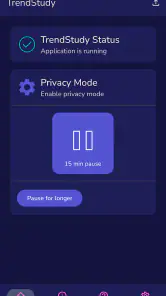

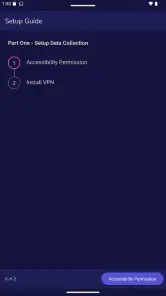
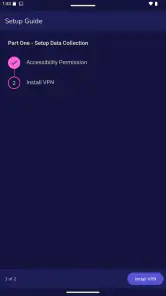
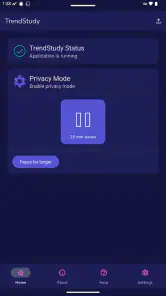
Analysis by Reviewed
I approached TrendStudy less like a typical lifestyle app and more like a doorway into market research. It is free to download and use, but its purpose is quite specific: it is an invite-only app for people who have opted in to research studies. That distinction matters immediately. You are not opening it for recipes, habit tracking, shopping deals, or entertainment. You are entering a controlled research experience managed by RealityMine Services LLC.
That narrow purpose gives the app a different kind of value from the usual lifestyle downloads. It may be useful if you have received an invitation and want to take part in the study connected to it. It is much less useful if you are simply browsing for a new everyday app. My overall impression is that TrendStudy makes sense as a study companion, not as a general-purpose service that everyone can install and explore freely.
How TrendStudy fits into everyday use
The most important thing to understand is the invitation requirement. Installing a free app does not automatically turn it into something you can use on demand. TrendStudy is designed around participation in opted-in market research, so the relevant question is not “What can I do with this app today?” but “Have I been invited to a study that uses it?” If the answer is yes, the app has a clear role. If the answer is no, there may be little reason to keep it on your phone.
I find that distinction helpful because it prevents the wrong expectations. Many lifestyle apps offer immediate utility after setup: a calendar can organize an appointment, a wellness app can record a walk, and a shopping app can help compare products. TrendStudy belongs to a different group. Its usefulness depends on a research context, and that context comes before the app itself.
The developer is RealityMine Services LLC, and the app sits in the lifestyle section rather than being presented as a game, social network, or productivity tool. That placement may make it easier to discover, but the experience is much more specialized than the category label suggests. I would describe it as a participation tool for research rather than a lifestyle destination in the ordinary sense.
For a realistic example, imagine receiving an invitation connected to a consumer study. You install TrendStudy, open it when requested, and use it as the designated channel for that participation. In that situation, the app can simplify the process by keeping the study-related activity in one place instead of asking you to improvise with email, screenshots, notes, or several unrelated apps. The benefit is not flashy; it is the structure and consistency of the workflow.
That same scenario also shows why the app is not a good fit for everyone. Without a valid invitation, you may have no meaningful study activity to complete. Someone looking for an app that delivers instant content or a visible personal benefit will probably find the experience underwhelming. I would not install it casually in the hope that it will reveal a catalog of open surveys or turn into a general research marketplace.
More From Our News Desk

Clash of Clans Is Won Between the Battles

Android Auto Makes the Case for Quieter Car Software

MobiOffice: Transforming Mobile Productivity with Seamless Integration

EA SPORTS FC™ Mobile Soccer: Redefining Mobile Sports Gaming

How Microsoft OneDrive Became a Mobile Productivity Giant

How Google Translate Breaks Language Barriers Effortlessly
What the free price really means
TrendStudy is free, which removes the most obvious financial barrier. I can consider it without a subscription decision, an upfront purchase, or a trial that later changes into a paid plan. That is a positive starting point, especially for an app whose value depends on whether a person has been invited to participate.
Still, free access should not be confused with guaranteed value. The app costs nothing to obtain, but its usefulness is conditional. If you have an active reason to use it, free access is practical because you are not paying for a specialized tool before knowing whether it applies to you. If you do not have that reason, the absence of a price does not make installation worthwhile by itself.
I also think this is where expectations need to stay disciplined. A free research app is not automatically a rewards app, a survey marketplace, or a source of guaranteed compensation. TrendStudy’s role is tied to opted-in market research, and I would judge it by how well it supports that participation rather than by assuming it offers money, coupons, or other benefits. Those are separate expectations and should not be attached to the app without a clear invitation explaining them.
For that reason, I would read the invitation carefully before installing. Check why you were contacted, what the study asks you to do, and whether the app is the correct one for that activity. This is a more useful preparation step than downloading first and trying to work out the purpose afterward. It also helps avoid keeping an app you never needed.
The practical value of a dedicated research companion
The strongest value here is organization. When research participation is handled through a dedicated app, the study has a defined place in your phone rather than being mixed into ordinary messages and personal notes. That can make it easier to remember where to return, especially if the study involves more than one interaction over time.
A second advantage is clarity of purpose. A general survey website may contain many unrelated questionnaires, while TrendStudy is associated with a particular invited research experience. That narrower focus can reduce browsing and decision fatigue. You are not searching through a large public list; you are responding to a study pathway that is relevant to your invitation.
A third, less obvious benefit is separation. I would rather keep research participation distinct from my personal task manager, photo library, or social apps. Even when the activity itself is simple, separating it makes it easier to remember what belongs to the study and what belongs to daily life. That is especially useful for people who participate in research only occasionally and do not want to build a manual system around it.
There is also a trade-off in that specialization. A dedicated app can feel clean when the invitation is active, but empty or unnecessary when it is not. A browser-based survey service may be more convenient for someone who wants to discover opportunities independently. A standard notes app may be enough for a person who only needs to record personal observations. TrendStudy’s value comes from being the intended channel for a specific opted-in process, not from replacing every alternative.
Where the experience may create friction
The invitation-only model is the main source of friction. It limits spontaneity, and it means the app cannot be judged like a normal download where the user controls the entire experience from the first launch. Your access depends on the study context, so the quality of your experience may be shaped as much by the invitation and research schedule as by the application itself.
That can be confusing for people who expect an open registration screen. If you install TrendStudy without knowing which study it belongs to, you may wonder what you are supposed to do next. My practical advice is to keep the invitation available while setting up the app. Having the original message or instructions nearby can prevent unnecessary guessing and help you identify the correct account or study path if the invitation includes specific details.
Another limitation is that the app is not likely to replace a full survey platform for people who want variety. Someone who enjoys browsing public questionnaires, choosing topics, or comparing opportunities will probably prefer an open service. TrendStudy is more focused and therefore less flexible. That is not necessarily poor design; it is simply the cost of serving a narrower purpose.
I would also avoid treating installation as a commitment to participate forever. If the study has ended or the invitation no longer applies, keeping a specialized app may add clutter without adding value. A simple review of your installed apps after the research activity is finished is sensible. This is one of those cases where uninstalling later can be part of good app management, not a sign that the app failed.
Privacy and trust deserve a thoughtful decision as well. Because TrendStudy supports opted-in market research, I would only use it when I understand who invited me and why the app is involved. I would not install a copy obtained from an unfamiliar message or assume that every invitation is legitimate. The safest workflow is to verify the source of the invitation, obtain the app through the normal store route, and follow only instructions that make sense for the study you agreed to join.
That advice is not a criticism of the developer; it is simply appropriate for research-related software. The app’s purpose makes context important. A person should know what they are agreeing to before beginning, rather than relying on the app name alone to explain the entire arrangement.
Compatibility and the basic decision to install
The current version is 5.5.0, and the app supports devices running Android 8.0 or later. For people using an older Android phone, compatibility is the first practical checkpoint. If your device meets that requirement, the technical barrier is relatively straightforward; if it does not, this particular app is not an option on that phone.
TrendStudy has passed the one-hundred-thousand-install mark and holds a 3.8 average from roughly seven hundred ratings, alongside more than one hundred reviews. Those figures suggest that it has a real user base, but they do not change the central condition: popularity does not turn an invite-only research app into an open service. I see the numbers as useful context rather than a reason to install without an invitation.
The Everyone content rating is reassuring for households that pay attention to age labels, although it should not be mistaken for a promise that every research study is personally suitable. The age label describes the app’s content classification, while participation itself still deserves an informed decision based on the invitation and the activity involved.
There is no reason to expect a game-like experience here. The app is not competing with entertainment, and I would not measure it by animation, replay value, or the amount of content available at launch. Its success is more functional: can an invited participant access the intended study, understand what is required, and return to the research activity without unnecessary confusion?
Who is most likely to benefit
TrendStudy is a sensible choice for someone who has deliberately opted into a market research project and has been told to use this app. In that situation, the free price and dedicated purpose work in your favor. You are not paying for access, and you do not need to force a general app into a role it was not designed to fill.
It may also suit people who prefer a clear boundary between research tasks and their everyday tools. If you do not want study reminders, notes, or instructions mixed into your personal productivity system, a dedicated app can make participation easier to manage. The advantage is modest but real: fewer improvised workarounds and less uncertainty about where the activity belongs.
I would be more cautious if you are searching for a way to find research opportunities on your own. An invite-only setup is not the same as an open directory, so another service may be better for discovery. Likewise, if your main goal is personal habit tracking, consumer feedback for your own purchases, or casual surveys, TrendStudy is probably too specialized.
It is also not the right choice for someone who dislikes installing temporary apps for one project. In that case, the convenience of a dedicated channel may not outweigh the extra app management. A browser-based process, when offered by the research organizer, could be a better fit. The important point is to choose based on the study’s instructions rather than assuming this app is universally necessary.
How it compares with familiar alternatives
Compared with ordinary survey websites, TrendStudy appears more focused on invited participation than open browsing. That can be an advantage when you already know which study you are joining, because the app’s purpose is easier to understand. The downside is reduced freedom for people who want to select from many public opportunities.
Compared with email-based research, a dedicated app can provide a more consistent destination. Email is convenient for invitations and reminders, but it can bury study instructions among personal messages. TrendStudy offers a separate place for the activity, which may be less distracting once everything is set up. On the other hand, email remains more universal and does not require another installation, so it can be preferable for a short or occasional study.
Compared with notes or task apps, TrendStudy has a clearer connection to the research process, but it is not a general organizer. I would use a notes app to record my own thoughts or a calendar to remember a deadline; I would use TrendStudy when the research organizer specifically directs me there. Trying to make one tool replace the other would create unnecessary friction.
This comparison leads to a simple rule: choose TrendStudy for participation, not discovery, personal tracking, or entertainment. Its focused design is its reason to exist, and judging it against broad lifestyle apps will make it seem either too limited or oddly specific. In the right context, that specificity is useful.
My verdict for invited participants
My recommendation is conditional but positive. If you have received a trustworthy invitation to an opted-in market research study that uses TrendStudy, I would install it. The app is free, supports Android 8.0 and later, and gives the research activity its own place instead of forcing you to manage everything through scattered messages and improvised notes.
I would skip it if you are simply browsing the lifestyle category for something useful to start today. The invite-only structure means there may be no meaningful experience waiting for you without the relevant study. I would also choose another option if you want public survey discovery, habit tracking, shopping assistance, or a broad collection of lifestyle tools.
Before installing, confirm the invitation source and understand what participation involves. During use, keep the study instructions accessible and treat the app as a dedicated channel rather than a general service. After the study is complete, decide whether you still need it instead of letting a specialized app remain installed indefinitely.
In short, TrendStudy delivers value through access and organization, not through breadth. Its free price makes trying it low-risk when the invitation is genuine, but the app is not valuable merely because it costs nothing. For the right participant, it can be a practical bridge into market research. For everyone else, skipping it is the more sensible choice.
TrendStudy Frequently Asked Questions
Who can download and use TrendStudy?
TrendStudy is an invite-only app for opted-in market research, so it is intended for people who have been invited to participate and agreed to take part. It is listed in the Lifestyle category and is rated Everyone. If you have not been invited or opted in, downloading the app alone may not provide access to its research activities.
What is TrendStudy and what can I use it for?
TrendStudy is an educational app designed to help users organize their learning, explore study-related content, and follow current academic or knowledge trends in one place. Depending on the available features and your region, it may support discovering topics, reviewing materials, tracking progress, or finding useful resources. Its value is greatest for students who want a more structured way to keep up with subjects and study goals.
Is TrendStudy suitable for beginners and advanced students?
TrendStudy can be useful for different levels of learners, but the experience may depend on the subjects, courses, and resources currently available in the app. Beginners can use it to discover topics and build consistent study habits, while advanced students may appreciate having educational trends and reference materials organized together. It is recommended to explore the available content before relying on it as your primary learning platform.
Does TrendStudy require an account or an internet connection?
Some TrendStudy features may be accessible without registration, but creating an account can be necessary for saving preferences, synchronizing progress, receiving recommendations, or accessing personalized content. An internet connection is generally expected when browsing new materials, loading updates, or using online resources. Offline availability can vary, so users should check the app’s current permissions and feature descriptions before downloading.
Is TrendStudy free to download and use?
TrendStudy is free to download. It is an invite-only research app, so access depends on being invited and opting in rather than simply installing it. Before proceeding, consider whether you have an invitation and are comfortable participating in market research. The app is available for devices running Android 8.0 or later.
Pros
- Clear lesson structure makes study sessions easy to follow.
- Progress tracking helps users monitor completed topics and goals.
- Useful for reviewing material in short
- focused study periods.
- Clean interface keeps essential learning tools easy to find.
- Can support independent learning outside traditional classroom settings.
Cons
- Some features may require an internet connection to work properly.
- Content quality and depth can vary between subjects or courses.
- Limited customization may not suit every learner’s study routine.
- Notifications could become distracting if too frequent.
- Older devices may experience slower performance with larger lessons.
- Category
- Lifestyle
- Version
- 5.5.0