Trade Hounds
- 193.00
- 3.9
- Installs
- 100.00K
- Price
- Free

Screenshots
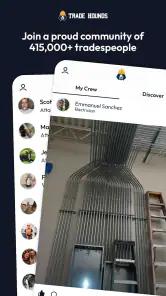

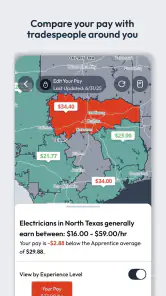
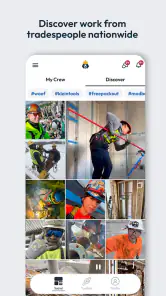
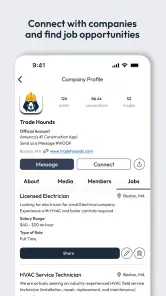

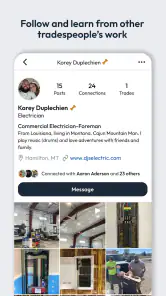
Analysis by Reviewed
Trade Hounds is a social app built around construction workers and the everyday conversations that happen around the trades. After spending time with it, my main impression is that it feels more useful when you treat it as a professional community rather than as another general-purpose social network. The audience is narrower, but that focus is exactly what gives the app its identity.
That focus also creates a clear trade-off. If you work in construction, are learning a trade, or simply want conversations that understand jobsite life, the app can feel more relevant than a broad social platform. If you are looking for a polished all-purpose network, a formal job board, or a replacement for direct messaging with your crew, it may not fit as well. Its value comes from shared trade experience, not from trying to serve everyone.
What makes the community useful
The app comes from Material Management Software, LLC, and its purpose is easy to understand once you look past the short store wording. Trade Hounds gives construction people a place to connect around work, skills, jobsite routines, and the practical concerns that are often difficult to explain to friends outside the industry. That context matters because construction conversations can be highly specific: tools, materials, safety habits, schedules, physical demands, and the differences between trades all shape the way people talk.
On a general social network, those subjects can disappear quickly among unrelated posts. Here, the shared background gives them a better chance of being understood. I found that this makes the app most appealing when I want perspective from people who recognize the realities behind a question, rather than a generic answer from an anonymous internet crowd.
The community angle is also more useful for people who are still finding their place in the industry. Someone entering a trade may want to see how experienced workers think about equipment, workplace expectations, or the day-to-day rhythm of a job. A person considering a change between trades can benefit from hearing practical viewpoints instead of relying only on formal career descriptions. Trade Hounds does not need to replace training or professional advice to be valuable; it can fill the conversational space between those more formal resources.
That is the strongest reason I would recommend trying it. The app is not interesting merely because it has a construction label. It is interesting because a focused community can make ordinary questions feel more relevant. A question about a tool, a difficult shift, or a career decision has a different tone when the people reading it are likely to understand the work involved.
A realistic way I would use it
Imagine finishing a long shift and realizing that a tool choice is slowing down a task. On a broad social platform, you might search through old videos or ask a mixed audience that does not know the trade. In Trade Hounds, I would post the situation with enough context for other construction workers to understand what is actually happening. The useful part is not simply receiving opinions; it is being able to compare those opinions with the routines and constraints of people doing similar work.
More From Our News Desk

Clash of Clans Is Won Between the Battles

Android Auto Makes the Case for Quieter Car Software

MobiOffice: Transforming Mobile Productivity with Seamless Integration

EA SPORTS FC™ Mobile Soccer: Redefining Mobile Sports Gaming

How Microsoft OneDrive Became a Mobile Productivity Giant

How Google Translate Breaks Language Barriers Effortlessly
I would also use it during a career transition. If I were considering a different specialty, I would read discussions over time rather than judging the entire field from one post. That approach is important because social communities naturally contain strong opinions. A single enthusiastic or negative response should not decide a career move, but several viewpoints can help me prepare better questions for a supervisor, instructor, or experienced coworker.
Another practical use is staying connected to the wider trade community when the people on my current site change. Construction work can be project-based, and crews do not always remain together. A community app can preserve some of that broader connection, especially for people who want to keep learning from workers outside their immediate workplace.
Where it stands apart from ordinary social apps
Trade Hounds is more focused than Facebook, Instagram, or a general discussion forum. Those alternatives may offer larger audiences and more polished discovery tools, but they also bring a lot of unrelated material. The advantage here is relevance. I am less likely to explain why a topic matters to construction workers, and more likely to encounter people who already understand the setting.
It is also different from a dedicated employment service. A job board is usually designed around vacancies, applications, and employer information. Trade Hounds is better understood as a place for community interaction and trade-centered discussion. That makes it more suitable for learning from peers and following industry conversation than for treating every post as a verified employment opportunity.
Compared with private group chats, the app offers a wider community perspective. A crew chat is excellent for immediate coordination, quick updates, and familiar contacts. It is not as useful when I want viewpoints from people outside my own workplace. Trade Hounds can complement that private communication, but it should not replace it for urgent jobsite instructions or sensitive workplace matters.
The comparison with professional networking platforms is also revealing. A conventional networking service often emphasizes résumés, titles, and polished career presentation. Trade Hounds feels more grounded in the working reality behind those labels. That can make it more comfortable for people who do not want to turn every interaction into a formal career pitch. The downside is that anyone expecting structured professional profiles may find the experience less organized for that purpose.
Strengths that become clearer with regular use
The first strength is audience fit. A focused community reduces the effort required to provide context. I can discuss construction-related experiences without turning every post into an explanation for outsiders. That does not guarantee that every response will be accurate or helpful, but it improves the starting point.
The second strength is informal learning. Experienced workers often share useful judgment in ways that formal guides do not: what tends to cause trouble, which questions to ask before accepting a role, or how a task feels in practice rather than on paper. I would treat these conversations as experience-based input, not official instruction, but they can still help me notice issues I had overlooked.
The third strength is belonging. Construction can be physically demanding and sometimes isolating, particularly when someone is new to a crew or working away from home. A community centered on the trade can make it easier to see that other workers face similar frustrations and decisions. That emotional usefulness is easy to miss if an app is judged only by whether it provides a direct service.
A less obvious benefit is that the app may help me separate local workplace habits from broader trade norms. When I only work with one crew, it is easy to assume that its methods are universal. Reading different perspectives can show where practices vary. That does not tell me which approach is correct, but it encourages me to ask better questions instead of accepting one local routine as the only option.
I also appreciate the possibility of using the community passively. I do not have to post every day to get value from a focused network. Browsing discussions occasionally can provide vocabulary, concerns, and ideas that become useful later. For someone with limited time after a shift, that lower-pressure style is more realistic than an app that demands constant participation.
The friction and limits I would take seriously
The biggest limitation is the same thing that makes the app distinctive: the audience is specialized. A narrow community can be highly relevant, but it may not answer every question quickly or provide the range of perspectives available on a much larger platform. If I want broad technical research, official safety guidance, or detailed product documentation, I would look elsewhere first.
Community advice also needs judgment. A confident post is not automatically a safe recommendation, and an experienced worker’s method may depend on equipment, local rules, training, or site conditions. I would never use an app discussion as the final authority for safety-critical decisions. The sensible workflow is to use conversations to identify possibilities, then verify them through qualified instruction, workplace procedures, and official sources.
Another weakness is that social feeds can mix useful experience with repetition, personal arguments, and posts that are more entertaining than informative. That is not unique to Trade Hounds, but it matters more when the subject involves work practices. I would get better results by searching with a specific question, comparing several responses, and saving the practical points I want to check later instead of accepting the first answer.
There is also a boundary between community participation and workplace privacy. I would avoid posting identifying details about a project, employer, client, or coworker. Even when a story feels harmless, construction sites can be recognizable from small details. The app is more useful when I treat it as a public-facing community rather than as a private conversation with my crew.
People who want a formal record of qualifications may also be disappointed. A social profile and a professional résumé serve different purposes. I would not rely on Trade Hounds alone to present certifications, work history, or references to an employer. For that task, a structured résumé and established professional channels remain better tools.
Who should install it, and who should skip it
I think Trade Hounds is a good fit for active construction workers who want trade-specific conversation outside their immediate crew. It also makes sense for apprentices, people exploring construction careers, and experienced workers who enjoy sharing practical knowledge. The app’s Teen content rating makes it accessible to a younger audience, although younger users should still approach jobsite advice carefully and rely on proper supervision and training for hands-on work.
It may also suit a worker who has recently moved to a new area or changed employers. In that situation, a community app can provide a broader sense of the industry while personal networks are being rebuilt. I would use it to discover common concerns and connect with the language of the trade, not to assume that every local practice is the same.
I would recommend skipping it if your main goal is private crew coordination. A workplace messaging tool will usually be clearer for assignments, urgent updates, and documents. I would also choose a conventional job platform if my immediate priority were searching and applying for openings. Trade Hounds can support the human side of a career search, but it is not the same thing as a dedicated recruitment workflow.
Likewise, people who dislike social feeds may not enjoy the format. The app depends on participation and community quality, so its usefulness can vary with what is being discussed and how much effort I put into finding relevant conversations. If I want a fixed library of authoritative lessons, a training platform or trade manual is a better match.
Practical expectations before downloading
Trade Hounds is free, which removes the main barrier to trying it. I would still approach the first session with a clear purpose instead of expecting the app to explain the entire construction industry. Decide whether you want peer discussion, career perspective, community connection, or a place to share your own experience. That decision makes it easier to judge whether the feed is helping.
The app has a 3.9 average from around 429 ratings, with roughly 193 written reviews, and it has passed 100K installs. Those figures suggest a real, established audience without making the app look like a universal social network. I read that as a reason to set realistic expectations: there is enough adoption for the community concept to be meaningful, but the experience will still depend on the conversations available to you.
It was released on December 3, 2018, and the current version is 5.2.0. The minimum operating-system requirement is version 10. Before installing, I would check that my phone meets that requirement, particularly if I use an older device. That small check avoids an unnecessary download attempt and is especially useful for workers who keep a secondary or older phone on the job.
My best tip is to avoid judging the app from a single visit. A community platform can look quiet or unfocused if I open it at the wrong moment. I would return with a specific question, read several perspectives, and notice whether the discussions match my trade and experience level. That is a fairer test than expecting instant value from passive scrolling.
I would also keep the app in its proper role. Use it to gather viewpoints, discover questions worth asking, and feel connected to other construction workers. Do not use it as a substitute for safety training, official requirements, a supervisor’s direction, or professional legal and employment advice. That distinction is not a criticism of the app; it is simply the responsible way to use any peer-based social community.
My final view
After looking at what Trade Hounds is trying to do, I see a focused social app with a clear audience and a sensible reason to exist. Its strongest quality is not a flashy feature; it is the chance to talk about construction with people who already understand why the details matter. That makes it more personally useful than a general network when the subject is trade work, jobsite experience, or career direction.
Its weaknesses are equally clear. The community format cannot guarantee authoritative answers, the specialized audience will not suit everyone, and it does not replace private work communication, formal training, or a dedicated employment service. I would be careful with sensitive workplace information and verify anything connected to safety or compliance.
For construction workers, apprentices, and trade-minded users who want peer perspective, I would recommend giving Trade Hounds a fair trial. For people seeking a formal job-search tool or a complete technical reference, another option will serve them better. My verdict is positive but specific: this is best used as a construction community, not as an all-purpose social network.
Trade Hounds Frequently Asked Questions
What devices can I use Trade Hounds on?
Trade Hounds is available for Android and iOS devices, making it accessible on the major mobile platforms. The Android version requires Android 10 or later, so check your device’s operating system before downloading. Once installed, the app is designed to bring its construction-focused social community to your phone, where you can connect with other tradespeople and follow industry-related posts.
Who develops Trade Hounds, and what kind of app is it?
Trade Hounds is a social app developed by Material Management Software, LLC. Its focus is construction and the skilled trades, rather than broad, general-interest social networking. That makes it most relevant to people who want to connect with others in the industry, share work-related experiences, or follow conversations from the trades community. The app is free to download.
What is Trade Hounds and who is it designed for?
Trade Hounds is a social networking app created for skilled tradespeople, including electricians, plumbers, carpenters, welders, mechanics, and construction workers. After reviewing the app, its main purpose is to help users connect with other professionals, share work-related experiences, discover opportunities, and follow content from the trades community. It is most useful for people who want industry networking rather than a general social media experience.
Can Trade Hounds help me find construction or trade jobs?
Trade Hounds can be useful for discovering employment opportunities, networking with contractors, and learning about openings shared within the skilled-trades community. However, it should not be treated as a guaranteed job placement service. The availability of listings and responses depends on your location, trade, experience, and how active employers are on the platform. Users should review each opportunity carefully before sharing personal information or accepting an offer.
Do I need an account to use Trade Hounds?
An account is generally required to access the app’s main social and professional features, such as creating a profile, posting updates, interacting with other users, and communicating about opportunities. Registration allows the platform to personalize the experience around your trade and location. Before signing up, review the information requested during registration and check the current privacy policy so you understand how profile details and activity may be used.
Pros
- Connects skilled tradespeople with relevant job opportunities.
- Lets users showcase their experience
- projects
- and professional skills.
- Provides a community for advice
- networking
- and industry discussions.
- Useful for discovering local companies and potential employers.
- Designed specifically for construction and skilled-trade professionals.
Cons
- The community may be smaller outside major cities or trade hubs.
- Some job listings may lack detailed pay or schedule information.
- Requires profile activity to get the most value from networking features.
- Content quality can vary depending on individual user posts.
- Some opportunities may involve third-party employers and external applications.
- Category
- Social
- Version
- 5.2.0