Toyzie AI: Toy Value Scanner
- 191.00
- 4.1
- Installs
- 100.00K
- Price
- Free

Screenshots
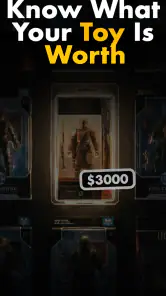
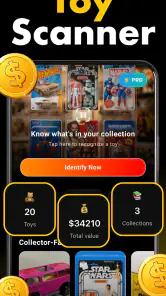
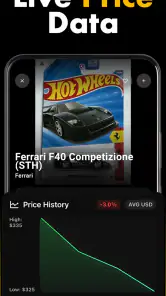
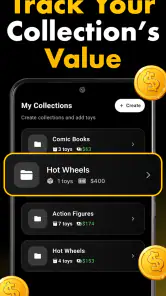
Analysis by Reviewed
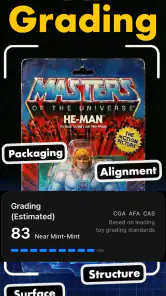
Collectible toys are easy to underestimate. A figure found in a storage box can be a childhood favorite, a limited release, or simply another common item that looks valuable at first glance. Toyzie AI: Toy Value Scanner is built for that moment of uncertainty. It is a free tools app from NineG that uses artificial intelligence to scan, identify, and estimate the value of collectible toys. I found its appeal strongest when I wanted a quick starting point rather than a full collector’s database.
The app is aimed at ordinary collectors, parents sorting a child’s old toys, people preparing a sale, and anyone who has inherited a mixed box of figures. Its store rating sits at 4.1 from around 1.5K ratings, while its reach has passed 100K installs. Those figures suggest that it has moved beyond being an obscure experiment, but I would still treat every result as an informed lead rather than a final appraisal.
What the scanner is really useful for
The first thing I noticed is that Toyzie AI changes the opening question from “What is this?” to “Is this worth investigating?” That distinction matters. A visual scanner can save time when a collection contains dozens of unrelated pieces, especially when packaging is missing and the original owner no longer remembers where anything came from.
In a practical session, I would photograph one toy at a time, inspect the identification returned by the app, and then separate the pieces into three groups: items worth researching further, ordinary toys suitable for a quick local sale, and objects that need better photographs or more information. That workflow is more useful than expecting the app to produce a perfect price for an entire storage bin in one pass.
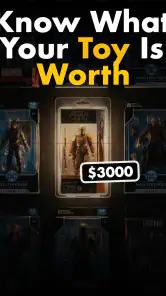
The value estimate is best understood as a screening tool. Collectible prices can change with condition, completeness, packaging, edition, accessories, regional demand, and the difference between an asking price and an actual completed sale. An AI result can point me toward a likely character or product line, but it cannot replace checking the physical object carefully.
That limitation does not make the app pointless. On the contrary, identification is often the hardest first step. A toy with a familiar character may have several releases that look almost identical. Small details such as a logo, paint variation, molded marking, accessory, or packaging design can affect the result. I would use the scan to create a research shortlist, then verify the details before listing anything for sale.
Why the camera setup matters more than expected
Good lighting is not just a cosmetic preference here. A dark room, reflective plastic, cluttered background, or toy partly hidden behind another object can make visual recognition less reliable. I get better results by placing the item on a plain surface, keeping the whole object inside the frame, and avoiding harsh reflections on glossy packaging.
I also recommend photographing the front first, then taking another view when the result looks uncertain. The underside, back, or a small molded mark may be more useful than a second front-facing image. This is one of the less obvious ways to use the app: treat it as part of a visual investigation, not as a one-button replacement for looking closely at the toy.
For loose figures, I would keep accessories beside the item but not cover the main shape. Accessories can help with identification, yet a crowded image can confuse the scan. For boxed products, I would photograph the front separately from close-ups of the branding or product code. Even when the app recognizes the general toy, those details help me decide whether the result deserves further checking.
Connectivity changes the experience
The AI nature of the tool makes network-dependent moments important. Scanning is not the same as using a simple flashlight or a local photo organizer. When the app needs to analyze an image and return an identification or valuation, the experience depends on the request completing successfully. I therefore prefer using it where the phone has a stable connection, rather than assuming every basement, garage, attic, or flea-market corner will behave the same way.
This becomes especially noticeable during a large sorting session. If I am moving through a box quickly, an interrupted request can break my rhythm. Instead of photographing everything at once, I would scan a small batch, note the useful results, and then continue. That approach also reduces the chance of mixing up which result belongs to which toy.
A weak connection can create an awkward pause even when the camera itself works perfectly. I would not interpret that pause as proof that the item is unidentifiable. It may simply mean the analysis has not completed. Waiting briefly, checking the connection, and retrying the same clean image is more sensible than immediately changing the toy or trusting a rushed guess.
This is also why I would avoid relying on the app as the only tool during a sale or valuation appointment. If a buyer is standing in front of me, I want the toy’s condition, markings, and accessories already documented. Toyzie AI is more comfortable as a preparation aid than as a guarantee that every question can be answered instantly in a crowded venue.
Using it in real mobile situations
The strongest mobile use case is sorting at home. Imagine opening a family storage box containing action figures, small vehicles, plush items, and pieces from several toy lines. Rather than searching each object manually, I can scan the most distinctive pieces first. The app helps me decide where to spend my limited research time.
A second useful situation is a charity-shop or flea-market visit. If I find an unfamiliar boxed toy, a quick scan may help me decide whether it deserves a closer look. I would still inspect the packaging and compare the result with what is physically present. A low-cost purchase is not automatically a bargain, and a high-looking estimate is not automatically a realistic resale value.
Phone ergonomics matter in these settings. Holding a toy in one hand and a phone in the other makes blurry images more likely. I get a more dependable process by placing the item down whenever possible, cleaning the camera lens, and taking a moment to frame the object. That sounds basic, but it is more valuable than repeatedly submitting poor images and wondering why the answers vary.
The app is also useful before donating or selling a mixed collection. I would scan unusual or complete-looking items first and leave clearly common pieces until later. This prioritization is a concrete advantage over opening a general search engine for every object. It prevents an afternoon of research from being consumed by toys that have little resale interest.
When a result needs recovery
There are several ways a scan can go wrong without the app being useless. The toy may be too small in the frame, the image may contain multiple objects, the lighting may hide important colors, or the item may be a custom combination assembled from several products. In those cases, I would improve the input before judging the result.
My recovery routine is simple: isolate the toy, retake the image in even light, include the full shape, and then try a detail view of any visible branding or molded text. If the object has removable accessories, I would make a second scan with the accessories arranged clearly. This produces a more controlled comparison than repeatedly photographing the same cluttered scene.
Mixed lots deserve extra caution. If a box contains ten figures, I would not assume one scan represents all ten. Similar characters can come from different releases, and a group photograph may cause the app to focus on the most visually prominent object. Individual scans take longer, but they produce a much cleaner inventory.
There is another recovery step that collectors often skip: recording the physical condition immediately after identification. I would note missing parts, paint wear, loose joints, odors, sun fading, and whether original packaging is present. A promising identification paired with poor condition can lead to an unrealistic value expectation. The app may start the investigation, but the final judgment still depends on the object in front of me.
When an estimate seems surprising, I would not immediately assume either a bargain or a mistake. I would scan again, inspect the item for edition clues, and compare the result with real market evidence. The most useful outcome may be discovering that a toy belongs to a more specific series than I first thought, even if the final selling price turns out to be modest.
Keeping the process sensible with mobile data
Because the experience involves image analysis, I would use it deliberately rather than sending every object through the scanner without a plan. A home Wi-Fi connection is the most comfortable choice for a large collection. It lets me work through images without worrying about using mobile data during a long sorting session.
When I am away from home, I would scan only the items that can genuinely affect a decision. For example, at a market, one unusual boxed figure may justify a quick check, while a full tray of identical loose toys probably does not. This selective approach keeps the app useful without turning every shopping trip into a continuous upload session.
I would also avoid scanning private background material unnecessarily. A plain surface makes recognition easier and keeps the image focused on the toy. Removing unrelated objects is good for accuracy and is a sensible habit whenever a camera-based tool is analyzing a household scene.
The app is free to install, though in-app purchases range from $4.99 to $39.99 per item. That makes it important to understand my own usage before paying for anything. A casual user who only wants help identifying a few inherited toys may find the free experience sufficient for deciding whether deeper research is worthwhile. A serious reseller should consider the cost in relation to the time saved and the number of items processed.
I would not pay simply because an estimate looks exciting. The better reason to consider a purchase would be a repeatable workflow in which the app regularly helps me sort, identify, and prioritize a substantial collection. Even then, I would judge the value by the quality of decisions it supports, not by how high any individual estimate appears.
Where it beats familiar alternatives
The usual alternative is a web search based on a description such as “red robot figure with blue helmet.” That can work when I already know the character or brand, but it becomes slow when the toy is unfamiliar. Toyzie AI has an advantage at the discovery stage because I can begin with an image rather than the right vocabulary.
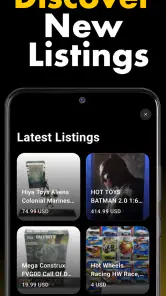
General image-search tools are another option. They may find visually similar products, but similarity is not the same as identification. A toy can resemble another release while differing in accessories, markings, or packaging. I see Toyzie AI as more focused for the collectible-toy question, although I would still use broader search tools afterward when I need to verify a release or compare real listings.
Collector forums and specialist databases remain better for difficult cases. Experienced collectors can recognize subtle variations, regional releases, reproduction parts, and condition issues that a visual scan may overlook. Those resources take more effort, but they are preferable when the item is expensive, rare, or emotionally important.
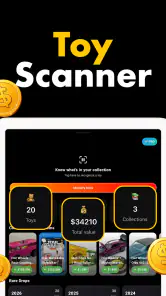
A spreadsheet or photo album is also better for long-term cataloging. Toyzie AI helps me investigate individual objects; it is not a substitute for my own inventory system. I would save clear photos, identification notes, condition details, and purchase or ownership information separately. That combination gives me a more dependable record than relying on memory after a busy scanning session.
Who will enjoy it, and who should skip it
I think the app is a good fit for casual collectors, families clearing storage, beginners learning how toy identification works, and sellers who need to triage a mixed lot. It is particularly helpful when the main problem is not pricing a known item but discovering which objects deserve attention.
I would be more cautious recommending it to a professional appraiser, a high-value collector, or someone expecting legally defensible valuations. Those users need detailed provenance, condition grading, market comparisons, and specialist judgment. An AI-assisted estimate can support that work, but it should not be the only evidence behind a major transaction.
It may also be a poor match for someone who wants a fully organized collection manager rather than a scanner. If the main goal is tracking ownership, insurance records, lending history, or a large catalog over time, a dedicated inventory tool will likely be more suitable. Toyzie AI makes the most sense at the front of the process, when the item is still unidentified or its importance is unclear.
The app is rated for Everyone, and it runs on Android starting with version 7.0. Its current version is 1.0.20, so I would keep the app updated through the normal store process and make sure the phone is compatible before planning a large sorting project. The developer is NineG, and the product is clearly positioned as a focused tool rather than a broad social platform or collector marketplace.
My final view on connected toy research
After using Toyzie AI as a first-pass assistant, I see its real strength in reducing the blank-page problem. Instead of staring at an unknown figure and wondering where to begin, I can obtain a direction, organize the collection, and decide which pieces deserve deeper research. That is a practical benefit, especially when the collection is large or the owner has limited time.
Connectivity is part of that trade-off. The app feels most convenient with a reliable connection, good lighting, and a deliberate scanning routine. In a garage with poor reception or at a busy market, the experience can become less predictable. I would prepare important items in advance rather than depend on a live scan at the exact moment a buying decision has to be made.
My advice is to use the app in layers: scan for a lead, inspect the physical toy, record its condition, and then verify any meaningful value through stronger market evidence. That approach avoids both extremes—dismissing the AI because it is not perfect and trusting an estimate without checking the details.
Toyzie AI is worth trying if you need a fast way to sort unknown collectible toys, especially when your first goal is identification and prioritization. I would not use it as the final authority on rare or costly pieces, but as a connected mobile companion for the early stages of research, it can turn a confusing box of toys into a manageable list of next steps.
Pros
- Quickly estimates toy values using a phone camera scan.
- Useful for identifying unfamiliar toys and collectibles.
- Convenient for checking items while shopping or thrifting.
- Can help organize a personal toy collection.
- Simple concept that requires little specialist knowledge.
Cons
- AI scans may misidentify toys or overlook rare variants.
- Estimated values can differ from real selling prices.
- Poor lighting or damaged packaging may reduce scan accuracy.
- Market data may be limited for niche or regional toys.
- Some features or scans may require in-app purchases.

- Category
- Tools
- Version
- 1.0.20