Text Number:Phone Text for Now
- 184.00
- 4.5
- Installs
- 100.00K
- Price
- Free
Screenshots
Analysis by Reviewed
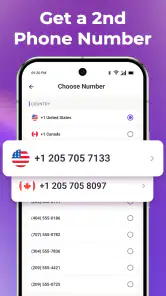
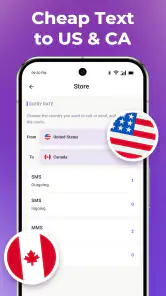
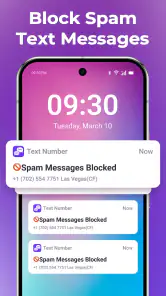
When I try a second-number app, I care less about a long feature list and more about whether I can get from installation to a usable conversation without unnecessary confusion. Text Number:Phone Text for Now takes a straightforward idea and places it in the Communication category: it gives me another number for texting and calling, with free access at its core and optional purchases available. That makes it interesting for separating personal conversations from a temporary project, online selling, travel planning, or a small side activity.
My first impression is that the app is aimed at people who want a practical communication layer rather than a complete replacement for their main phone service. The developer is Text Number Free text App, and the app is free to install. It has earned a 4.5 average from around 2.8 thousand ratings, with more than 100 thousand installs, so it has clearly attracted a meaningful audience while remaining relatively focused.
The important distinction is this: a second number can be useful, but it is not automatically a perfect substitute for a carrier line. The experience depends on setup, the quality of the connection, and what the recipient or service accepts. I found that the best way to judge it is to treat it as a flexible communication tool, not as a guaranteed solution for every verification, business, or calling situation.
Getting past the points where second-number apps become confusing
The first place users can get stuck is the moment they expect the app to behave exactly like the phone app that came with their device. A second-number service has its own workspace, so messages and calls need to be handled inside the app experience. If I am waiting for a reply while looking only at my normal text-message inbox, I can easily assume something failed when I am simply checking the wrong place.
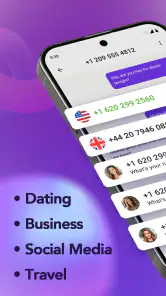
I recommend deciding what the number is for before choosing how to use it. If I want to contact buyers for a short project, I can keep those conversations separate from family messages. If I need a number for a club or volunteer activity, I can use it as a boundary between that activity and my private line. This small decision makes the app feel more organized and also helps me notice when a problem is actually related to the recipient, the network, or the purpose of the number.
Another common point of friction is expecting every recipient to treat the new number as a normal personal mobile number. Most people will simply receive a call or text, but automated services and verification systems can be more selective. I would not make this app my only plan for an account that is important to my finances, identity, or long-term access. For those situations, a primary carrier number or another officially supported method is usually the safer choice.
The same caution applies to calling. A call made through an internet-based communication app can feel different from a call placed through the device’s standard cellular service. A weak Wi-Fi signal, crowded mobile data connection, battery-saving behavior, or background restrictions can affect whether a call connects smoothly. That is not a reason to dismiss the app, but it is a reason to keep expectations realistic.
You May Like

Clash of Clans Is Won Between the Battles

Android Auto Makes the Case for Quieter Car Software

MobiOffice: Transforming Mobile Productivity with Seamless Integration

EA SPORTS FC™ Mobile Soccer: Redefining Mobile Sports Gaming

How Microsoft OneDrive Became a Mobile Productivity Giant

How Google Translate Breaks Language Barriers Effortlessly
Text Number:Phone Text for Now is rated for Everyone, which makes its basic audience broad. That does not mean every use case is equally suitable for every person. Someone who only needs occasional contact may find it convenient, while someone who needs guaranteed reachability at all times should keep a dependable primary line available.
A setup routine that prevents avoidable problems
Before I start sending messages, I would check the basics in a deliberate order. I would install the current release, which is version 1.14.1, and make sure the device is running a compatible operating system. The minimum requirement is Android 9, so an older device may need attention before the app can be used normally.
Next, I would complete the app’s number-selection or account flow carefully rather than rushing through it. I would write down the new number somewhere private, then send a test message to a trusted contact. That test is more useful than assuming the setup worked because the app opened successfully. It confirms that I know where outgoing and incoming conversations appear and gives me a chance to check the number before sharing it.
I would also make one short test call. The purpose is not to judge the entire service from a single conversation, but to confirm that the microphone, speaker, and connection behave as expected. If I am using wireless headphones, I would test once with them and once without them. This separates an audio-accessory issue from an app issue before I need the number for something urgent.
For a cleaner workflow, I would keep the app available on the home screen and enable only the notifications I actually need. If notifications are delayed, I would inspect the phone’s battery and background-activity settings instead of immediately reinstalling the app. Android devices sometimes limit background work to preserve battery, and that can make a communication app appear less responsive than it really is.
There is also a practical privacy habit worth adopting: I would avoid putting the new number into public posts unless I am comfortable receiving unsolicited calls or texts. A second number can create separation, but it does not remove the need to manage who can contact me. For marketplace listings or temporary groups, I would share it only with the people who need it and remove the number from old posts when the activity ends.
The app includes in-app purchases ranging from $1.99 to $39.99 per item. Because of that, I would review the purchase screen carefully before confirming anything. I would first use the free portion for a real, low-risk conversation and only consider paying if the app solves a recurring problem for me. A second number is valuable when it saves time or protects a boundary, but it is not worth paying for simply because I have not yet decided how I will use it.
Recovering a conversation when something seems wrong
When a message appears not to send, I avoid tapping repeatedly. I first check whether the conversation is still visible and whether the connection is stable. Repeated attempts can create duplicate messages, which is especially awkward when I am contacting a customer or coordinating a meeting. I would wait briefly, reopen the conversation if necessary, and send one clear follow-up only after confirming what happened.
If an incoming message does not appear, I would ask the sender to confirm which number they used. This sounds obvious, but it is one of the easiest mistakes with a second-number app: people may reply to my ordinary number from an earlier conversation or select the wrong contact entry. Saving the new number under a distinct name can prevent this, particularly when I use both numbers with the same person.
For calls, I would check the connection first and then test another contact. If one person cannot hear me, the problem may be their device, their signal, or an audio setting rather than the app. If every call has the same problem, I would restart the app, check the phone’s microphone and speaker behavior in another application, and try a different network. These are simple checks, but they tell me whether the problem follows the app or follows the device and connection.
Notifications deserve their own recovery process. I would confirm that notifications are enabled for the app, that the phone is not in a restrictive focus or do-not-disturb mode, and that battery optimization is not stopping background activity. I would then send a test message from another device. If the message arrives only after I open the app, the issue is likely notification delivery rather than the message itself.
I would be careful with the idea of deleting and reinstalling as a universal fix. Reinstallation can remove local context or force me to repeat the setup process, so I would use it only after simpler checks. Before taking that step, I would make sure I know the account details or recovery information needed to return to the same workflow. That is particularly important if the number is already being used for active conversations.
A useful habit is to keep a small record of the number’s purpose and the contacts who have it. I do not mean storing sensitive conversation content; I mean maintaining enough organization to know which people should use the second number. This makes troubleshooting faster because I can test with a trusted contact instead of guessing whether a silent recipient has blocked, ignored, or misread the new number.
Knowing when the app is not the real cause
Not every failed text points to a fault in Text Number:Phone Text for Now. The recipient may have poor service, an incorrect contact entry, a full inbox, or settings that limit unfamiliar numbers. A call may fail because the other person is unavailable. Before deciding that the app is unreliable, I would test with a second trusted contact and compare the results.
Automated systems are another special case. Some websites accept only certain types of numbers, and some may reject a number that is not recognized as a conventional mobile line. If a verification message never arrives, trying repeatedly is unlikely to help. I would use the service’s official alternative, such as email or a primary phone number, rather than treating the app as a workaround for a system that does not support it.
Network conditions can also create misleading symptoms. A text may appear delayed when the phone is moving between Wi-Fi and mobile data, while a call can sound poor in a busy location. I would test from a stable connection before judging everyday performance. If the app works consistently in one place but not another, the environment is part of the explanation.
Device compatibility matters too. Android 9 is the minimum operating-system requirement, and older hardware may also have stricter background limits or less reliable audio components. If the app opens but behaves inconsistently on an aging phone, I would compare it with another communication app on the same device. That helps reveal whether the phone itself is struggling.
I also would not confuse a second number with anonymity. The number separates conversations from my primary line, but I would still avoid sharing personal information casually and would not use it for harassment, deception, or anything that violates the rules of another service. The most useful role here is controlled separation, not invisibility.
Where it fits beside ordinary texting and calling options
The standard phone and messaging apps remain better when I need the strongest connection to my carrier service, the least complicated calling path, or a number that institutions already recognize. They are also the natural choice for emergency communication and important account recovery. I would keep my main line for those purposes and use this app where a separate identity is more valuable than absolute simplicity.
Compared with a typical messaging platform tied to an existing account, a second-number app can be more practical when I want people to contact me by phone number rather than asking them to join another service. That is useful for a local sale, a temporary work arrangement, or a group that includes people with different messaging habits. The trade-off is that I need to monitor another communication space and remember which number I gave to whom.
Compared with buying another carrier line, the app is easier to try because the basic download is free. A carrier line may be preferable for long-term reliability, formal business use, or situations where cellular service and broad number acceptance matter more than convenience. Text Number:Phone Text for Now makes more sense when I want flexibility without committing immediately to another full mobile plan.
One non-obvious strength is the ability to design a communication boundary before a situation becomes messy. I can use the second number for a short-term project from the beginning, rather than handing out my personal number and trying to undo that decision later. The limitation is that this boundary works only if I consistently use the app’s number and do not mix it with my regular contact details.
Another useful trade-off is the separation of testing from commitment. I can try the free experience with a trusted contact, check whether calls and texts fit my routine, and then decide whether optional purchases are justified. That is a better approach than paying first and discovering that my intended recipient or service does not work well with a second-number app.
For a realistic example, imagine I am selling furniture during a move. I would use the app’s number in the listing, answer questions there, and arrange a pickup without exposing my everyday number. I would keep the conversation inside that separate workflow, test a call before meeting, and stop sharing the number once the sale is complete. For this kind of temporary contact, the app’s value is not just free calling or texting; it is the ability to keep a short-lived activity distinct from my personal life.
My practical verdict after weighing the friction
I see Text Number:Phone Text for Now as a useful option for people who specifically need a second phone number and are willing to manage it as a separate communication channel. Its free entry point makes experimentation easy, and its purpose is clear enough for everyday situations such as temporary projects, marketplace conversations, club coordination, and personal boundaries.
I would recommend it to a friend who wants to test a second number without immediately adding another carrier line. I would tell that friend to begin with a low-risk contact, confirm both texting and calling, check notification and battery settings, and avoid relying on it as the sole route to an important account. Those steps address most of the practical friction before it becomes frustrating.
I would skip it if I needed guaranteed carrier-level reachability, a number accepted by every verification system, or a communication tool that I never have to monitor separately. In those cases, a normal mobile line or the official communication method offered by the service would be a better fit.
The app is free, rated for Everyone, and supports devices from Android 9 onward. Optional purchases are available, so I would treat payment as a decision based on repeated usefulness rather than an automatic part of setup. The best reason to use it is controlled separation, not the promise that every call, text, or verification process will behave exactly like a normal carrier number.
Overall, I find the concept worthwhile when the use case is clear. It does not eliminate the need for sensible troubleshooting, stable connectivity, or a backup plan for important communication. But for a temporary number, a privacy-conscious contact boundary, or a small project that deserves its own inbox and calling identity, it can be a practical addition to an Android phone.
Text Number:Phone Text for Now Frequently Asked Questions
What devices can I use Text Number: Phone Text for Now on?
Text Number: Phone Text for Now is a communication app available for devices running Android 9 or later. Before installing, check your device’s operating system version and make sure you have enough space for the app. The app’s current version is 1.14.1, so keeping it updated can help you use the latest available features and maintain compatibility.
Who develops Text Number: Phone Text for Now, and what do users think of it?
The app is developed by Text Number Free text App and is listed for users of all ages. It has an average rating of 4.5 from around 2.8 thousand ratings, alongside 184 written reviews. Ratings can offer a quick impression, but individual experiences may differ depending on location, device, and how someone uses a second number.
What is Text Number: Phone Text for Now used for?
Text Number: Phone Text for Now is designed to provide users with an additional phone number for texting and, depending on the available features and region, calling. It can be useful for separating personal and business communication, signing up for online services, or maintaining more privacy when sharing a number. Before downloading, check which functions are supported in your country.
Can I use Text Number: Phone Text for Now without giving it my personal phone number?
The app may allow you to create or use a secondary number, but registration requirements can vary by device, country, and account type. Some users may be asked to verify an existing phone number, email address, or identity before accessing messaging features. Review the sign-up screen and privacy policy carefully so you understand what information is collected and why it is required.
Is the phone number provided by the app permanent?
A number obtained through Text Number: Phone Text for Now may not always be permanent. In many second-number services, numbers can expire, be reclaimed, or become unavailable if they are not used regularly or if a subscription ends. If you use the number for important accounts, banking, or verification, confirm the app’s retention rules and keep the number active according to its terms.
Pros
- Simple interface makes sending and receiving texts easy.
- Supports quick communication without requiring a social media account.
- Useful for keeping personal and work messages separate.
- Message history is easy to browse and review.
- Lightweight design should work well on older devices.
Cons
- Some features may require payment or an active subscription.
- Privacy options may be limited compared with secure messaging apps.
- Performance can depend on your mobile network or internet connection.
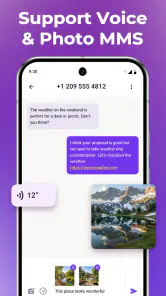
- Not ideal for group chats or advanced media sharing.
- Compatibility and features may vary between Android and iOS.

- Category
- Communication
- Version
- 1.14.1