Taser Prank: Electric Stun Gun
- 1.00
- 3.4
- Installs
- 100.00K
- Price
- Free
Screenshots

Analysis by Reviewed
I tried Taser Prank: Electric Stun Gun as a lighthearted sound-effects app rather than as a serious utility, and that distinction matters from the first tap. It belongs to the lifestyle category, is free to use, and is aimed at quick jokes built around simulated taser, stun-gun, time-bomb, and haircut sounds. The idea is simple: open it, choose an effect, and use your phone as a small source of theatrical noise.
That simplicity is also the main reason to consider it. You do not install this looking for a deep game, a practical safety tool, or a realistic electric device. You install it for a short social moment. In my experience, the app works best when the people around you already understand that it is a harmless prank and are comfortable with exaggerated sound effects. Used carefully, it can add a funny surprise to a casual gathering. Used carelessly, the same sound can be startling or uncomfortable.
How the prank format feels in everyday use
The developer is Era Global Publishing, and the application is currently at version 1.0. Its age rating is Everyone, which fits the basic concept: the app presents playful audio scenarios rather than a complex or mature experience. Still, an Everyone label should not replace common sense. A loud fake shock sound can alarm a child, a pet, someone driving, or anyone who has a strong reaction to sudden noises.
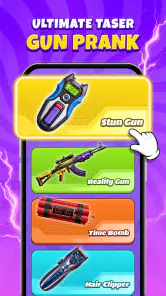
The most useful way to think about the app is as a pocket soundboard. The taser and stun-gun themes are designed for mock reactions, while the time-bomb and haircut themes give you different comic setups. That variety helps prevent the experience from feeling like one repeated button, although the appeal remains tied to short sessions. I would not expect it to keep a group entertained for a long evening by itself.
One practical scenario is a small get-together where a friend pretends to give you a haircut. Instead of trying to imitate the sound with your mouth, you can select the corresponding effect and hold the phone near the conversation. The joke works because the sound supplies a familiar cue. The same approach can work with a pretend countdown, but I would avoid using that effect in places where people might mistake it for a real emergency.
The app is also more suitable for a willing audience than for strangers. A prank is not automatically funny because it is brief. I would avoid directing the taser-style effect at someone who may interpret it as a threat, and I would never use it near security checks, public transport staff, schools, workplaces with strict rules, or anyone operating a vehicle. The best result comes from choosing a harmless setting and making the joke obvious soon after the sound begins.
Connectivity changes the timing
Because this is a phone-based sound experience, the moment of use is more important than the length of the session. A joke often depends on a quick transition: someone makes a comment, you open the effect, and the sound arrives while the conversation still has momentum. Any delay caused by loading, a weak connection, or switching between screens can make the punchline feel forced.
More From Our News Desk

Clash of Clans Is Won Between the Battles

Android Auto Makes the Case for Quieter Car Software

MobiOffice: Transforming Mobile Productivity with Seamless Integration

EA SPORTS FC™ Mobile Soccer: Redefining Mobile Sports Gaming

How Microsoft OneDrive Became a Mobile Productivity Giant

How Google Translate Breaks Language Barriers Effortlessly
I would therefore prepare the app before starting a prank. Open it in a calm moment, look through the available sound choices, and decide which one fits the situation. That small amount of preparation is more valuable than trying to search for an effect while everyone is watching. A soundboard joke has a narrow timing window; once the conversation has moved on, even a good effect may feel random.
Network conditions can matter around the wider mobile experience, such as obtaining the app or dealing with anything that needs to load, but I would not treat a connection as part of the joke itself. The safest habit is to test the chosen sound before relying on it in a social moment. If it does not respond as expected, do not keep tapping in front of the audience. Put the phone away and let the moment pass instead of turning a small prank into an awkward technical demonstration.
This is one of the app’s less obvious trade-offs. Its concept looks instant, but instant comedy depends on preparation. A dedicated physical novelty device may be ready faster, while a phone app is easier to carry and gives you several themes in one place. If you already have your phone in your hand, the app is convenient. If you need guaranteed immediate playback in a noisy or busy environment, a separate sound device may feel more dependable.
Designed for short mobile moments
The app makes the most sense on a phone because the device is already part of everyday social life. You can use it during a casual conversation, at home with friends, or while setting up a harmless role-play joke. The mobile format also makes it easy to stop immediately. That matters with startling sounds: if somebody looks uncomfortable, ending the effect is simpler than continuing a physical gag.
There is a useful difference between using it as a planned prop and using it as a random interruption. As a prop, you can choose the haircut sound while a friend is pretending to style someone’s hair, or select the countdown effect for a clearly fictional challenge. As an interruption, the same audio may confuse people who do not know what is happening. I prefer the first approach because it gives the sound a context rather than making the phone itself the center of attention.
Small-screen use also creates a handling issue. If you hold the device too close to someone’s ear, the effect may be unpleasant even if the joke is otherwise harmless. I recommend keeping a little distance and using a moderate volume. In a crowded place, the sound may be difficult to hear, so increasing it sharply is not always the right answer. A quieter, well-timed effect in a familiar setting is usually better than a loud one that disturbs everyone nearby.
Another realistic limitation is that the app cannot create the whole joke for you. It supplies the audio cue, but the setup, acting, timing, and audience still determine whether the moment works. Someone looking for a game with objectives, progression, or a longer interactive loop will probably find this too narrow. Someone who wants a collection of quick prank sounds may appreciate the lower commitment.
What to do when the effect fails
Any sound-based prank app needs a simple recovery plan. If the selected effect does not start, first stop pressing repeatedly. Rapid taps can make it harder to tell whether the phone is delayed or whether several triggers have been registered. I would wait briefly, check the volume, and return to the sound selection screen before trying again.
If the phone is connected to another audio device, the sound may not come from the place you expect. That can ruin the timing and make the situation confusing. Before using the app with headphones, a speaker, or a car system nearby, test where the audio is actually routed. For a private joke, headphones are usually a poor choice because the audience will hear nothing. For a public setting, external amplification can be disruptive, so I would avoid it unless everyone nearby is part of the activity.
A failed effect is not a reason to keep escalating. The most graceful recovery is to acknowledge the failed joke, smile, and move on. This is especially important with the taser and bomb-themed sounds, which can be misread when they appear without context. If somebody reacts with concern, explain immediately that it is a phone sound effect and stop using it. The app is entertainment, not a reason to test people’s patience or sense of safety.
I also recommend avoiding the app during moments when a phone malfunction could cause a bigger problem. Do not rely on it for a performance that cannot pause, a timed activity where everyone is depending on the cue, or any situation where a sudden sound could interfere with attention. A physical prop, spoken cue, or ordinary timer is the better choice when reliability has real consequences.
Using it without wasting attention or data
Although the app is free, free does not mean frictionless in every situation. The cost here is more likely to be attention, battery, storage, or mobile data than money. Since the app is built around short effects, I would avoid repeatedly opening and closing it just to browse during a gathering. Decide what you want before the moment, then close it when the joke is over.
For data-conscious users, the sensible approach is to install and test the app while connected to a trusted network, then check how it behaves before taking it somewhere with limited service. I am not assuming that every sound works without a connection, so I would not promise myself offline use until I had personally tested the exact version on the phone I planned to carry. This is a practical precaution rather than a criticism of the concept.
The same caution applies to permissions and privacy decisions. Read each request shown by the operating system and grant only what makes sense for the task. A soundboard should not be given extra access casually. I would also avoid leaving the app open in the background when I am finished, especially if the phone is low on battery or I am heading into a situation where unexpected audio would be embarrassing.
There is a subtle advantage to keeping the experience small: you can make a clear decision about whether it is worth retaining. If you use the haircut effect once and never touch the app again, it may not deserve permanent space on your phone. If you regularly host playful gatherings and enjoy having several themed sounds available, the free price makes occasional use easy to justify. The right choice depends on how often you actually create these moments, not on the number of effects alone.
Who will enjoy it, and who should skip it
I would recommend it to someone who wants a quick, low-commitment prank prop and understands that the humor comes from timing rather than complexity. It can suit friends who already enjoy silly role-play, family members who are comfortable with sound-based jokes, or a person who wants several novelty themes without carrying separate gadgets.
I would skip it if you are looking for a realistic self-defense tool. The taser and stun-gun themes are simulated entertainment, not protection, training, or legal guidance. It is also a poor choice for anyone who dislikes startling noises, needs a dependable professional audio cue, or wants a full game with goals and replay systems. In those cases, a normal soundboard with calmer effects, a physical novelty item, or a dedicated game would be more appropriate.
Compared with the usual alternatives in the lifestyle and prank space, the phone format is convenient but less tangible. A physical buzzer or novelty device can be quicker to operate and may feel more convincing because it is designed for one gag. A general soundboard may offer broader audio categories. This app’s advantage is the focused mix of electric-shock, countdown, and haircut scenarios in a single free package. Its weakness is that the novelty can wear off quickly once the group has heard the main effects.
The audience size matters too. In a private room, the phone speaker may be enough and the context is easier to control. In a noisy gathering, the effect can disappear or require a volume level that bothers people outside the joke. I would choose it for small, familiar settings rather than large public spaces. That is not a limitation I would try to solve by making the sound louder; it is a sign that the app’s natural range is intimate and casual.
What the adoption numbers suggest about expectations
The app has reached over one hundred thousand installs, while its average rating is 3.4 from around eighty-seven ratings. I read that combination as a reason to keep expectations measured. There is enough interest to show that the idea attracts people, but the rating does not suggest a universally polished experience. Since there is only a single written review represented in the listing, the numerical score gives less detailed guidance than a large body of comments would.
That does not make the app a bad download. It simply reinforces my view that this is a narrow novelty tool rather than an essential lifestyle application. Its success depends on whether the sounds fit your sense of humor, whether they trigger smoothly on your device, and whether you have a suitable audience. Those factors are personal, so a middling average can coexist with a perfectly enjoyable short session for the right user.
The release date is May 13, 2026, and the app supports Android 7.0 or later. That broad compatibility makes it accessible to people using older Android phones, although the actual feel can still vary with speaker quality, system volume behavior, and how quickly a particular device opens an effect. The current version is 1.0, so I would treat it as an early release and pay attention to future changes before assuming that every behavior will remain identical.
My connectivity verdict
Connectivity shapes this app mainly through preparation and reliability, not through a deep online feature set. I would test it before a planned joke, avoid depending on it for anything important, and keep a non-digital backup if the timing truly matters. That approach removes most of the frustration without pretending that a prank soundboard is more sophisticated than it is.
After using it, I see Taser Prank: Electric Stun Gun as a straightforward free novelty app with a clear but limited purpose. The strongest use case is a brief, consensual joke among people who know one another. The weakest is any situation involving strangers, real danger, public alarm, or a need for guaranteed playback.
My recommendation is cautious but positive for the right audience: install it if you enjoy quick sound-based gags and can use them responsibly, especially when the haircut or clearly fictional setup feels safer than a shock or bomb-themed surprise. Prepare the effect, keep the volume sensible, respect the people around you, and remember that the app provides only the sound. The judgment that makes the prank funny—or makes it a bad idea—still comes from you.
Taser Prank: Electric Stun Gun Frequently Asked Questions
What does the 100+ sounds description mean, and what kinds of prank effects can I expect?
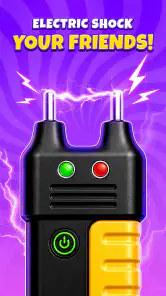
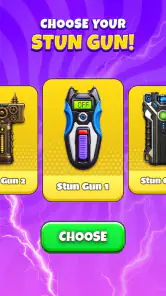
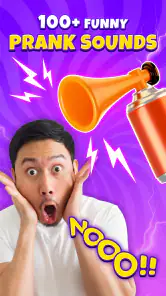
Taser Prank: Electric Stun Gun is presented as a collection of playful sound and visual effects rather than a real stun device. Its advertised themes include a taser prank, stun gun, time bomb, and haircut prank, with more than 100 sounds. The experience is intended to create a playful surprise, so consider the setting and the people nearby before playing any effect aloud.
What is Taser Prank: Electric Stun Gun, and how does it work?
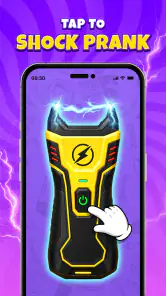
Taser Prank: Electric Stun Gun is a simulated stun-gun app designed for entertainment and practical jokes. It uses your phone’s screen effects, sound, vibration, or camera-style visuals to imitate an electric shock device. During testing, it behaved as a virtual prank tool only; it cannot generate electricity, shock another person, or function as a real self-defense weapon. The experience depends on your device’s supported features and settings.
Can Taser Prank: Electric Stun Gun actually shock or harm someone?
No. The application cannot produce a real electric shock and should not be confused with a legally regulated stun gun or Taser device. Any apparent spark, flash, crackling sound, or vibration is created digitally by the phone. Even so, responsible use is important: avoid frightening people who may panic, have medical conditions, or react unpredictably. Always make sure the person understands it is only a harmless app prank.
Does Taser Prank: Electric Stun Gun require internet access or special permissions?
Requirements can vary depending on the version and your operating system. Basic prank effects may work offline, but the app could request internet access for advertisements, analytics, updates, or optional content. It may also ask for permissions related to vibration, sound, or notifications. Before installing, review the permissions listed on Google Play or the App Store and deny anything that seems unnecessary for the features you intend to use.
Is Taser Prank: Electric Stun Gun free to download and use?
Taser Prank: Electric Stun Gun is free to download. Free versions commonly include advertisements, optional purchases, or limitations on certain effects, so check the store listing for current pricing, subscription information, and in-app purchase details before downloading. If children use the device, parental controls are recommended because accidental taps on advertisements or purchase buttons can lead to unexpected charges.
Pros
- Simple controls make the prank easy to set up and use.
- Vibration and sound effects create a convincing phone-based gag.
- Works well for quick jokes during casual gatherings.
- Lightweight app that is easy to open and demonstrate.
- Does not require a real stun gun or electrical equipment.
Cons
- The prank is only virtual and cannot deliver an actual electric shock.
- Loud effects may annoy people or cause embarrassment in public.
- Some users may consider shock-themed jokes inappropriate or upsetting.
- Prank value can wear off quickly after the first demonstration.
- May include ads or in-app prompts during use.
- Category
- Lifestyle
- Version
- 1.0