Tarot Card Reading and Meaning
- 1.01K
- 4.8
- Installs
- 100.00K
- Price
- Free
Screenshots
Analysis by Reviewed
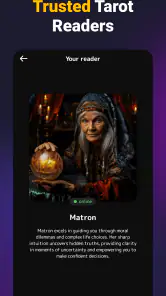
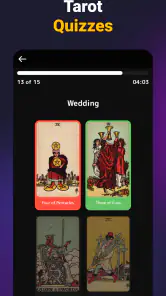
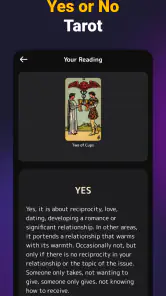
I approached Tarot Card Reading and Meaning as a quiet, personal tool rather than a game to finish or a feed to scroll. Developed by DEN TSMO, this free lifestyle app combines AI chat with tarot readings built around the complete tarot deck and a wide selection of spreads. Its central appeal is simple: instead of opening a book and trying to connect a card to a situation, I can ask a question and use the app as a guided starting point for reflection.
The first impression is helped by the low barrier to entry. There is no purchase required to try it, and the app is available for devices running Android 7.0 or later. It is marked Mature 17+, which matters because tarot questions can touch on relationships, anxiety, grief, intimacy, money and other subjects that are not suitable for younger users. The current version is 3.10.1, and the app has reached over 100,000 installs with an average rating of 4.8 from around 7,300 ratings.
What the first week feels like
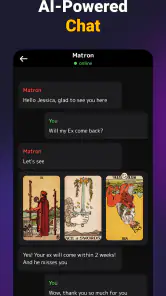
During the first few sessions, the strongest feature is the feeling of being given a structure for a vague thought. I do not always know whether I want advice, reassurance or simply a way to name what is bothering me. A tarot reading gives that uncertainty a shape. I can begin with a broad question, look at the cards and then use the AI chat to explore the meaning in relation to my circumstances.
That makes the app more approachable than a traditional tarot reference book for a beginner. A book may explain the symbolism of every card, but it leaves me to decide which parts matter and how several cards connect. Here, the conversational format encourages follow-up questions. I can ask for another angle on a card, request a clearer explanation or test whether the interpretation fits the situation I had in mind.
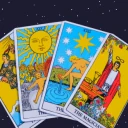
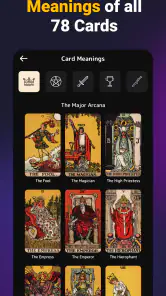
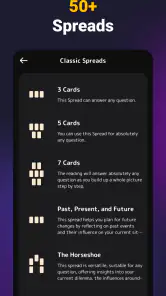
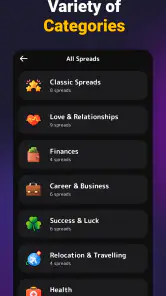
The full set of 78 tarot cards is important because it gives the readings the familiar depth of a standard deck rather than reducing the experience to a handful of positive or negative prompts. The availability of more than 50 spreads also gives the first week some variety. A one-card reading works when I want a quick pause, while a larger spread is better when I need to examine several sides of a decision.
My practical advice is to begin with questions that invite reflection instead of questions demanding certainty. “What should I pay attention to in this conflict?” is more useful than “Will this definitely work out?” The former leaves room for judgment, while the latter can encourage me to treat an interpretive reading as a prediction. The app is at its best when I use it to organize my thoughts, not when I hand over responsibility for an important choice.
A realistic everyday use would be a Sunday evening check-in. I might ask what deserves attention during the coming week, read the result and write down one concrete action suggested by the interpretation. If the reading highlights communication, that action could be preparing for a difficult conversation rather than waiting for a mystical event. Used this way, the app becomes a prompt for intentional planning.
More From Our News Desk

Clash of Clans Is Won Between the Battles

Android Auto Makes the Case for Quieter Car Software

MobiOffice: Transforming Mobile Productivity with Seamless Integration

EA SPORTS FC™ Mobile Soccer: Redefining Mobile Sports Gaming

How Microsoft OneDrive Became a Mobile Productivity Giant

How Google Translate Breaks Language Barriers Effortlessly
The AI element makes the experience feel more responsive than drawing a card and searching its meaning separately. At the same time, that convenience can make the interpretation sound more personally certain than it really is. I found it helpful to pause after a response and ask myself which part came from the card’s symbolism and which part was my own projection. That small habit keeps the session grounded.
Why the variety matters early on
The spread selection is not just decoration. Different layouts encourage different kinds of thinking. A short spread can isolate the main tension in a question, while a broader layout can separate background influences, present concerns and possible directions. I would not use the largest spread for every question because too much interpretation can turn a simple concern into an elaborate story.
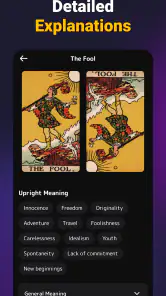
One of the less obvious strengths is that the app can support a gradual learning process. I can first read the AI explanation, then look at the card’s traditional symbolism and compare the two in my own notes. Over time, that makes the app less like an answer machine and more like a bridge into tarot literacy. This workflow is especially useful for someone who wants to learn the cards but finds a complete guidebook intimidating.
Another useful approach is to repeat a question only after something has changed. Asking the same thing several times in one sitting may produce a comforting answer, but it also encourages confirmation-seeking. I prefer to record the original question, the spread and my first reaction, then return later with new information. That turns the app into a reflective journal prompt instead of a slot machine for reassurance.
Where it differs from familiar alternatives
Compared with a physical deck, Tarot Card Reading and Meaning is faster and more private. I do not need to learn how to shuffle, carry cards or consult a separate reference. That is valuable when I am traveling, taking a short break at work or trying to reflect without making the process visible to anyone nearby. A physical deck still feels richer for people who enjoy tactile ritual, visual artwork and the deliberate pace of laying cards on a table.
Compared with a general AI chatbot, this app has a clearer symbolic framework. A general chatbot may give practical advice immediately, but it does not naturally provide the ritual, card language and spread-based structure that tarot users are looking for. On the other hand, a general chatbot may be better when I need a direct checklist, a factual explanation or help comparing concrete options. This app should not replace those tools when the question has a straightforward real-world answer.
Compared with a tarot website, the dedicated app feels more focused during a short session. I am less likely to wander through unrelated articles before getting to the reading. The trade-off is that an app-centered experience can feel narrower if I want extensive historical background, multiple schools of interpretation or a deep comparison of symbolic traditions. For casual readings and guided reflection, that narrowness is convenient; for serious study, I would still want additional resources.
Does it keep earning a place after the novelty?
Month-to-month value comes from a repeatable ritual
The first-week novelty is easy to understand: the cards, the spreads and the AI conversation create an engaging loop. The harder question is whether I would still open it once the initial curiosity fades. My answer is yes, but only if I give it a defined role. Without a routine, tarot apps can become something I open whenever I feel uncertain, which quickly becomes repetitive and emotionally unhelpful.
The most sustainable role is a periodic check-in rather than constant consultation. A weekly reflection, a monthly review of recurring themes or a reading before starting a personal project gives the app a natural boundary. I can compare what I thought a card meant at the beginning of the month with what actually demanded my attention. That process creates value even when the reading does not feel dramatic.
Keeping a simple note outside the app is one of my strongest recommendations. I would record the date, the question, the spread, the cards and one sentence about the practical action I intend to take. This makes it possible to notice patterns without relying on memory. It also prevents the AI conversation from becoming an endless stream of interpretations that disappear as soon as the session closes.
The broad spread selection helps with recurring use because I can match the format to the purpose. A quick daily prompt may be enough when I want focus, while a more detailed spread can help me examine a transition or a relationship concern. Still, variety alone does not create lasting value. If I keep asking the same question in different layouts, the experience becomes a search for a preferred answer rather than a useful practice.
There is also a financial point to consider. The app is free to download and use in its basic form, while in-app purchases range from $0.99 to $59.99 per item. That wide range means I would pay attention before confirming anything, especially if I am experimenting casually. I would not treat an optional purchase as necessary for personal insight. The free entry point is enough to decide whether the reading style fits my habits before spending money.
The maintenance burden is low, but boundaries matter
Unlike a fitness app or a productivity planner, this app does not demand daily data entry, scheduled tasks or a long setup process. The maintenance burden is mostly self-imposed: choosing sensible questions, resisting repeated readings and deciding how to record useful observations. That is a strength for people who want a flexible ritual rather than another system to manage.
The main maintenance task is emotional rather than technical. If I notice that I am asking for readings whenever I feel anxious, I need to step away and use a more direct coping strategy. Tarot can help me articulate a concern, but it cannot verify facts, replace professional support or guarantee an outcome. This distinction becomes particularly important for health, legal, financial and safety decisions.
I also recommend separating symbolic reflection from action planning. After a reading, I ask myself what information I still need, which person I should speak with or what small step is genuinely under my control. This two-stage workflow is more reliable than allowing a card interpretation to become the entire decision. It preserves the app’s imaginative value while keeping real-world responsibility with me.
For users who share a device, privacy habits are worth considering even without turning the app into a formal diary. I would avoid entering highly identifying details into questions and would keep sensitive topics general. A prompt such as “I am worried about a difficult family conversation” gives enough context for reflection without turning the session into a detailed personal record.
What can cause fatigue over time
The biggest source of fatigue is interpretive repetition. Tarot has a finite deck, and familiar cards can begin to feel predictable when I use the app too often. The AI chat may make the language feel fresh, but a new explanation does not always represent new insight. After several sessions about the same issue, I would rather take a break than keep asking for a different interpretation.
Another source of tiredness is the gap between poetic language and practical needs. Tarot readings often work through symbols and possibilities, while some problems require a direct conversation, a budget, a timetable or professional advice. If I open the app expecting a precise answer to a concrete problem, the experience can feel evasive. That is not necessarily a defect in the app; it is a mismatch between the tool and the question.
The AI format can also encourage over-explaining. A concise card message may be enough, but a follow-up conversation can expand it into several possible meanings. I get better results when I decide in advance how much interpretation I want. For a quick check-in, one card and one follow-up question are enough. For a deeper session, I can use a larger spread, but I stop once I have a practical takeaway.
People who prefer evidence-based planning may find the whole format frustrating. The app is not designed to prove that a prediction is true, and I would not use its readings as evidence about another person’s private thoughts or future behavior. Someone seeking meditation timers, structured journaling, therapy exercises or a conventional advice app will probably find a different lifestyle tool more suitable.
There is also a difference between learning tarot and consuming interpretations. If I only read the AI’s explanation, I may become dependent on the app’s wording. A better long-term method is to study the card imagery and traditional meanings separately, then use the app to test my understanding. That makes the experience more active and reduces the risk of treating generated text as an unquestionable authority.
Who will get the most from it
I think this app is a good fit for curious beginners, casual tarot readers and people who enjoy guided self-reflection. It is particularly convenient for someone who wants to explore spreads without buying a deck immediately. The combination of the complete card set, many spread options and conversational interpretation gives newcomers enough room to experiment before deciding whether tarot deserves a larger place in their life.
It can also suit experienced readers who want a quick digital prompt when they are away from their cards. The value for them is less about replacing a personal practice and more about convenience. A seasoned reader may use the app to generate a starting point, then apply their own knowledge rather than accepting the interpretation literally.
I would skip it if I am looking for guaranteed predictions, clinical guidance or a substitute for a trusted adviser. I would also hesitate if I know that uncertainty makes me repeatedly seek reassurance. In that situation, a grounded journaling app, a conversation with someone reliable or professional support would be a healthier choice than more readings.
My long-term verdict
Tarot Card Reading and Meaning earns lasting space when I use it as a structured pause, not as an authority. Its strongest qualities are the accessible AI chat, the complete tarot deck and the range of spreads, all wrapped in a free lifestyle app that is easy to revisit. The experience is more engaging than looking up isolated card definitions and more focused than asking a general chatbot for vague life advice.
Its limitations are just as important. The interpretations remain symbolic, repeated readings can become tiring and the conversational format may tempt me to keep searching for certainty. The purchase range also deserves attention before spending, particularly because the core appeal can be evaluated without committing financially. I would treat any paid item as optional, not as proof that a reading will become more accurate or more useful.
After the novelty fades, I would keep it installed for occasional weekly or monthly reflection, especially when I need a question framed from a new angle. I would not make it a daily decision-maker. The app works best when it starts a thoughtful conversation with myself rather than ending one for me.
Overall, I recommend it to adults who enjoy tarot symbolism and want a convenient, conversational way to explore it. The Mature 17+ rating is appropriate for the subjects users may bring to a reading, and the app’s free starting point makes trying it relatively easy. If I approach it with curiosity, personal boundaries and a willingness to take practical responsibility afterward, it can remain a useful small ritual instead of becoming another short-lived novelty.
Tarot Card Reading and Meaning Frequently Asked Questions
What devices and operating systems can run Tarot Card Reading and Meaning?
Tarot Card Reading and Meaning is a mobile app for people who want to explore tarot on a phone or tablet. Its minimum operating-system requirement is version 7.0, so it is worth checking your device settings before downloading. Keeping your operating system and the app updated can also help you access the current experience and avoid compatibility issues.
What can I explore in Tarot Card Reading and Meaning besides individual card meanings?
The app brings together AI chat for tarot readings, all 78 tarot cards, and more than 50 spreads. That gives you options beyond looking up a single card: you can explore different layouts and ask questions through the chat experience. The variety may appeal to curious newcomers as well as readers who want a convenient digital way to revisit familiar tarot themes.
What is Tarot Card Reading and Meaning, and how does it work?
Tarot Card Reading and Meaning is an app designed to introduce users to tarot cards, their traditional symbolism, and common interpretations. After choosing or drawing cards, you can read explanations related to themes such as love, work, personal growth, and daily guidance. The app should be viewed as a reflective and entertainment tool rather than a scientifically proven method of predicting future events.
Is Tarot Card Reading and Meaning suitable for beginners?
Yes, the app is generally suitable for beginners because it presents card meanings in an accessible format and helps users become familiar with the Major and Minor Arcana. Newcomers can explore individual cards, learn about upright and reversed interpretations, and try simple readings without prior knowledge. More experienced tarot readers may find it useful as a quick reference guide.
Does the app provide real tarot readings or guaranteed predictions?
The app provides digital tarot readings based on selected cards and established tarot interpretations, but it cannot guarantee predictions or outcomes. Its readings are best used as prompts for reflection, journaling, and considering different perspectives. Important decisions involving health, finances, legal matters, or relationships should not rely exclusively on the app or any tarot reading.
Pros
- Clear explanations make card meanings easy for beginners to understand.
- Useful reference for exploring major and minor arcana symbolism.
- Helps users practice readings privately at their own pace.
- Simple layout makes finding specific cards quick and convenient.
- Can inspire reflection and personal journaling during readings.
Cons
- Interpretations may feel too general for experienced tarot readers.
- Some content may require in-app purchases or additional access.
- Readings should not replace professional medical or financial advice.
- Limited customization may not suit users with advanced tarot systems.
- Results can encourage overreliance on predictions for personal decisions.
- Category
- Lifestyle
- Version
- 3.10.1