StarMet
- 114.00
- 4.4
- Installs
- 100.00K
- Price
- Free

Screenshots

Analysis by Reviewed
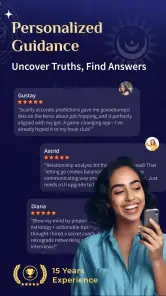
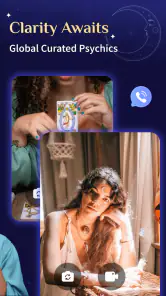
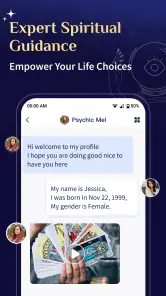
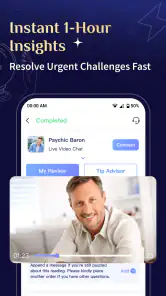
I approached StarMet as a lifestyle app for people who want a quick way to explore psychic insights, rather than as a replacement for careful decision-making or professional advice. Its central promise is simple: it connects the user with real psychics. That makes the app interesting for curiosity, reflection, and moments when you want another perspective, but it also means the quality of the experience depends heavily on how comfortable you are with spiritual guidance and paid conversations.
After looking at how it fits into an everyday routine, I would describe it as a focused option rather than an all-purpose wellness app. It is not trying to be a meditation library, a mood tracker, or a conventional self-help course. The appeal is more personal and immediate: you bring a question or situation, then use a psychic reading as a way to think about it. Whether that feels useful depends less on technical novelty and more on your expectations.
How I would decide whether StarMet is right for me
The first question I would ask is what I want from a psychic app. If I am looking for a reflective conversation about relationships, work uncertainty, or a personal crossroads, StarMet may feel relevant. If I want objective answers, guaranteed predictions, or evidence-based mental-health support, I would choose something else. The app’s value comes from interpretation and personal meaning, not from proving what will happen next.
That distinction matters because the store summary presents the service in a very compact way: insights from real psychics. In practice, a reader should treat that as an invitation to explore a viewpoint, not as a promise that every answer will be accurate or equally helpful. I found the best mindset was to arrive with an open question and healthy skepticism. A reading can help organize feelings, but it should not make major financial, medical, legal, or safety decisions for you.
StarMet is free to install, which lowers the barrier to trying it. However, the app includes purchases ranging from $1.99 to $199.99 per item, so the important decision is not simply whether to download it. It is whether I can use a paid spiritual service without allowing curiosity or emotion to push me into spending more than intended. I would set a personal limit before starting and keep that limit separate from the excitement of a particularly engaging reading.
The audience rating is Teen, so younger users may encounter the app as well. That makes clear boundaries especially important. A teenager dealing with a difficult relationship or family situation may be drawn to psychic guidance, but a trusted adult, counselor, or qualified professional may be a safer first choice for serious concerns. The app can be part of private reflection; it should not become the only source of support.
What I would prepare before opening a session
I would not begin with a vague request such as “Tell me everything.” That approach can produce an experience that feels broad but leaves me unsure what to do with it. Instead, I would write down one question, the context around it, and what kind of perspective I want. For example, I might ask how to approach an uncomfortable conversation at work, rather than asking whether my entire career is doomed.
More From Our News Desk

Clash of Clans Is Won Between the Battles

Android Auto Makes the Case for Quieter Car Software

MobiOffice: Transforming Mobile Productivity with Seamless Integration

EA SPORTS FC™ Mobile Soccer: Redefining Mobile Sports Gaming

How Microsoft OneDrive Became a Mobile Productivity Giant

How Google Translate Breaks Language Barriers Effortlessly
This is one of the most useful ways to get more value from the app: use it as a prompt for reflection. Before a reading, I would note my current assumption. Afterward, I would separate the parts that offered a genuinely useful question from the parts that sounded too certain or too general. That small habit prevents the session from becoming a substitute for my own judgment.
I would also avoid sharing sensitive information unnecessarily. Even when an app is designed around personal conversations, I do not need to provide full names, addresses, account details, or intimate facts to explain a situation. A concise description is usually enough to discuss the emotional or practical issue. This keeps the experience more comfortable and reduces the chance that I reveal more than I intended during an emotionally charged moment.
Where the app feels strongest
The strongest part of StarMet is its clear identity. Many lifestyle apps combine several unrelated tools, while this one is built around psychic insight. If that is the kind of interaction I am seeking, I do not have to sort through meditation timers, generic affirmations, or long self-improvement programs first. The focused concept makes the app easier to understand before I commit time to it.
It also suits short, personal moments. Imagine finishing a difficult conversation with a partner and feeling stuck between sending another message or giving the situation space. I might use StarMet to describe the uncertainty and hear a different interpretation. The useful outcome would not be a guaranteed prediction about the relationship. It would be noticing whether the reading helps me identify what I actually fear, what I can control, and what conversation I need to have next.
That workflow is more practical than treating a reading as a final verdict. I can use the session to generate questions, then return to ordinary evidence: what the other person said, what they did, and what boundaries I need. In that role, the app becomes a reflective tool with a spiritual angle. I find that more defensible and more helpful than handing over responsibility for a decision.
Another advantage is accessibility. The app supports devices running Android 6.0 or later, so it is not limited to only the newest phones. For someone with an older compatible Android device, that can make trying the service easier than moving to a newer platform or buying separate materials. The developer behind it is New Joy Times Limited, and the current release is identified as version 1.1.20260603.
The app also has enough public interest to suggest that it is not an obscure experiment. It has passed 100K installs, with an average rating of 4.4 from roughly 721 ratings and 114 written reviews. I would read those figures as signs that people are willing to try the concept, not as proof that every psychic interaction will suit every user. Ratings for personal services can reflect very different expectations, budgets, and emotional situations.
Three ways I would use it more thoughtfully
First, I would use a two-stage question process. I would begin with the emotional question behind the situation, then turn it into a practical question. For example, “Why am I anxious about changing jobs?” can become “What information do I need before deciding?” A psychic reading may speak to the first question, while the second reminds me to check salary, responsibilities, timing, and alternatives myself.
Second, I would keep a private reading journal. I would record the date, the question, the main themes, and my reaction immediately afterward. I would not use the journal to track predictions as though they were scientific results. Instead, I would look for patterns in my own thinking. If the same concern keeps appearing, that may tell me I need a direct conversation or professional support, not another reading.
Third, I would create a stopping rule. One session can easily lead to the urge to ask the same question again in a different way, especially when the answer is not what I hoped to hear. My rule would be to wait before purchasing another item and to avoid repeated readings about the same decision on the same day. This is a simple but important trade-off: the app’s immediacy is convenient, yet immediacy can encourage impulsive spending or reassurance-seeking.
What may make the experience less comfortable
The biggest limitation is built into the category. Psychic interpretations are subjective, and two readings about the same situation may not produce the same conclusion. Users who need consistent, testable guidance may find that frustrating. I would not use StarMet to replace a financial planner, doctor, therapist, lawyer, or emergency service. The app may help me reflect on a concern, but it cannot take responsibility for the consequences of my choice.
Cost is another point of friction. Free access makes the first step easy, but the purchase range is wide enough that I would pay close attention before confirming anything. The higher end of that range is significant for a casual lifestyle app, particularly if I am using it during an emotional low point. I would check what I am buying, decide whether the price fits my budget, and stop if the experience begins to feel like a cycle of seeking certainty.
I would also expect that the quality of a session may vary depending on the individual psychic and the question I bring. That is not necessarily a flaw unique to StarMet; it is a normal trade-off in services based on personal interpretation. Still, it means I would judge the app over several carefully chosen interactions rather than assuming that one disappointing or exciting session represents the whole experience.
There is also a privacy and emotional-comfort consideration. A user may be tempted to tell a psychic everything because the subject feels personal. I would keep my descriptions focused and avoid identifying details. If a reading makes me more frightened, dependent, or pressured to act immediately, I would step away. An app should leave me more capable of thinking, not less able to trust my own judgment.
How StarMet compares with the usual alternatives
When a psychic app is preferable to general lifestyle tools
Compared with a meditation app, StarMet is better suited to someone who wants dialogue or interpretation rather than a structured breathing exercise. Meditation can help calm the body and create distance from anxious thoughts; a psychic reading offers a narrative about the situation. If I need immediate emotional regulation, I would choose meditation first. If I want to explore the meaning I am assigning to a relationship or decision, StarMet may feel more relevant.
Compared with a journaling app, StarMet provides an outside perspective instead of asking me to generate every insight alone. That can be useful when I am stuck in the same mental loop. The trade-off is control. With journaling, I know exactly what I am recording and can revisit it freely. With StarMet, the direction of the conversation depends on the psychic interaction, and paid use may make repeated exploration more expensive.
Compared with a conventional advice forum, the app offers a more personal and spiritual format. A forum may provide many practical opinions from people with similar experiences, while a psychic reading is more individualized in tone. I would prefer a forum for comparing concrete options, such as handling a workplace dispute or choosing between study routes. I would consider StarMet when the main need is emotional perspective rather than a crowd-sourced checklist.
Compared with professional counseling, the difference is even more important. Counseling is designed around trained support, assessment, and therapeutic methods. StarMet is not the option I would select for persistent distress, trauma, self-harm thoughts, abuse, addiction, or a mental-health crisis. In those circumstances, I would contact an appropriate professional or emergency resource. The app belongs in the lighter space of curiosity and reflection.
Who should probably skip it
I would skip StarMet if I know I tend to make decisions based on predictions, become distressed when answers conflict, or spend impulsively when I want reassurance. I would also skip it if I expect every question to receive a precise and verifiable answer. The app’s central format is unlikely to satisfy someone who wants measurable progress, formal expertise, or a fixed plan.
I would be cautious about recommending it to someone in an abusive relationship who is asking whether to stay, someone facing a serious medical diagnosis, or someone deciding whether to take a major financial risk. A reading might feel comforting, but comfort is not the same as protection or competent advice. In those cases, practical support and qualified guidance are more appropriate.
On the other hand, I can see the appeal for an adult who enjoys spiritual practices, understands the limits of psychic guidance, and wants a private way to explore personal questions. The app may also suit someone who has tried journaling but wants an external voice to challenge their first interpretation. The key is using it as one input among several, not as an authority above reality.
The real cost of switching from another option
Moving from a meditation or journaling app to StarMet is easy in terms of habit: I can open it when a question arises instead of following a daily program. The harder switch is psychological. I may move from a tool that asks me to observe my own thoughts to a service that gives those thoughts a spiritual interpretation. That can feel more engaging, but it may also make me less patient with uncertainty.
If I am moving from a free advice community, the financial change deserves attention. StarMet is free to install, yet individual purchases can become part of the routine. I would compare the cost of one reading with what I actually need. If my goal is to list options, a notebook may be enough. If my goal is to feel heard and explore a symbolic perspective, a reading may justify occasional spending, provided I keep it occasional.
I would not delete every alternative immediately. For the first few uses, I would keep a simple note-taking method available so I could compare the outcome. Did the reading help me identify a practical next step? Did it reduce confusion, or only create a need for another session? Did I learn something about my own priorities? Those answers tell me more about whether the app fits than a single enthusiastic moment.
My recommendation after weighing the trade-offs
My recommendation is conditional but positive for the right user. StarMet is worth trying if you are genuinely interested in psychic insight, want a focused lifestyle experience, and can treat readings as reflective conversations rather than guaranteed forecasts. The free entry point makes exploration straightforward, while the Teen rating and broad purchase range mean I would use extra care with younger users and spending boundaries.
I would begin with one clearly written question, avoid sharing unnecessary personal details, and decide my budget before engaging deeply. I would then judge the app by the quality of my own reflection afterward, not by whether a prediction sounds dramatic or reassuring. If the experience helps me slow down and see a situation differently, it has earned a place as an occasional tool.
I would not recommend it as a substitute for professional help, practical research, or direct communication with the people involved in a decision. For those needs, a counselor, specialist, trusted friend, journal, or evidence-based app may be a better fit. StarMet wins when I want a spiritual perspective on a personal question; it loses when I need certainty, accountability, or specialized expertise.
Overall, I see it as a niche but approachable lifestyle app from New Joy Times Limited. Its strongest quality is focus, and its main weakness is the same focus: everything depends on how much value I place on psychic interpretation. Used with boundaries, it can offer an engaging pause in a confusing day. Used as an authority, it can lead me away from the practical information and support that serious decisions require.
StarMet Frequently Asked Questions
Is StarMet available for my phone, and what age group is it intended for?
StarMet is a Lifestyle app from New Joy Times Limited, and it is intended for a Teen audience. Check your device’s operating system before downloading: the app requires Android 6.0 or later. If you are choosing the app for a younger user, consider whether its astrology and psychic-focused content is appropriate for them and review the applicable store age guidance.
Who makes StarMet, and what do users think of it?
StarMet is developed by New Joy Times Limited. It has a 4.4 average rating from over 700 ratings, alongside more than 100 written reviews. These figures offer a snapshot of user reception, but individual experiences can differ depending on expectations and how the app is used. Reading recent reviews can help you decide whether its approach to astrology and psychic insights suits you.
What is StarMet and what can I do with it?
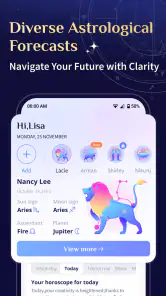
StarMet is an entertainment-focused mobile application built around astrology and personalized star-related content. Its store summary invites users to get insights from real psychics. After opening the app, users can typically explore horoscope information, read zodiac-based interpretations, and review content tailored to their birth sign or personal details. The exact tools available may vary by version, so it is worth checking the current app description and permissions before downloading.
Is StarMet free to download and use?
StarMet is free to download, but some features or content can require in-app purchases, with items ranging from $1.99 to $199.99. Before confirming a payment, carefully review the price and terms shown in the app store or inside the application. Free access may also include advertisements or limitations compared with the premium experience.
Does StarMet require my personal information or birth details?
Astrology applications commonly request information such as your name, date of birth, time of birth, or place of birth to generate more personalized readings. You should only provide details you feel comfortable sharing and review StarMet’s privacy policy before creating an account. Also check whether the app explains how data is stored, used, shared, or deleted.
Pros
- Simple interface makes the main features easy to find.
- Runs smoothly on most modern Android and iOS devices.
- Useful notifications help users stay updated in real time.
- The visual design is clean
- colorful
- and easy to understand.
- Offers a convenient way to explore StarMet content in one place.
Cons
- Some features may require an account or personal information.
- Notifications can become distracting if too frequently enabled.
- Performance may vary on older phones or slower connections.
- The app may use considerable battery during extended sessions.
- Content availability can differ depending on location or platform.
- Category
- Lifestyle
- Version
- 1.1.20260603