SpareRoom US
- 1.14K
- 4.3
- Installs
- 500.00K
- Price
- Free

Screenshots
Analysis by Reviewed
Finding a room is easy to describe and surprisingly difficult to do well. You need enough detail to judge a place, enough context to understand the people involved, and enough fresh listings to make repeated checking worthwhile. I spent time using SpareRoom US with that practical question in mind: does it remain useful after the excitement of the first search, or does it become another app I open only when a housing problem becomes urgent?
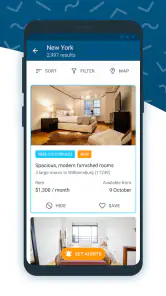
My first impression was positive because the app is focused on a very specific job. It is a free lifestyle app from SpareRoom for people looking for roommates, rooms, sublets, and rental properties in the United States. That focus makes it feel more purposeful than a general classifieds app where housing posts compete with unrelated listings. The interface is built around the kind of decision a renter actually has to make: where to live, what sort of arrangement is acceptable, and which people or properties deserve further attention.
It is available for Android devices running at least Android 10, and its content rating is Teen. The app has been around since September 2016, which gives it a more established feel than a newly launched housing experiment. Its current version is 3.1.3430, and the service has passed the early novelty stage with more than 500 thousand installs. That does not guarantee a good match in every city, but it does make the app worth testing when a shared home is genuinely on your agenda.
What the first week feels like
The first week is when the app makes its strongest case. A newcomer can use it to get a sense of the local rental landscape before committing to conversations or viewings. I found that especially helpful for someone moving to a new area, changing jobs, studying away from home, or leaving a lease with little time to spare. Instead of beginning with a vague web search, I could think in terms of rooms, roommates, sublets, and property rentals as separate possibilities.
That distinction matters. A person searching for a room in an occupied home has different priorities from someone seeking a whole apartment or a temporary sublet. The app’s purpose is broad enough to cover those paths while remaining centered on shared and rental housing. I would not treat every result as equally suitable, but the range encourages a more realistic search. Sometimes the best option is not the private apartment you first imagined; it may be a room with a shorter commitment or a household that already has the furniture and utilities arranged.
One useful habit is to decide your non-negotiables before browsing deeply. I would write down the maximum monthly budget, preferred area, move-in timing, acceptable commute, and whether I am comfortable sharing a bathroom or common space. Without that preparation, a polished photo or an attractive neighborhood can pull attention away from the details that will matter every morning. SpareRoom US is most useful when I use it as a screening tool rather than as a source of instant answers.
A realistic scenario would be a worker who receives a job offer in another city and has a few weeks to find somewhere to live. During the first evening, they can explore room listings and identify which neighborhoods appear repeatedly. Over the next few days, they can compare the practical trade-offs: a lower-cost room farther from work, a more central place with less privacy, or a temporary sublet that buys time for a better local search. The app helps organize that process, but the final decision still requires direct questions and an in-person or live video viewing.
More From Our News Desk

Clash of Clans Is Won Between the Battles

Android Auto Makes the Case for Quieter Car Software

MobiOffice: Transforming Mobile Productivity with Seamless Integration

EA SPORTS FC™ Mobile Soccer: Redefining Mobile Sports Gaming

How Microsoft OneDrive Became a Mobile Productivity Giant

How Google Translate Breaks Language Barriers Effortlessly
How I would use the search without wasting time
I would begin broadly for orientation, then narrow the search only after I understood the local supply. Looking at too few results can create a false impression that one listing is unusually good. Looking at everything without a plan creates a different problem: endless scrolling with no clear shortlist. I prefer to save or note the strongest candidates, then compare them using the same checklist rather than relying on memory.
The most important checklist item is not the room photograph. It is the arrangement itself. I would ask who currently lives there, whether the room is private, how shared areas are used, what the expected move-in process is, and whether the advertised arrangement matches the actual property. I would also clarify what is included in the stated rent, how payments are handled, and whether the timing works for both sides. These questions are not busywork; they prevent a promising listing from becoming an expensive misunderstanding.
Another non-obvious advantage of a dedicated roommate marketplace is that the household fit can receive attention earlier than it would on an ordinary rental site. With a conventional apartment search, the main comparison may be square footage, amenities, and lease terms. In a shared home, daily behavior is just as important. I would use the listing as an opening for questions about schedules, guests, cleaning expectations, noise, and the general atmosphere of the home. A cheaper room is not a bargain if the living arrangement makes the rest of the week exhausting.
Where the early experience needs caution
The app cannot remove the uncertainty that comes with private housing arrangements. A well-written post may still leave out something important, while a plain-looking listing may represent a perfectly workable home. I would never send money, personal documents, or sensitive information merely because a conversation feels friendly. I would verify the address and the person’s connection to the property, arrange a safe viewing, and keep communication clear about every financial and practical commitment.
This is also where SpareRoom US may disappoint users expecting a fully managed rental platform. It is useful for discovering possibilities and starting conversations, but it should not be confused with a service that personally guarantees the condition of a room, the character of a roommate, or the smoothness of a lease. People who want a standardized process, professionally managed buildings, or a single application workflow may prefer a traditional rental marketplace or a local property manager.
The app earns a 4.3 average from around 3.3 thousand ratings, with roughly 1.1 thousand written reviews. I read that overall reception as encouraging rather than conclusive. Housing searches vary dramatically by location, season, budget, and urgency, so one person’s excellent experience may not resemble another’s. The meaningful test is whether it produces credible options in the area you need and whether you are willing to do the verification work afterward.
Does it keep earning a place on the phone?
Month-to-month value comes from changing circumstances
Most people do not need a roommate app every day for years. Its lasting value is more practical: it should be worth reopening whenever your housing situation changes. That could mean a lease ending, a roommate moving out, a temporary relocation, a search for a replacement tenant, or a decision to rent out an unused room. In those moments, an app that brings together several kinds of housing need can be more useful than maintaining several unrelated searches.
I see the strongest recurring use in transitions. Someone may first use it to find a room, then return later to look for a new roommate. Another person might use it to compare a sublet with a longer-term shared home before making a move. This flexibility gives the app more staying power than a tool designed only for one narrow stage of renting. Still, recurring value depends heavily on whether the local listings remain active and relevant. A service can be well designed and still feel thin in a location with limited participation.
For a renter, I would revisit the app when my requirements changed rather than checking it aimlessly. If my budget increased, my move-in date shifted, or I became open to a different neighborhood, a fresh search could reveal options that were previously invisible to me. This is a better habit than repeatedly refreshing the same narrow criteria. It also reduces the temptation to settle for a listing that was merely the first acceptable result.
For someone offering a room, the value is different. The app may help reach people specifically interested in shared housing instead of relying only on personal contacts or a general social media post. That can widen the pool, but it also increases the need for a careful screening process. I would prepare a consistent description, answer practical questions directly, and avoid presenting the space more generously than it deserves. Clear expectations save time for both sides and make unsuitable replies easier to identify.
The maintenance burden is mostly human
SpareRoom US itself is not difficult to keep using. The real maintenance burden comes from managing the search. Listings change, people stop replying, availability moves quickly, and a room that looked ideal can become irrelevant after one conversation. I found that the app rewards organization more than constant attention. Keeping a short list of active candidates, recording the questions I asked, and removing dead ends prevents the process from becoming a cluttered stream of half-finished possibilities.
I would also set a stopping rule. After a few serious conversations, it is easy to continue browsing because another listing might be slightly better. That can be useful when the market is competitive, but it can also delay a sound decision. My rule would be to stop expanding the search once I had several verified options that met the basic requirements, then compare those options on household fit, location, cost, and timing.
There is a financial detail worth noticing before using the app heavily. The app is free to download, but in-app purchases are listed from $9.99 to $199.00 per item. I would not assume that every useful part of the experience requires payment, nor would I spend money simply to make a weak listing seem more attractive. If an optional paid feature is offered, I would first decide whether it solves a real problem in my search and whether the likely benefit justifies the cost. A free starting point is valuable, but users should still pay attention before confirming any purchase.
That pricing range also changes how I would approach the app as a person advertising a room. Paid visibility can be tempting when time is short, but presentation and responsiveness should come first. A clear description, realistic photos, and prompt answers may do more to build trust than paying to put an unsuitable post in front of more people. The best use of any optional promotion would be after the fundamentals are already honest and complete.
What creates fatigue after the novelty fades
The biggest source of fatigue is repetition. Housing posts often require the same questions, the same scheduling messages, and the same explanation of your circumstances. After several unresponsive conversations, the app can feel less like a helpful search tool and more like a queue of unfinished tasks. I would limit browsing sessions, prepare a short introduction, and use a small set of direct questions so that the process stays manageable.
Another source of frustration is emotional comparison. A room can look affordable until commuting, deposits, furnishings, or shared-space compromises enter the picture. A central location can seem perfect until the household routine becomes clear. I would avoid judging listings on one appealing detail. The app is better at presenting possibilities than at making the final trade-off for you.
There is also a safety and privacy cost to any roommate search. You are not simply choosing a product; you may be choosing people who will have access to your home and daily life. I would keep early communication focused on the arrangement, avoid disclosing unnecessary personal information, and meet in a sensible setting before agreeing to anything. If a person pressures me to move quickly, refuses reasonable questions, or changes the terms repeatedly, I would treat that as a reason to leave the conversation rather than a challenge to overcome.
Users who need a conventional apartment with a predictable landlord process may experience the app as too personal and too variable. Likewise, anyone seeking a guaranteed short-term booking, a hotel-like arrangement, or a fully verified property-management experience should probably begin elsewhere. SpareRoom US is at its best when the user accepts that finding a shared home involves judgment, communication, and a little patience.
Small tactics that improve the long-term experience
My first tactic would be to separate discovery from decision-making. During discovery, I would notice neighborhood patterns, typical room arrangements, and the kinds of people posting. During decision-making, I would ignore the excitement of new results and compare only the candidates that answered basic questions. This prevents the constant arrival of fresh listings from resetting the search every few minutes.
Second, I would ask about the ordinary weekday rather than only the room. “What does a normal evening look like here?” can reveal more than a list of amenities. I would ask how shared spaces are handled, how often people have guests, and what happens when someone needs quiet. These details are especially important because a room can be perfectly acceptable while the household routine is a poor match.
Third, I would treat timing as a negotiation point, not merely a filter. If the room is available earlier or later than I need, I would ask whether the dates are flexible before discarding it. A short gap may be manageable with temporary accommodation, while a long mismatch may make the option impractical. This approach is useful for sublets and transitional moves, where the right arrangement may not fit a standard long-term search.
Finally, I would keep a written record of agreed terms before moving forward. Conversations can become confusing when several listings are active at once. Recording the rent, expected start date, included items, household rules, and next steps gives me something concrete to check. It also makes it easier to spot when a later message quietly changes the original arrangement.
My long-term verdict
SpareRoom US earns lasting space on my phone as a situational tool, not as a permanent daily habit. That is not a criticism. Housing needs are naturally occasional, and an app does not need to demand daily attention to be valuable. When I need a room, roommate, sublet, or rental possibility, its focused purpose gives me a useful starting point and encourages me to consider arrangements I might overlook on a standard apartment site.
I would recommend it to renters who are comfortable doing their own checks and who want to compare shared-living options rather than only browse professionally managed apartments. It is also worth considering for someone with a room to fill, provided they are prepared to write honestly, respond clearly, and screen potential housemates carefully. The app’s free entry point makes it easy to try, while the established presence of SpareRoom gives the search a more dedicated home than a random classifieds feed.
I would skip it, or use it only alongside another option, if I needed a guaranteed booking, a highly standardized lease process, or a property manager to handle the important details. I would also avoid relying on it as my only source in a small market or under extreme time pressure. In those situations, local agents, established rental companies, personal referrals, and other housing platforms may provide a better safety net.
Overall, my opinion stayed favorable after the first-week appeal wore off because the app has a clear recurring role: it helps turn a vague shared-housing search into a set of conversations and comparisons. It does not replace judgment, viewing, or careful agreement, and the search can become tiring when replies are slow or choices are inconsistent. But for the right renter, its value is not novelty. It is the ability to return during the next housing transition and begin with a focused pool of possibilities instead of starting from scratch.
SpareRoom US Frequently Asked Questions
Can I search for sublets and property rentals as well as roommates?
Yes. SpareRoom US is designed for searches involving roommates, rooms to rent, sublets, and property rentals, so it can suit people with different housing needs. Before contacting anyone, read each listing carefully to understand what is being offered, when it is available, and whether it matches your plans. Clear expectations from the start can make conversations more productive.
What should I check before contacting someone about a listing?
Read the listing closely and compare its location, rent, availability, and stated terms with what you need. Prepare a few practical questions about the room, household, and move-in arrangements, and be clear about your own timeline and preferences. A thoughtful first message helps both sides decide whether it is worth arranging a viewing or continuing the conversation.
Is SpareRoom US suitable for people who want to find a roommate rather than rent a room?
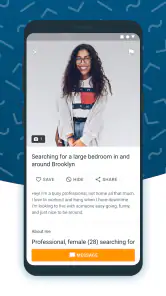
Yes. SpareRoom US can help people looking for a roommate, as well as those searching for a room or shared housing. You can create a profile and browse listings or respond to potential roommates, using your preferences to look for a compatible match. Be upfront about your lifestyle, budget, and timing so prospective housemates can judge whether living together is likely to work.
What is SpareRoom US and how does it work?
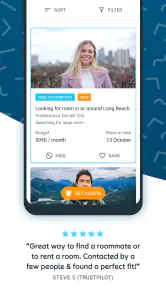
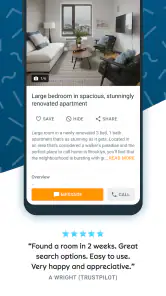
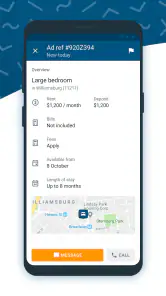
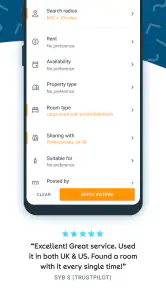
SpareRoom US is a roommate-finding app and website designed to help people search for rooms, roommates, and shared housing. After creating a profile, you can browse listings by location, price, move-in date, and preferences. You can contact advertisers or respond to potential roommates, making it useful for renters, landlords, and people looking to fill an available room.
Is SpareRoom US free to use?
SpareRoom US offers free access to many essential features, including browsing listings, creating a profile, and contacting users in certain circumstances. However, some visibility or promotional tools may require payment, and availability can vary depending on the listing or account type. The app is free to download, while optional in-app purchases range from around ten dollars to about two hundred dollars per item. Review the current pricing and subscription details shown in the app before upgrading.
Pros
- Large selection of rooms and roommates across major US cities.
- Detailed listings include rent
- amenities
- location
- and availability.
- Search filters make it easier to narrow down suitable housing options.
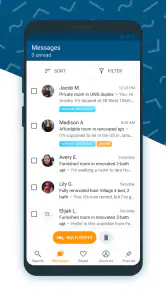
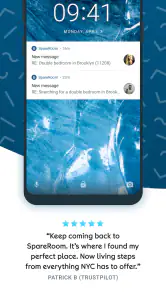
- Messaging tools let users contact advertisers directly.
- Useful for finding short-term
- flexible
- or replacement-room arrangements.
Cons
- Popular listings can attract many applicants and disappear quickly.
- Some listings may have incomplete or outdated availability information.
- Users must independently verify landlords
- properties
- and rental agreements.
- Premium features may be required for earlier access to some listings.
- The quality and responsiveness of advertisers can vary considerably.
- Category
- Lifestyle
- Version
- 3.1.3430