Sniffspot - Private Dog Parks
- 600.00
- 4.6
- Installs
- 100.00K
- Price
- Free

Screenshots
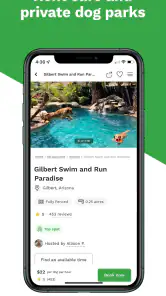
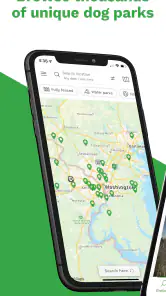
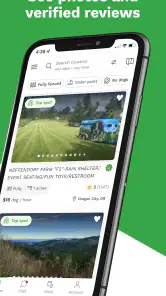

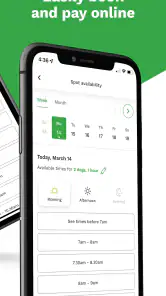
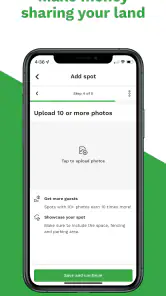

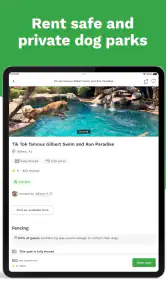
Analysis by Reviewed
I approached Sniffspot - Private Dog Parks as a practical question rather than a simple app download: when does renting a private place make more sense than using a public dog park, walking around the neighborhood, or trying to exercise a dog at home? After spending time with this lifestyle app, my answer is that it is most useful when privacy, control, and a change of scenery matter more than spontaneity.
The idea is refreshingly focused. Instead of treating every dog as comfortable in the same shared space, the app helps people look for private areas where a dog can exercise, sniff, play, swim, hike, or work on training. That makes it especially interesting for nervous dogs, reactive dogs, puppies still learning good habits, and owners who simply want a calmer outing.
It is free to install, aimed at Everyone, and comes from Sniffspot Inc. The service has been available since October 16, 2018, and the current app version is 2.21.1 for devices running Android 7.0 or later. Its average rating sits at 4.6 from around 4.6 thousand ratings, with roughly 600 written reviews and more than 100 thousand installs. Those figures suggest a well-established niche product rather than a general-purpose social network for pet owners.
How I Decided Whether Sniffspot Was Worth Using
The real decision is about your dog, not just the app
The first thing I would consider is how my dog behaves around unfamiliar animals. A public dog park can be excellent for a confident, sociable dog, but it can also be noisy, unpredictable, and difficult to leave quickly if the atmosphere changes. Sniffspot is built around a different choice: arrange access to a private dog-friendly space and make the outing more controlled.
That distinction matters more than the word “park.” I would not judge this app only by whether it offers a large field or an impressive view. I would ask whether a private booking solves a real problem. Does my dog need room to run without being approached by other dogs? Am I trying to introduce a young dog to outdoor exercise gradually? Do I need somewhere to practice recall without the distractions of a busy public area? If the answer is yes, the app has a clear purpose.
My second criterion is convenience. A private space is only helpful if it is realistic to reach and easy enough to use for the length of the visit. A nearby location that fits into an ordinary morning is more valuable to me than a beautiful destination that turns a short dog break into a major outing. I would compare travel time, the kind of activity I want, and how much preparation the dog needs before deciding.
The third criterion is the dog’s energy level. Sniffing, exploring, and moving through a new environment can tire a dog in a different way from walking along the same streets. For a high-energy dog, a private area may provide better opportunities for free movement. For an older dog, a quieter place may be useful even if the visit is mostly gentle exploration. The app’s value is not limited to dogs that need to sprint.
More From Our News Desk

Clash of Clans Is Won Between the Battles

Android Auto Makes the Case for Quieter Car Software

MobiOffice: Transforming Mobile Productivity with Seamless Integration

EA SPORTS FC™ Mobile Soccer: Redefining Mobile Sports Gaming

How Microsoft OneDrive Became a Mobile Productivity Giant

How Google Translate Breaks Language Barriers Effortlessly
A useful way to plan the first visit
I would start with a modest goal rather than trying to create the perfect adventure. For a first booking, I would choose a place that suits the dog’s current confidence level and allow enough time for sniffing before expecting play or training. Dogs often need a few minutes to process a new environment, and rushing that introduction can make a promising location feel overwhelming.
Before leaving home, I would make a small checklist: water, waste bags, a familiar reward, a leash, and any training item I already use responsibly. I would also think through the return trip. A dog that has just explored intensely may be tired, muddy, or overstimulated, so the best visit is one that ends while the dog is still coping well rather than after the outing has gone too far.
One less obvious benefit of a private setting is that it can make observation easier. In a crowded park, I may spend most of my attention watching other dogs and negotiating space. In a quieter environment, I can notice what actually motivates my dog: following scents, chasing a toy, investigating vegetation, or practicing a recall. That information helps me choose better activities on future visits.
Where the app fits into an ordinary week
Imagine I work from home and have a dog that becomes restless by late afternoon but does not enjoy crowded parks. Instead of adding another repetitive pavement walk, I could use Sniffspot to plan a private visit on a day when the dog needs more room. I would let the dog explore first, spend a short period on recall or calm walking, and then finish before fatigue turns into frantic behavior.
Another realistic case is a newly adopted dog that is still learning how to handle the world. A private place can provide a middle step between a quiet home environment and a busy public park. I could control the pace, keep the dog close when needed, and leave if the surroundings prove too much. That does not replace professional behavioral help, but it may give daily training more suitable surroundings.
For a dog recovering from a period of inactivity, the same approach can be adapted in the opposite direction. I could use the space for slow sniffing rather than intense running, assuming the activity is appropriate for the dog’s health and any veterinary guidance. The key is that privacy gives me more control over the session; it does not automatically make every activity safe for every dog.
Where this app wins over a public dog park
The strongest advantage is predictability. Public parks depend on whoever arrives at the same time, while a private booking is intended to reduce that uncertainty. For dogs that guard space, become anxious around groups, or need more distance, this can change the entire experience. I can focus on my dog instead of constantly managing unexpected greetings.
Privacy also helps with training foundations. Recall is difficult to practice when every distraction is uncontrolled. A private area may let me build better habits in stages: reward attention, increase distance gradually, and end the exercise before the dog starts ignoring me. That is a more thoughtful workflow than simply releasing a dog into a busy area and hoping the skill appears.
Another strength is flexibility of purpose. I do not have to define the visit as “dog park time.” It can be a decompression outing, a sniffing session, a gentle hike, a play period, or an opportunity to work on manners. That broader view is important because not every dog benefits from nonstop ball throwing. In my experience, varied activity usually gives an owner more useful information than repeating one exhausting game.
The app also makes sense for households with multiple dogs that have different social needs. A private space may allow them to exercise together without adding unfamiliar dogs to the situation. Even then, I would watch their interactions rather than assuming a larger area solves every relationship problem. More room can reduce pressure, but it does not replace supervision.
Three practical insights that are easy to miss
First, I would treat the search as a matching exercise, not a hunt for the most attractive listing. The right place depends on the dog’s behavior and the session’s purpose. A smaller, calmer area can be a better choice for confidence-building than a large space that encourages uncontrolled running. Conversely, a dog that needs physical exercise may become frustrated if the location does not offer enough room to move.
Second, I would separate “exercise” from “arousal.” A dog can come home tired and still be wound up. If the aim is relaxation, I would build in time for sniffing and quiet exploration instead of making the whole visit a high-speed game. This is a useful trade-off: the most energetic activity is not always the most successful outing.
Third, I would use repeat visits to create a routine rather than booking randomly every time. Once I know what kind of environment helps my dog, returning to a suitable place can make planning easier and let me compare behavior across sessions. The app becomes more useful when I use it as part of a simple exercise plan, not as an occasional impulse download.
The friction I would expect before relying on it
Private access is more structured than walking out the door. I need to search, choose a suitable place, arrange a visit, and plan around that commitment. That extra effort is worthwhile when the dog needs a controlled environment, but it is not the best answer for a quick bathroom break or an unplanned burst of exercise.
There is also a mental cost to choosing well. I would need to read the available information carefully and think about whether the setting matches my dog’s abilities. A place that sounds ideal for a confident explorer may not suit a dog that climbs, bolts, or becomes distressed in unfamiliar surroundings. The app can help me find an option, but responsible judgment remains my job.
Weather and travel can reduce the value of a booking as well. A private outdoor location may be less appealing in heavy rain, extreme heat, or poor visibility, and a long drive can undermine the convenience of the whole idea. I would avoid treating the app as a guaranteed replacement for a nearby daily walk. It works best as one layer in a broader routine.
How it compares with the usual alternatives
A public dog park is usually the simplest choice when my dog enjoys social play and I want an informal outing without much planning. It can offer spontaneous interaction and may be more convenient for a quick visit. However, I give up control over the dogs, noise, and pace. For a reactive or easily overwhelmed dog, that trade-off can be too expensive in stress.
A normal neighborhood walk is better when I want predictable logistics and everyday training. Walking teaches useful skills such as staying near me, passing people, and handling ordinary sounds. Sniffspot should not replace that foundation. Instead, I see it as a different environment for movement and exploration, particularly when pavement walks have become repetitive or do not provide enough room.
Home exercise is the most convenient alternative, especially for short training sessions, puzzle activities, and bad-weather days. It is also easier to control. The limitation is space. A home cannot always provide the same sensory variety or freedom to move. A private outdoor location can complement indoor enrichment, but it should not be viewed as a shortcut around teaching a dog how to behave in everyday public spaces.
Professional training is the better option when the central problem involves aggression, severe fear, escape behavior, or a complicated household relationship. A private park may reduce distractions, but it is not a substitute for expert assessment. I would use the app to support a training plan, not to manage a serious behavior issue alone.
What the cost of switching really looks like
Because the app itself is free, the first commitment is not the download. It is changing how I plan dog exercise. I may need to reserve time, travel farther than I would for a sidewalk walk, and prepare equipment for a more active outing. Depending on the chosen location and arrangement, the visit can involve a separate rental cost, so I would review the details of each option before treating a booking as a casual free activity.
That makes the app a poor fit for someone who only wants unlimited, immediate access to a public space. It is a better fit for an owner willing to pay for control when control has a practical benefit. The value is easiest to justify when one successful private session prevents a stressful public-park experience or gives a dog a safer way to build confidence.
I would also factor in the cost of choosing the wrong environment. A booking is not automatically worthwhile just because it is private. If the dog spends the whole visit anxious, the location is difficult to reach, or the space does not match the planned activity, the experience may not justify the effort. My advice is to start with a single, clearly defined goal and judge the result by the dog’s behavior afterward.
Switching from a public park does not have to be permanent. I could keep neighborhood walks for daily structure, use public parks when conditions are right, and reserve private spaces for specific needs. That mixed approach is probably more realistic than making one service responsible for every kind of exercise.
Who should use it, and who should skip it
I would recommend this app to owners of dogs that need distance from unfamiliar animals, people who want a quieter alternative to crowded parks, and anyone looking for a more controlled place to practice recall or confidence-building. It is also appealing for owners who enjoy giving a dog different kinds of enrichment rather than repeating the same route every day.
I would be more cautious if my dog has a strong tendency to escape, reacts dangerously to environmental triggers, or cannot be safely managed outdoors. Privacy reduces some distractions, but it does not remove risks such as gates, terrain, water, wildlife, or sudden fear. I would assess the dog honestly and seek professional advice where necessary.
I would also skip it if my main need is a free, last-minute walk close to home. The usual neighborhood route is simpler for that. Likewise, if my dog thrives on friendly group play and I have access to a well-managed public park, the private model may feel unnecessarily planned.
My recommendation after weighing the trade-offs
My recommendation is positive, but specific: use Sniffspot - Private Dog Parks when privacy is the solution to a real exercise or training problem. I would not install it expecting a universal replacement for walks, public parks, indoor enrichment, or professional training. I would install it because my dog needs a calmer setting, more room, or a more deliberate way to explore.
The free app is easy to justify as a discovery tool, especially for owners who have never considered private dog exercise. The important step is to choose with the dog’s temperament in mind, plan a manageable first visit, and judge success by calm engagement rather than by how exhausted the dog becomes. That approach makes the service more useful and avoids turning every outing into a test of stamina.
For me, the deciding strength is the control it can add to an otherwise unpredictable part of dog ownership. The limitations are equally clear: planning, travel, suitability checks, and possible rental expenses mean it will not beat a public park or local walk for every situation. Still, when a dog needs space without social pressure, this app offers a thoughtful alternative that is difficult to reproduce with ordinary walking alone.
In short, I would keep it in my toolkit rather than treat it as my only dog-care app. It is most valuable for targeted visits: decompression after a stressful week, gradual confidence work, private recall practice, or a change of scenery for a dog that needs more than pavement can provide. If that describes your household, I think trying it is worthwhile. If your dog already enjoys public parks and your priority is instant, no-planning exercise, the familiar alternatives may remain the better choice.
Sniffspot - Private Dog Parks Frequently Asked Questions
Is Sniffspot - Private Dog Parks free to download?
Yes, Sniffspot is free to download, and it is designed for finding and booking private dog-friendly spaces. The cost of a visit is separate from the app download: hosts set their own prices, and the amount depends on the space and reservation. Check the total shown before confirming a booking so you understand what you will pay.
Can I find a Sniffspot that suits my dog’s exercise needs?
Sniffspot is intended to help owners find private places for dogs to swim, hike, train, play, and exercise. Spaces differ, so compare the descriptions, photos, amenities, and rules when choosing one. Whether you are looking for room to run, a quieter setting, or a particular activity, review the individual listing and make sure it fits your dog and your plans.
What is Sniffspot - Private Dog Parks?
Sniffspot is a platform that lets dog owners discover and book private yards, fields, and other dog-friendly spaces by the hour. Instead of visiting a crowded public dog park, you can choose a location that matches your dog’s needs, such as a fenced yard, swimming area, hiking space, or quiet environment. Availability, rules, amenities, and pricing vary by host and location.
How does booking a private dog park through Sniffspot work?
After creating an account, you can search for Sniffspots by entering your location and reviewing available spaces on the map or in a list. Each listing normally includes photos, descriptions, amenities, host rules, reviews, and booking times. Select a date and time, confirm the reservation, and follow the host’s instructions for arrival, access, and departure. It is important to read the complete listing before booking.
Is Sniffspot suitable for reactive, anxious, or unsocialized dogs?
One of Sniffspot’s main advantages is that many locations offer private use, allowing dogs to exercise without interacting with unfamiliar animals or large groups of people. This can be helpful for reactive, fearful, elderly, or recovering dogs. However, every property is different, and some may have nearby homes, visible dogs, open areas, or other distractions. Check the listing carefully and choose a space appropriate for your dog’s behavior.
Pros
- Private bookings offer dogs a calmer
- less crowded play environment.
- Wide range of spaces
- from fenced yards to larger outdoor areas.
- Search filters help find parks suited to size
- location
- and activities.
- Hosts often provide useful details
- photos
- and amenity information.
- Flexible booking times can fit walks
- training
- or energetic play sessions.
Cons
- Availability and quality can vary significantly between individual locations.
- Some parks may require a car
- especially outside major urban areas.
- Cancellation rules and refund policies differ by host and reservation.
- Additional fees may apply for extra dogs
- guests
- or extended visits.
- Outdoor spaces can be affected by weather
- mud
- insects
- or seasonal conditions.
- Category
- Lifestyle
- Version
- 2.21.1